
 Save 15% on your 1st Autoship learn more

 Email us
 Live Chat
 FAQs
FAQs





Introduction
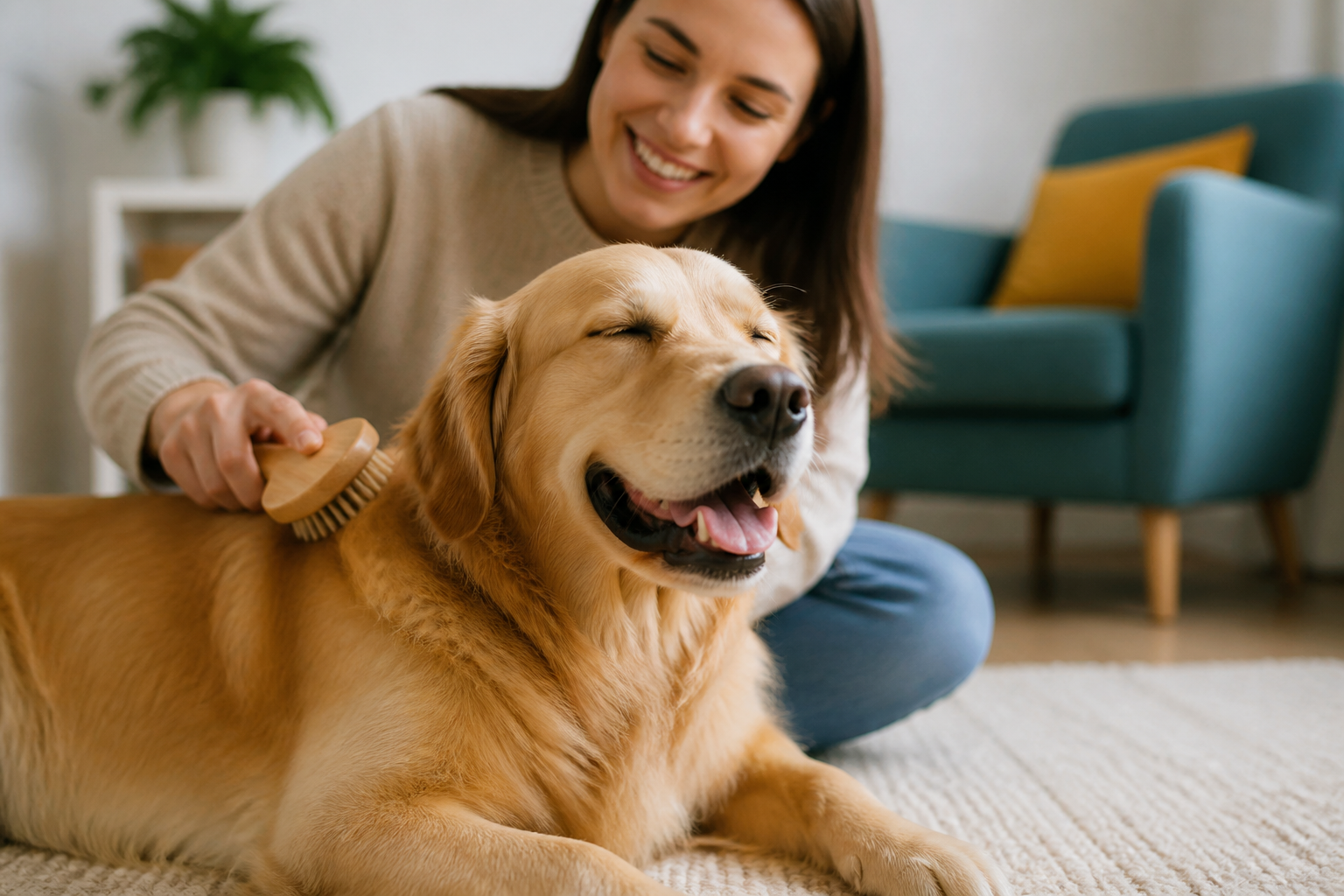
You are sitting on the rug with your dog after a long day of work. You pull out the grooming brush and your dog immediately leans their weight into your hand. It is a quiet moment that feels less like a chore and more like a conversation between friends. We often think of grooming as a way to keep the house clean or prevent mats. For many dogs, however, this routine is the highlight of their day. At BaxterBoo, we see how a regular grooming routine strengthens the relationship between pets and their people. This article covers the biological, sensory, and emotional reasons why dogs enjoy the sensation of being brushed. We will also look at how to help a reluctant dog learn to love the process. Brushing is not just about a shiny coat. It is about comfort, health, and the unique bond you share with your dog.
Quick Answer: Dogs like being brushed because it mimics social bonding behaviors, releases feel-good hormones, and provides a soothing massage. It also removes itchy loose fur and stimulates the production of natural skin oils for better comfort.
The Biological Roots of Social Grooming
To understand why your dog sighs with relief when the brush comes out, we have to look at their history. Dogs are social animals that descended from pack-dwelling ancestors. In a pack environment, grooming is a primary way to maintain social bonds. Biologists call this behavior allogrooming. It is the act of one animal grooming another within the same species.
When a mother dog licks her puppies, she is not just cleaning them. She is providing comfort and establishing a sense of safety. As puppies grow, they continue this behavior with their littermates. When you brush your dog, you are stepping into that social role. You are signaling that they are part of your "pack" and that they are safe in your care.
This social interaction triggers the release of oxytocin in both you and your dog. Oxytocin is often called the love hormone or the bonding hormone. It lowers heart rates and reduces levels of cortisol, which is the hormone associated with stress. This is why a grooming session can feel so therapeutic for a dog that has had a busy or anxious day.
The Physical Sensation of a Canine Massage
The skin is the largest organ on a dog's body. It is packed with nerve endings that respond to pressure and texture. When you use the right grooming tools, the sensation is very similar to a professional massage.
Brushing helps to stimulate blood flow to the surface of the skin. This increased circulation brings more oxygen and nutrients to the hair follicles. For the dog, this feels like a warm, tingling sensation that can be incredibly relaxing. It is especially beneficial for senior dogs who may have stiff muscles or decreased circulation.
Key Takeaway: Brushing serves as a form of tactile communication that lowers stress and mimics the natural bonding behaviors found in canine packs.
Different brushes provide different sensations. A soft bristle brush feels like a gentle caress. A rubber curry brush provides a deeper, kneading sensation that many short-haired dogs find irresistible. At BaxterBoo, we carry a wide variety of brushes designed for every coat type in our dog brushes and combs collection. Choosing the right tool ensures the physical sensation is pleasurable rather than irritating. If the brush is too sharp or the bristles are too stiff, the dog will associate grooming with discomfort instead of a massage.
Removing the Itch and Keeping Cool
If you have ever had an itchy spot on your back that you could not reach, you know how frustrating it is. Dogs deal with this constantly. Their thick coats can trap dust, dander, and loose fur against their skin. This trapped material causes itching and general discomfort.
When you brush your dog, you are acting as a high-tech backscratcher. You are reaching the places they cannot reach with their own paws or teeth. Removing the dead undercoat is especially important for double-coated breeds like Huskies or Golden Retrievers. This dead fur does not just sit there. It can become tangled and heavy.
Removing this extra layer also helps with temperature regulation. A dog's coat acts as insulation against both heat and cold. However, when the coat is clogged with dead fur, it cannot "breathe." This makes it harder for the dog to stay cool in the summer. By clearing out the debris, you are making them physically more comfortable in their own skin.
The Importance of Natural Oil Distribution
Dogs do not have sweat glands across their bodies like humans do. Instead, they rely on sebaceous glands located at the base of their hair follicles. These glands produce sebum, which is a natural oil. Sebum keeps the skin hydrated and provides a protective barrier against bacteria and environmental irritants.
Without regular brushing, these oils can pool at the base of the hair. This leads to greasy skin and dry, brittle fur at the tips. Brushing acts as a natural conditioning treatment. The bristles of the brush pick up the sebum and distribute it along the entire length of the hair shaft.
This process serves two purposes. First, it gives the coat a healthy, glossy shine. Second, it keeps the skin from becoming dry and flaky. A dog with well-moisturized skin is far less likely to suffer from chronic itching or dander issues. For additional coat-care supplies, explore our dog skin and coat care category.
Identifying Health Issues Early
One of the most practical reasons to brush your dog is health surveillance. When you brush your dog, you are performing a mini-physical exam. You are feeling for lumps, bumps, or areas of sensitivity that might otherwise go unnoticed.
This is a great time to check for external parasites. Our dog pharmacy carries a variety of flea and tick preventives. Finding a tick early during a brushing session can prevent serious illnesses like Lyme disease.
You should also look for signs of skin irritation or allergies. If you notice redness, hot spots, or a sudden change in skin texture, it is important to pay attention. Sometimes these issues require prescription shampoos or medications that can be managed through a veterinary consultation.
Vet Tip: Use your brushing time to check for new growths or skin changes. If your dog flinches or yelps when you touch a specific area, it could indicate a hidden injury or joint pain. Always consult your veterinarian if you find a suspicious lump or if your dog shows signs of pain during grooming.
Training Your Dog to Enjoy the Brush
Not every dog starts out loving the brush. Some dogs are naturally shy or have had a bad experience in the past. If your dog runs away when they see the grooming kit, you can change their mind with a bit of patience.
Step 1: Introduce the tool without using it. / Let your dog sniff the brush while it sits on the floor. Place a high-value treat on top of the brush so they associate the object with something positive.
Step 2: Practice "touch and treat." / Briefly touch the brush to your dog's side without actually brushing. Give them a treat immediately. Repeat this until they look for the treat when they see the brush.
Step 3: Start with one or two strokes. / Brush a small area that the dog usually enjoys being touched, like the base of the neck. Keep the session under thirty seconds.
Step 4: Gradually increase the time. / As your dog becomes more comfortable, you can move to more sensitive areas like the belly or the back legs. Always end the session while the dog is still having a good time.
Using a "lick mat" can be a great distraction. You can smear a bit of peanut butter or plain yogurt on the mat. While the dog is busy licking, you can focus on brushing out a few tangles. This turns grooming into a multi-sensory reward.
Dealing with Mats and Tangles
Mats are more than just an eyesore. They are a health hazard. When fur becomes tightly knotted, it begins to pull on the skin. This can be extremely painful for a dog. In severe cases, mats can restrict blood flow to the skin or hide underlying infections.
If you find a mat, do not try to pull it out with the brush. This will cause pain and make your dog fear the grooming process. Instead, use your fingers to gently pull the mat apart. You can also use a specialized detangling spray or a small amount of coconut oil to help the hair slide apart.
If the mat is too close to the skin, do not try to cut it out with scissors. It is very easy to accidentally cut a dog's thin skin. In these cases, it is best to see a professional groomer or use electric clippers with a safety guard. Consistency is the best way to prevent mats from forming in the first place. You can find additional options in our grooming tools category.
How Different Coat Types Experience Brushing
Every coat type requires a different approach. A short-haired dog like a Beagle does not have the same needs as a Poodle or a Maine Coon.
- Short Coats: These dogs benefit most from rubber curry brushes. The soft rubber nubs massage the skin and pull away loose hair without scratching.
- Long Coats: These require a slicker brush or a long-toothed comb. You need to reach all the way down to the skin to ensure you are removing the dead undercoat.
- Wire Coats: Breeds like Terriers often have a rough outer coat and a soft undercoat. Brushing helps keep the textures distinct and removes debris trapped in the wiry fur.
- Curly Coats: Dogs with curls do not shed in the traditional sense. The dead hair gets caught in the curls. Regular brushing is essential to prevent these dogs from turning into one large mat.
Understanding your dog's specific coat type will help you choose the tools that make them feel the best. We offer a variety of specialized grooming gear to match these different needs. When you have the right tool, the job becomes much easier for you and more enjoyable for your pet. For curly-coated dogs, read how to groom a dog with curly hair.
The Emotional Connection
Beyond the biology and the skin health, there is an emotional component to brushing. In our busy lives, it can be hard to find ten minutes of uninterrupted time to just be with our pets. Brushing provides that window.
Your dog thrives on your attention. When you are brushing them, you are not looking at your phone or watching television. You are focused entirely on them. This focused attention makes them feel valued and secure.
Many owners find that brushing their dog helps lower their own stress levels as well. The repetitive motion of the brush and the soft feel of the fur have a calming effect on the human nervous system. It is a rare win-win situation where both the human and the dog end the session feeling better than when they started.
Bottom line: Brushing is a multi-purpose tool that improves physical health, prevents pain, and fosters a deep emotional connection through focused attention.
Keeping Your Grooming Area Positive
Where you brush your dog matters. If you always brush them in a place where they feel trapped, they may become anxious. Try to find a spot where they feel comfortable, like their favorite rug or a specialized grooming mat.
If you have a small dog, you might find it easier to place them on a table so you do not have to hunch over. Just make sure the surface is non-slip. For large dogs, sitting on the floor with them can make the experience feel more like a play session than a chore.
Keep your grooming supplies in a specific bag or box. Your dog will eventually recognize the "grooming kit." If you have built a positive association, they might even start wagging their tail as soon as you bring it out. Consistency is the key to making this a lifelong habit that your dog looks forward to every week.
A Note on Professional Grooming
While home brushing is essential, it does not always replace the need for a professional groomer. Professionals have access to high-powered dryers, specialized tubs, and advanced shearing tools. They can also handle tasks like nail trimming and ear cleaning that some owners find difficult.
However, your work at home makes the professional's job much easier. A dog that is used to being brushed at home will be much calmer at the grooming salon. They will be less likely to have painful mats that require shaving. Think of your home brushing routine as daily maintenance that keeps your dog comfortable between professional appointments.
If your dog has a chronic skin condition or requires prescription-strength grooming products, our pharmacy is here to help. We can help you manage your pet's ongoing health needs with the same convenience as your regular shopping. Our pharmacy offers a range of medicated shampoos and treatments that your veterinarian may recommend for sensitive skin.
Summary of the Benefits of Brushing
- Stress Reduction: Lowers cortisol and increases oxytocin for both pet and owner.
- Skin Health: Distributes natural oils and stimulates blood circulation.
- Comfort: Removes itchy debris and prevents painful mats.
- Safety: Allows for early detection of lumps, bumps, and parasites.
- Cleanliness: Reduces the amount of fur shed on furniture and clothing.
Maintaining a regular brushing schedule is one of the simplest things you can do to improve your dog's quality of life. It costs very little but provides massive returns in terms of health and happiness. Whether you have a tiny puppy or a dignified senior dog, they will appreciate the extra care and the time spent together.
At BaxterBoo, we have been helping pet owners find the best products for their dogs since 2006. We believe that every pet deserves to feel their best. By choosing the right tools and taking a patient approach, you can turn a routine task into a cherished bonding ritual.
For more information on grooming tools or to explore our pharmacy options for skin and coat health, visit our dog grooming collection. You can also take advantage of our Autoship programme to ensure you never run out of your favorite grooming supplies or wellness products.
FAQ
Why does my dog suddenly hate being brushed?
If your dog used to enjoy brushing but now avoids it, they may be experiencing pain. This could be due to a hidden mat pulling on the skin, a recent injury, or underlying joint pain like arthritis. It is a good idea to check their skin for redness or lumps and consult your veterinarian to rule out any medical issues.
How often should I brush my dog?
The frequency depends on your dog's coat type and activity level. Short-haired dogs may only need a weekly brushing to remove loose hair. Long-haired or double-coated breeds often require brushing every two to three days to prevent mats and manage shedding.
Can I brush my dog if their skin is irritated?
It depends on the cause of the irritation. If the skin is broken, inflamed, or showing signs of infection, you should stop brushing that area and talk to your vet. However, if the irritation is caused by dry skin or trapped dander, a very soft brush can actually help by distributing natural oils and removing irritants.
What should I do if my dog is afraid of the brush?
Start very slowly by letting them sniff the brush and pairing it with high-value treats. Avoid forcing the brush on them, as this will increase their fear. Use short sessions of just one or two strokes and gradually build up their confidence over several weeks using positive reinforcement.






