
 Save 15% on your 1st Autoship learn more

 Email us
 Live Chat
 FAQs
FAQs





Introduction
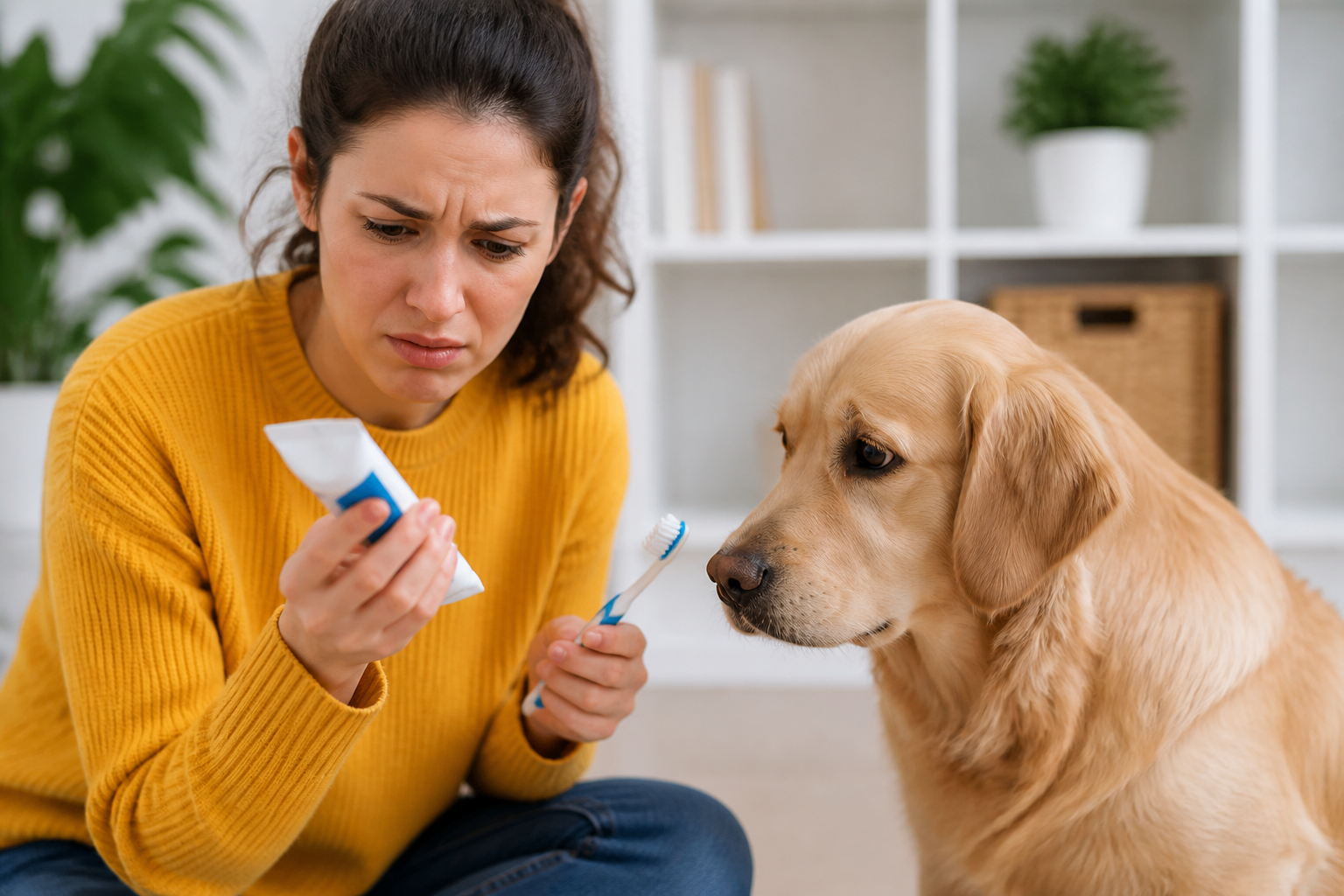
You are standing in the bathroom with your toothbrush in hand. Your dog sits patiently at your feet, looking up with that familiar wagging tail. You realize his breath is a bit strong and wonder if a quick scrub with your own toothpaste might help. It seems like a logical shortcut when you are out of pet supplies. However, reaching for that tube of minty human toothpaste can lead to a serious medical emergency.
At BaxterBoo, we want to help you navigate these everyday pet care choices with confidence. This guide explains why human dental products are unsafe for pets and what you should use instead. We will cover the hidden toxins in your medicine cabinet and provide a step-by-step plan for a safe cleaning routine. Brushing is essential for your dog’s health, but using the right tools is the only way to keep them safe.
Quick Answer: No, you should never use human toothpaste to clean a dog's teeth. Many human brands contain xylitol and fluoride, which are toxic to dogs and can cause life-threatening issues if swallowed.
The Serious Dangers of Human Toothpaste
The primary reason you cannot use human toothpaste on dogs is that dogs do not spit. When we brush our teeth, we rinse and spit out the excess paste. Dogs swallow everything you put in their mouths. Human toothpaste is formulated with the assumption that it will not be ingested in large amounts. It contains several ingredients that are safe for us but dangerous for a dog's digestive system and bloodstream.
The most dangerous ingredient found in many modern toothpastes is xylitol. This is an artificial sweetener that is becoming increasingly common in sugar-free products. While it is perfectly fine for humans, it is incredibly toxic to dogs. Even a small amount can cause a rapid drop in blood sugar, leading to seizures or liver failure.
Fluoride is another major concern. We use it to strengthen our enamel, but it is not meant to be eaten. If a dog swallows fluoride regularly, it can lead to severe stomach upset and even permanent kidney damage. Because dogs have much smaller bodies than we do, these chemicals reach toxic levels very quickly.
Identifying Toxic Ingredients in Your Bathroom
It is important to know exactly what is inside that tube on your counter. Many pet owners think a "natural" human toothpaste might be safe. This is rarely the case. Even fluoride-free or organic human pastes often contain foaming agents like Sodium Lauryl Sulfate (SLS).
SLS is what makes your toothpaste bubbly and frothy. For a dog, these bubbles are not just confusing. Swallowing foaming agents can cause significant gastrointestinal distress, leading to vomiting and diarrhea. Dogs also have a much more sensitive sense of taste than we do. The intense artificial mint or cinnamon flavors in human paste can be overwhelming or even painful for them.
Vet Tip: If your dog accidentally consumes human toothpaste, check the label for xylitol immediately. Contact your veterinarian or an animal poison control center right away if you see this ingredient listed. Early intervention is critical for recovery.
Why Dog-Specific Toothpaste Is Different
Pet-specific toothpaste is designed with a dog's biology in mind. The most important difference is that it is safe to swallow. It does not contain xylitol, fluoride, or heavy foaming agents. Instead of artificial mint, these products use flavors that dogs actually enjoy. You can find options that taste like poultry, beef, malt, or peanut butter.
Most high-quality dog toothpastes are enzymatic. This means they contain proteins that help break down plaque and bacteria chemically. This is helpful because dogs often do not sit still for a long, thorough scrubbing. The enzymes continue to work even after you stop brushing.
Using a product that tastes good turns a chore into a treat. When your dog sees the tube, they should think they are getting a snack. This positive association makes the process much easier for both of you over time. For more guidance, read our post on the top pet dental care tips.
The Role of Plaque and Tartar in Canine Health
To understand why we brush, we have to look at what is happening in your dog's mouth. Within hours of eating, a sticky film of bacteria called plaque forms on the teeth. If this plaque is not brushed away, it mixes with minerals in the saliva. Within just 24 to 48 hours, it hardens into tartar, also known as calculus.
Once tartar forms, you cannot remove it with a toothbrush. It requires a professional cleaning by a veterinarian. This tartar buildup leads to periodontal disease, which affects a staggering 80 percent of dogs over the age of three. This condition causes inflammation and infection in the tissues surrounding the teeth.
Left untreated, periodontal disease does not stay in the mouth. The bacteria can enter the bloodstream through the gums. From there, it can travel to and damage the heart, liver, and kidneys. Regular brushing is one of the most effective ways to extend your dog’s lifespan and improve their quality of life. You can also review warning signs of bad teeth in dogs.
Choosing the Right Brushing Tools
The paste is only half of the equation. You also need the right brush. While you can use a very soft, child-sized human toothbrush in a pinch, a brush designed for dogs is usually a better choice. We carry a wide variety of these tools in our dog dental care collection to suit dogs of all sizes.
- Finger Brushes: These are small rubber or silicone caps that fit over your pointer finger. They are excellent for puppies or dogs who are nervous about long handles in their mouths.
- Angled Brushes: These look like human toothbrushes but have a specific curve. This angle helps you reach the back molars where tartar builds up the most.
- Double-Headed Brushes: These have bristles on both sides. They allow you to clean the inside and outside of the teeth at the same time, which is great for wiggly dogs.
- Gauze Pads: If your dog will not tolerate a brush at all, wiping the teeth with a piece of gauze and some dog toothpaste is still better than doing nothing.
Key Takeaway: Proper dental care requires dog-safe enzymatic toothpaste and a brush that fits your dog's mouth size. Never settle for human products that could cause internal harm.
Step-by-Step Guide to Brushing Your Dog's Teeth
Brushing should be a gradual process. If you try to scrub their entire mouth on day one, they will likely resist. Take your time and keep the sessions positive.
Step 1: The Taste Test. Put a small dab of dog toothpaste on your finger. Let your dog sniff and lick it off. Do this for a few days until they get excited when they see the tube.
Step 2: Finger Rubbing. Once they like the taste, start rubbing your finger along their gums and teeth while they lick the paste. This gets them used to the sensation of you touching their mouth.
Step 3: Introduce the Brush. Put some paste on the toothbrush and let them lick it off. Do not try to brush yet. Just let them get used to the texture of the bristles against their tongue.
Step 4: The Front Teeth. Gently lift the upper lip and brush the large canine teeth in a circular motion. Aim for the gum line where the tooth meets the tissue. Reward them with praise immediately after.
Step 4: The Back Molars. Once they are comfortable, move to the back of the mouth. This is where the most plaque accumulates. You do not need to worry about the inside surfaces of the teeth as much, as the tongue handles a lot of that cleaning.
Step 5: Consistency. Aim for 30 seconds of brushing on each side. If you can do this daily, you will significantly reduce the need for expensive professional cleanings. A gradual introduction is also recommended in our guide to building a pet dental care routine.
Alternatives to Brushing
Some dogs simply will not tolerate a toothbrush. If you have a rescue dog with a sensitive mouth or a senior dog with existing pain, you may need other options. While brushing is the gold standard, these alternatives can help slow down the accumulation of plaque.
Dental chews are a popular choice. These treats are designed with a specific texture that scrapes away plaque as the dog chews. Look for products with the Veterinary Oral Health Council (VOHC) seal of approval. This ensures the product has been tested and proven to work. Ark Naturals Brushless Toothpaste Dog Chews are one option for dogs that enjoy chewing.
Water additives are another easy solution. You simply add a small amount of the liquid to your dog's water bowl. These additives contain enzymes that help kill the bacteria that cause bad breath and plaque. They are flavorless and odorless, so most dogs do not even notice them. For example, Synergy Labs Dental Fresh Water Additive Dog Original Formula is designed to be added to your dog’s water.
Bottom line: While chews and additives help, they are most effective when used alongside a regular brushing routine.
Signs Your Dog Needs a Professional Dental Visit
Even with the best home care, your dog may still develop dental issues. Some breeds, especially small and toy breeds, are genetically prone to crowded teeth and gum disease. It is important to check your dog's mouth weekly for any changes.
Keep an eye out for very bad breath. While "dog breath" is normal, a truly foul or rotting smell is a sign of infection. You should also look for red, swollen, or bleeding gums. If your dog is pawing at their face or dropping food while eating, they may have a painful broken tooth or an abscess.
Loose or missing teeth in an adult dog are always a cause for concern. If you notice any of these symptoms, schedule a visit with your veterinarian. They can perform a thorough exam and determine if a professional cleaning under anesthesia is necessary. Our article on recognizing dental disease warning signs can help you know what to watch for.
The BaxterBoo Pharmacy and Prescription Care
If your veterinarian diagnoses your dog with advanced periodontal disease, they may require more than just a toothbrush. They might need prescription medications to fight infection or specialized diets to prevent further decay.
We offer a full pharmacy service through our partnership with Pet's Choice. This allows you to get FDA-approved medications and prescription pet foods delivered directly to your home. We carry brands like Farmina Vet Life that are formulated for specific health needs, including weight management and dental support. Having access to these professional tools ensures your dog gets the best possible care for their chronic health conditions.
Building a Long-Term Dental Routine
Healthy teeth do not happen overnight. It takes a consistent commitment to a daily routine. Start by setting a specific time each day for dental care, perhaps right after your evening walk. When it becomes part of the daily schedule, both you and your dog will get used to it.
Join our MVP Rewards programme to earn points on every dental care purchase. This helps you save money on the toothpaste and brushes you need to keep your dog healthy. You can also use our Autoship program to ensure you never run out of supplies. Getting a fresh tube of poultry-flavored paste delivered on a schedule means you will never be tempted to reach for that dangerous human tube in the bathroom.
Key Takeaway: Consistency is the secret to avoiding painful dental procedures. Use high-quality tools, stay patient, and reward your dog for their cooperation.
Conclusion
Keeping your dog's mouth clean is a vital part of being a pet parent. While it might seem convenient to use what you have on hand, human toothpaste is a danger you should never risk. Stick to products made specifically for dogs to avoid the life-threatening risks of xylitol and fluoride. By investing a few minutes each day into brushing, you are protecting your dog's heart, kidneys, and overall happiness.
- Never use human toothpaste due to xylitol and fluoride toxicity.
- Select an enzymatic pet toothpaste in a flavor your dog loves.
- Use a brush designed for a dog's mouth shape and size.
- Monitor your dog for signs of gum disease and see a vet regularly.
Your next step is to explore our full range of dog dental care products. Whether you need a starter kit for a new puppy or a specialized finger brush for a senior dog, we have the expert-vetted options you need. Visit our dental care collection to find the right tools for your furry best friend.
FAQ
Can I use a human toothbrush on my dog?
Yes, you can use a human toothbrush if it has very soft bristles. A child-sized toothbrush is often the best choice for small to medium dogs because the head is small enough to reach the back molars. However, dog-specific brushes are often angled better for a canine's jaw structure.
Is baking soda a safe alternative to toothpaste?
Baking soda is technically non-toxic in very small amounts, but it is not recommended for regular use. It has a high alkaline content that can upset a dog's stomach if swallowed. Furthermore, most dogs hate the taste, which can make them fight you during the brushing process.
What should I do if my dog hates having their teeth brushed?
If your dog resists the brush, start very slowly with just your finger and some tasty pet toothpaste. You can also use dental wipes or gauze pads to clean the teeth. If they still struggle, talk to your vet about dental treats and water additives as a secondary form of protection.
How often do dogs actually need their teeth brushed?
Ideally, you should brush your dog's teeth every day, just like you do your own. Plaque begins to harden into tartar within 24 to 48 hours, so daily brushing is the only way to prevent buildup. If daily is not possible, aiming for at least three times a week still provides significant health benefits.






