Save 15% on your 1st Autoship learn more

 Email us
 Live Chat
 FAQs
FAQs





Introduction
You are running a brush through your long-haired cat’s silky coat when you notice a dusting of white flakes. It looks like a tiny snowstorm has settled deep in their undercoat. While a few flakes are normal, a sudden increase in dandruff can make a beautiful coat look dull and leave your cat feeling itchy. At BaxterBoo, we know that long-haired breeds face unique grooming challenges that can lead to skin irritation. This article covers the common causes of feline dandruff, how to tell it apart from normal shedding, and practical steps to restore your cat's skin health. Understanding the "why" behind those flakes is the first step toward a shiny, healthy coat.
Understanding Feline Dandruff vs. Dander
It is easy to get these two terms confused, but they are quite different. Dander consists of microscopic skin cells that every healthy cat sheds naturally. You usually cannot see dander with the naked eye. It only becomes an issue when it carries the proteins that trigger human allergies.
Dandruff refers to much larger, visible flakes of dead skin. These flakes often get trapped in the thick undercoat of long-haired breeds. While dander is a sign of a healthy body regenerating its skin, dandruff usually signals an imbalance. It might mean the skin is too dry, too oily, or that your cat is struggling to keep up with their grooming routine.
Quick Answer: Dandruff in long-haired cats is often caused by a buildup of the undercoat or difficulty grooming. It can also signal underlying health issues like allergies, parasites, or nutritional gaps that require a vet's attention.
Why Long-Haired Cats are Prone to Flakes
Long-haired cats have a more complex coat structure than short-haired breeds. They typically have a long outer layer of guard hairs and a dense, soft undercoat. If the undercoat is not brushed out regularly, dead skin cells and loose hair get trapped against the skin.
This buildup prevents air from circulating. It also stops the natural oils produced by the skin from being distributed along the hair shaft. When these oils sit on the skin for too long, they can become waxy or cause the skin to flake. For cats with very thick fur, a "grooming gap" often occurs. The cat simply cannot reach the skin through all that hair, especially along the lower back and base of the tail. For more coat-care guidance, see our guide to grooming long-haired cats.
Common Causes of Flaky Skin
Identifying the root cause of the dandruff is essential for finding the right solution. While many cases are environmental, some require medical intervention.
Environmental Factors and Humidity
During the winter months, indoor heating strips moisture from the air. This dry environment can cause a cat’s skin to lose hydration, leading to fine, white flakes. This is most common in regions with harsh winters or very dry climates.
Nutritional Gaps
Skin health starts from the inside. If a cat's diet is low in essential fatty acids like Omega-3 and Omega-6, their skin barrier becomes weak. We carry several premium brands, such as Farmina and Open Farm, that prioritize these healthy fats to support coat shine and skin elasticity.
Parasites and "Walking Dandruff"
Not all dandruff is just dry skin. A specific mite called Cheyletiella can cause "walking dandruff." If you look closely, you might actually see the white flakes moving. This is a highly contagious parasite that requires specific treatment. Traditional fleas and lice can also cause irritation that leads to heavy flaking.
Health Conditions and Mobility
As cats age, they may develop arthritis or spinal stiffness. This makes it painful to twist and reach the lower back, which is why dandruff often appears in that specific area. Additionally, conditions like obesity, diabetes, or hyperthyroidism can change the quality of a cat’s skin and coat.
Vet Tip: If your cat has dandruff accompanied by hair loss, redness, or excessive itching, schedule a veterinary exam. These symptoms often point to infections or parasites that require prescription treatment rather than just extra brushing.
How to Manage Dandruff at Home
If your vet has ruled out serious medical conditions, you can manage most dandruff issues with a consistent routine.
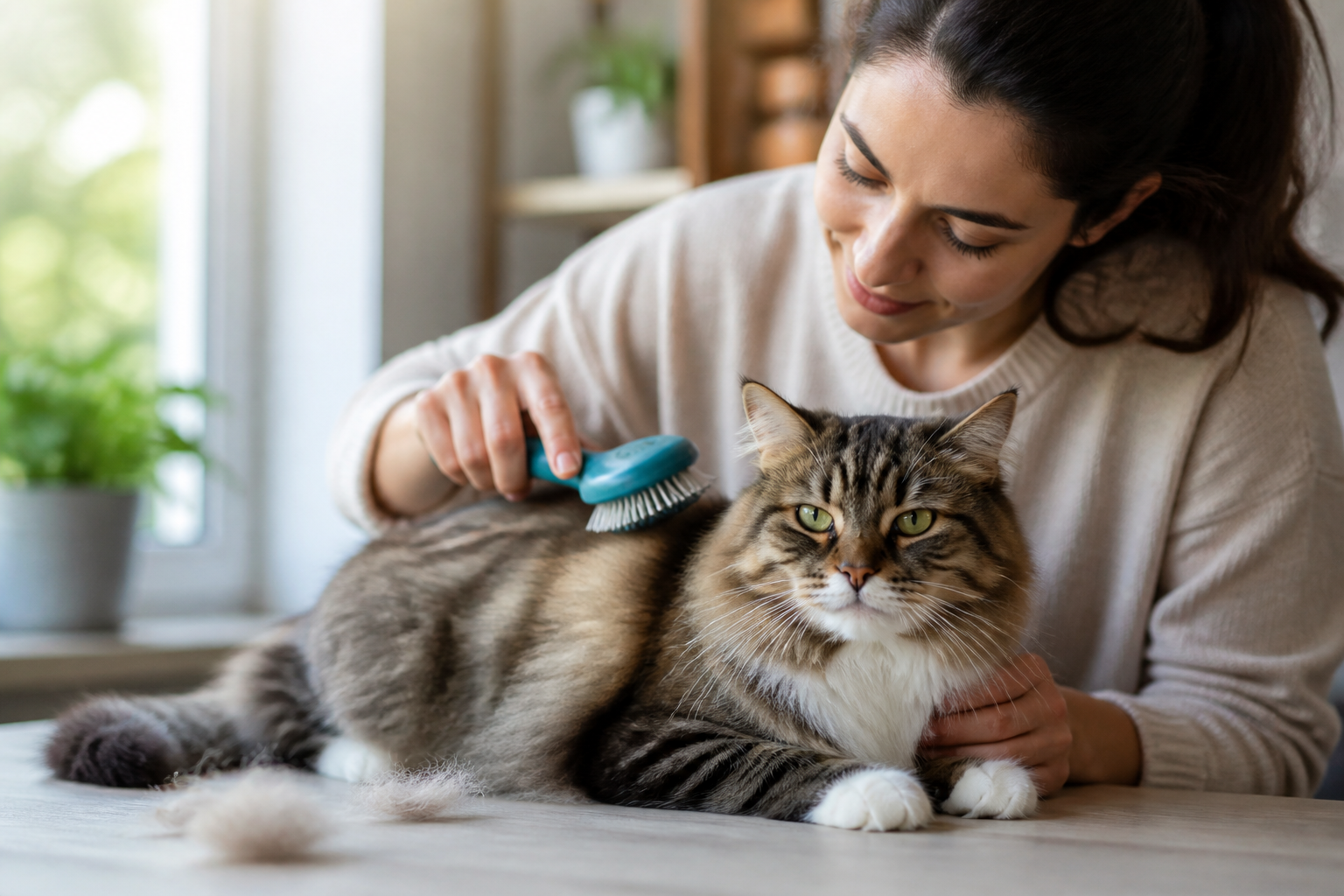
Step 1: Increase grooming frequency. / Long-haired cats should be brushed at least once a day. Use a high-quality slicker brush or an undercoat rake to reach the skin. This removes trapped flakes and spreads natural oils. Explore our cat grooming supplies for brushes, combs, wipes, and coat-care products.
Step 2: Add moisture to the air. / Run a humidifier in the room where your cat spends the most time. This is especially helpful during the winter to prevent the skin from drying out.
Step 3: Improve hydration. / Cats are notorious for not drinking enough water. Try adding wet food toppers from brands like Tiki Cat and Fussie Cat. Better hydration leads to more resilient skin.
Step 4: Supplement the diet. / Consider adding a liquid fish oil or a skin and coat supplement. These provide the building blocks for a healthy skin barrier.
The Role of the BaxterBoo Pharmacy
Sometimes, a change in brushing habits is not enough. If your cat’s dandruff is caused by a medical issue like a fungal infection, severe allergies, or parasites, you will need professional help. Our cat pharmacy offers prescription medications and prescription pet foods.
If your vet diagnoses a condition like hyperthyroidism or a specific skin infection, they may prescribe a medicated shampoo or a prescription diet like Farmina Vet Life. Having a pharmacy attached to our warehouse means you can get your cat's specialized food and medication delivered right to your door alongside their favorite toys and treats.
When to See Your Veterinarian
While a few flakes might just mean your cat needs a good brushing, some signs indicate a bigger problem. Watch for these red flags:
- Intense scratching: If your cat is constantly biting or scratching at their skin.
- Skin lesions: Any red spots, scabs, or sores under the fur.
- Greasy coat: If the fur feels oily or matted rather than just having dry flakes.
- Behavioral changes: Lethargy, hiding, or a sudden loss of appetite.
- Thinning hair: Patchy hair loss or a coat that looks "moth-eaten."
Key Takeaway: Dandruff is a symptom, not a disease. Effective treatment involves identifying whether the cause is environmental, nutritional, or medical.
Choosing the Right Grooming Tools
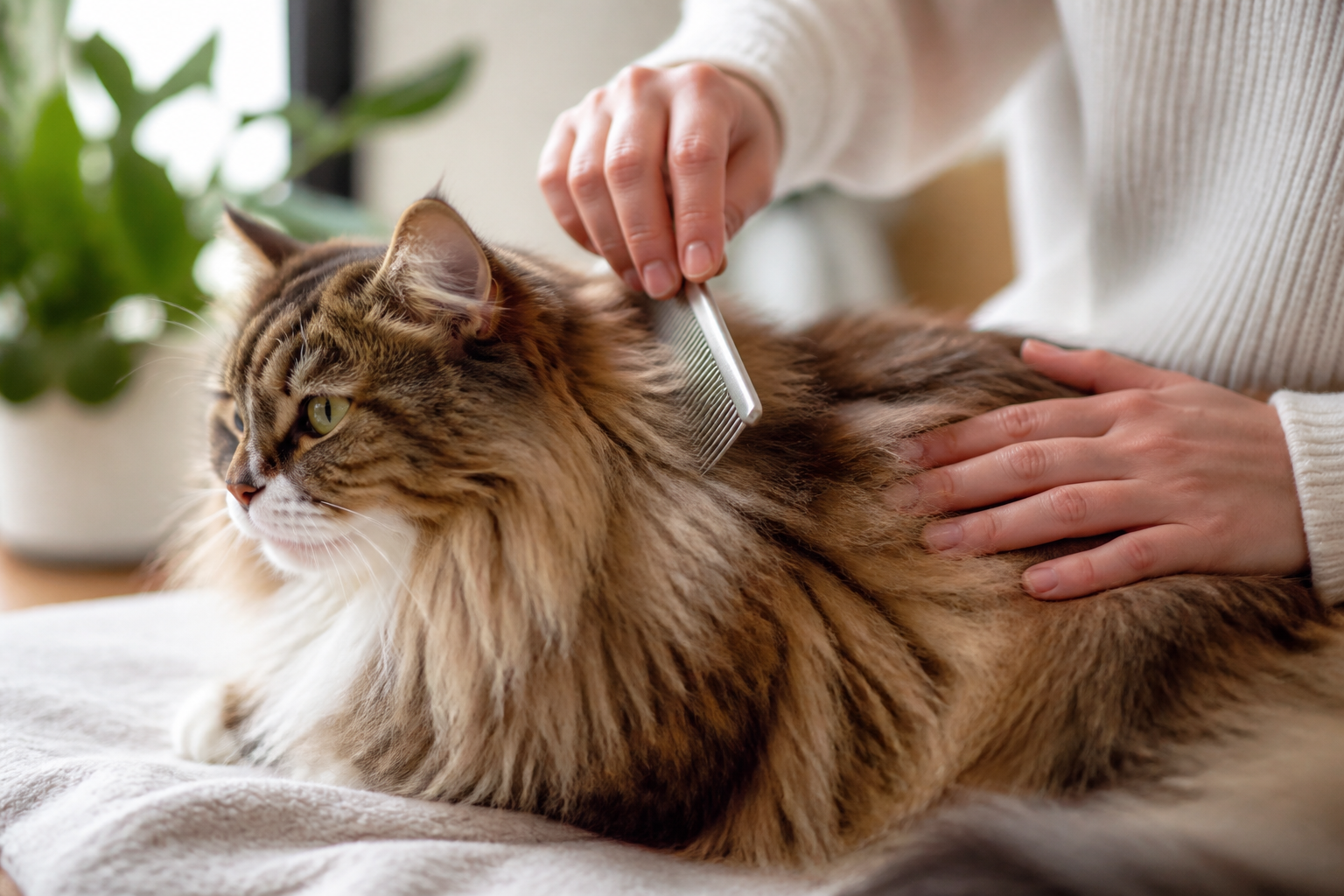
For long-haired cats, the tool you choose makes all the difference. A standard plastic comb usually won't cut it. You need something that can penetrate the dense undercoat without scratching the skin. Our grooming tools for cats include brushes, combs, and other coat-maintenance essentials.
| Tool Type | Best For | Benefit |
|---|---|---|
| Slicker Brush | Daily maintenance | Removes loose hair from the top layer and prevents tangles. |
| Undercoat Rake | Deep grooming | Reaches through the guard hairs to pull out dead fur from the undercoat. |
| Stainless Steel Comb | Finishing | Helps identify small mats before they become painful. |
| Grooming Wipes | Quick cleanup | Helps remove visible flakes and saliva allergens between brushes. |
Bottom line: Regular, deep grooming with the right tools is the most effective way to prevent dandruff buildup in long-haired breeds.
FAQ
Can I use human dandruff shampoo on my long-haired cat?
No, you should never use human dandruff shampoos on cats. These products often contain ingredients like zinc pyrithione or salicylic acid that can be toxic if your cat licks their fur. Always use a shampoo specifically formulated for felines or one recommended by your veterinarian.
Is cat dandruff the same as an allergy to cats?
Dandruff and cat allergies are related but not the same. Most people are allergic to a protein found in a cat's saliva, which gets onto the skin and hair during grooming. When the cat sheds dandruff or dander, that protein spreads through your home. Reducing your cat's dandruff can often help reduce the amount of allergens in the air.
Does my cat’s weight affect their dandruff?
Yes, obesity is a leading cause of dandruff in cats. If a cat is overweight, they physically cannot reach certain parts of their body to groom, typically the middle of the back and the base of the tail. This leads to a buildup of dead skin and oils in those hard-to-reach areas.
How long does it take for dandruff to go away after treatment?
Skin cells take time to regenerate, so you likely won't see results overnight. If you improve your grooming routine or add supplements, it usually takes three to four weeks to see a noticeable difference in the coat. If you are treating a medical condition with help from our pharmacy, follow your vet's specific timeline for recovery.