
 Save 15% on your 1st Autoship learn more

 Email us
 Live Chat
 FAQs
FAQs





Introduction
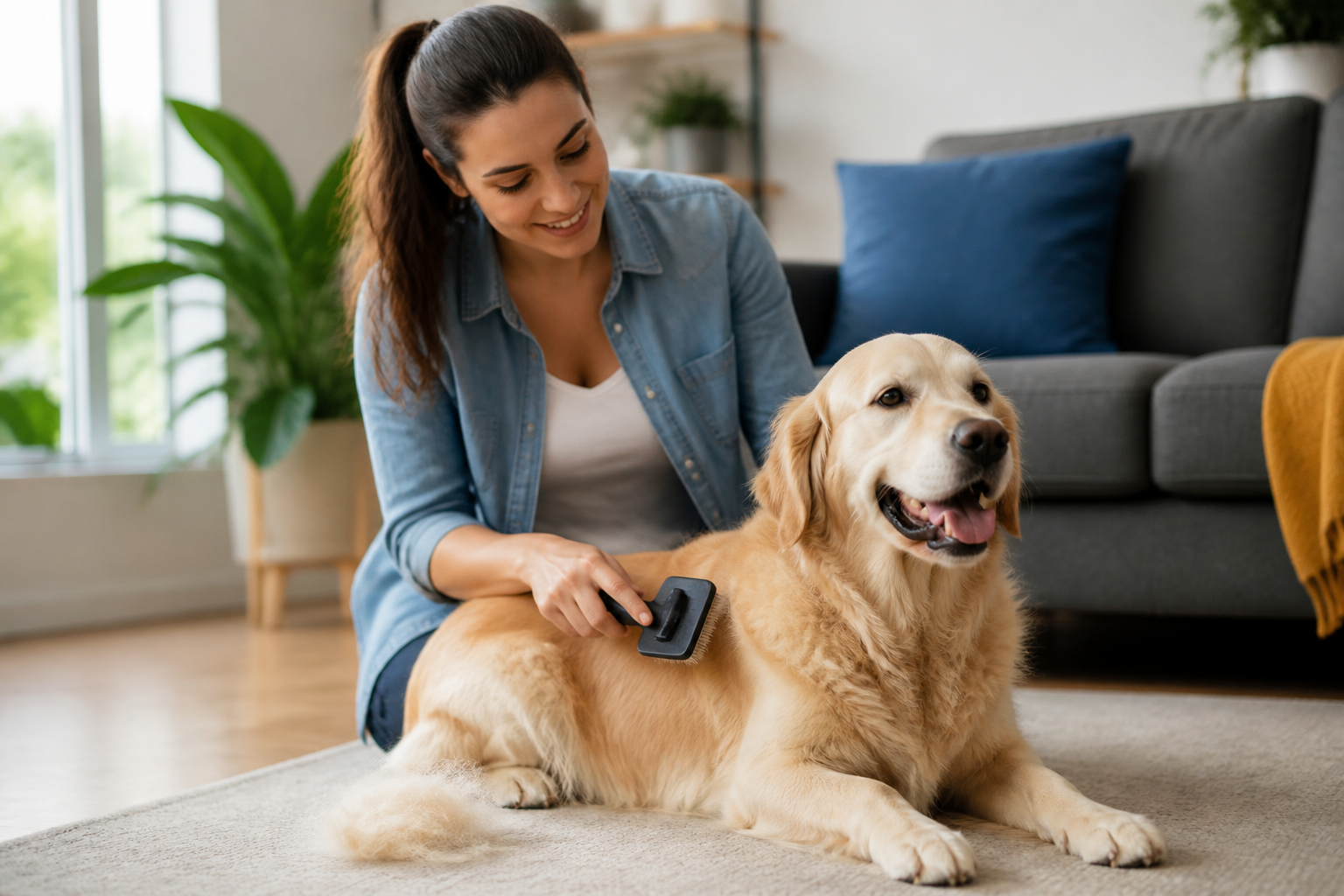
You just finished vacuuming the living room and sit down with a cup of coffee. Within minutes, you spot a fresh tumbleweed of fur drifting across the hardwood floor. It feels like a losing battle. If your dog is a heavy shedder, you know the frustration of finding hair on your clothes, your furniture, and even in your lunch. At BaxterBoo, we understand that while you love your dog, you do not necessarily love wearing their coat on your favorite sweater. Many owners wonder if picking up a brush more often really makes a difference or if it just moves the mess around. This post covers why brushing is your best defense against loose fur, which tools actually work, and how internal health affects what ends up on your floor. Regular brushing is the most effective way to manage shedding because it captures dead hair at the source before it can fall.
How Brushing Specifically Reduces Shedding
Brushing does not stop the biological process of hair growth and loss. Instead, it gives you control over where that hair ends up. Every dog goes through a cycle where old hair dies and falls out to make room for new growth. When you brush your dog, you are manually removing those dead strands from the coat. Without your help, those hairs stay trapped against the skin or loosely tangled in the fur until they eventually drop onto your carpet.
Brushing also stimulates the skin and distributes natural oils throughout the coat. These oils act as a natural conditioner. When the skin is healthy and well oiled, the hair stays stronger for longer. This reduces the amount of "breakage shedding" caused by brittle or dry fur. A well groomed coat also allows for better airflow. This helps your dog regulate their body temperature, which can naturally stabilize the shedding cycle during seasonal changes.
Quick Answer: Yes, regular brushing significantly helps with shedding by removing dead undercoat and loose guard hairs before they fall off the dog. It also distributes natural skin oils that keep the coat healthy and reduce hair breakage.
Choosing the Right Tool for Your Dog's Coat
Using the wrong brush is a common mistake that leads to frustration. If you use a soft bristle brush on a thick double coated dog, you are only smoothing the top layer. The dead undercoat stays trapped underneath. Conversely, using a heavy duty rake on a short haired dog can irritate their skin. Our dog brushes and combs include options for different coat types and grooming needs.
Short and Smooth Coats
Dogs like Boxers, Labradors, or Beagles have hair that lies close to the skin. These dogs shed frequently, but the hairs are short and stiff. For these breeds, a rubber curry comb is often the best choice. The rubber nubs grab the short hairs and pull them away without scratching the skin. A firm bristle brush is also useful for removing surface debris and adding shine.
Double Coats
Breeds like Huskies, Golden Retrievers, and Shepherds have a soft insulating undercoat and a tougher outer layer. These are the heavy hitters of the shedding world. You need a long toothed undercoat rake to reach through the top layer and pull out the "wool" underneath. A slicker brush is also excellent for smoothing the coat and removing smaller tangles. For more seasonal shedding guidance, read about how Australian Shepherds shed.
Long or Silky Coats
Dogs with long hair, such as Yorkies or Setters, need frequent brushing to prevent mats. Mats are clumps of dead hair that have become tangled with live hair. If you do not brush these out, the shedding becomes trapped and causes painful knots. A wire pin brush or a high quality slicker brush is necessary to keep these coats manageable.
| Coat Type | Primary Tool | Secondary Tool |
|---|---|---|
| Smooth/Short | Rubber Curry Comb | Bristle Brush |
| Double Coat | Undercoat Rake | Slicker Brush |
| Long/Silky | Pin Brush | Steel Comb |
| Wire Coat | Slicker Brush | Stripping Knife (optional) |
Key Takeaway: Matching the tool to the specific coat type ensures you reach the layers where dead hair is trapped, making your grooming sessions much more effective.
The Best Brushing Technique for Maximum Results
Simply running a brush over your dog's back is a good start, but a specific technique will yield better results. For dogs with thick fur, try the "line brushing" method. Part the hair with one hand so you can see the skin. Brush that small section from the root to the tip. Move up an inch and repeat the process. This ensures you are not missing the deep undercoat where most shedding originates.
For short haired dogs, try brushing in the opposite direction of hair growth first. This ruffles the fur and loosens any dead hairs that are stuck. Once the coat looks a bit messy, brush back down in the direction of growth to sweep all that loose hair away. We carry a wide variety of dog grooming supplies that make this process easier for every experience level.
- Start at the head and work toward the tail.
- Be gentle around sensitive areas like the stomach and ears.
- Check for skin lumps or ticks while you brush.
- Always reward your dog with a treat afterward to build a positive association.
The Role of Bathing in Shedding Management
Bathing is a powerful supplement to brushing. A warm bath helps to loosen the hair follicles and release dead fur that is stubborn. However, you should never bathe a matted dog. Water acts like a glue for knots. It causes the hair fibers to swell and tighten, making mats almost impossible to remove without scissors. Always do a thorough brush out before the dog gets wet.
Using a de-shedding shampoo can also make a difference. These formulas often contain omega fatty acids and moisturizers that hydrate the skin. When the skin is hydrated, it holds onto the hair better, reducing the amount of "dandruff" and premature shedding. After the bath, as the dog dries, you will likely see a fresh wave of loose hair. This is the perfect time for another brushing session to catch the last of the debris.
Vet Tip: If you notice your dog is shedding in large bald patches or has red, irritated skin, consult your veterinarian. While shedding is normal, patchy hair loss can indicate allergies, parasites, or underlying hormonal issues.
Nutrition and Its Impact on the Coat
What goes into your dog is just as important as what you brush off. A dog with a poor diet will often have a dull, brittle coat that sheds excessively. High quality protein is the building block of hair. If the food lacks the right nutrients, the body will prioritize internal organs over hair health, leading to more shedding.
Omega-3 and Omega-6 fatty acids are essential for a shiny, resilient coat. Many owners find that adding a fish oil supplement or switching to a premium food like NutriSource or Acana reduces the daily hair volume on their floors. Hydration also plays a massive role. Dehydrated skin becomes flaky and tight, which causes hair to fall out more easily. Always ensure your dog has access to fresh, clean water. For more ideas about nutritional support, explore this pet supplement guide.
- Look for real meat as the first ingredient in their food.
- Consider supplements with salmon oil or flaxseed.
- Monitor your dog's water intake, especially in summer.
- Avoid foods with excessive fillers that provide little nutritional value.
Key Takeaway: A healthy coat starts from the inside. Combining a nutrient dense diet with regular external grooming is the most effective long term strategy for managing shedding.
When Shedding Becomes a Health Concern
While most shedding is just a part of life with dogs, sometimes it signals a medical problem. It is important to know the difference between a heavy seasonal "blow out" and a health issue. Dogs naturally shed more in the spring and fall as they transition between their winter and summer coats. This is normal.
However, if your dog is scratching constantly, has an odor, or is losing hair only in specific spots, it is time for a checkup. Problems like flea allergies, thyroid imbalances, or fungal infections can all cause excessive hair loss. Our pharmacy partnership with Pet's Choice allows us to provide FDA approved medications and prescription diets when your vet identifies a specific health need. This ensures you can get the exact treatment required to get your dog's coat back in peak condition.
Vet Tip: Keep an eye on your dog's behavior during grooming. If they flinch or seem painful when you brush certain areas, they may have skin sensitivity or a localized infection that needs professional attention.
Managing the Mess in Your Home
Even with the best brushing routine, some hair will escape. The key is to make your home easier to clean. Using washable furniture covers can save your sofa. Microfiber cloths are better at picking up pet hair than standard dusters because they use static electricity to grab the fibers.
Many BaxterBoo customers use our Autoship program to stay stocked up on grooming wipes and lint rollers. This ensures you never run out of the essentials when you are trying to keep your home tidy. If you stay consistent with your routine, you will notice that the "tumbleweeds" become smaller and less frequent.
Bottom line: Consistency is more important than duration; five minutes of brushing every day is more effective than an hour of brushing once a month.
FAQ
How often should I brush my dog to see a reduction in shedding?
For most shedding breeds, brushing two to three times a week is the minimum for seeing a real difference in your home. If your dog has a very thick double coat or is currently in a high shedding season, daily brushing is recommended. Short sessions are often better for the dog's patience than one long, exhausting session.
Can I shave my dog to stop them from shedding?
Shaving is generally not recommended for double coated dogs because it can permanently damage the coat and interfere with their ability to regulate temperature. A shaved dog still sheds, but the hairs are simply shorter and sharper, which can make them harder to remove from fabric. It is much better to use a de-shedding tool to remove the undercoat while leaving the protective topcoat intact.
Why does my dog shed more in the spring?
This is often called "blowing the coat." As the weather warms up, dogs lose their heavy, insulating winter undercoat to prepare for the summer. This process usually lasts two to four weeks. During this time, you may need to brush your dog every day to keep up with the sheer volume of hair being released.
Do supplements really help with shedding?
Supplements containing Omega fatty acids can help improve skin elasticity and coat strength, which reduces the amount of hair lost to breakage and dry skin. While they will not stop natural seasonal shedding, they can make the coat much healthier and more manageable. Always talk to your veterinarian before adding new supplements to your dog's routine to ensure they are appropriate for your pet's specific needs.
Summary of Shedding Management
Controlling the hair in your home requires a multi-pronged approach. Brushing is the foundation because it removes dead hair before it can fall. Using the right tools, such as an undercoat rake for thick coats or a curry comb for short ones, makes the job much easier. Don't forget that nutrition and hydration support the coat from the inside out, making the hair more resilient.
- Brush consistently based on your dog's specific coat type.
- Use a de-shedding shampoo to loosen trapped hair during baths.
- Feed a high quality diet rich in healthy fats.
- Consult a vet if shedding is accompanied by skin irritation or bald spots.
If you are ready to get ahead of the mess, explore our full collection of grooming supplies. From professional grade slicker brushes to soothing conditioners, we have everything you need to keep your dog's coat healthy and your floors clear. Taking a few minutes to brush your dog today means a much cleaner home tomorrow.






