Save 15% on your 1st Autoship learn more

 Email us
 Live Chat
 FAQs
FAQs





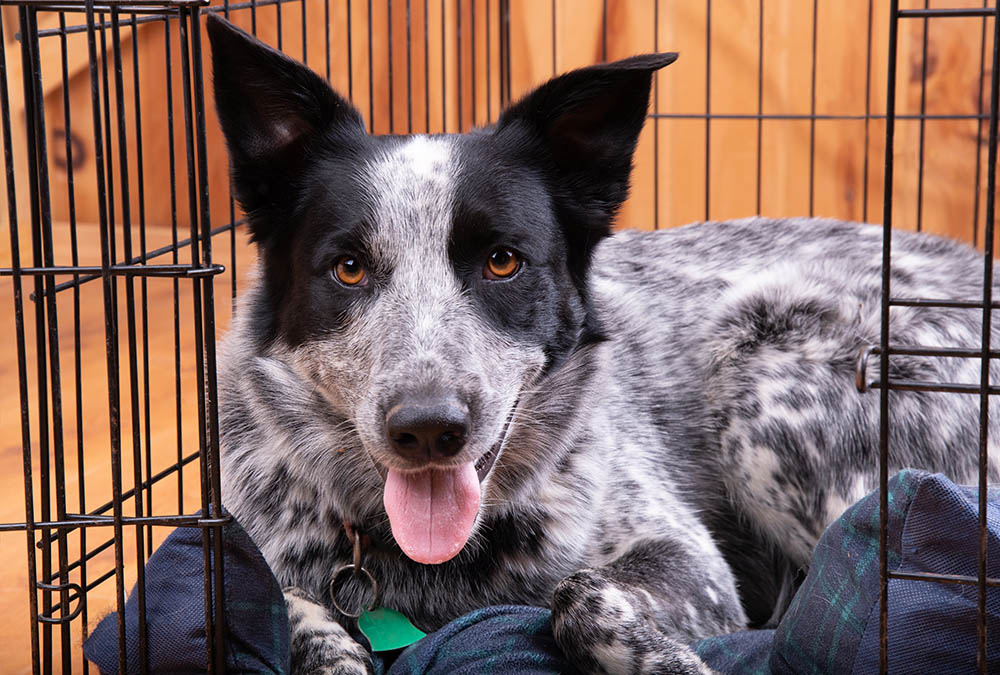
Crate training your dog is beneficial for both you and your pet. Training gives you peace of mind, may make it easier for your to potty train your pup, can help you travel more easily with your pet, and can keep him from becoming too excited when people are over. In the same vein, your dog will have a personal space that helps him feel safe, will be able to be included in family outings more easily, and will feel more comfortable being around people if they are in their own space. Of course, you'll need to train your pup to use his crate, which requires a bit of knowledge.
1. Choose the Right Crate For Your Dog
You won't be able to properly train your dog if you don't have the right type and size for your crate. You'll be able to choose between plastic, metal, or collapsible crates. If you plan to travel a lot, choosing something that folds down is important for ease of use. There is a wide range of sizes as well. The crate you choose for your dog should be large enough for him to stand up and turn around in, but no larger. This makes him feel safer and ensures him that the space is only his own.
2. Spend Time Introducing Your Dog to the Crate
Dogs are social creatures and want to be near their pack, which is your family. This means that you need to place his crate close to where the family spends the most time. Typically, this is the living room or kitchen. Add a soft blanket or a towel to the crate and leave the door open, making sure that it's securely open and won't accidentally hit your dog and startle him.
Use a happy tone of voice while showing your pet the crate. Pat the inside of it, showing him that it's safe to enter. You may also need to add some of his favorite dog treats in the crate, which may help him to want to enter it. If treats won't do the job, you can also try using his favorite toy. Keep in mind that many dogs are shy about change and a crate can be a big one. It can take hours or even days for the introduction process to be complete.
3. Let Your Dog Eat in His Crate
After your dog is used to the crate being in the family space and has been properly introduced to it, it's time to start feeding him meals in the crate. However, it's important not to rush this, so it is a multi-step process. First, feed him at his normal times but place his food bowl near the crate. This will start to create a happy association for him, as he'll begin to associate the crate with meals.
When your dog has eaten his food near the crate once or twice, it is time to move on. Next, you'll want to push the food dish all the way to the back of the crate. Consider whether your dog will actually go into the crate, though. If he won't, place the crate as far in as he will go, which may mean in the middle or even right near the door.
Once you get your dog to a point where he'll readily enter the crate to eat food placed in the back of it, you can begin to close the door while he eats. Open the door right away when he's done for the first couple of times. After he's used to that routine, you can keep him inside for about 10 minutes so he can get used to simply being in the crate without food or treats. Keep in mind that whining may mean you increased the time too quickly, so you may need to let him out and try a shorter time period next time.
4. Keep Your Pet in the Crate For Longer Time Periods
Once your dog is used to eating in his crate, it's time to teach him how to spend time in it without food. Start by using one of his favorite treats to call him over the crate. Teach him a command such as "go to your crate" or "kennel time" to encourage him to enter the crate. Use the same command and inflection in your voice every time to avoid confusion. When he enters the crate, give him the treat and close the door.
Spend 5-10 minutes sitting close to him. Next, spend time in another room for a few minutes. Return, sit again for a bit of time and then let him out of the crate. Do this several times a day, gradually increasing the amount of time that you're out of his sight while he's in the crate. Do this until your dog is able to sit in his crate for 30 minutes at a time without becoming distressed.
Once your dog can sit in his crate for at least 30 minutes, you will be able to leave him for short amounts of time, gradually increasing how long you're out of the home while he's created. Remember, there is no exact science to crate training a dog. Each one is different. Some will pick it up easily while others take more time. As long as you are patient and consistent, you are more likely to be successful at training your dog to use his crate.