Save 15% on your 1st Autoship learn more

 Email us
 Live Chat
 FAQs
FAQs





Introduction
You are likely familiar with the sound of a dog inhaling their dinner in record time. It is a common frustration for many pet owners. When a dog eats too fast, they miss out on the mental satisfaction of the hunt. This is where a snuffle mat becomes a vital tool in your home. These enrichment toys encourage your pet to use their nose to forage for dry food or treats hidden within fabric strips. While you can buy them pre-made, many people prefer to build their own. At BaxterBoo, we know that the secret to a durable, safe, and effective DIY project lies in the foundation. Choosing the right rubber mat for snuffle mat construction determines how long the toy lasts and how much your dog enjoys it. This guide covers how to select the best base, how to assemble your mat, and how to use it safely.
Why the Base Is the Most Important Part
The base of a snuffle mat is the skeleton that holds everything together. If you choose a material that is too flimsy, the mat will bunch up or slide across the floor. A lightweight plastic base might be easy to find, but a heavy rubber mat for snuffle mat projects provides the stability a determined dog needs. When a dog is "snuffling," they are pushing their nose deep into the fabric. A heavier rubber base keeps the mat flat on the ground so the dog can focus on sniffing rather than chasing a sliding toy.
Rubber is also generally more durable than thin plastic. Dogs that are high-energy or prone to chewing can quickly snap thin plastic grids. A sturdy rubber base can withstand the pressure of paws and the tugging of teeth. We always recommend choosing a material that is heavy enough to stay put but flexible enough to be comfortable for the pet.
Safety is another factor to consider when choosing your base. The holes in the mat need to be large enough for you to thread fabric through easily. However, they should not be so large that your dog can get a paw or a tooth stuck in the grid. A rubber mat with a consistent hole pattern is the safest choice for a DIY enrichment toy.
Quick Answer: A rubber sink mat or a heavy-duty anti-fatigue mat is the best base for a snuffle mat. These materials provide the weight and durability needed to keep the mat in place while your dog forages for treats.
Types of Rubber Mats for Snuffle Mat Bases
There are several different types of mats you can use as a foundation. Each has its own benefits depending on the size of your dog and how they play.
Rubber Sink Mats
These are often the most accessible option. You can find them in the kitchen section of most stores. They are usually around 12 by 12 inches, which is a perfect size for a small or medium dog. They are easy to cut if you need a specific shape. Because they are made for kitchen sinks, they are usually water-resistant and easy to wipe down.
Anti-Fatigue Mats
For owners of large breeds like Labradors or German Shepherds, a sink mat might be too small. Anti-fatigue mats are much larger and heavier. These are the mats often used in workshops or kitchens to provide cushioning for people standing for long periods. They feature large, uniform holes and a very heavy weight. This ensures that even a 70 pound dog cannot easily flip the mat over.
Heavy-Duty Doormats
Some outdoor doormats are made of heavy rubber with a honeycomb or grid pattern. These can work well, but you must ensure the rubber is clean and free of any strong chemical odors. Since your dog will have their nose pressed against this material for 15 minutes at a time, the rubber should be high-quality and non-toxic.
Benefits of Rubber over Plastic
- Stability: Rubber grips the floor better than plastic.
- Weight: It prevents the dog from picking up and shaking the mat.
- Flexibility: Rubber mats are less likely to crack or shatter.
- Comfort: A softer rubber is gentler on a dog's nose than hard plastic edges.
Key Takeaway: Match the weight and size of your rubber base to your dog's strength. Use sink mats for smaller pets and heavy-duty workshop mats for larger, more enthusiastic sniffers.
Preparing Your Materials
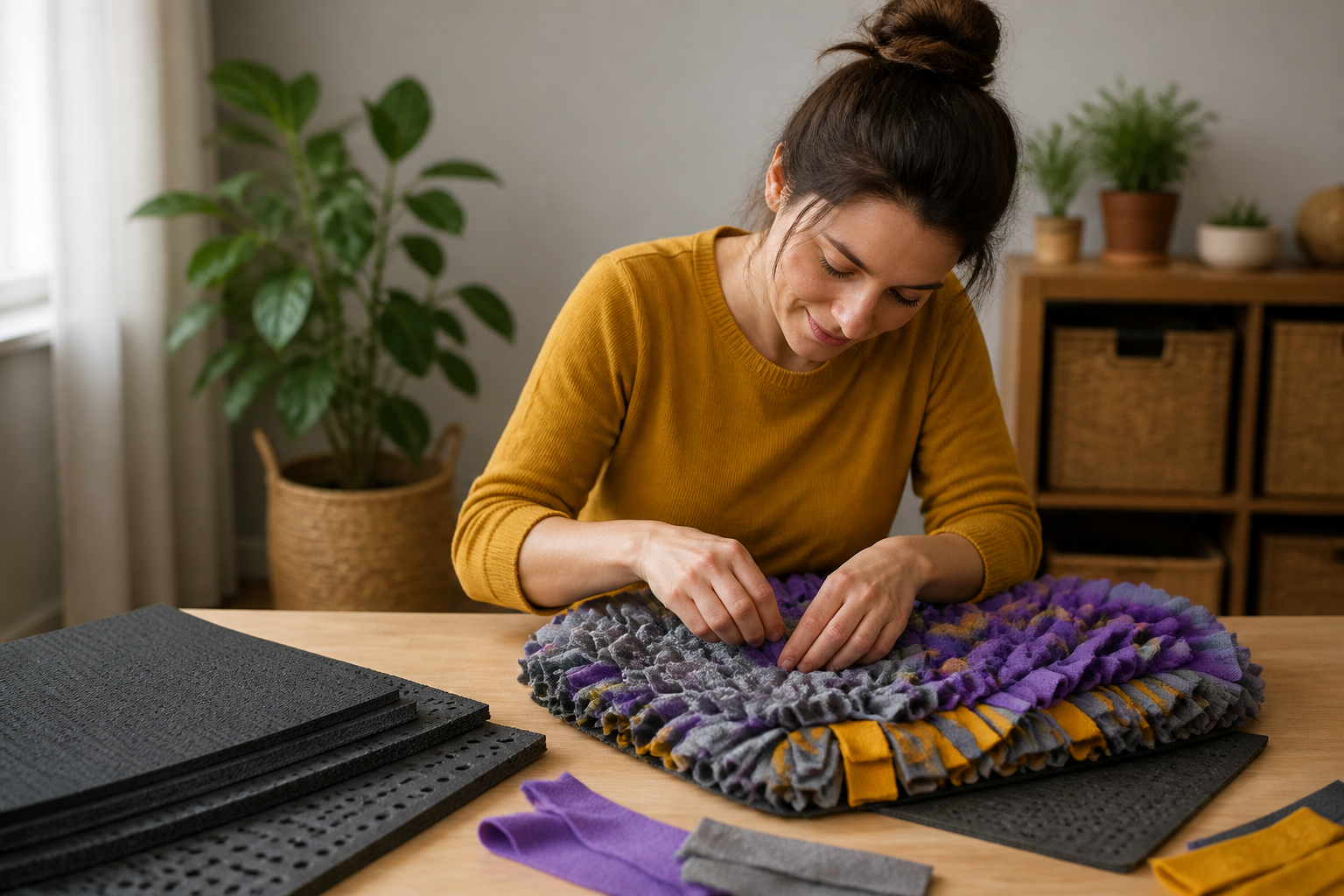
Once you have selected your rubber mat for snuffle mat construction, you need to gather your other supplies. The most common fabric used for the "grass" of the mat is fleece. Fleece is an ideal material because it does not fray when you cut it. It is also soft on the dog's face and holds its shape well even after being tied into tight knots.
You will need about one to two yards of fleece depending on the size of your mat. It is often helpful to use two or three different colors. This does not matter to the dog, as they are using their nose, but it helps you see where you have already tied strips.
Checklist for Success:
- One heavy rubber mat with holes
- One to two yards of anti-pill fleece
- Fabric scissors or a rotary cutter
- A ruler or measuring tape
- High-value dry dog treats or kibble
When cutting your fleece, aim for strips that are about one inch wide and six to eight inches long. If the strips are too short, they will be very difficult to tie. If they are too long, the mat will be too "floppy," and the treats will simply fall to the bottom where the dog cannot reach them easily.
Step by Step Assembly Guide
Building a snuffle mat is a repetitive process. It is a great activity to do while listening to a podcast or watching a movie. Expect the process to take anywhere from one to three hours depending on the size of your base.
Step 1: Cut your strips
Lay your fleece out and cut it into strips. If you are using a standard 12 by 12 sink mat, you will likely need between 150 and 200 strips. Cutting them all at once makes the tying process go much faster.
Step 2: Start at a corner
Take one strip of fleece. Feed one end through a hole in the rubber mat. Feed the other end through the adjacent hole. Pull both ends up so they are on the top side of the mat.
Step 3: Tie the knot
Tie the two ends of the fleece strip into a single, firm knot. You do not usually need to double knot it unless your fleece is very thin. The goal is for the ends of the fabric to stand up like blades of grass.
Step 4: Fill the rows
Continue this process across the first row. Once the horizontal rows are filled, some people like to go back and tie strips vertically across the same holes. This creates a much denser mat that hides treats more effectively.
Step 5: Check the density
Once you have finished, flip the mat over. You should not see much of the rubber mat through the fleece. If you see large gaps, add more strips. A dense mat makes the "work" more rewarding for your dog.
Bottom line: Tying fleece strips to a rubber base is a simple but time-consuming process that results in a durable, long-lasting enrichment toy.
Introducing the Snuffle Mat to Your Dog
The first time you give your dog the mat, they might not understand what to do. Some dogs may try to pick the mat up or chew on the fleece. It is important to guide them so they understand the goal is sniffing, not destroying.
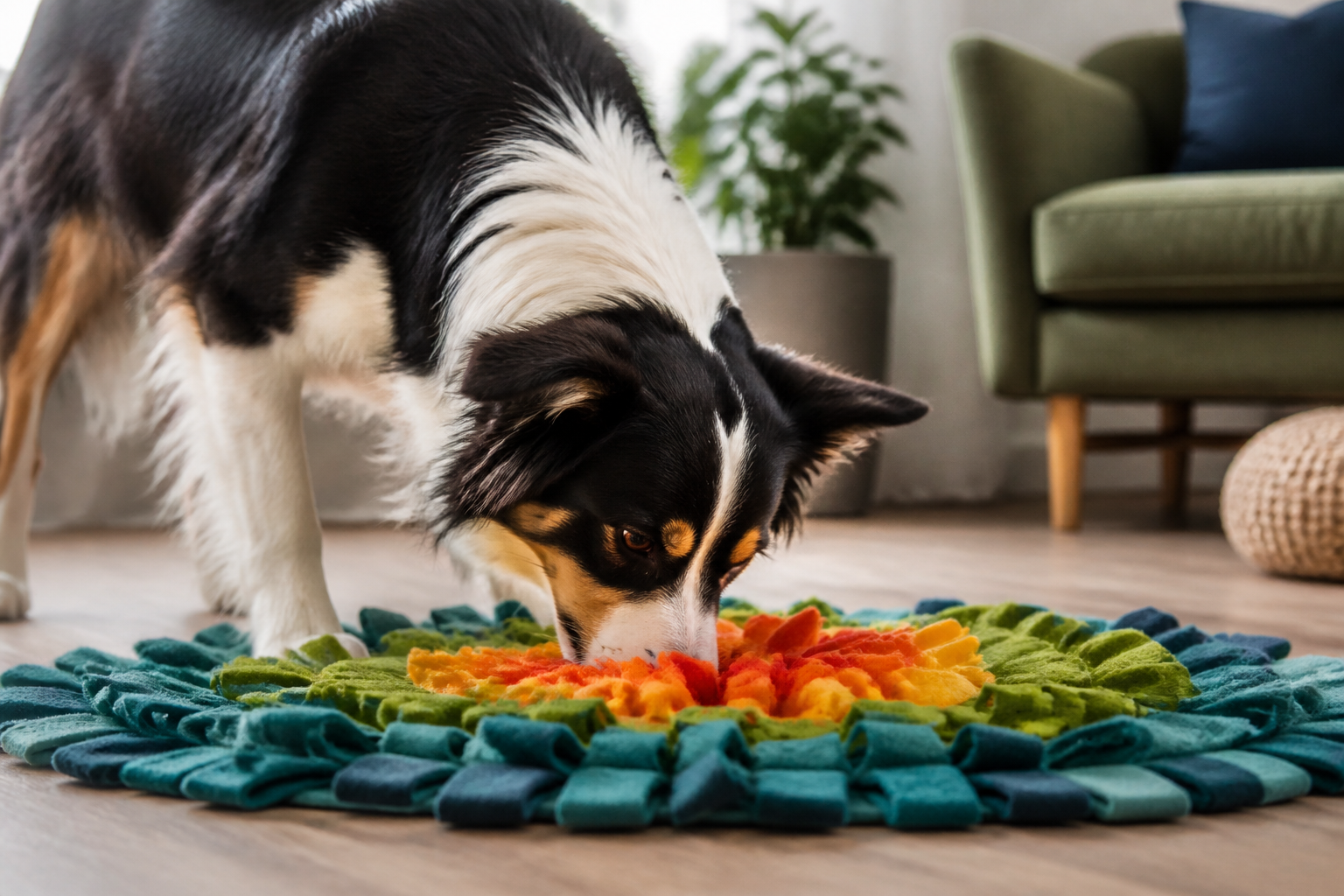
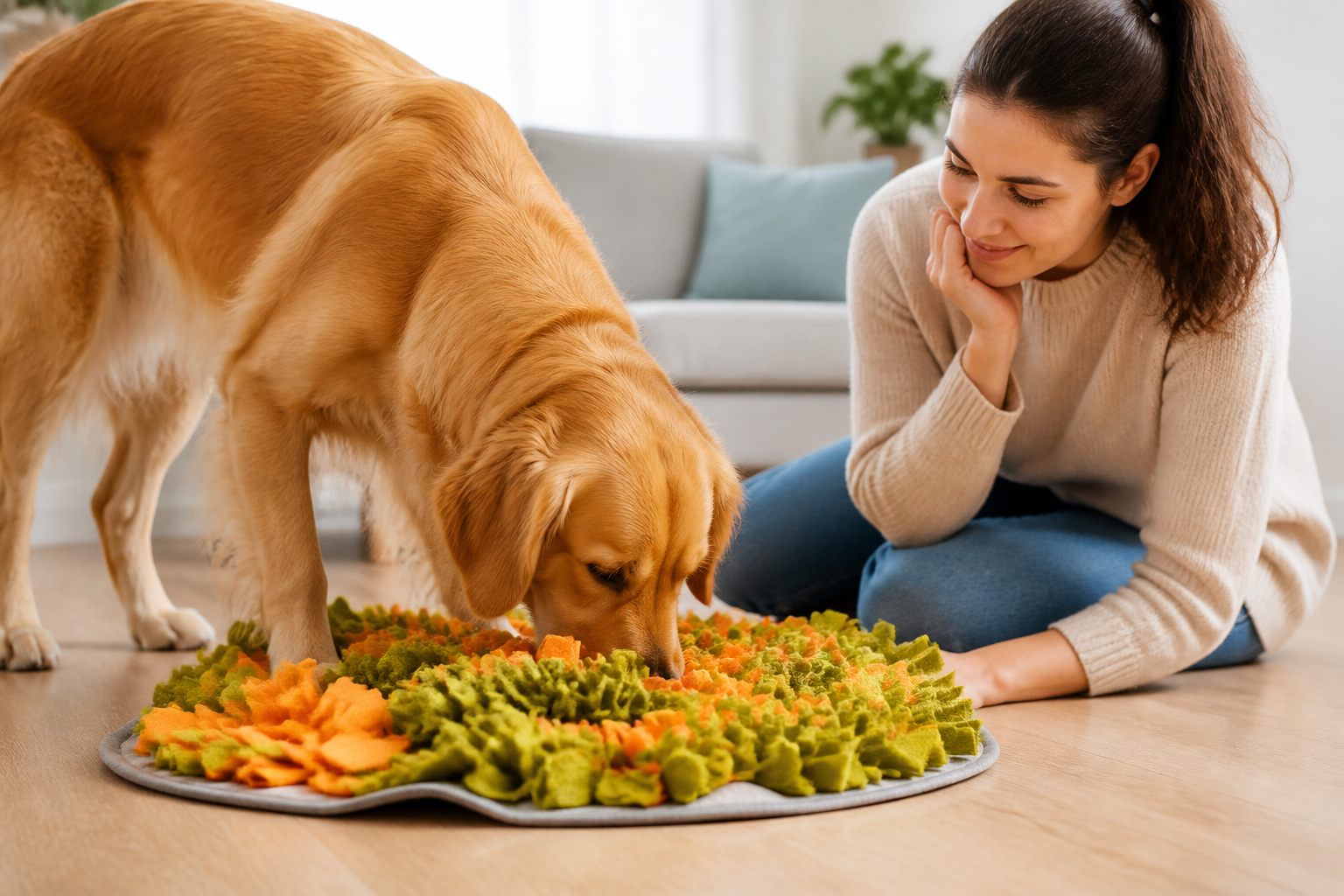
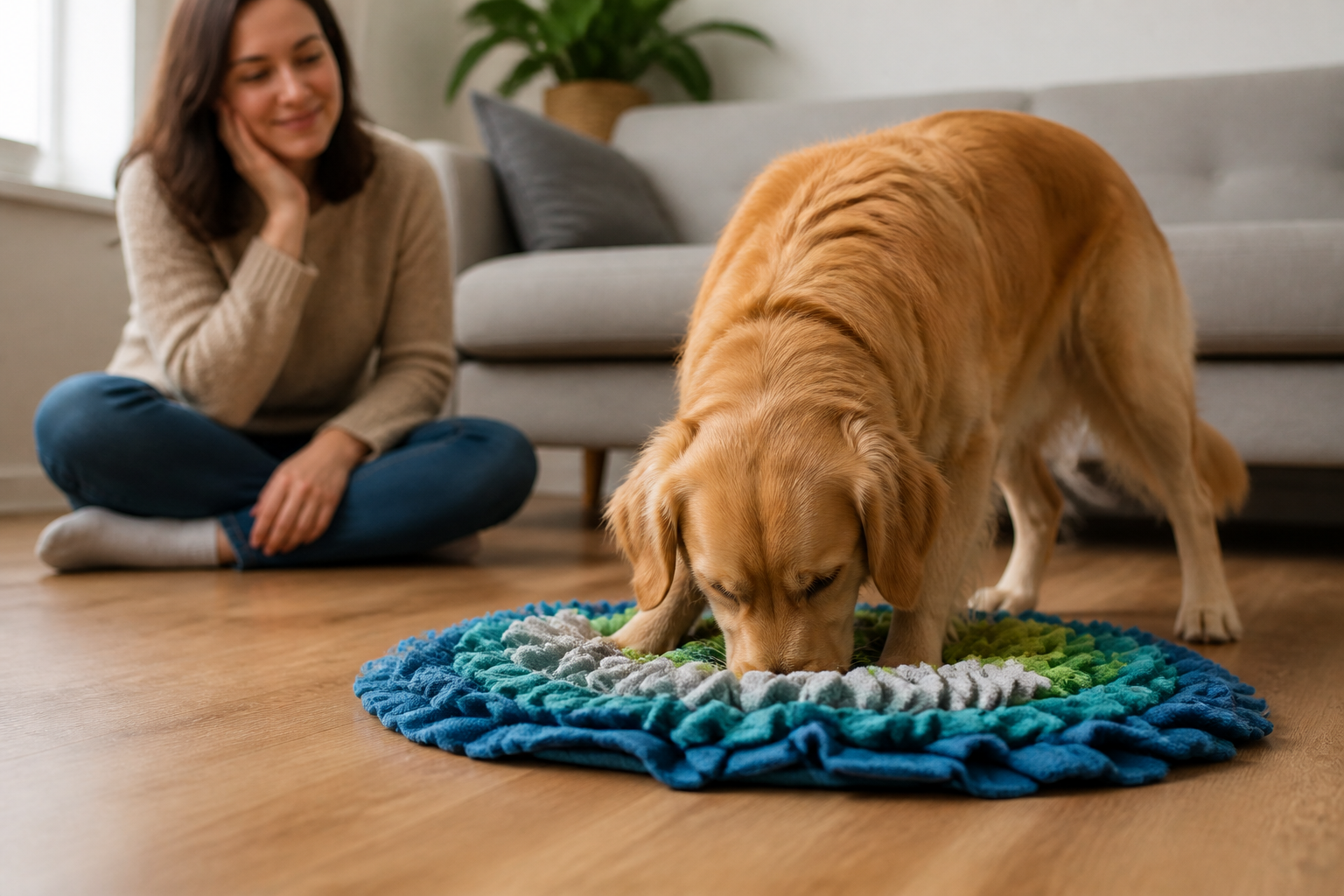
Start by placing a few treats directly on top of the fleece. Let your dog see you put them there. Use the command "Find it" or "Search." Once they eat the visible treats, they will naturally begin to sniff for more that have fallen deeper into the fabric.
As your dog becomes an expert, you can hide the treats deeper. You can even tuck them inside the folds of the fleece strips. This increases the difficulty and keeps them engaged for longer. If your dog starts to get frustrated and tries to dig at the mat with their paws, encourage them to use their nose instead.
Vet Tip: Always supervise your dog when they are using a snuffle mat. While rubber and fleece are durable, a determined chewer could ingest pieces of fabric or rubber. If your dog starts to chew the mat instead of sniffing, take it away and try again later. If you suspect your pet has swallowed any part of the toy, contact your veterinarian immediately.
For more ideas, see these indoor enrichment activities for dogs.
Cleaning and Maintenance
Because your dog's nose and saliva will be all over the mat, it will get dirty over time. A rubber mat for snuffle mat bases is easier to clean than a cardboard one, but you still need to be careful.
Most DIY snuffle mats should be hand washed. Fill a bathtub or a large sink with warm water and a small amount of pet-safe, unscented detergent. Submerge the mat and swish it around. Avoid using heavy fragrances, as your dog's sense of smell is much stronger than yours. A strong perfume smell can make the mat unpleasant for them to use.
Rinse the mat thoroughly with clean water. To dry it, lay it flat on a towel or hang it outside. Do not put a rubber-based snuffle mat in the dryer. The heat can cause the rubber to warp or become brittle. It may take a full day for the dense fleece to dry completely.
- Wash the mat every two weeks if used daily.
- Inspect the rubber base for cracks or loose pieces after every wash.
- Ensure all fleece knots remain tight.
- Shake out the mat after every use to remove leftover crumbs.
Managing Weight and Slow Feeding
Many owners use snuffle mats as a way to feed entire meals. If your dog is on a weight management plan, a snuffle mat is a fantastic tool. It turns a thirty-second meal into a fifteen-minute activity. This helps the dog feel more satisfied with their portion.
If your dog requires a specific diet for health reasons, we can help. Our pet pharmacy offers a range of prescription pet foods and FDA-approved medications through our partnership with Pet's Choice. If your veterinarian has prescribed a specific diet to manage obesity or digestive issues, you can still use that kibble in a snuffle mat. This allows you to follow medical advice while still providing mental enrichment.
Using a snuffle mat for mealtime is especially helpful for senior dogs who may have decreased mobility. It provides mental exercise without requiring them to run or jump. It is a low-impact way to keep their brain sharp.
Advanced Enrichment Ideas
Once your dog has mastered the basic snuffle mat, you can vary the experience. You do not have to stick to just dry kibble. You can use small pieces of dehydrated meat or broken-up dental treats.
We carry a wide variety of high-quality treats that are perfect for hiding in fleece. Look for treats that are "dry" to the touch. Greasy or wet treats will make the mat messy and difficult to clean. Brands like Stella & Chewy's or Vital Essentials offer freeze-dried options that are aromatic enough for the dog to find but clean enough for your mat.
You can also change the environment. Place the mat in different rooms or even outside on a patio. The change in scenery adds another layer of excitement to the activity. If you have multiple dogs, always give them their mats in separate areas to prevent any resource guarding or tension.
Why Quality Gear Matters
At BaxterBoo, we have been helping pet owners since 2006. We believe that every product should be handpicked with care. Whether you are buying a pre-made enrichment toy or building one yourself with a rubber mat for snuffle mat projects, quality is the priority.
Our team is made of people who genuinely love pets. We know that a happy dog is one that is both physically and mentally active. By taking the time to build a high-quality snuffle mat, you are investing in your dog's long-term well-being. This DIY project is a simple way to show your pet you care about their natural instincts.
If you find that your dog is a "super chewer" who destroys even the toughest DIY projects, you might want to look into our dog toys designed for active play. We carry brands like Kong and West Paw that are designed for the most aggressive players. Sometimes a combination of DIY mats and professional-grade rubber toys is the best approach for a high-energy household.
Health Benefits of Sniffing
Sniffing is a natural self-soothing behavior for dogs. When a dog engages in "nose work," their heart rate actually slows down. It is a form of decompression. This is why snuffle mats are often recommended for dogs with anxiety or those recovering from surgery who need to stay calm.
Using a rubber mat for snuffle mat bases ensures that this soothing activity remains safe. A stable base prevents the dog from getting frustrated by a sliding toy. When the activity is smooth and rewarding, the dog gets the full neurological benefit of the work.
If your dog struggles with high levels of anxiety, enrichment toys are just one part of the puzzle. You should always consult with your veterinarian to see if there are underlying health issues or if a calming supplement might be appropriate. Our pharmacy carries several options for anxiety management that can be used alongside behavioral enrichment.
Building Your Pet's Enrichment Kit
A snuffle mat is a great start, but it should be part of a larger enrichment routine. Think of it like a puzzle for a human. You wouldn't want to do the same puzzle every single day for a year. Rotating your dog's toys keeps them from getting bored.
You can use the same rubber mat for snuffle mat technique to create different shapes. You could make a long "snuffle runner" for a hallway or a small "snuffle ball." The more variety you provide, the more engaged your pet will be.
Remember to sign up for our MVP Rewards program when you stock up on fleece or treats. You can earn up to 5% back on your purchases. This makes it easier to keep your pet's enrichment kit fresh and exciting. If you find a treat your dog absolutely loves for their snuffle mat, consider our Autoship programme. You will save on your first order and ensure you never run out of foraging supplies.
Key Takeaway: Snuffle mats are a low-cost, high-reward enrichment tool. Using a heavy rubber base and high-quality fleece ensures the toy is safe, durable, and effective for daily mental exercise.
Conclusion
Creating a DIY snuffle mat is one of the most rewarding projects you can do for your pet. By choosing a sturdy rubber mat for snuffle mat construction, you ensure that the toy stays in place and lasts for years. This simple tool provides essential mental stimulation, slows down fast eaters, and helps anxious dogs relax.
- Choose a heavy rubber base for stability.
- Use anti-pill fleece for the "grass" strips.
- Tie knots tightly to create a dense sniffing surface.
- Supervise your pet to ensure safety.
At BaxterBoo, we are here to support you in every stage of pet ownership. From providing the best treats for foraging to offering FDA-approved medications through our pharmacy, we want your pet to thrive. Start your next DIY project today and watch your dog's confidence grow.
Bottom line: A well-constructed snuffle mat with a rubber base is a durable and essential tool for any dog's mental health and mealtime routine.
FAQ
What is the best rubber mat for snuffle mat DIY projects?
The best base is typically a rubber sink mat or a heavy-duty anti-fatigue mat with pre-drilled holes. These provide the necessary weight to keep the mat from sliding while being durable enough to withstand tugging. Avoid thin plastic grids that can snap and create sharp edges.
Can I wash a snuffle mat with a rubber base?
Yes, you can wash these mats, but hand washing is highly recommended. Submerge the mat in warm, soapy water using a pet-safe detergent and then air dry it completely. Placing a rubber mat in the washing machine or dryer can cause the base to warp or break.
How many fleece strips do I need for a 12x12 rubber mat?
For a standard 12 by 12 inch sink mat, you will usually need between 150 and 200 fleece strips. This allows you to fill every hole and potentially double up on rows to create a dense surface. A denser mat is better at hiding treats and providing a challenge for your dog.
Is a snuffle mat safe for all dogs?
Most dogs can safely use a snuffle mat, but supervision is always required. If your dog is a known "destroyer" who tries to eat fabric or rubber, the mat may not be suitable for them. Always inspect the mat for loose strips or cracked rubber before and after each use to prevent accidental ingestion.