
 Save 15% on your 1st Autoship learn more

 Email us
 Live Chat
 FAQs





Introduction
You are relaxing on the couch with your cat when you notice small white flakes scattered across their lower back. As you pet them, the flakes become more obvious, especially near the base of the tail. While you might assume your cat just needs a quick brush, dandruff in this specific area often points to deeper issues like mobility struggles, skin sensitivity, or environmental changes. At BaxterBoo, we know that a healthy coat is a sign of a happy cat, and we are here to help you understand what those flakes are telling you. This post covers the common causes of feline dandruff on the lower back, how to identify when it is a medical concern, and the best ways to restore your cat’s coat to its natural shine. Feline dandruff is manageable when you address the root cause with the right tools and care.
Quick Answer: Cat dandruff on the lower back is often caused by a cat’s inability to reach that area for grooming, frequently due to obesity or arthritis. It can also stem from dry air, poor nutrition, or parasites like mites and fleas.
Understanding Feline Dandruff vs. Dander
It is common to use the terms dandruff and dander interchangeably, but they are not the same thing. Every cat has dander. These are microscopic skin cells that all animals with fur or feathers shed naturally. You cannot see dander with the naked eye, but it is the primary carrier of the proteins that trigger allergies in humans.
Dandruff consists of much larger, visible white flakes. These are dead skin cells that have clumped together. When you see these flakes on your cat’s lower back, it means the normal process of skin shedding has been disrupted. Instead of the cells falling away unnoticed during daily grooming, they are building up and becoming trapped in the fur.
Dandruff can be dry or oily. If the skin is too dry, the flakes will be thin and dusty. If the skin is producing too much oil, which is known as seborrhea, the flakes might look yellowish and feel greasy to the touch. Both types indicate that the skin barrier is not functioning perfectly.
Cat Skin & Coat Care













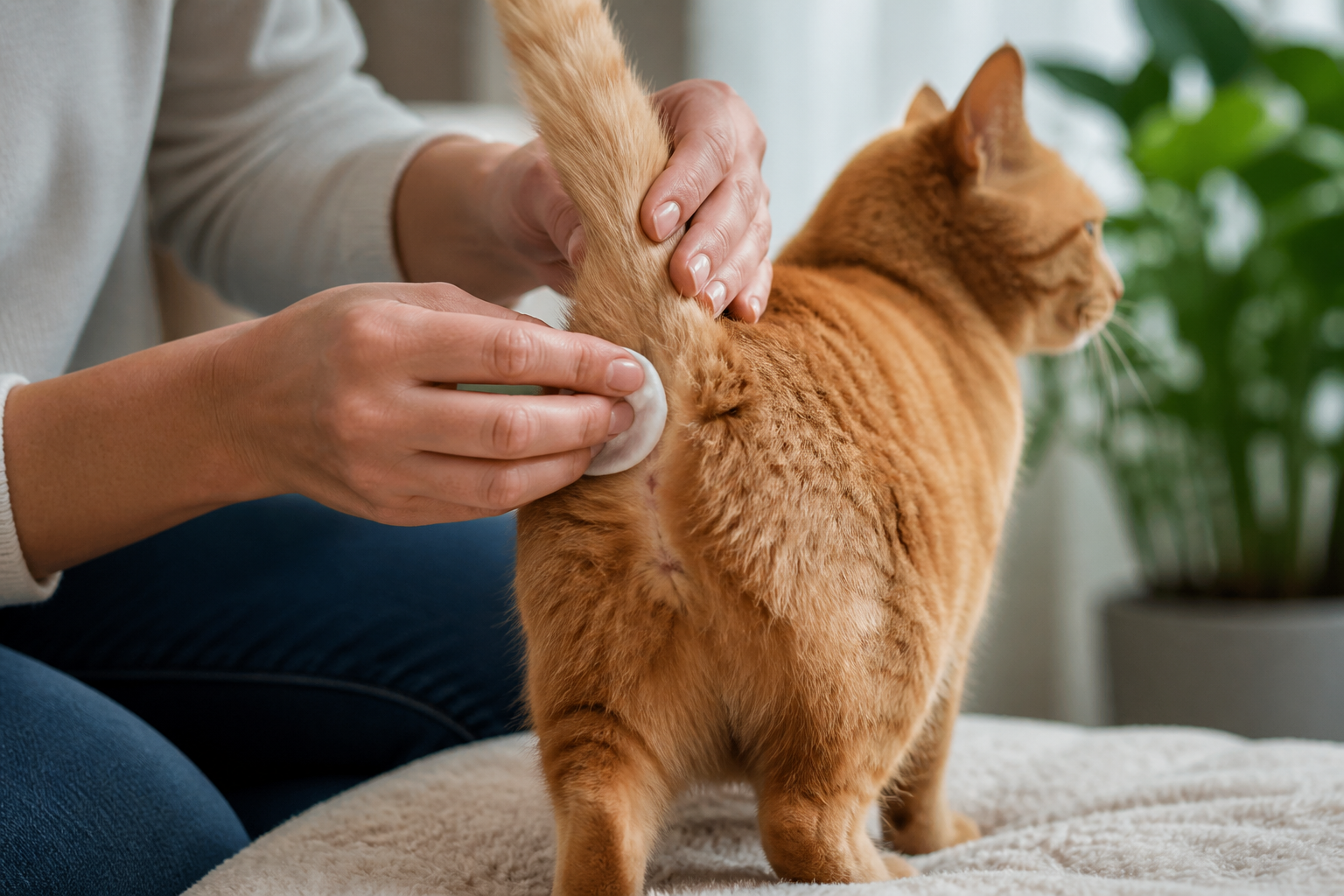
Why the Lower Back and Tail Base?
You may wonder why the dandruff seems to concentrate right above the tail. This area is the most common spot for "grooming gaps." A healthy, flexible cat spends a large portion of their day cleaning themselves. They use their tongue to strip away loose hair and dead skin.
The lower back is a difficult area for many cats to reach, especially as they age or if they carry extra weight. If a cat cannot comfortably twist their body to reach the base of their spine, that area remains untouched. Skin cells accumulate, natural oils become trapped, and dandruff begins to show.
This specific location is also a hotspot for certain parasites. Fleas often congregate near the base of the tail because it is warm and protected. The irritation from flea bites or other pests can cause the skin to flake and become inflamed. For additional prevention ideas, read how flea collars work.
Key Takeaway: Concentrated dandruff on the lower back is a primary indicator that a cat is physically unable to groom that specific spot effectively.
Common Causes of Flaky Skin in Cats
Dandruff is a symptom rather than a disease itself. To get rid of the flakes, you have to identify what is causing the skin to react. Several factors typically contribute to this condition.
Mobility and Weight Issues
Obesity is one of the leading causes of dandruff on the lower back. If a cat has a larger midsection, they physically cannot reach around to groom their rear end. Similarly, senior cats often suffer from arthritis or joint stiffness. The act of twisting to clean the lower back can be painful, so they simply stop doing it. In these cases, the dandruff is a sign of a mobility problem.
For more guidance about healthy weight management, read how to help an indoor cat lose weight.
Environmental Dryness
Low humidity is a major factor, especially during the winter months. When you turn on the heater in your home, the air becomes very dry. This saps the moisture from your cat's skin. Without proper hydration in the air, the skin becomes brittle and flakes off easily. This is often a seasonal issue that improves when the weather turns humid.
Nutritional Deficiencies
The skin and coat require significant amounts of protein and healthy fats to stay healthy. Specifically, Omega-3 and Omega-6 fatty acids are vital for maintaining the skin's moisture barrier. If a cat is eating a low-quality diet or one that is not properly balanced, their coat will be the first thing to show signs of neglect. The hair may become dull, and the skin will likely start to flake.
Brands like Royal Canin offer cat food formulas for different nutritional needs.
Parasites and the "Walking Dandruff" Mite
Not all white flakes are dead skin. Sometimes, the "dandruff" you see is actually alive. Cheyletiella mites are small parasites that live on the surface of the skin. They are often called walking dandruff because when you look closely, you can see the white specks moving across the fur.
These mites are highly contagious between pets. They cause intense itching and a significant amount of scaling. If you see movement or if your cat is scratching more than usual, a vet visit is necessary. Our pet pharmacy for cats carries prescription treatments for various parasites.
Fleas are another major culprit. Some cats have a condition called Flea Allergy Dermatitis. A single flea bite can cause a massive skin reaction. This leads to redness, scabs, and heavy dandruff, especially around the tail base. Consistent, year-round flea prevention is the best way to keep this under control. You can also browse our cat flea and tick collection.
Vet Tip: If you notice the "flakes" on your cat are moving or if there are small black specks (flea dirt) present, consult your veterinarian for a professional diagnosis and a prescription parasite treatment plan.
Health Conditions That Cause Skin Changes
Sometimes dandruff is a sign of an internal health struggle. When the body is stressed by a chronic condition, it often diverts nutrients away from the skin to more vital organs.
- Diabetes and Hyperthyroidism: These hormonal imbalances are common in middle-aged and senior cats. They often cause changes in thirst, appetite, and skin health. A cat with these conditions may develop a greasy, flaky coat.
- Dental Disease: If a cat’s mouth is painful, they will stop grooming. Licking requires a healthy mouth, and if they have infected gums or broken teeth, the friction of their tongue on their fur may be too much to bear.
- Skin Infections: Bacterial or fungal infections, such as ringworm, can cause patches of flaky skin and hair loss. Ringworm is especially important to catch early because it can spread to humans and other pets in the house.
How to Help Your Cat at Home
If your veterinarian has ruled out serious medical issues, you can take several steps at home to manage the flakes. These strategies focus on improving the skin's environment and supporting your cat’s grooming routine.
Step 1: Assist with Grooming
Since the lower back is hard to reach, you need to step in as the primary groomer. Use a high-quality brush or comb to gently remove loose fur and flakes. Our cat grooming supplies include brushes, combs, wipes, and other helpful tools.
- Use a slicker brush for long-haired cats to reach the undercoat.
- Use a fine-toothed comb for short-haired cats to lift flakes away from the skin.
- Groom daily for 5 to 10 minutes to distribute natural oils across the coat.
Step 2: Improve Nutrition
Look for foods that prioritize skin health. Brands like Royal Canin, Farmina, and Hill’s Science Diet offer formulas specifically designed for skin and coat support. These often contain higher levels of Omega-3 fatty acids. You can also add a liquid fish oil supplement to their wet food. Supplements from brands like Zesty Paws or Cosequin can help rebuild the skin's moisture barrier from the inside out.
Step 3: Manage the Environment
If your home is dry, especially in the winter, a humidifier can make a massive difference. Increasing the moisture in the air helps prevent the skin from drying out in the first place. Ensure your cat has access to plenty of fresh water at all times. Hydrated cats have much healthier skin than those who are chronically dehydrated.
Step 4: Weight and Pain Management
If obesity is the reason your cat cannot groom, talk to your vet about a weight loss plan. We carry prescription weight management foods in our pharmacy that help cats lose weight safely without losing muscle. For senior cats with arthritis, talk to your vet about joint supplements or pain medications. When a cat feels better, they are much more likely to resume their normal grooming habits.
Bottom line: Helping your cat groom and improving their internal nutrition are the most effective ways to reduce non-medical dandruff.
When to See the Veterinarian
While a few flakes might not be an emergency, you should never ignore persistent dandruff. It is often the first visible sign that something is wrong. You should book an appointment if you notice any of the following symptoms alongside the dandruff:
- Redness or Sores: If the skin under the flakes looks raw, red, or has scabs, there is likely an infection or an allergy present.
- Hair Loss: Patchy hair loss or thinning fur often points to parasites like mites or ringworm.
- Behavioral Changes: If your cat is lethargic, hiding, or has a change in appetite, the dandruff is likely a side effect of a systemic illness.
- Excessive Itching: If your cat is constantly biting or scratching at their lower back, they are in discomfort and need professional help.
Your vet may perform a skin scraping to look for mites or a blood test to check for thyroid issues or diabetes. Getting a clear diagnosis early can prevent a minor skin issue from turning into a chronic health problem.
Recommended Grooming Tools
Having the right gear makes a difference. We stock a wide variety of grooming supplies at BaxterBoo that are perfect for managing flaky skin.
| Tool Type | Best For | Purpose |
|---|---|---|
| Slicker Brush | Long-haired cats | Removes trapped flakes in the undercoat. |
| Rubber Grooming Mitt | Sensitive cats | Gently massages skin and moves natural oils. |
| Fine-Toothed Comb | All hair lengths | Best for identifying fleas and lifting dandruff. |
| Waterless Shampoo | Cats who hate baths | Cleans the coat and adds moisture without the stress of a tub. |
Bathing a cat is often stressful and can actually dry out the skin further if done too often. Unless your vet prescribes a medicated shampoo for an infection, stick to waterless foams or grooming wipes. These allow you to clean the lower back and tail base without stripping away the essential oils your cat’s skin needs.
Conclusion
Cat dandruff on the lower back is more than just a cosmetic flaw. It is a helpful signal that your cat needs a bit of extra support, whether that means a new grooming routine, a change in diet, or a visit to the vet for mobility help. By paying attention to where the flakes appear and watching for other signs of discomfort, you can catch health issues early.
- Check for parasites if you see "walking" flakes or black specks.
- Help your cat groom the hard-to-reach areas on their lower back.
- Support skin health with Omega-3 fatty acid supplements.
- Use a humidifier to combat dry winter air.
Key Takeaway: Most cases of cat dandruff can be resolved by addressing grooming accessibility, improving nutrition, and maintaining a consistent parasite prevention schedule.
If your cat's dandruff persists or is accompanied by itching and hair loss, the next best step is to consult your veterinarian. You can then fulfill any necessary prescriptions for medicated shampoos or parasite preventatives through the our pet pharmacy.
FAQ
Why does my cat only have dandruff on their lower back?
The lower back and tail base are the hardest areas for a cat to reach during grooming. If your cat is overweight, senior, or has arthritis, they may lack the flexibility to clean these spots, allowing dead skin and oils to build up into visible flakes.
Can I use human dandruff shampoo on my cat?
No, you should never use human dandruff shampoo on a cat unless specifically instructed by a veterinarian. Human products often contain ingredients like zinc pyrithione or salicylic acid that can be toxic to cats if licked off the fur. Always use products formulated specifically for feline skin.
Is cat dandruff contagious to humans?
Regular dandruff caused by dry skin or poor grooming is not contagious. However, if the "dandruff" is actually caused by Cheyletiella mites (walking dandruff) or ringworm, those conditions can be passed to humans and other pets. If you notice skin irritation on yourself or other family members, see a doctor and a vet immediately.
Will a bath help my cat's dandruff?
Bathing can help remove existing flakes, but it often does not solve the underlying problem and can actually make dry skin worse if done too frequently. Instead of a full bath, try using a grooming wipe or a waterless shampoo foam on the affected area to clean the fur without causing extra stress or dryness.






- Site & Contents BaxterBoo.com. BaxterBoo is located in the United States.
- Privacy & Security
- Terms of Use
- Accessibility Statement
