Save 15% on your 1st Autoship learn more

 Email us
 Live Chat
 FAQs
FAQs





Introduction
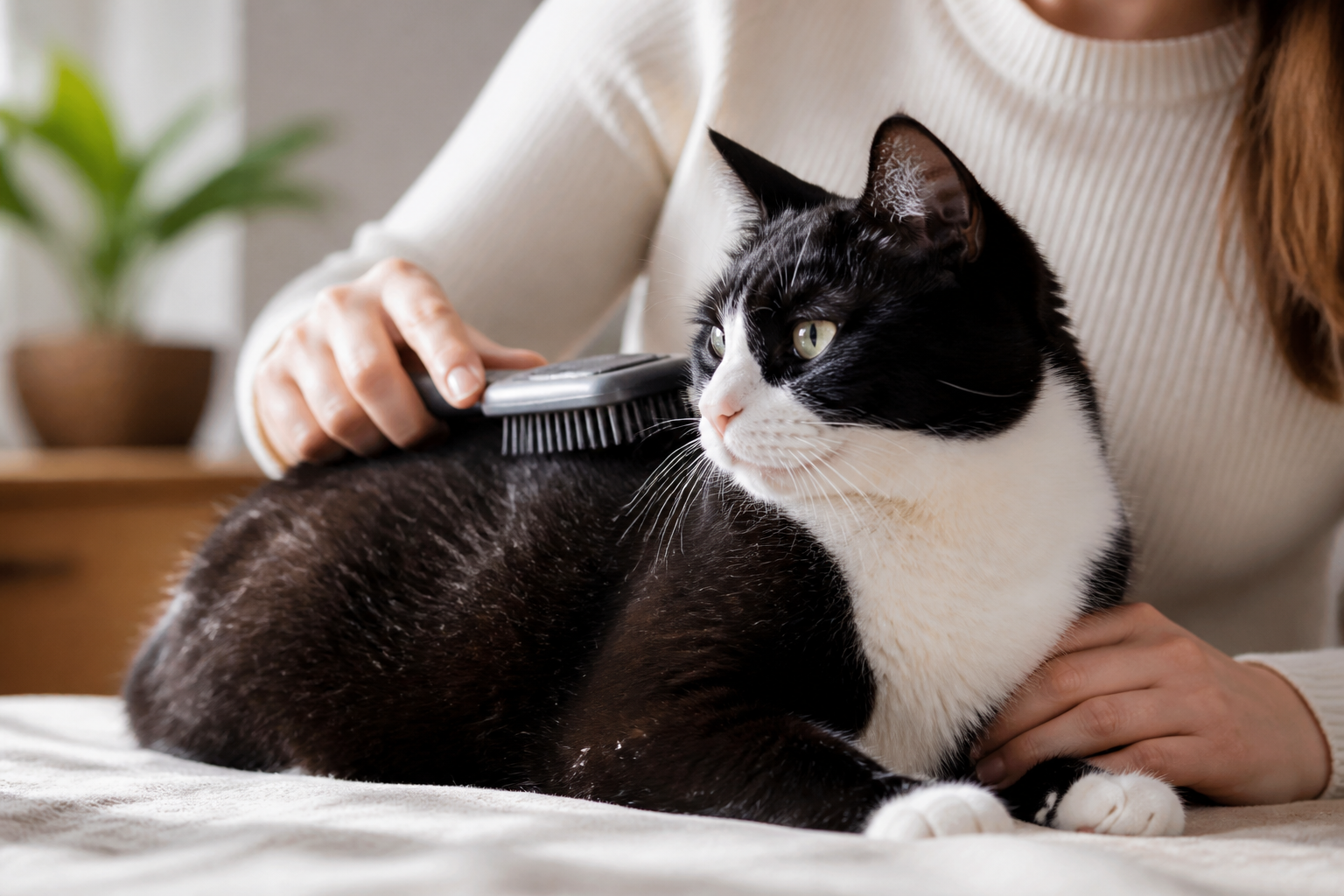
You are relaxing on the sofa with your cat when you notice a dusting of white flakes across their lower back. It looks like a light sprinkle of salt against their dark fur. This sight is common for many pet owners, but it often leaves them wondering if their cat is itchy or uncomfortable. At BaxterBoo, we understand that a healthy coat is more than just a matter of vanity. It is a sign of your cat's internal wellness. This post covers the best ways to use cat dandruff oil, the difference between dry skin and medical issues, and how to restore your pet's glossy shine. We will explore how targeted supplements and topical care can help your cat feel their best.
Understanding Feline Dandruff
Dandruff is not a specific disease. It is a symptom of an underlying issue. In cats, dandruff consists of dead skin cells that have clumped together and become visible to the naked eye. While every cat sheds skin cells naturally, a healthy cat usually grooms these away before you ever see them. When you start seeing flakes, it means the skin is shedding too fast, or the cat is not grooming effectively.
Dandruff vs. Dander
It is important to distinguish between dandruff and dander. Every cat produces dander. Dander consists of microscopic skin cells and proteins from saliva that shed naturally. This is what usually triggers human allergies. You cannot see dander. Dandruff, however, is very visible. It appears as white or gray flakes on the fur, bedding, or your clothes after a cuddle session.
Signs of an Unhealthy Coat
While flakes are the most obvious sign, they are rarely the only one. You might notice your cat's fur feels greasy or unusually coarse. The skin underneath might look red or irritated. If the flaking is localized to one spot, such as the base of the tail, it might suggest a specific problem like a flea allergy or a grooming limitation.
Quick Answer: Cat dandruff oil typically refers to oral fish oil supplements or topical skin conditioners. These products provide essential fatty acids that strengthen the skin barrier and reduce flaking caused by dryness.
Why Oils Matter for Cat Skin Health
The skin is the largest organ in a cat's body. It acts as a primary defense against the outside world. To stay healthy, the skin needs a specific balance of lipids, or oils. These oils create a waterproof seal that keeps moisture in and allergens out. When this oil balance is disrupted, the skin becomes brittle and flakes off. For additional options, explore our cat skin and coat care collection.
The Science of the Skin Barrier
A cat's skin cells are held together by a "mortar" of fats. If your cat's diet lacks these fats, the barrier weakens. This leads to something called transepidermal water loss. Essentially, the moisture inside the skin evaporates into the air. This leaves the skin dry, itchy, and prone to dandruff. Adding specific oils to your cat's routine helps rebuild this barrier from the inside out.
Omega-3 and Omega-6 Fatty Acids
Not all fats are created equal. Omega-6 fatty acids are essential for growth and skin integrity. Most commercial cat foods are rich in Omega-6. However, Omega-3 fatty acids are often lacking. Omega-3s, like those found in fish oil, have anti-inflammatory properties. They help calm the skin and reduce the urge to scratch. Balancing these two types of fats is the secret to a flake-free coat. You can compare available options in our cat healthcare selection.
Key Takeaway: Proper skin hydration depends on a healthy lipid barrier. Supplementing with Omega-3 oils helps seal in moisture and reduces the inflammation that causes excessive skin shedding.
Types of Cat Dandruff Oil
When looking for a cat dandruff oil, you have two main choices: oral supplements or topical applications. Each has a different role in your cat's care routine.
Oral Fish Oil Supplements
Oral supplements are the most common way to address dry skin. These are usually derived from cold-water fish like salmon, pollock, or sardines. Brands like Zesty Paws offer salmon oil that can be pumped directly onto your cat's food.
- Salmon Oil: Highly palatable and rich in EPA and DHA.
- Pollock Oil: A great alternative for cats who might find salmon too rich.
- Krill Oil: Highly concentrated, meaning you can use smaller doses.
Topical Oils and Sprays
Topical treatments work from the outside in. These are often sprays or spot-on treatments that contain essential oils or fatty acids. They provide immediate relief for localized dryness. Some owners use a tiny amount of coconut oil, but specialized feline skin conditioners are generally better. They are formulated to be safe if the cat licks them off during grooming.
Vet Tip: Always consult your veterinarian before adding a new oil supplement to your cat's diet. While fish oil is generally safe, excessive amounts can interfere with blood clotting or lead to weight gain if not balanced correctly.
Common Causes of Flaky Skin
Before you start a new oil regimen, it is helpful to understand why the flakes appeared in the first place. Some causes are simple, while others require a trip to the clinic.
Nutritional Deficiencies
If a cat eats a diet that is too low in fat, their skin will suffer. This sometimes happens with "low-calorie" diets that have been stripped of healthy fats to reduce the calorie count. Brands like Farmina provide balanced nutrition that keeps skin health in mind even in weight management formulas.
Environmental Factors
Dry air is a major culprit. During winter, indoor heating systems strip the moisture from the air. This dries out your cat's skin just as it dries out your own. If you notice the dandruff only appears in the winter, the environment is likely the cause.
Mobility and Grooming Issues
Cats are meticulous groomers. However, if a cat is overweight or has arthritis, they may not be able to reach their lower back or the base of their tail. This leads to a buildup of dead skin and hair. In these cases, the dandruff is not a skin disease: it is a grooming failure.
When it is More Than Just Dry Skin
Sometimes, flakes are a sign of parasites or infections. "Walking dandruff" is actually a type of mite called Cheyletiella. These mites look like moving flakes of skin. Flea allergies can also cause intense irritation and flaking.
- Flea Allergy Dermatitis: Causes small scabs and flakes.
- Ringworm: A fungal infection that causes circular patches of hair loss and scales.
- Hyperthyroidism: Can cause a greasy, unkempt coat with heavy flaking.
For more information about flea-related skin concerns, read this guide to flea and tick prevention.
When to Use the BaxterBoo Pharmacy
If your cat's dandruff is caused by an infection or parasites, over-the-counter oils will not solve the problem. You will need targeted medical treatment. Our pharmacy for cats carries a variety of FDA-approved medications through our partnership with Pet's Choice.
If your veterinarian diagnoses your cat with mites, fleas, or a fungal infection, they can call a prescription into our pharmacy. We offer prescription-strength flea and tick preventatives like NexGard, as well as medicated shampoos. Using the pharmacy allows you to get the specific treatment your cat needs delivered right to your door alongside your regular food and treats.
Bottom line: While oils support general skin health, medical conditions like mites or infections require prescription intervention from a veterinarian.
How to Introduce Oil to Your Cat's Routine
If you decide to try an oral cat dandruff oil, such as fish oil, you should move slowly. Cats have sensitive stomachs. A sudden influx of fat can cause digestive upset.
Step 1: Consult your vet. / Ensure the dandruff is not caused by an underlying medical condition or a parasite.
Step 2: Choose a high-quality oil. / Look for oils that are third-party tested for purity and free from heavy metals.
Step 3: Start with a micro-dose. / Add just a few drops to their wet food once a day for the first week.
Step 4: Monitor the litter box. / If your cat develops loose stools, reduce the amount of oil.
Step 5: Gradually increase. / Work up to the recommended dose on the bottle over two to three weeks.
Step 6: Be patient. / It takes about four to six weeks for the skin to cycle through and for you to see a noticeable difference in the coat.
Practical Grooming Tips
Oil works best when combined with regular grooming. Brushing your cat does more than just remove loose hair. It stimulates the skin and distributes the natural oils your cat already produces. Browse our cat grooming supplies for brushes, combs, and other grooming tools.
Choosing the Right Brush
For cats with dandruff, a soft slicker brush or a rubber grooming mitt is often best. These tools are gentle on irritated skin. They help lift the flakes away without scratching the surface. If your cat has long hair, a stainless steel comb can help reach the undercoat where flakes often get trapped.
The Problem with Frequent Baths
You might be tempted to bathe your cat to wash away the flakes. In most cases, this makes the problem worse. Water and soap strip away the very oils you are trying to replace. Unless your vet prescribes a medicated shampoo for an infection, avoid bathing your cat. If you must clean them, use a waterless shampoo or a damp cloth.
Environmental Support for Healthy Skin
Adding moisture to your home can have a dramatic effect on your cat's coat. This is especially true in cold climates.
- Use a Humidifier: Place a humidifier in the room where your cat spends most of their time. Aim for a humidity level between 40% and 50%.
- Hydration is Key: Skin needs water from the inside too. Encourage your cat to drink more by using a pet fountain.
- Wet Food Matters: Switching some of your cat's diet to wet food increases their overall moisture intake. Brands like Tiki Cat or Fancy Feast provide high moisture content that supports skin health. You can browse our Tiki Cat selection or our Fancy Feast selection.
| Treatment Type | Best For | Pros | Cons |
|---|---|---|---|
| Oral Fish Oil | Long-term skin health | Treats the root cause; easy to feed | Takes weeks to see results |
| Topical Sprays | Immediate itch relief | Fast-acting; localized | Some cats dislike sprays |
| Humidifiers | Seasonal dryness | Benefits humans and pets | Requires regular cleaning |
| Medicated Wash | Infections/Parasites | Kills the underlying cause | Can be stressful for the cat |
Conclusion
Managing cat dandruff is often a matter of consistent, small changes. By adding a high-quality cat dandruff oil to their diet and maintaining a regular grooming schedule, you can help your feline friend achieve a soft, flake-free coat. Remember that while dry skin is common, persistent flakes should always be discussed with a professional. We are here to support your pet's journey to health with a curated selection of supplements and premium foods. For those times when your cat needs more than a supplement, our pharmacy is ready to help with prescription solutions.
Bottom line: A combination of Omega-3 fish oil, regular brushing, and a humid environment is the most effective way to eliminate non-medical cat dandruff.
FAQ
Can I use human dandruff shampoo on my cat?
No, you should never use human dandruff shampoo on a cat. Human skin has a different pH level than feline skin, and the active ingredients in human shampoos can be toxic if your cat licks them. Always use a shampoo specifically formulated for cats or a product recommended by your veterinarian.
How long does it take for fish oil to fix cat dandruff?
It usually takes four to six weeks to see a visible change in your cat's coat after starting a fish oil supplement. This is because it takes time for the new, healthier skin cells to grow and replace the old, dry ones. Consistency is the most important factor in seeing results.
Is coconut oil good for cat dandruff?
Coconut oil can be used topically in very small amounts to soothe a dry patch of skin. However, it is not as effective as fish oil when fed orally because cats do not convert the fats in coconut oil as efficiently. Some cats may also experience stomach upset if they ingest too much coconut oil.
Why does my cat only get dandruff on their lower back?
Dandruff on the lower back is often a sign of a grooming issue. Cats who are overweight or have arthritis often struggle to reach this area. It can also be a sign of flea allergy dermatitis, as fleas tend to congregate near the base of the tail. If you see flakes only in this area, check for fleas and monitor your cat's mobility.