Save 15% on your 1st Autoship learn more

 Email us
 Live Chat
 FAQs
FAQs





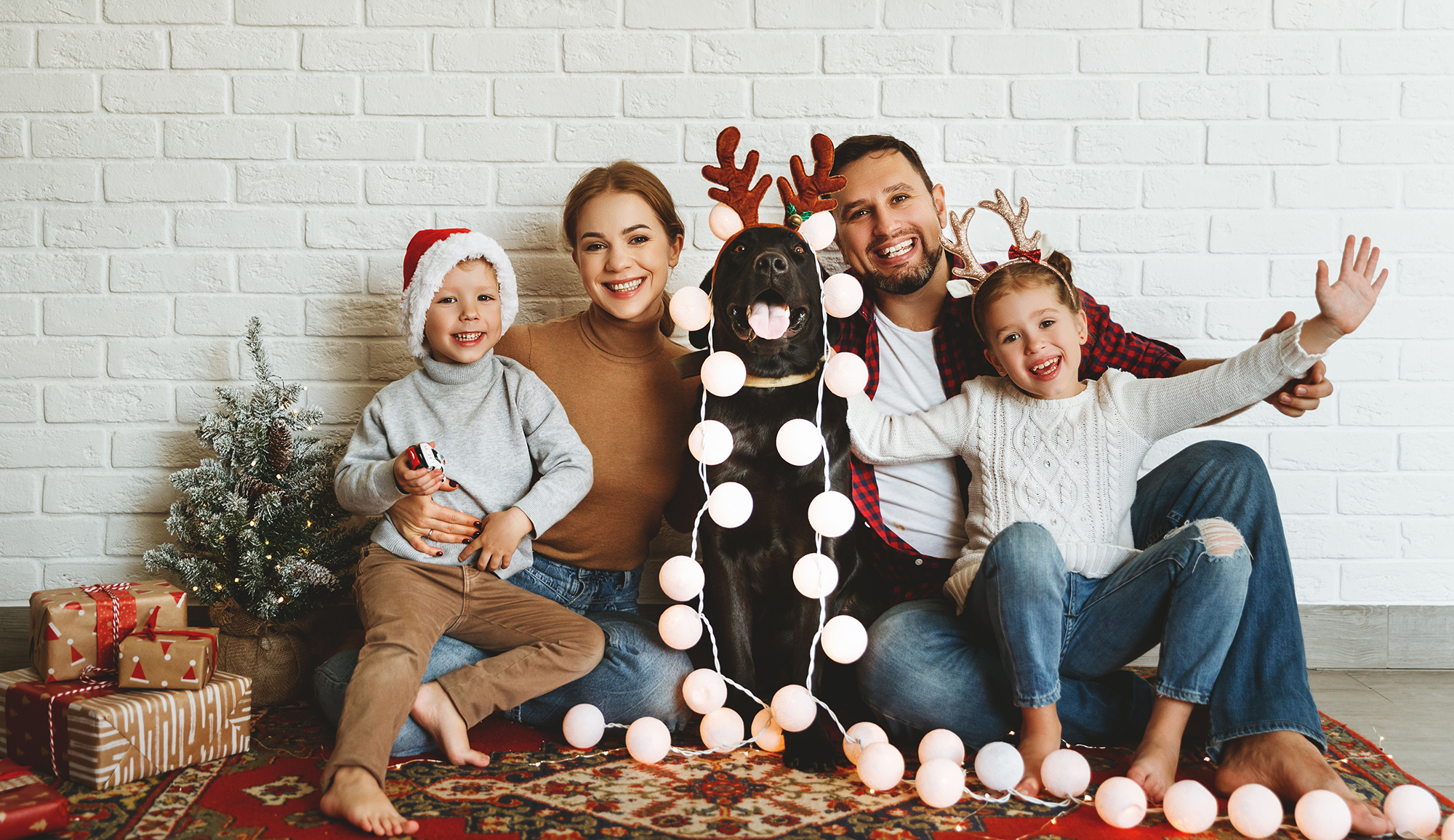
Most pet owners consider dogs and cats to be furry, four-legged members of the family. It may not seem right to leave pets out of your family portraits. If you want to include the pets in your pictures, you should do so. Just keep in mind that it isn't always easy. Your pet's quirks are what make him so cute and loveable but may also make it difficult to get him to stand still long enough to take the portrait. Despite the challenges, families routinely take beautiful portraits including pets successfully. Here are some tips to help make it easier.
Have Your Pet Groomed
You want your whole family to look their best for the portrait, including your pets. At the very least, brush your pet's coat until it shines. You may also want to consider a shampoo or trim.
Decide Whether To Hire a Professional
It is entirely possible to take attractive pictures of your pets yourself, and some of these tips apply if you decide to take your own picture. However, because this is a family portrait, you probably want everyone in the family to be included. Most families hire professionals for family portraits to make sure they are of the highest quality.
If you do decide to hire a professional, choose one who has experience photographing pets. Talk with him or her beforehand about your dog's or cat's personality and what you've found effective in terms of behavioral control in the past. Knowing as much as possible about your pet can help the photographer to work more effectively, which means less stress for everyone.
Teach Commands Beforehand
If your dog already knows basic commands such as "sit," "stay," and "down," those will all be very helpful when taking family portraits. When you are talking to a photographer about your pet, tell him or her about the commands your dog knows. That way, the photographer can use them during the session to get the desired pose from your dog. If your dog responds to commands in another language, be sure the photographer knows that. If your dog does not already know basic commands and you have some time before taking the portraits, now is the perfect time for her to learn. Knowing these commands will not only make taking portraits easier but improve her behavior generally.
While it is possible to teach cats commands, it is more difficult. Most cats do not respond to commands, so you need to find other ways to control their behavior while you are taking a portrait.
Know How To Get Your Pet's Attention
Even dogs that know basic commands may not look where you want them to, when you want them to. In this instance, it helps to know your pet and how to influence his behavior. If your dog has a favorite toy that always gets his attention, bring it to your portrait session. If your cat perks up when you offer treats, use this to your advantage to get a good pose. Be sure to reward your pet when he does what you want him to do.
Time the Session Carefully
A family portrait may well be a new experience for your pet. Depending on her personality, this may make her excited or anxious. The portrait session is likely to go more smoothly when your pet is calm. If you know there is a certain time of day when this is more likely to happen, you should schedule the portrait for this time. Perhaps your cat is more relaxed after an afternoon nap; schedule the portrait session for just afterward. Maybe your dog calms down after a walk; take him out for a bit beforehand.
Take pictures that don't include the pet first; this gives her an opportunity to understand what is going on so that she should be calm by the time it is her turn.
Enlist Some Help
The downside of saving your pet's portraits for last is that he could get into mischief while waiting for his turn as the family and photographer are otherwise occupied. It is appropriate to enlist the help of a friend or neighbor with whom your pet is familiar and comfortable to watch after him until it is his turn to take pictures. For example, this person could keep your dog on a leash so that he does not accidentally spoil the picture by running into the frame. The helper could also take the dog for a walk while the family is taking other pictures.
Use Natural Light
This may be less of an issue if you hire a professional photographer who likely uses equipment to prevent red-eye. However, amateur flash photography can cause otherwise adorable cats and dogs to look like demons from the light reflecting off the back of their eyes. It may also startle pets that are already nervous or skittish and leave just a blur as they run away. If you're taking the pictures yourself, you should definitely find a source of natural light. An experienced pet photographer likely already knows the benefits of natural light and may suggest taking pictures outside, at least the ones that involve pets.
Be Flexible
Even if your pet does not do exactly what you want her to do, it could make for a better picture if she does something that is cute in its unexpectedness. Whether you take the portraits yourself or hire a professional, be open to happy accidents such as these. After all, part of the fun of having pets is their spontaneity. It can highlight your pet's personality if she does something unpredictable.
A combination of preparation, flexibility, and patience can help you take pet portraits that you treasure for years to come.