Save 15% on your 1st Autoship learn more

 Email us
 Live Chat
 FAQs
FAQs





Introduction
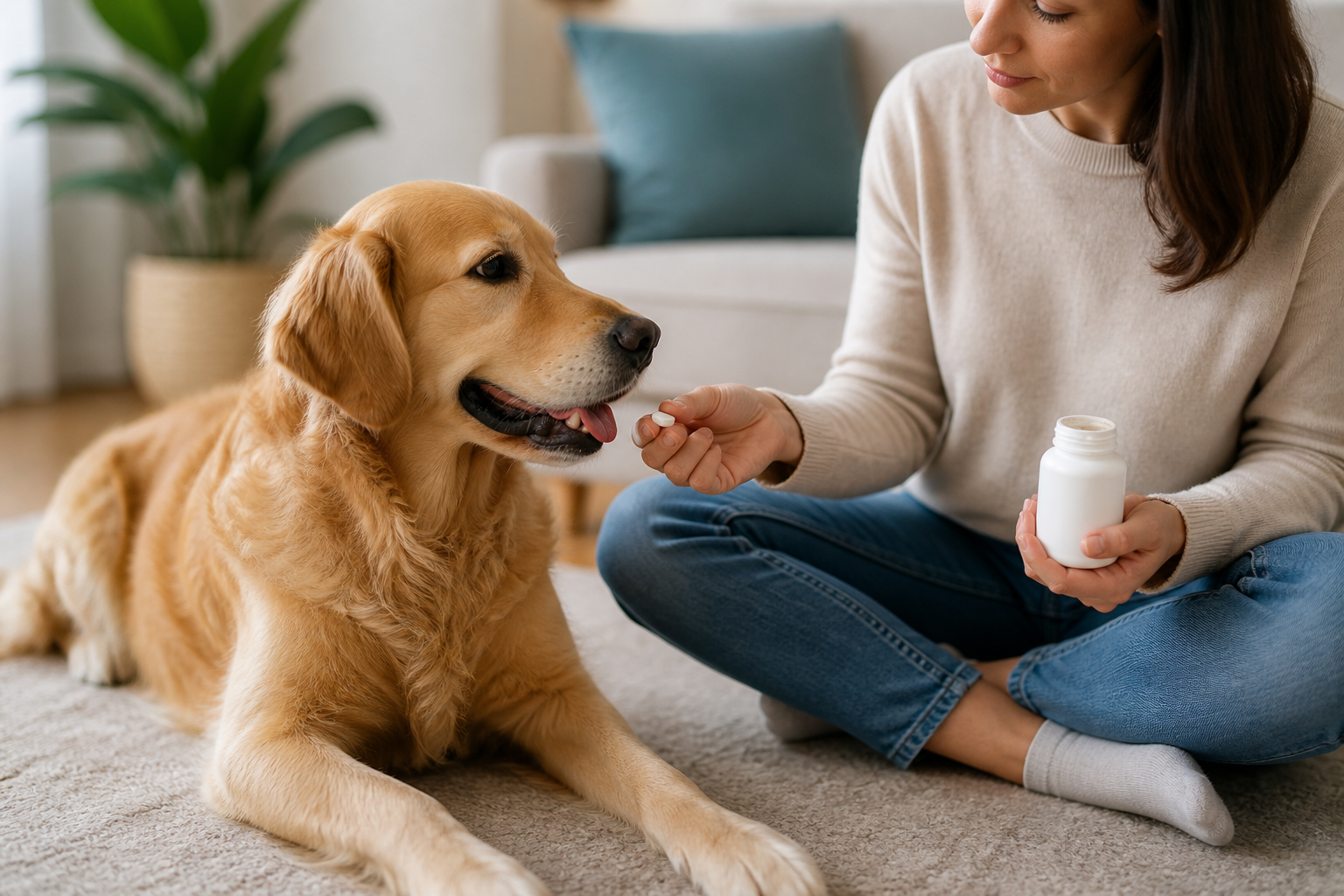
You are reaching for your daily supplement bottle when you notice your dog is having a bit of a rough day with their digestion. Maybe they are unusually gassy or their stool seems a bit loose. You know how much probiotics help your own gut health, so you wonder if sharing a capsule might help your pup feel better. At BaxterBoo, we hear this question frequently from pet owners who want to provide quick relief using what they already have in the cabinet.
While it is tempting to share, the answer is not a simple yes or no. Most human probiotics are not toxic to dogs, but they are rarely the best solution for canine health. This post covers the differences between human and dog microbiomes, the hidden risks in human supplements, and how to choose the right support for your pet. Our goal is to help you understand how to balance your dog's digestive system safely and effectively.
The Short Answer on Sharing Supplements
If your dog accidentally eats a human probiotic capsule, you usually do not need to panic. Most of the bacterial strains used in human supplements, such as Lactobacillus and Bifidobacterium, are also found in the canine gut. However, just because a product is safe does not mean it is useful.
Quick Answer: Most human probiotics are not toxic to dogs, but they are often ineffective for them. Dogs have a different gut pH and different bacterial needs than humans, so species-specific supplements are always the better choice.
A dog's digestive system is shorter and much more acidic than a human's. This high acidity is a natural defense mechanism. It helps dogs digest raw proteins and handle bacteria that might make a human sick. Unfortunately, this same acid often destroys human-grade probiotic strains before they ever reach the dog's lower intestines where they are needed.
Why Dog-Specific Probiotics Matter
The internal environment of a dog is a unique ecosystem. Scientists call this the microbiome. While humans and dogs share some types of bacteria, the ratios and specific strains vary significantly.
The pH Factor
Human stomachs typically have a pH ranging from 1.0 to 3.0 during digestion. A dog's stomach can drop to a pH of 1.0 or lower. Many human probiotic supplements are designed to survive the human stomach but cannot withstand the "acid bath" of a canine stomach. If the bacteria die in the stomach, they cannot colonize the gut or provide health benefits.
Bacterial Strains
Certain bacteria are powerhouses for dogs but less common in human supplements. For example, Enterococcus faecium is one of the most effective strains for managing sudden diarrhea in dogs. While you might find it in some human products, it is a staple in high-quality dog formulas.
Colony Forming Units (CFUs)
The "strength" of a probiotic is measured in CFUs. Human supplements often have massive counts designed for a 150-pound adult. Giving those same levels to a 20-pound terrier can lead to more digestive upset, including bloating and cramping.
Key Takeaway: Species-specific probiotics are formulated to survive the high acidity of a dog's stomach and provide the exact bacterial strains their unique microbiome requires.
For species-specific options, explore our dog digestive health collection.
Potential Risks of Human Probiotics
The biggest danger in giving your dog a human supplement is not usually the bacteria itself. It is the "inactive" ingredients. Manufacturers add flavors, sweeteners, and binders to make capsules easier for humans to swallow or taste better.
- Xylitol: This is a common artificial sweetener also known as birch sugar. It is perfectly safe for humans but highly toxic to dogs. Even small amounts can cause life-threatening drops in blood sugar and liver failure.
- Dairy and Lactose: Many human probiotics use dairy-based carriers. Since many adult dogs are lactose intolerant, these can actually cause the diarrhea you are trying to treat.
- Fillers: Ingredients like garlic powder or certain fibers used as prebiotics in human supplements might irritate a dog's sensitive stomach.
Vet Tip: Always check the "Other Ingredients" list on any supplement for xylitol or birch sugar. If your dog ingests a product containing these, contact a veterinarian or an animal poison control center immediately.
Comparing Human and Dog Probiotics
| Feature | Human Probiotics | Dog-Specific Probiotics |
|---|---|---|
| Primary Strains | Lactobacillus acidophilus, Bifidobacterium | Enterococcus faecium, Bacillus coagulans |
| Acid Resistance | Moderate (designed for human pH) | High (designed for canine pH) |
| Common Sweeteners | Xylitol, Sorbitol (can be toxic) | Animal-safe flavors like beef or chicken |
| Dosage Form | Capsules, large tablets | Chews, powders, or flavored liquids |
| Target Results | Human digestive regularity | Canine stool quality and immune support |
When Does Your Dog Need a Probiotic?
Healthy dogs usually maintain a balanced gut naturally through a high-quality diet. However, certain life events can throw that balance off. This is known as dysbiosis.
After Antibiotic Treatment
Antibiotics are life-saving medications, but they do not discriminate between "bad" bacteria and "good" bacteria. They often clear out the beneficial microbes in the gut. Our dog pharmacy offers prescription medications and prescription diets through our partnership with Pet's Choice. If your vet prescribes an antibiotic, we often recommend starting a probiotic a few hours after each dose to help maintain gut health.
Stress and Anxiety
There is a strong connection between the gut and the brain. When a dog is stressed due to boarding, moving to a new home, or loud noises, their digestion often suffers. Probiotics can help stabilize the gut during these transitions.
Dietary Changes
If you are transitioning your dog to a new food brand, their system might struggle to adapt. Introducing a probiotic a few days before the switch can make the transition much smoother for their stomach. For additional guidance, read how dry food can affect diarrhea in dogs.
Seasonal Allergies
A large portion of the immune system lives in the gut. Some studies suggest that keeping the microbiome balanced can reduce the severity of skin itching and hotspots caused by environmental allergies.
Natural Probiotic Foods for Dogs
If you prefer a whole-food approach, some human foods are safe and offer natural probiotic benefits. You should still introduce these slowly to avoid upsetting your dog's stomach.
Step 1: Choose the right food. Plain, unsweetened Greek yogurt or kefir are the best options. Ensure there is no xylitol or added fruit.
Step 2: Start small. For a medium-sized dog, start with just one teaspoon added to their meal.
Step 3: Monitor the response. Watch for any signs of gas, bloating, or loose stools over the next 24 hours.
Step 4: Increase gradually. If your dog handles it well, you can give them up to a tablespoon daily depending on their size.
Note: While yogurt contains live cultures, the concentration is much lower than what you find in a concentrated supplement. It is often better as a general wellness topper than a treatment for a specific digestive issue.
How to Choose the Right Dog Supplement
When shopping for a probiotic, do not just grab the first bottle you see. Quality varies significantly between brands. At BaxterBoo, we handpick supplements from trusted names like Zesty Paws, Honest Paws, and NutriSource to ensure you are getting products that actually work.
Look for the Strain Name
A good label will list the specific strain, not just the genus. For example, look for Enterococcus faecium SF68 or Bacillus coagulans. These are well-researched for canine use.
Guaranteed Analysis
Check the label for a "Guaranteed Analysis" that lists the CFU count at the time of expiration, not just at the time of manufacture. Bacteria are living organisms and die off over time. You want to ensure the product is still potent when you feed it to your dog.
Prebiotics Included
Prebiotics are types of fiber that act as "food" for the probiotics. Ingredients like chicory root or inulin help the good bacteria thrive once they reach the intestines. Most high-quality dog supplements are "synbiotics," meaning they contain both.
For more guidance on selecting supplements, read our pet supplement guide.
Signs of a Probiotic Reaction
Even the best dog-specific probiotic can cause a temporary reaction. As the bacterial balance shifts, your dog might experience a "die-off" effect where harmful bacteria are replaced.
- Increased gas for the first 48 hours
- A temporary change in stool consistency
- Minor changes in appetite
If these symptoms last longer than a few days or if your dog seems lethargic or refuses to eat, stop the supplement and consult your veterinarian. They may want to check for underlying issues like parasites or inflammatory bowel disease.
Bottom line: While human probiotics are rarely toxic, dog-specific formulas are safer and significantly more effective for your pet's unique digestive needs.
For repeat purchases of supplements, consider our Autoship programme.
Managing Chronic Digestive Issues
If your dog suffers from ongoing digestive problems, a simple over-the-counter probiotic might not be enough. Some conditions require prescription-strength support or specialized diets. Through our partnership with Pet's Choice, the BaxterBoo pharmacy carries prescription pet foods from brands like Farmina Vet Life and Royal Canin.
These diets are formulated to manage conditions like chronic pancreatitis, IBD, and severe food sensitivities. Working with your vet to combine a specialized diet with the right probiotic can give your dog a much higher quality of life.
Conclusion
Sharing your human probiotics with your dog is generally safe in an emergency, provided they do not contain toxic sweeteners like xylitol. However, because of the high acidity of a dog's stomach and their specific bacterial needs, human supplements often provide little to no actual benefit. For the best results, stick to a high-quality, species-specific supplement designed for the canine microbiome.
- Dogs have a much more acidic stomach than humans.
- Check all human supplement labels for toxic xylitol or birch sugar.
- Use dog-specific strains like Enterococcus faecium for better results.
- Consult your vet if digestive issues persist for more than 48 hours.
Key Takeaway: Supporting your dog's gut health is a vital part of their overall wellness, especially during times of stress or after a course of antibiotics.
The next time your pup needs a digestive boost, browse our dog healthcare collection. You can also visit our pet pharmacy for prescription-strength support to keep your dog's tail wagging and their tummy happy.
FAQ
Can I give my dog human probiotics like Culturelle or Align?
While these specific brands are generally safe and do not usually contain xylitol, they are formulated for the human digestive tract. Your dog likely will not benefit much from them because the bacteria may not survive their stomach acid. It is much better to use a product designed for dogs that contains strains like Bacillus coagulans.
How long does it take for probiotics to work in dogs?
For acute issues like stress-related diarrhea, you might see an improvement in stool quality within 24 to 48 hours. For chronic conditions or skin support, it can take four to six weeks of daily use to see a significant change. Consistency is key when trying to shift the balance of the microbiome.
Can human probiotics cause diarrhea in dogs?
Yes, they can. Because human probiotics often have very high CFU counts or contain dairy-based fillers, they can overwhelm a dog's system. This can lead to the very digestive upset you are trying to cure. If you must use a human product, start with a very small fraction of the dose.
Is it safe to give my puppy probiotics?
Yes, probiotics are excellent for puppies as they develop their immune systems and transition to solid food. However, you should use a puppy-specific formula or a high-quality dog probiotic. Puppies have very sensitive systems, so always consult your veterinarian before adding supplements to their growing diet.