Save 15% on your 1st Autoship learn more

 Email us
 Live Chat
 FAQs
FAQs





Introduction
You are relaxing on the sofa with your cat when you notice a scattering of tiny white specks across their fur. Your first instinct might be to reach for a brush, but you may also wonder if those flakes are a sign of an allergy or an underlying skin condition. Understanding the difference between cat dander and cat dandruff is a vital part of proactive pet care. At BaxterBoo, we help owners navigate these common health questions by providing expert guidance on coat health and wellness products. This post covers how to tell these two conditions apart, why they occur, and how to restore your cat’s skin to its healthiest state. Knowing whether you are seeing a natural biological process or a sign of irritation allows you to take the right steps for your feline friend.
Quick Answer: Cat dander consists of microscopic skin cells that all healthy cats shed naturally as part of skin renewal. Cat dandruff involves visible white flakes and is usually a sign of dry skin, poor grooming, or an underlying health issue that needs attention.
Understanding Cat Dander
Cat dander is a perfectly normal part of a cat's biology. Just like humans, cats are constantly growing new skin cells. As these new cells move to the surface, the old, dead skin cells must fall away. This process is called shedding or turnover. Because these cells are microscopic, you cannot see them with the naked eye. If your cat has a healthy coat and you do not see any visible flakes, they are still producing dander every single day.
Every cat produces dander, including hairless breeds like the Sphynx and breeds often marketed as hypoallergenic. The reason dander is so famous is because of its role in human allergies. Most people who are allergic to cats are not actually allergic to the fur itself. Instead, they are reacting to a protein called Fel d 1. This protein is produced in a cat’s saliva and skin glands. When a cat grooms itself, it spreads this protein over its fur and skin. As the microscopic dander sheds, it carries the protein into the air and onto your furniture.
Because dander is so light and small, it can stay airborne for a long time. This is why you might start sneezing in a house with a cat even if the cat is in a different room. You cannot stop a cat from producing dander because it is a necessary part of their skin's life cycle. However, regular cleaning and high-quality nutrition can help manage how much dander is circulating in your home environment. For additional context on feline allergens, read our guide to cat allergens and grooming routines.
What is Cat Dandruff?
Cat dandruff is distinct from dander because it is visible. If you see white, tan, or gray flakes on your cat’s back or in their bedding, you are looking at dandruff. While dander is a sign of a healthy skin cycle, dandruff is often a signal that something is off balance. It occurs when the skin cells shed in large clumps rather than individual microscopic pieces.
Dandruff usually suggests that the skin is either too dry or too oily. When the skin is excessively dry, the top layer can crack and flake off in visible pieces. This is common in the winter months when indoor heating reduces the humidity in your home. On the other hand, if a cat's skin is too oily, the excess sebum can trap dead skin cells. These cells then clump together and fall off in larger, greasy patches.
Unlike dander, dandruff is often accompanied by other symptoms. You might notice that your cat’s fur looks dull or feels coarse. Some cats with dandruff will scratch more frequently or develop red, irritated patches of skin. If the flakes are persistent, it is important to investigate the cause rather than assuming it is just a cosmetic issue. You can browse our cat healthcare selection for general skin and wellness supplies.
Key Takeaway: Dander is a healthy, invisible biological process found in all cats, while dandruff is a visible, abnormal shedding of skin that often indicates a health or environmental problem.
Comparing Cat Dander vs Cat Dandruff
It is helpful to see the differences side by side so you can accurately assess what is happening with your pet. While they both involve dead skin cells, their impact on your cat and your home is very different.
| Feature | Cat Dander | Cat Dandruff |
|---|---|---|
| Visibility | Microscopic and invisible | Visible white or yellowish flakes |
| Health Status | Normal and healthy | Signal of skin or health issues |
| Size | Tiny, stays airborne | Larger, settles on fur and bedding |
| Prevention | Cannot be prevented | Can be treated and managed |
| Allergy Impact | Major cause of human allergies | Can carry allergens but less airborne |
| Symptoms | No skin irritation | May include itching or redness |
Common Causes of Cat Dandruff
If you have determined that your cat has dandruff, the next step is finding the root cause. Several factors can lead to flaky skin, ranging from simple environmental changes to complex medical conditions.
Environmental Factors and Humidity
The air inside your home plays a large role in your cat's skin health. During the winter, many households use furnaces that strip moisture from the air. This low humidity can dry out a cat’s skin quickly. If you notice that your cat only gets flaky when the weather turns cold, the environment is likely the culprit. Using a humidifier can help maintain a better moisture balance for both you and your pet.
Nutritional Deficiencies
The quality of the food your cat eats directly impacts the quality of their coat. Skin requires specific nutrients to remain supple and strong. The most important of these are Omega-3 and Omega-6 fatty acids. If a cat's diet is low in these essential fats, their skin barrier can weaken, leading to dryness and flaking. We often recommend looking for foods that list salmon oil or flaxseed as ingredients to support a glossy coat. Explore our cat food category for complete diet options.
Hydration and Water Intake
Cats are notorious for having a low thirst drive. In the wild, they get much of their moisture from their prey. If a domestic cat eats primarily dry kibble and does not drink enough water, they can become mildly dehydrated. This dehydration often shows up first in the skin and fur. Providing a water fountain can encourage many cats to drink more, as they are naturally attracted to moving water. For cats that prefer kibble, our dry cat food selection offers additional choices to discuss with your veterinarian.
Mobility and Grooming Habits
Cats are usually expert groomers, but some factors can prevent them from reaching certain spots. Obesity is a common reason for dandruff, especially along the lower back and base of the tail. If a cat is too heavy to reach those areas, dead skin cells and oils build up, eventually flaking off as dandruff. Similarly, senior cats with arthritis may find it painful to twist and groom themselves. In these cases, the dandruff is a secondary symptom of a mobility issue.
Vet Tip: If your cat is older or overweight and has flakes specifically on their lower back, they may be struggling to groom. Helping them with daily brushing and talking to your vet about weight management or joint supplements like Cosequin can make a huge difference.
Medical Conditions That Look Like Dandruff
Sometimes, what looks like simple dry skin is actually a medical problem that requires a trip to the veterinarian. It is important to monitor your cat for signs that the flaking is part of a larger issue.
Parasites and Walking Dandruff
There is a specific mite called Cheyletiella that causes a condition known as walking dandruff. These mites are large enough to be seen with the naked eye, and as they move under the skin scales, it looks like the dandruff is literally walking. This condition is highly contagious between pets. Our cat pharmacy carries prescription and nonprescription products for a variety of pet health needs. If you suspect your cat has parasites, a vet must confirm the type to ensure you use the correct medication.
Skin Infections and Allergies
Bacterial or fungal infections, such as ringworm, can cause significant scaling and flaking. Additionally, cats can suffer from environmental or food allergies. When a cat has an allergic reaction, their skin often becomes inflamed, itchy, and flaky. This usually requires a diagnostic workup by a professional to identify the allergen.
Systemic Health Issues
In some cases, flaky skin is a sign of an internal struggle. Conditions like diabetes, hyperthyroidism, and kidney disease can all affect the appearance of a cat’s coat. These illnesses change the way the body processes nutrients and maintains hydration. If your cat’s dandruff is accompanied by changes in thirst, urination, or appetite, it is time for a medical evaluation.
How to Treat and Manage Cat Dandruff
Once you have ruled out serious medical conditions with your vet, you can begin a routine to clear up the flakes. Consistency is the key to improving skin health.
Step 1: Increase Grooming Frequency.
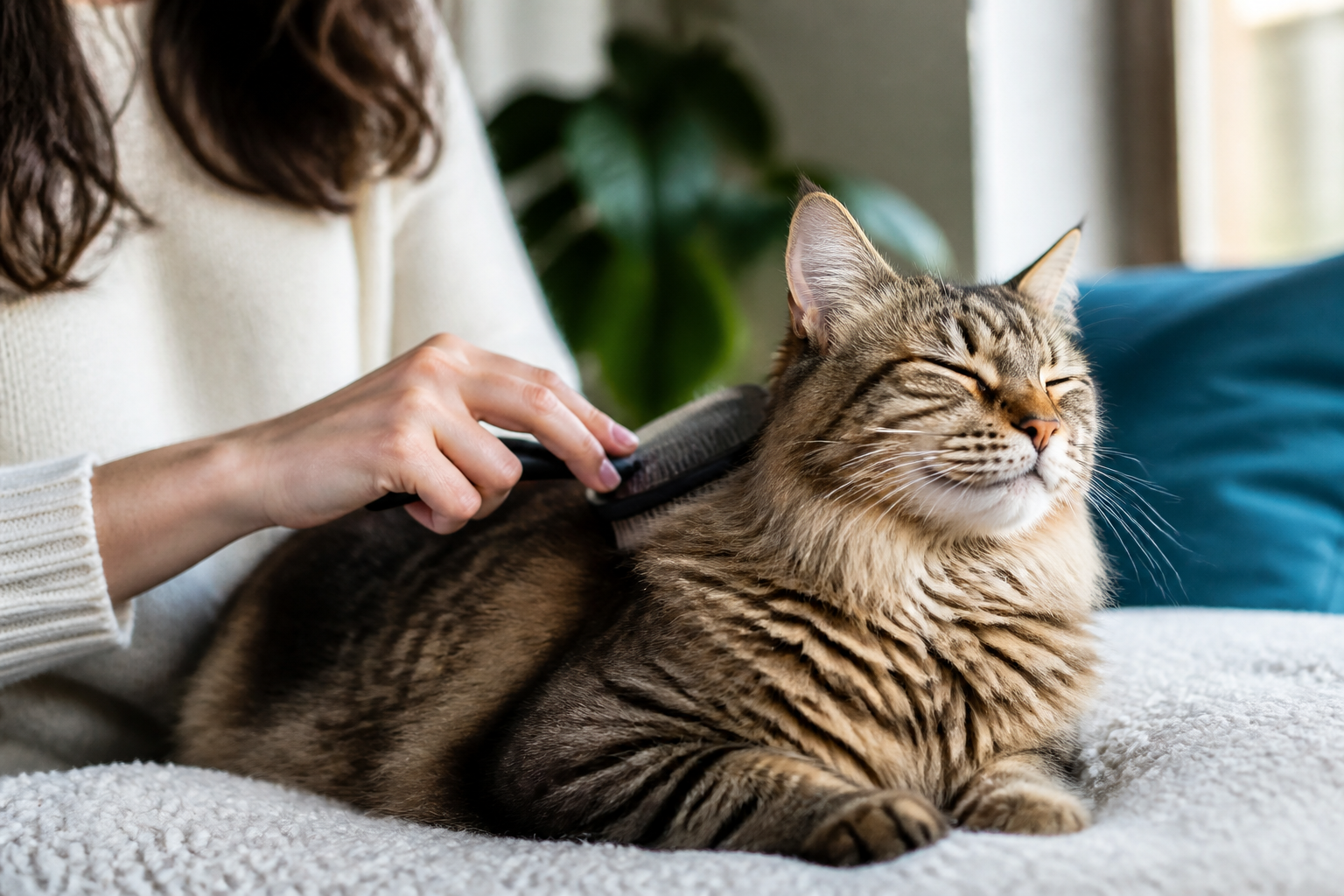
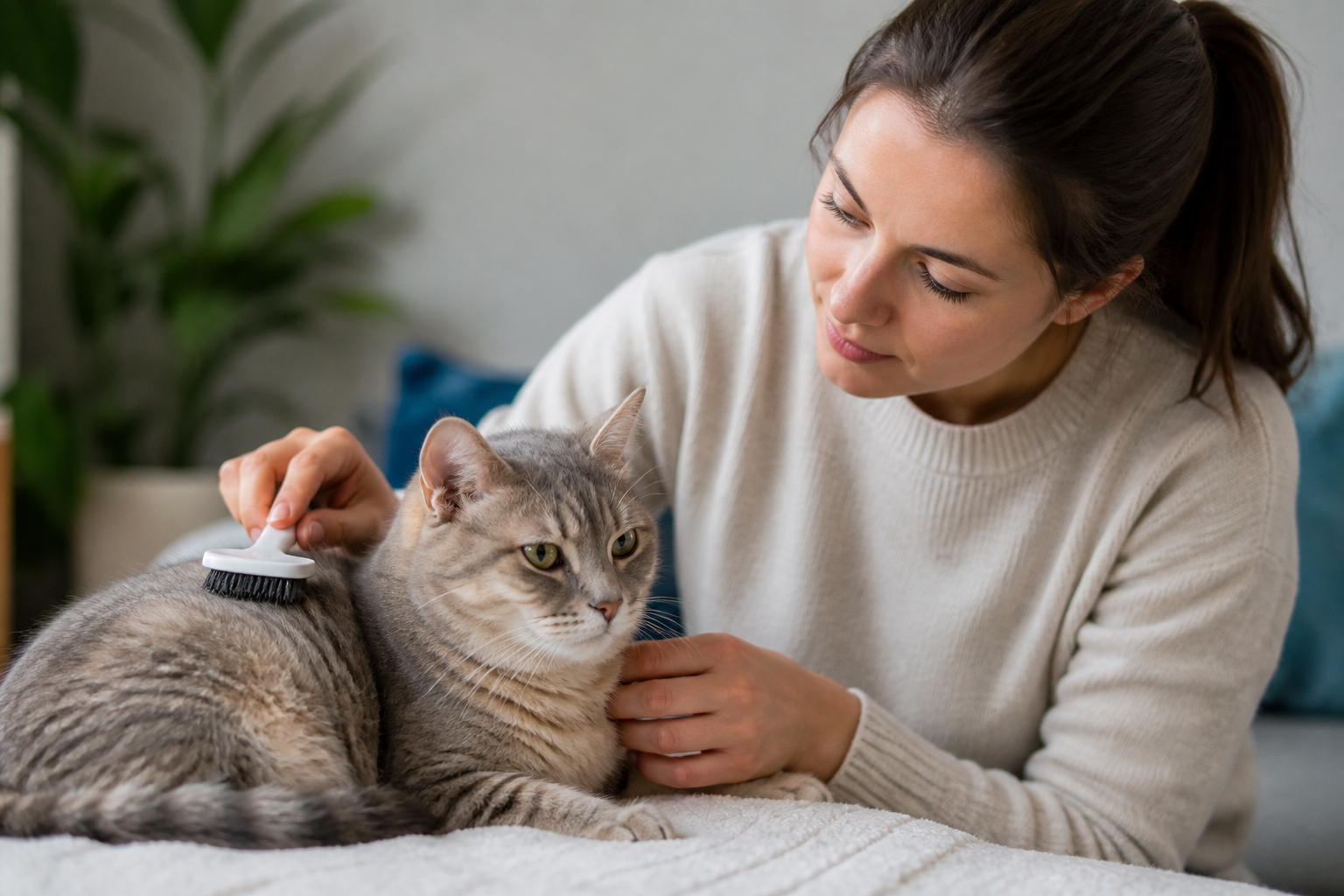
Brush your cat daily using a soft bristle brush or a grooming glove. This helps distribute natural oils across the skin and removes dead cells before they can clump together. For long-haired cats, this also prevents mats that can trap moisture and bacteria against the skin. Browse our cat grooming supplies for brushes, combs, shampoos, and other tools.
Step 2: Improve the Diet.
Switch to a high-quality, complete, and balanced cat food. We carry brands like Farmina and Royal Canin that offer specialized formulas for skin and coat health. If your vet recommends it, you can also add a liquid Omega-3 supplement to their wet food to boost skin moisture from the inside out.
Step 3: Address Hydration.
Ensure your cat has access to fresh, clean water at all times. If they are a picky drinker, try adding a little water to their canned food or using a circulating fountain. Proper hydration is the foundation of healthy, elastic skin.
Step 4: Use Gentle Topical Treatments.
If the skin is very dry, a vet-approved moisturizing shampoo or waterless foam can help. Avoid using human shampoos, as the pH balance of a cat's skin is very different from ours. Using the wrong product can actually make the dryness worse.
Step 5: Maintain Regular Parasite Prevention.
Fleas and mites are a major source of skin irritation. Keeping your cat on a year-round preventative is one of the easiest ways to avoid dandruff caused by biting insects. Our pharmacy offers a variety of prescription and over-the-counter options to fit your cat's lifestyle.
Bottom line: Most cases of cat dandruff can be resolved by combining better nutrition, increased hydration, and a regular grooming schedule.
Reducing Cat Dander in the Home
While you cannot stop dander production, you can reduce its impact on the humans in your household. This is especially important if someone in your family suffers from cat allergies.
- Use Air Purifiers: High-efficiency particulate air (HEPA) filters are excellent at trapping microscopic dander as it floats through the air. Place them in the rooms where your cat spends the most time.
- Regular Vacuuming: Use a vacuum with a HEPA filter to clean carpets, rugs, and upholstery. This prevents dander from being kicked back into the air as you clean.
- Wash Bedding Weekly: Cats leave a high concentration of dander wherever they sleep. Washing their beds and your own linens in hot water can significantly lower the allergen count in your home.
- Wipe Down the Cat: Using a damp cloth or specially formulated pet wipes can trap dander on the surface of the fur before it sheds into the environment. This is much easier and less stressful than a full bath for most cats.
BaxterBoo has been helping pet owners find the right tools for these tasks since 2006. We know that a clean home and a healthy cat go hand in hand. By staying on top of cleaning and grooming, you can live comfortably even with a dander-producing feline.
When to See Your Veterinarian
While a few flakes now and then might not be a crisis, certain symptoms indicate that your cat needs professional help. Skin health is a window into a cat's overall well-being, and persistent issues should not be ignored.
Consult your vet if you notice:
- The skin is red, inflamed, or bleeding.
- Your cat is losing patches of fur.
- The dandruff is accompanied by a foul odor.
- Your cat is scratching or biting at their skin constantly.
- There are visible parasites like fleas or "walking" mites.
- Your cat’s behavior has changed, such as becoming lethargic or losing their appetite.
Your veterinarian can perform skin scrapings or blood tests to find out exactly what is causing the irritation. If your cat needs a prescription diet or medication to manage a condition like a skin infection or hyperthyroidism, you can easily fulfill those needs through our cat pharmacy.
Conclusion
Distinguishing between cat dander and cat dandruff is the first step in ensuring your cat stays comfortable and healthy. Remember that dander is a natural, invisible process, while dandruff is a visible sign that your cat’s skin needs a little extra help. By focusing on high-quality nutrition, proper hydration, and a consistent grooming routine, you can keep those pesky white flakes at bay. We are here to support your journey with a wide selection of premium foods, grooming tools, and health supplies. For those managing chronic skin conditions or needing parasite protection, our pharmacy offers a convenient way to get medications delivered to your door. Keeping your cat’s coat shiny and flake-free is a rewarding part of being a pet parent, and with the right approach, it is an achievable goal for every household.
FAQ
Can I use human dandruff shampoo on my cat?
No, you should never use human dandruff shampoo on a cat. Human skin has a different pH level than cat skin, and the active ingredients in human shampoos can be toxic or extremely irritating to felines. Always use a product specifically formulated for cats and consult your vet before starting any topical treatment.
Is cat dandruff contagious to humans?
Regular dandruff caused by dry skin or nutrition is not contagious. However, if the "dandruff" is actually caused by parasites like Cheyletiella mites (walking dandruff) or a fungal infection like ringworm, these can be passed to humans and other pets. If you notice skin lesions on yourself or other animals in the house, seek medical and veterinary advice immediately.
Does brushing my cat more often help with dander allergies?
Yes, regular brushing can help reduce the amount of dander and Fel d 1 protein that ends up in your home environment. By removing loose fur and skin cells during a grooming session, you can dispose of them directly rather than letting them fall onto your furniture. Using a damp cloth after brushing can further trap those microscopic particles.
Will switching to wet food help my cat's dry skin?
Switching to wet food or adding it to your cat's diet often helps because it significantly increases their daily water intake. Many cats live in a state of mild dehydration on a dry-food-only diet, which can lead to flaky skin. The extra moisture in wet food supports skin elasticity and can reduce the appearance of dandruff.