Save 15% on your 1st Autoship learn more

 Email us
 Live Chat
 FAQs
FAQs





Introduction
Petting your cat is usually a soothing way to bond, but it can be startling to find your hand covered in tiny white flakes. While cats are famous for being clean, they can still struggle with skin issues that lead to visible flaking. If your cat has excessive dandruff, it is often a sign that their skin health needs a little extra attention. At BaxterBoo, we know that a shiny coat is a reflection of overall wellness. This post covers why these flakes appear and how you can help your cat feel comfortable again. We will explore the common causes of feline dandruff and when it is time to seek professional care. Finding the right solution starts with understanding the difference between normal shedding and a genuine skin problem.
Understanding Feline Dandruff vs. Dander
It is important to distinguish between dandruff and dander because they are not the same thing. Every cat produces dander. These are microscopic bits of skin that naturally shed as your cat’s skin cells renew themselves. You generally cannot see dander with the naked eye, though it is the primary cause of allergies for humans.
Dandruff is much more noticeable. It consists of larger, visible flakes that cling to the fur or fall off onto your furniture. These flakes are dead skin cells that have clumped together. This happens when the skin is either too dry or producing too much oil. While dander is a normal part of life, dandruff is a symptom of an underlying issue.
Quick Answer: Cat dandruff is a visible buildup of dead skin cells that appears as white or gray flakes in the fur. It can be caused by environmental factors like dry air, grooming difficulties, or health issues like allergies and parasites.
The Role of Grooming and Mobility
Cats are usually expert groomers. They spend a significant portion of their day cleaning themselves and distributing natural oils across their coat. When a cat stops grooming effectively, dead skin cells and loose fur begin to build up. This buildup eventually flakes off as dandruff. For tools that can make regular brushing easier, explore our cat grooming supplies.
Weight and Obesity
If a cat is overweight, they may physically struggle to reach certain parts of their body. You will often see dandruff concentrated at the base of the tail or along the lower back. These are the hardest areas for a larger cat to reach. If the skin is not being stimulated by the tongue and teeth during grooming, the natural oils sit on the surface and become flaky. You can also read about helping an indoor cat lose weight for related guidance.
Joint Discomfort and Aging
Senior cats often develop arthritis or general joint stiffness. Bending and twisting to clean their back can become painful. If you notice dandruff suddenly appearing on an older cat, it might be because they are skipping their grooming routine to avoid pain. We carry various mobility aids and supplements that can support joint health, but it is also important to help them with the physical task of grooming.
How to Help with Brushing
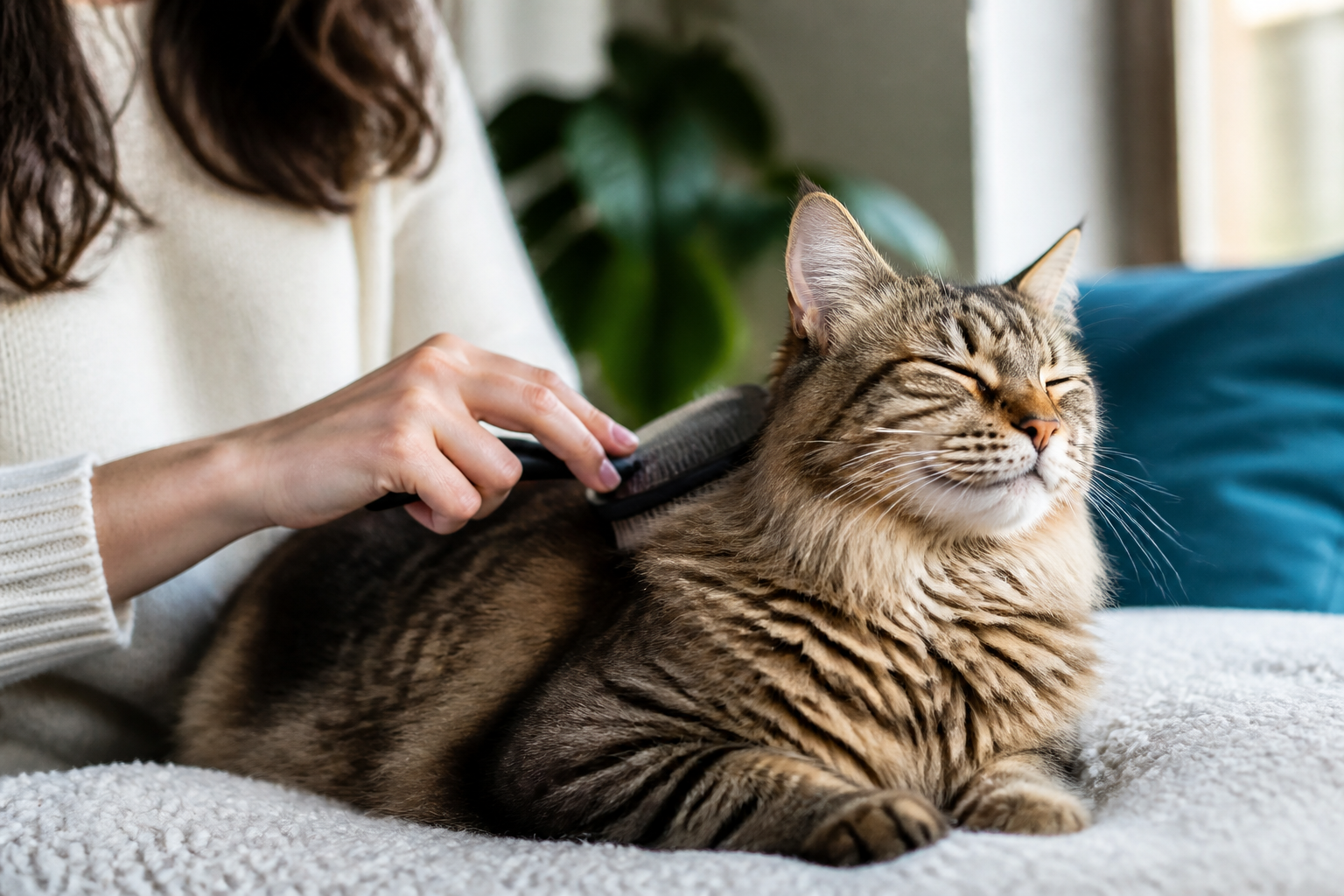
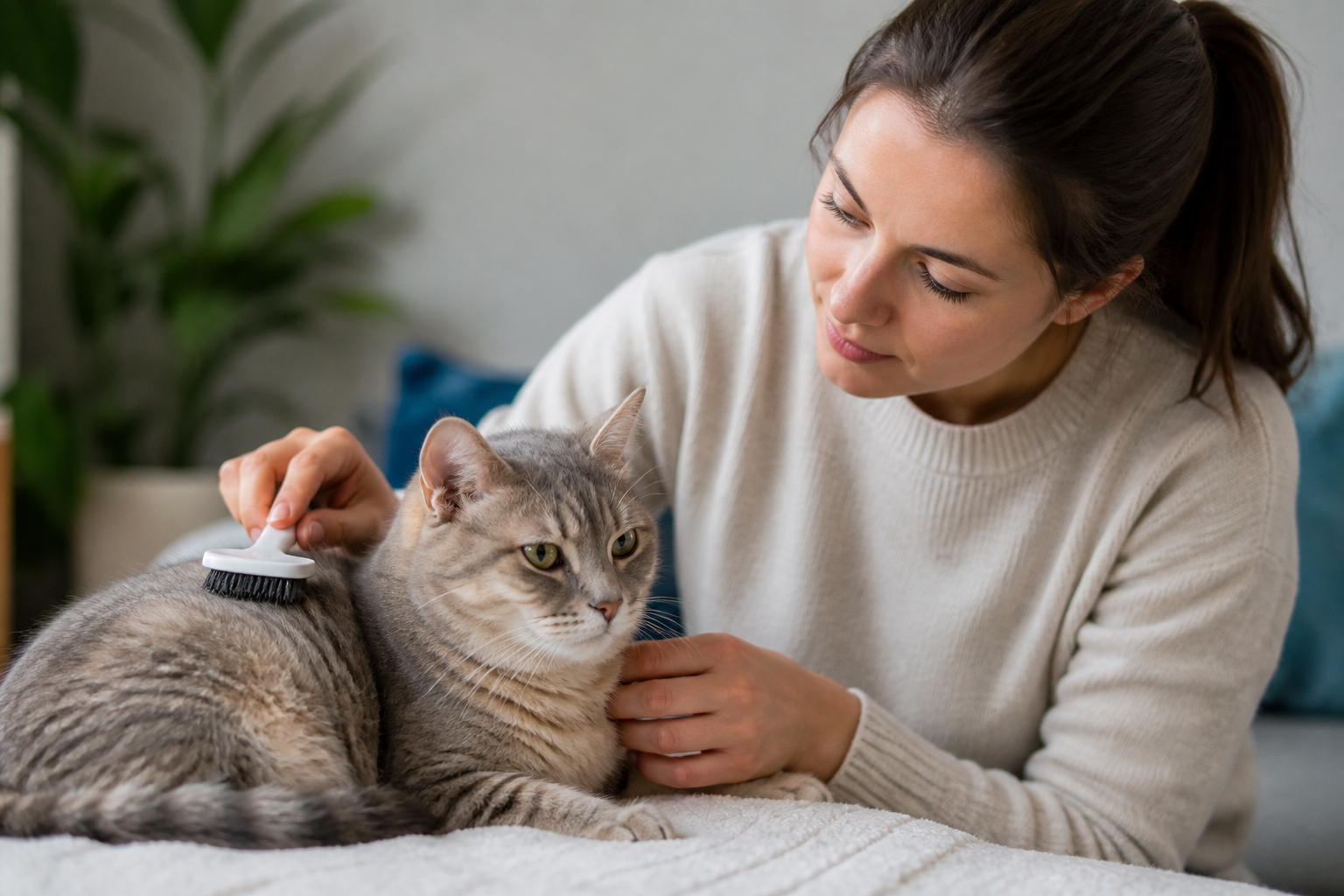
If your cat cannot groom themselves, you must step in. Daily brushing is one of the most effective ways to manage dandruff. It removes the dead cells before they can clump together. For short-haired cats, a soft bristle brush or a grooming mitt works well. Long-haired cats require a sturdy comb to reach the undercoat.
Key Takeaway: Poor grooming is a leading cause of feline dandruff. If your cat is obese or has joint pain, they need daily manual brushing to keep their skin healthy and clear of flakes.
Environmental and Seasonal Factors
The air inside your home can have a major impact on your cat’s skin. Just like humans get dry skin in the winter, cats can suffer when the humidity drops.
Dry Winter Air
During the colder months, home heating systems strip moisture from the air. This dry environment pulls moisture out of your cat’s skin, leading to itchiness and flaking. If you notice that the dandruff only appears when the heater is running, the environment is likely the culprit.
Low Humidity Solutions
Using a humidifier in the rooms where your cat spends the most time can make a big difference. You should also ensure your cat is staying hydrated. Some cats are picky about their water and prefer it to be moving. A pet fountain can encourage more drinking, which keeps the skin hydrated from the inside out.
Note: Dry air is a common seasonal trigger for dandruff. Increasing indoor humidity and encouraging your cat to drink more water can help resolve mild cases.
Nutritional Gaps and Skin Health
What goes into your cat’s body directly affects the quality of their coat. Skin and fur require a lot of protein and specific fats to remain healthy. If their diet is lacking, the skin is often the first place you will see signs of trouble. Browse our cat food selection when reviewing your cat’s everyday nutrition.
Essential Fatty Acids
Omega-3 and Omega-6 fatty acids are vital for skin barrier function. They help the skin retain moisture and stay supple. Many commercial cat foods contain these fats, but sometimes they are not present in high enough concentrations for cats with sensitive skin.
If your cat's skin is consistently dry, you might consider a supplement. Brands like Zesty Paws or Honest Paws offer options that are easy to add to a meal. These supplements support the skin's natural oil production, which can reduce flaking over time.
Quality of Protein
Cats are obligate carnivores. This means they need high-quality animal protein to thrive. Lower-quality foods might use fillers that do not provide the amino acids necessary for a healthy coat. We carry premium brands like Orijen, Acana, and Stella and Chewy’s that focus on meat-based nutrition to support overall skin health.
Vet Tip: If you decide to change your cat’s diet to help with dandruff, do it slowly. Mix the new food with the old over seven to ten days to prevent digestive upset.
When Dandruff Signals a Health Condition
Sometimes dandruff is more than just dry skin. It can be a symptom of a medical condition that needs a veterinarian's attention. If your cat is showing other signs of illness, you should not wait to seek help. Our cat healthcare products can support an everyday wellness routine, but they do not replace veterinary care.
Parasites and Walking Dandruff
Certain mites can look exactly like dandruff. Cheyletiella mites are often called "walking dandruff" because they are large enough to see. If you look closely at the flakes and notice they are moving, your cat has a parasite. This condition is highly contagious to other pets and even humans.
Regular flea and tick prevention is the best way to keep these pests away. Our pharmacy carries a variety of FDA-approved preventives through our partnership with Pet's Choice. If your vet confirms a mite infestation, you can get the necessary medication through our cat pharmacy with a valid prescription.
Skin Infections and Allergies
Bacterial or fungal infections, such as ringworm, can cause the skin to scale and flake. Allergies to food or environmental triggers like dust and pollen can also cause inflammation. This inflammation leads to a cycle of itching and flaking.
Systemic Illnesses
Dandruff can sometimes be a side effect of more serious internal problems. Conditions like diabetes, kidney disease, and hyperthyroidism can all change the way a cat’s skin and coat look. When the body is fighting a chronic illness, it often diverts nutrients away from the skin to more vital organs.
Vet Tip: Schedule a veterinary exam if the dandruff is accompanied by hair loss, redness, a foul odor, or changes in thirst and appetite. A professional can rule out serious issues like diabetes or parasites.
The BaxterBoo Pharmacy and Prescription Needs
When a skin condition requires medical intervention, we are here to help. Through our partnership with Pet's Choice, we offer a full-service pharmacy for your pet’s needs. This is especially useful for cats managing chronic conditions that cause skin issues.
We provide access to:
- FDA-approved flea and tick medications to stop parasitic dandruff.
- Prescription diets from brands like Farmina Vet Life and Royal Canin for weight management or allergies.
- Medicated shampoos designed to treat fungal or bacterial skin infections.
- Medications for underlying health issues like hyperthyroidism or diabetes.
Our pharmacy makes it easy to manage your cat's health in one place. Once your vet provides a prescription, we handle the rest, ensuring you get the exact medication your cat needs to feel their best.
Bottom line: For dandruff caused by medical issues, the BaxterBoo pharmacy provides a convenient way to get FDA-approved treatments delivered to your door.
Step-by-Step Management for Flaky Skin
If your vet has ruled out serious illness, you can start a home care routine to clear up the flakes. Consistency is key when dealing with skin issues.
Step 1: Start a daily brushing routine.
Spend five to ten minutes each day brushing your cat. This removes dead skin and spreads natural oils that protect the coat.
Step 2: Evaluate their diet and hydration.
Ensure they are eating high-quality protein. Consider adding a water fountain or switching to a wet food diet to increase their moisture intake.
Step 3: Add a skin and coat supplement.
Look for products rich in EPA and DHA fatty acids. These help strengthen the skin barrier from the inside out.
Step 4: Maintain parasite prevention.
Apply a monthly flea and tick treatment. This prevents the itching and inflammation that lead to secondary dandruff.
Step 5: Control the environment.
Use a humidifier during the dry winter months to prevent the skin from drying out.
Selecting the Right Grooming Tools
Not all brushes are created equal. Using the wrong tool can actually irritate the skin and make dandruff worse. You want to choose a tool that matches your cat's specific coat type.
For cats with short, fine hair, a rubber grooming mitt is excellent. It mimics the sensation of petting while gently pulling away loose hair and flakes. For cats with a thick undercoat, a slicker brush or a stainless steel comb is better. These tools reach down through the fur to the skin level, ensuring that you are actually clearing away the buildup.
We carry a wide range of grooming supplies from trusted brands like Kong and Jackson Galaxy. If your cat is sensitive to brushing, try to keep the sessions short and follow up with a high-value treat to create a positive association. You can find suitable rewards in our cat treats collection.
Can You Bathe a Cat for Dandruff?
Most cats do not need regular baths. In fact, bathing a cat too often can strip away the natural oils they need for healthy skin. However, if your cat has a severe buildup of oils or a fungal infection, your vet might recommend a medicated bath.
Always use a shampoo specifically formulated for cats. Human shampoos have a different pH balance and can be toxic or highly irritating to feline skin. If you must bathe your cat, use lukewarm water and ensure you rinse the shampoo out completely. Any soap residue left on the skin will cause more itching and flaking.
Managing Allergic Reactions
If your cat’s dandruff is caused by allergies, you may need to investigate their environment. Common allergens include:
- Fragrances in laundry detergents or air fresheners.
- Dust and mold in the home.
- Certain proteins in their food.
- Flea saliva.
A single flea bite can cause a massive reaction in an allergic cat, leading to scabs and dandruff. This is why year-round prevention is so important. If food allergies are suspected, your vet may suggest a novel protein diet or a hydrolyzed protein prescription food. These are available through our pharmacy partnership for easy home delivery.
Bottom line: Identifying and removing allergens is a critical step in stopping the cycle of skin inflammation and flaking.
Summary of Next Steps
Managing excessive dandruff in cats requires a mix of environmental control, good nutrition, and proper grooming. While most cases are benign and related to dry air or weight, you should never ignore persistent flaking. A quick check-in with your veterinarian can rule out parasites or internal health problems.
- Brush your cat daily to remove dead skin and distribute oils.
- Improve hydration with water fountains or wet food.
- Check for signs of parasites like fleas or "walking" mites.
- Add Omega fatty acid supplements to their diet.
- Consult a vet if the skin is red, itchy, or losing hair.
If your cat needs specialized care, the BaxterBoo pharmacy is a great resource. You can fill prescriptions for medicated shampoos and health-specific diets through our Pet's Choice partnership. To save even more on the supplies you use every day, consider our Autoship program. It ensures you never run out of the food, supplements, or preventives your cat needs to stay flake-free.
FAQ
Is cat dandruff the same as cat dander?
No, they are different things. Dander is microscopic skin cells that all cats shed naturally, while dandruff consists of visible white or gray flakes that indicate a skin imbalance. If you can see the flakes in your cat's fur, it is dandruff.
Can I use my own dandruff shampoo on my cat?
You should never use human dandruff shampoo on a cat. These products contain ingredients that are toxic to felines and have a pH balance that is too harsh for their skin. Always use a shampoo specifically made for cats or a medicated one prescribed by your vet.
Why does my cat have dandruff only on their lower back?
Dandruff near the tail and lower back is often a sign of grooming trouble. This happens if a cat is overweight or has arthritis, making it hard for them to reach that area. Daily brushing by the owner can help clear the flakes in these hard-to-reach spots.
Does diet really help with cat dandruff?
Yes, diet plays a huge role in skin health. Cats need high-quality animal protein and essential fatty acids like Omega-3 to maintain a healthy skin barrier. If their food is low in these nutrients, their skin can become dry, brittle, and flaky.