
 Save 15% on your 1st Autoship learn more

 Email us
 Live Chat
 FAQs





Introduction
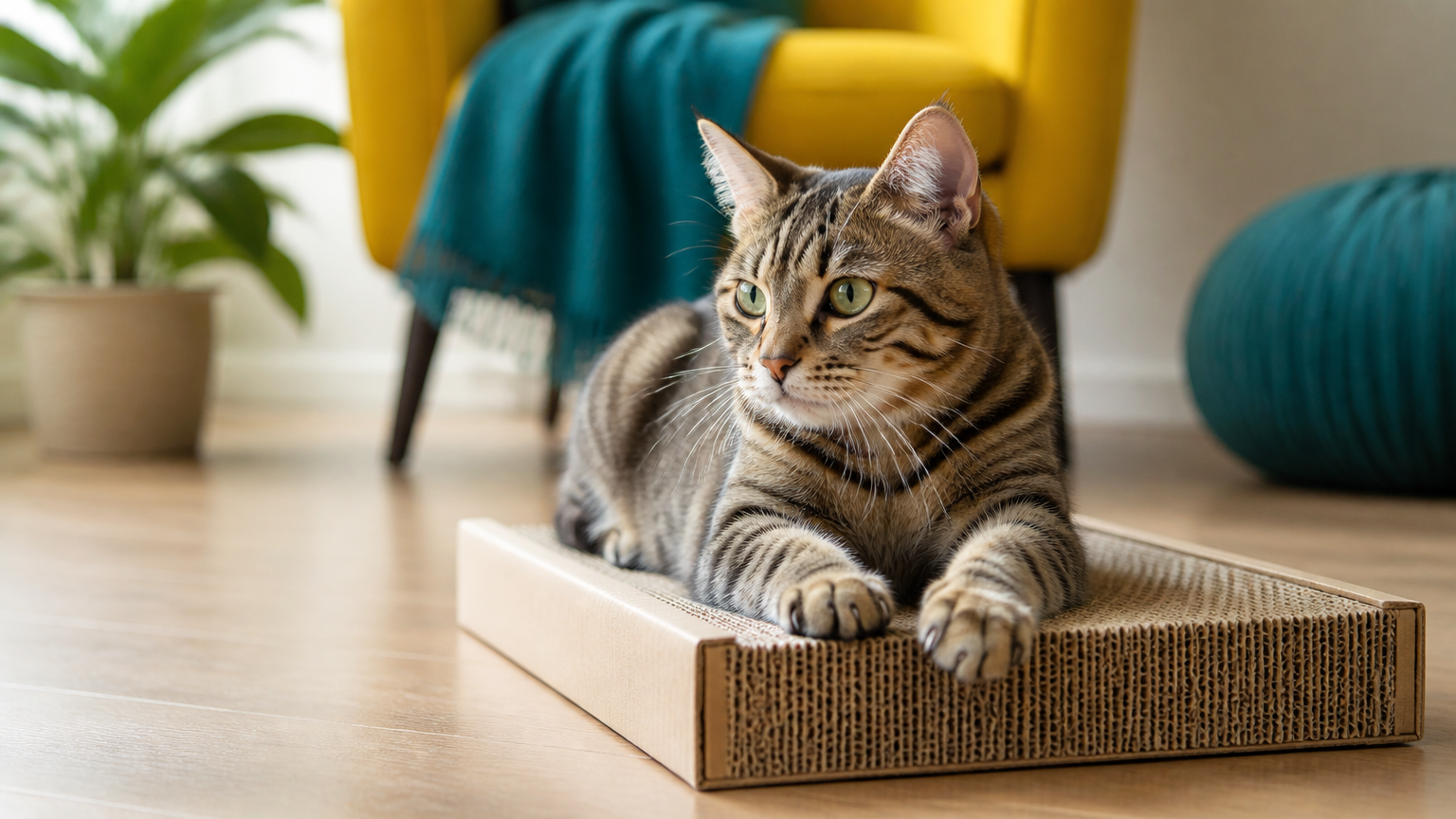
Your cat loves to scratch, but those sharp claws can make playtime and nail trims stressful. A cat nail file enrichment box offers a tempting idea: let your cat explore a puzzle while a textured surface works on their claws. Some cats may enjoy the activity, but the box is not a guaranteed replacement for checking and trimming their nails.
At BaxterBoo, we want to help you choose enrichment that fits your cat’s habits and supports a practical grooming routine. Here’s how these boxes differ from ordinary scratchers, what to look for in reviews, and how to introduce one safely. The main point: choose a box for play first, and keep an eye on every claw.
What Is a Cat Nail File Enrichment Box?
A cat nail file enrichment box is generally a puzzle-style toy with openings your cat can reach into. You may be able to place treats or toys inside to encourage your cat to investigate. Some designs include a textured or abrasive surface intended to contact the claws during play.
A cat scratch puzzle enrichment box may combine a similar activity with a scratching surface. Product descriptions vary, so check how each box is meant to be used. A box marketed for scratching does not necessarily contain a filing surface, and a filing surface does not guarantee that every claw will contact it.
An ordinary cat enrichment box may simply give your cat something to explore. That can be useful on its own, even if it has no nail-care feature.
Cat Scratchers


Does Scratching File a Cat’s Nails?
Scratching is normal behavior. It gives cats a way to stretch, leave scent and visible marks, and shed the worn outer layers of their claws. The little claw-shaped pieces near a scratcher are often those shed outer layers. (vet.cornell.edu)
A scratching session does not necessarily shorten claws. A scratcher can remove an outer sheath and leave the claw underneath feeling sharp. How much contact a cat has with a filing surface can also vary from one paw or claw to another.
We would treat a nail file box as an enrichment option, not a substitute for nail checks. Your cat may enjoy reaching into it without scratching the surface in the way the manufacturer intended. Even a cat who uses it often may still need a trim.
Vet Tip: Ask your veterinarian or a veterinary technician to show you how to check your cat’s claws and trim them comfortably. This is especially helpful if the claws are dark or you are new to nail care.
Comparing Boxes and Scratchers
The right choice depends on what your cat likes to do. A puzzle box can encourage reaching and investigating, while a regular scratcher gives your cat a surface for a full-body stretch.
| Option | What your cat can do | Nail-care expectation |
|---|---|---|
| Nail file enrichment box | Reach or paw into a box, often for a treat or toy | Filing depends on how the cat uses it. Continue checking claws. |
| Scratch puzzle box | Explore openings and use an included scratching surface | Scratching is useful enrichment, but it may not shorten claws. |
| Cardboard or sisal scratcher | Scratch, stretch and mark a stable surface | Helps satisfy scratching behavior, but is not a reliable nail trim. |
| Simple enrichment box | Explore and retrieve appropriate treats or toys | Offers play without a nail-filing claim. |
You do not have to choose only one. If your cat enjoys a vertical post, keep it available even after introducing a puzzle box. A cat who prefers scratching horizontally may also appreciate a flat cardboard scratcher.
Place a scratcher near an area where your cat already likes to scratch or rest. If your cat ignores one style, try a different orientation or texture rather than assuming they do not like scratchers.
What to Look for Before Buying a Box
Start with the way your cat plays. An energetic cat who reaches for toys may enjoy a puzzle with several openings. A cautious cat may prefer a simpler design where a treat is easy to see and retrieve.
Look closely at the size and construction. The box should sit securely when your cat paws at it, and the openings should allow comfortable access without making you worry about a paw getting caught. Check for rough edges, loose parts or surfaces that could snag a claw.
If the box contains an abrasive insert, look for clear instructions about its intended use and replacement. Avoid adding your own sandpaper or another abrasive material unless your veterinarian advises you on the setup. More abrasion is not automatically better for a cat’s paws.
Consider cleaning and upkeep, too. A treat puzzle should be easy to inspect and clean according to its instructions. Replace a damaged insert or retire the box if the material breaks down or exposes sharp edges.
Use this checklist while comparing options:
- Check the box dimensions and opening size against your cat’s size.
- Look for a stable base and securely attached parts.
- Inspect the surfaces your cat’s paws and claws will touch.
- Check how the box opens for cleaning and treat removal.
- Find out whether the intended inserts can be replaced.
How to Introduce a Scratch Puzzle Box
A new toy is more inviting when your cat can explore it at their own pace. Choose a quiet spot with enough room for your cat to move away.
Step 1: Inspect the box. Follow its assembly instructions and check that the base, openings and inserts are secure. Set aside any small loose pieces that are not part of the finished toy.
Step 2: Make the first reward easy to find. Place an appropriate cat treat or a toy where your cat can see and reach it without much effort. If you use treats, account for them in your cat’s daily feeding routine.
Step 3: Let your cat investigate. Stay nearby and watch how your cat approaches the box. Do not hold their paws against the surface or force them to reach inside.
Step 4: Adjust the challenge. Once your cat understands the game, you can place a reward farther inside if the design allows safe access. If they walk away or seem frustrated, make the next attempt easier.
Step 5: Check the toy and your cat’s paws. After play, look for damaged material or signs that a claw has snagged. Stop using the box if you notice paw irritation, limping or repeated catching, and contact your veterinarian if your cat appears hurt.
Some cats will use a box right away. Others may need several short introductions, and some will prefer a different toy altogether. Keep familiar scratchers available so the new box does not replace an activity your cat already enjoys.
How to Read Cat Nail File Box Reviews
Reviews can help you understand how a box works in a home, but one cat’s reaction will not predict yours. Look for details about the cat’s size, the type of play and how the box held up over time. A useful review should explain more than that a cat loved or ignored it.
For nail-care claims, look for reviews that describe how the owner checked the claws. A cat playing with a box is not, by itself, proof that the box shortened their nails. Compare that feedback with the product instructions and remember that usage can differ between cats.
Pay attention to comments about stability, cleaning, loose pieces and replacement inserts. If several reviews describe the same concern, check whether it applies to the current version of the product. Customer reviews are individual experiences, not proof that a box will work or be safe for every cat.
Can You Make a Cat Enrichment Box?
A simple cardboard box can be a low-cost way to offer exploration without making a nail-filing claim. Place a cat-safe toy or a few suitable treats inside an open box and let your cat investigate.
Remove staples, loose tape, string and packing materials first. Keep openings roomy and edges smooth, and supervise the activity so you can remove the box if your cat chews or damages it. Replace worn cardboard rather than waiting for it to come apart.
A homemade activity is not a reason to skip a regular scratcher. Offer both if your cat enjoys them: the box for exploration and the scratcher for stretching and scratching.
Keep a Separate Claw-Care Routine
Check your cat’s claws regularly, including the claws higher on the front paws. Look for claws that are becoming long or catching on fabric. Older cats and cats who are less active may need particular attention because long claws can be easy to miss.
For a trim, use clippers designed for pets and take off only the sharp tip. Avoid the quick, the sensitive tissue inside the claw. If you cannot see where it is, your cat struggles, or you are unsure how much to remove, ask your veterinarian or a trained groomer for help. (vcahospitals.com)
You can also work on comfort between trims. While your cat is relaxed, briefly touch a paw, offer a reward and stop before your cat becomes uncomfortable. You do not need to handle every paw in one session.
Contact your veterinarian promptly if a claw is growing into a paw pad, a paw is bleeding or swollen, or your cat is limping. Do not try to solve a painful claw problem by encouraging more scratching.
Conclusion
A nail file enrichment box can be a fun addition for a cat who likes to investigate and paw at rewards. Choose it for the activity your cat enjoys, then judge the nail-care result by checking the claws rather than the box’s promise.
- Keep a stable scratcher available for stretching and scratching.
- Choose a box with comfortable openings and secure parts.
- Supervise introductions and inspect the toy for wear.
- Continue claw checks and ask your veterinarian for grooming help when needed.
Next step: Explore the cat toy category at BaxterBoo for enrichment options that suit your cat’s play style.
FAQ
Can a cat nail file box replace nail clippers?
It may not. A cat might not contact the filing surface with every claw, even if they enjoy the toy. Keep checking their nails and trim them or arrange help when needed.
Is a scratch puzzle box the same as a nail file box?
Not always. Both can encourage a cat to reach and explore, but a scratch puzzle may have a scratching surface rather than an insert intended for filing. Read the product description and instructions to understand the difference.
What if my cat ignores the enrichment box?
Make the activity easier by placing a favorite appropriate treat or toy where your cat can see it. Try again in a quiet location, but let your cat walk away. A flat scratcher, vertical post or different toy may be a better fit.
How do I know if my cat’s claws need attention?
Look for claws that are long, catching on fabric or curving toward the paw pad. If a claw is growing into the pad or your cat is limping, bleeding or showing signs of pain, contact your veterinarian promptly.



- Site & Contents BaxterBoo.com. BaxterBoo is located in the United States.
- Privacy & Security
- Terms of Use
- Accessibility Statement
