
 Save 15% on your 1st Autoship learn more

 Email us
 Live Chat
 FAQs





Introduction
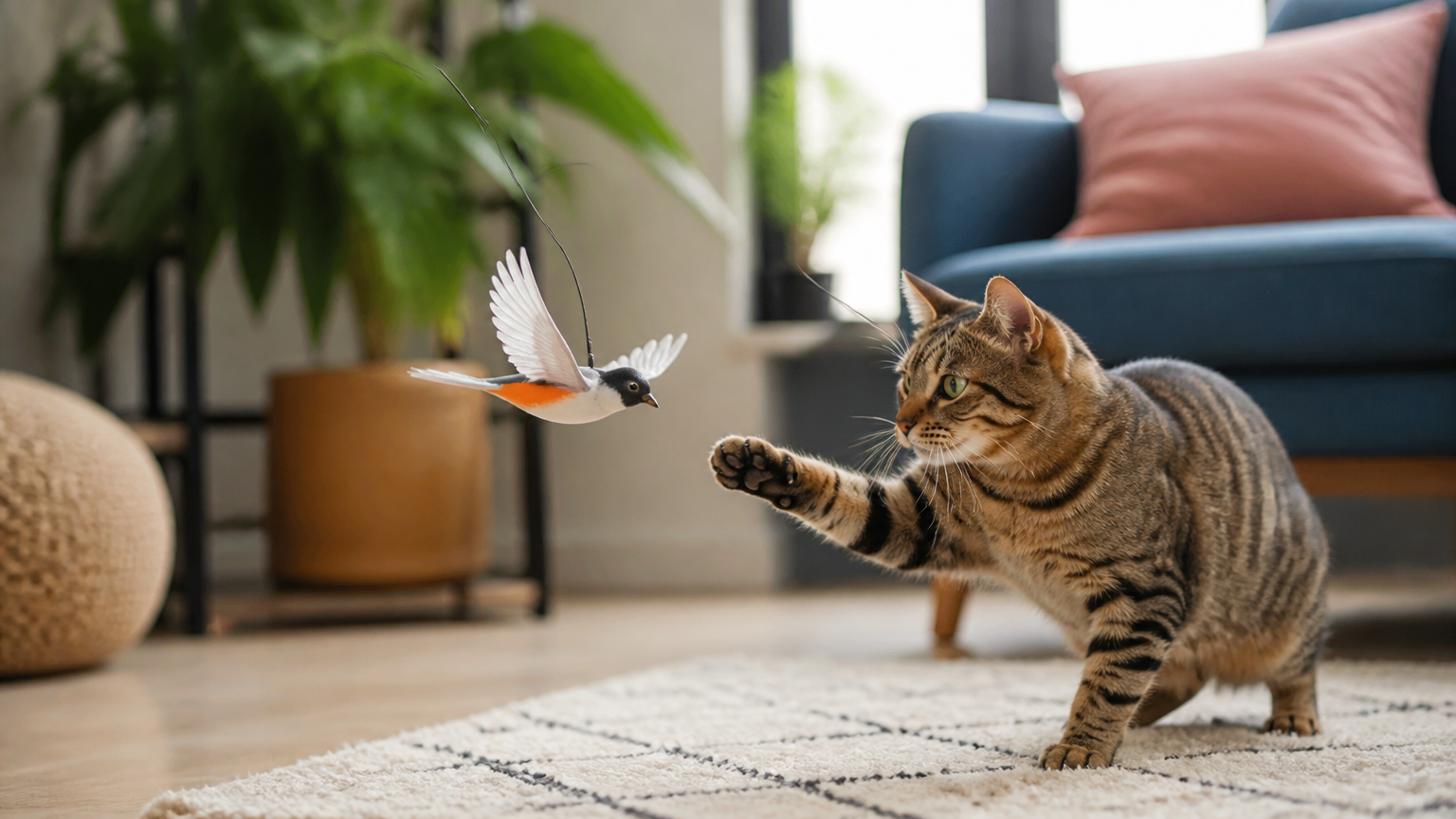
A bird toy can catch your cat’s attention, but the word “flying” doesn’t always mean what you might expect. Some toys flap on the floor, while others move through the air on a wand or a rotating arm. The right choice depends on how your cat likes to play and how much you want to participate.
At BaxterBoo, we know a toy that looks fun to you also needs to fit your cat’s comfort level and your home. A quiet wand may suit a cautious cat, while a kicking and flapping toy may appeal to one who likes to wrestle. Start by choosing the kind of movement your cat enjoys, then check the toy’s construction and supervision needs.
What Makes a Bird Toy Interactive?
An interactive bird toy responds to your cat or moves in a way that encourages your cat to engage with it. You might control the movement with a wand, or the toy might flap, chirp or rotate using a motor. Some toys combine several features.
The bird shape is only part of the appeal. Your cat may be more interested in the flutter of a feather, the movement of a plush body or the chance to catch and hold it. A toy that makes noise or moves quickly isn’t automatically a better choice.
Look at the product description to understand what actually happens during play. A touch-activated bird, for example, may flap when your cat bats it but stay on the floor. A flying bird toy may travel through the air because it’s attached to a wand or arm, not because it flies freely.
Interactive & Electronic Cat Toys




Flying, Flapping and Chirping Toys Compared
These toy types offer different play experiences. Think about what your cat will do with the toy, as well as how it moves.
| Toy type | How it generally works | A good fit for |
|---|---|---|
| Bird wand | You move a bird or feather attachment using a handle and line. | Cats who enjoy stalking and chasing with you. |
| Automatic flying-style toy | A motor moves a bird attachment, often on an arm or line. | Cats interested in moving targets and owners who want a motorized option. |
| Flapping plush bird | A plush bird moves its wings or body when activated. | Cats who like to grab, hold and kick toys. |
| Chirping bird | A bird-shaped toy makes a sound when activated. | Cats who respond to sound as well as touch or movement. |
Features vary by product. Some toys combine flapping and chirping, while others offer movement without sound.
Wand Toys for Playtime Together
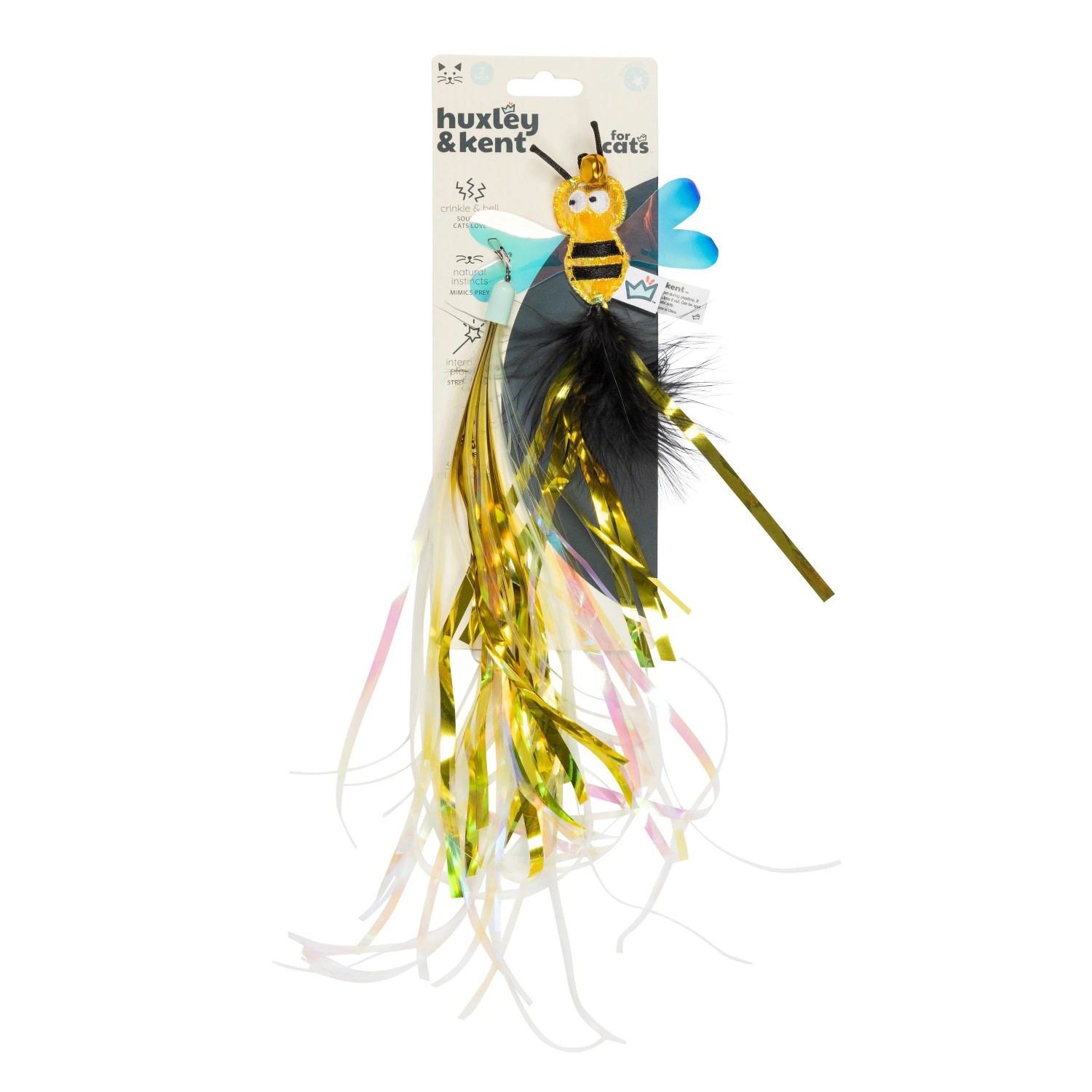
A bird wand gives you control over the pace and direction of play. You can move the toy along the floor, let it disappear behind a piece of furniture or lift it briefly into the air. Your cat can watch, approach and pounce at a comfortable pace.
Wands are useful if your cat loses interest in a toy that always moves the same way. They also give you a chance to slow down for a hesitant cat. Because the line and attachment can pose a hazard if damaged or tangled, supervise play and put the wand away afterward. (vcahospitals.com)
Automatic Flying-Style Toys
An automatic toy may move a bird attachment around a base or suspended arm. It can provide a different pattern of motion from a handheld wand, but check the setup before buying. The toy needs enough clear space to move, and its base or attachment should remain stable during play.
Automatic doesn’t mean a toy should be left out without supervision. Watch how your cat interacts with it, follow the maker’s directions and turn it off before putting it away. Check the listing for the actual motion, power source and any settings rather than relying on “flying” in the product name.
Flapping and Chirping Birds
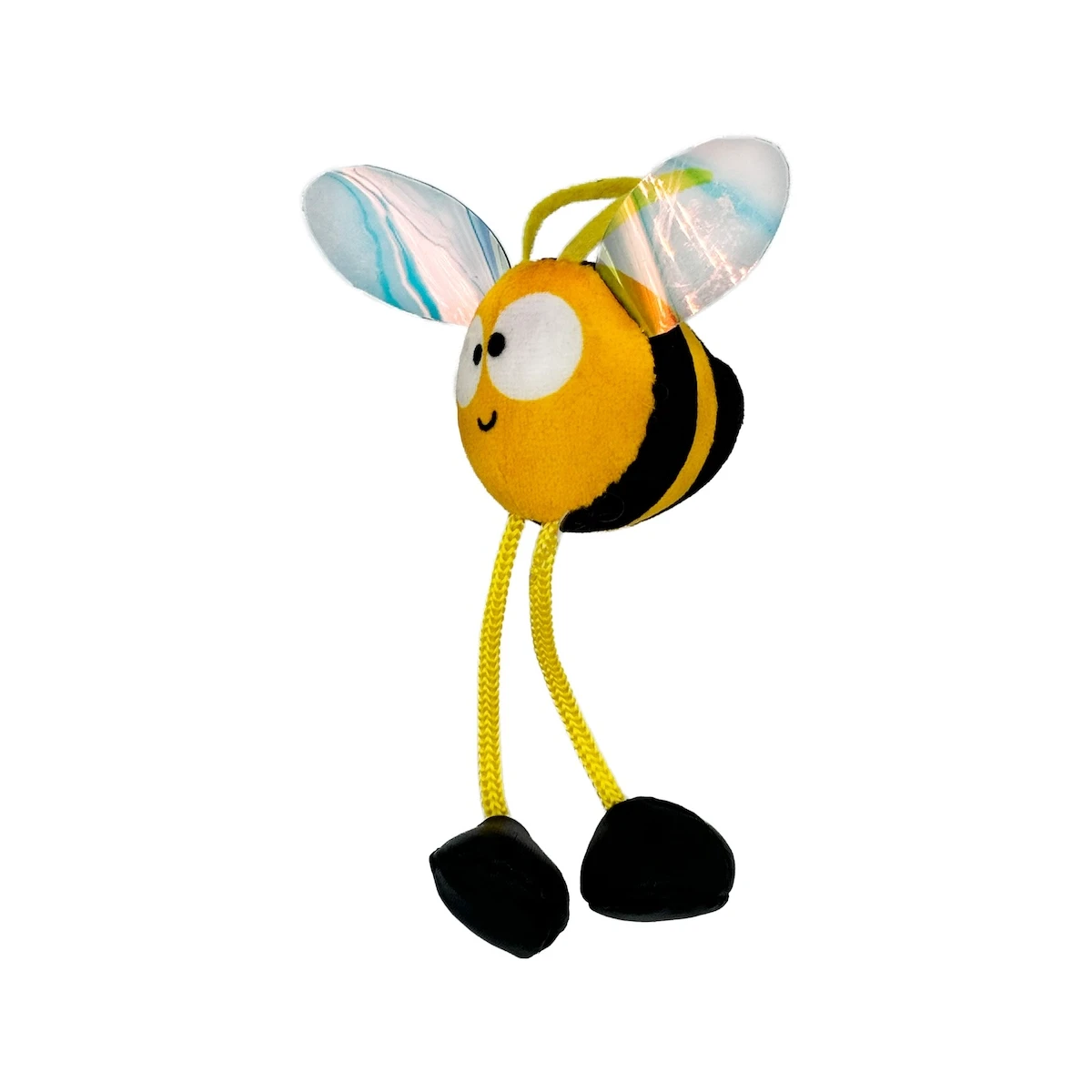
A flapping plush bird stays within reach for cats who like to wrestle with a toy. Your cat may bat it, grab it with the front paws or kick it with the back feet. Some versions make noise or activate when touched.
A chirping toy can add another cue to play, though sound preferences vary. If your cat startles easily, check whether the sound can be turned off or choose a quieter design. A bird that flaps on the floor can be engaging, but it won’t provide the same overhead movement as a wand.
Choose for Your Cat’s Play Style
Your cat’s current favorite toys can offer a useful clue. Watch what holds their attention before choosing a bird toy with more features.
For a Cat Who Likes to Chase
Try a wand or a flying-style toy that moves an attachment through a clear area. A wand lets you change direction and speed, which can help you find a pace your cat likes. Keep the movement close enough to the floor that your cat can catch it without needing to make a high jump.
A large open room isn’t essential for a handheld wand. You can make short movements around a chair or across a rug. Move fragile objects first and leave your cat a clear path to approach and retreat.
For a Cat Who Likes to Grab and Kick
A plush bird gives your cat something to hold between the paws. Check its size against toys your cat already carries or wrestles with. A very small attachment may be difficult to grab, while a large one may be awkward for a smaller cat.
If the toy has a motor or sound component, look for clear care instructions and a secure compartment. The outer material should be intact, with seams and attachments that can stand up to your cat’s normal play.
For a Cautious Cat
Start with a quiet toy and let your cat investigate it without movement. Once your cat seems comfortable, move it gently along the floor. Avoid turning on a noisy motor right beside your cat or moving the toy toward their face.
Some cats prefer to watch for a while before joining in. Give yours room to move away, and try again later if they seem unsettled. A simple wand may be a better first choice than a toy with several unpredictable features.
For a Kitten or Senior Cat
Choose a toy your kitten can approach and catch without struggling to handle it. Check for loose parts, and supervise closely as you learn how your kitten plays. Store string and feather attachments out of reach between sessions.
For a senior cat, try gentle movement at floor level and allow time to watch before pouncing. Interest in play varies from cat to cat, so adjust the pace rather than expecting the same response every day.
Vet Tip: If your cat seems painful, has trouble moving or suddenly loses interest in usual activities, ask your veterinarian for guidance.
What to Check Before You Buy
A bird toy should fit your cat, your space and the way you’ll use it. Before choosing one, check these details:
- Movement: Does the bird flap on the floor, move on a wand or travel around a motorized base?
- Activation: Do you move it, or does it respond to touch or a switch?
- Sound: Does it chirp, and can the sound be controlled if your cat prefers quiet?
- Construction: Are seams, feathers, cords and any battery compartment secure?
- Power and care: Does it need batteries or charging, and how should it be cleaned?
For a motorized toy, check the dimensions of the full setup, not just the bird attachment. Make sure you have room for its moving parts and a suitable place to store it. For a wand, consider whether the handle is comfortable for you and whether replacement attachments are offered for that particular toy.
Optional extras, such as catnip, may appeal to some cats but aren’t necessary for play. If a toy includes a refillable pouch, follow the product instructions and make sure the pouch stays secure. Don’t rely on an extra feature to make up for a toy that is poorly suited to your cat’s size or play style.
How to Introduce a Bird Toy
A gentle introduction gives you a chance to see what interests your cat and spot any problems with the toy. Choose a clear area away from breakable items and other pets who might compete for it.
Step 1: Inspect the toy. Check the seams, attachments and any cord before the first session. Make sure a battery compartment is closed and remove packaging that isn’t part of the toy.
Step 2: Let your cat look. Place the toy nearby or hold the wand attachment still. Allow your cat to approach and sniff rather than putting it directly against them.
Step 3: Start with small movements. Move a wand slowly along the floor, or activate an electronic toy at a comfortable distance. Pause if your cat backs away, hides or seems startled.
Step 4: Let your cat catch it. Give your cat chances to reach and hold the bird instead of keeping it constantly out of reach. If they prefer to watch, that’s useful information too.
Step 5: Stop and store it. End the session when your cat walks away or loses interest. Turn off electronic toys and put wand lines, feathers and loose attachments somewhere your cat can’t reach.
There’s no need to keep the toy moving throughout the session. Pausing lets your cat look and decide what to do next. You can also vary the direction of a wand or move it briefly behind a sturdy object to see what captures your cat’s attention.
Keep Bird Toys in Good Condition
Check the toy regularly, especially if your cat bites or kicks it. Look for torn fabric, loose feathers, exposed stuffing, damaged cords and a compartment that no longer closes securely. Take the toy away if it’s damaged, and replace it or its attachment as appropriate.
Keep wand toys and hanging lines stored out of reach when you aren’t using them. Even a toy that held up during one session should be checked again before the next. If you have more than one cat, watch how they share the space and separate play sessions if one cat prevents another from joining in.
Follow the manufacturer’s cleaning instructions, particularly for toys with motors, batteries or charging ports. Don’t assume an electronic bird can go into water or a washing machine. If your cat may have swallowed a feather, string, battery or toy part, contact your veterinarian promptly. (vcahospitals.com)
If Your Cat Ignores the Toy
First, change how you present it. A cat who ignores a bird waved overhead may respond to one moving slowly across the floor. Another may prefer a plush bird they can hold instead of a moving attachment.
Check the toy itself, too. An electronic bird may need charging, a new battery or a switch adjustment according to its instructions. If it works but the noise or movement bothers your cat, turn it off and try a quieter option.
You can also put the toy away and offer it another time. Keep a few suitable toys available for rotation rather than leaving every toy out at once. The goal is to find a type of play your cat chooses to engage with, not to make every toy a favorite.
Conclusion
The best bird toy is one your cat can enjoy comfortably and that you can use and store safely. At BaxterBoo, we suggest starting with your cat’s favorite way to play rather than picking the toy with the most features.
- Choose a wand for play you control.
- Consider a flapping plush bird for grabbing and kicking.
- Check movement, sound and construction before buying.
- Supervise play and put toys away when the session ends.
Next step: Browse our cat toy collection for a bird-style toy that fits your cat’s play preferences.
FAQ
Do interactive flying bird toys actually fly?
Some move through the air on a wand, line or motorized arm. A flapping plush bird may move its wings while remaining on the floor, so check the product description for the specific motion.
Are bird toys good for indoor cats?
Bird toys give indoor cats an opportunity to watch, chase, bat or hold a toy during play. Choose a style your cat enjoys and supervise the session.
Can I leave an automatic bird toy out for my cat?
It’s best to supervise use and follow the manufacturer’s instructions. Put the toy away after play, especially if it has a line, feathers or other parts your cat could damage or swallow.
What if my cat is afraid of a flapping or chirping bird?
Turn the toy off and let your cat investigate from a distance. If the noise or motion remains unsettling, try a quieter wand or plush toy and introduce it gently.


- Site & Contents BaxterBoo.com. BaxterBoo is located in the United States.
- Privacy & Security
- Terms of Use
- Accessibility Statement
