
 Save 15% on your 1st Autoship learn more

 Email us
 Live Chat
 FAQs
FAQs





Introduction
You are standing in the treat aisle or browsing online, looking for something that will finally keep your dog occupied for more than five minutes. You see a bin of natural antlers and remember hearing they are great for scraping away tartar. At BaxterBoo, we hear this question frequently from pet owners who want to balance the need for a long lasting chew with the desire for a healthy mouth. Antlers are often marketed as nature's toothbrush for canines. They are durable, sustainable, and packed with minerals. However, the reality of using them for dental care is more complicated than it looks on the surface. This article will explore the mechanical way antlers interact with plaque, the very real risks of tooth fractures, and how to choose the safest chewing options for your dog.
How Antlers Interact With Plaque and Tartar
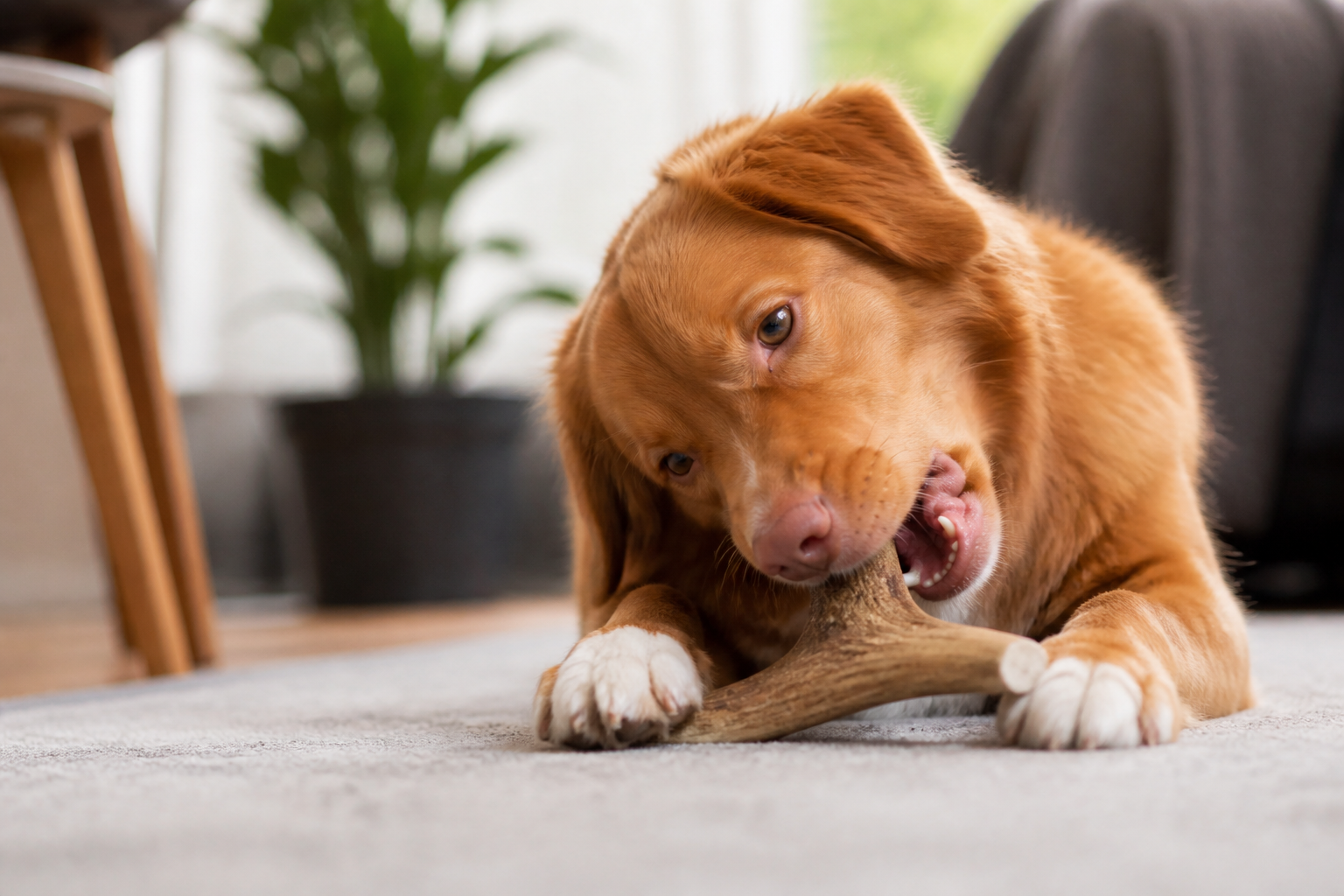
The primary reason people use antlers for dental health is the mechanical scraping action. As a dog gnaws on the hard surface, the material rubs against the side of the teeth. This friction can help break off bits of hardened calculus and prevent new plaque from settling. Unlike soft treats that crumble instantly, an antler requires hours of work. This extended chewing time is what provides the cleaning benefit.
Saliva also plays a role during this process. When your dog chews intently, their mouth produces more saliva. This fluid contains natural enzymes that help break down food particles and wash away bacteria. In theory, the combination of physical scraping and increased enzyme activity makes for a cleaner mouth.
Quick Answer: Antlers can mechanically scrape plaque from a dog's teeth through friction. However, they are often harder than the tooth enamel itself, which leads to a high risk of painful dental fractures.
The Risks of Hard Chews to Dog Enamel
While the scraping action works, it comes at a significant cost. The enamel on a dog's tooth is surprisingly thin. It is much thinner than human enamel. When a dog bites down with full force on something as hard as a deer or elk antler, the tooth often gives way before the antler does.
Veterinarians frequently see "slab fractures" caused by antlers. This happens most often to the carnassial tooth, which is the large, multi-rooted tooth toward the back of the upper jaw. A slab fracture occurs when a piece of the tooth side shears off like a flake of stone. This exposes the sensitive pulp and nerves inside.
Signs of a Dental Fracture
- Chewing on only one side of the mouth.
- Dropping food while eating.
- Sudden disinterest in hard toys or kibble.
- Paw-ing at the face or rubbing the mouth on the floor.
- Visible bleeding or a pink/dark spot on the center of a tooth.
Vet Tip: If you notice your dog has cracked a tooth or has bleeding gums after chewing, contact your veterinarian immediately. Untreated fractures can lead to painful abscesses and systemic infections that require professional dental surgery or extractions.
For additional warning signs and routine care guidance, read our guide to recognizing dental problems in dogs.
Comparing Different Types of Antler Chews
Not all antlers are created equal. They vary in density depending on the animal they come from and how they are processed. Understanding these differences can help you manage the risk level for your specific pet.
Deer Antlers
Deer antlers are generally the densest and hardest option. They have a very thick outer wall and a smaller amount of inner marrow. These are typically the most dangerous for "power chewers" who try to crack the chew like a nut. If your dog is the type to put their whole jaw strength into a single bite, deer antlers are likely too risky.
Elk Antlers
Elk antlers are usually larger and slightly less dense than deer antlers. They have more porous marrow in the center. Many retailers sell "split" elk antlers. These are cut down the middle to expose the marrow. Split versions are slightly safer because the dog can get to the "good stuff" without having to break through the hard outer shell first.
Moose Antlers
Moose antlers are often the softest of the three. They are frequently sold as "paddles" or flat slices. Because they are less dense, they tend to wear down more quickly. This makes them a slightly better choice for older dogs or those who are not aggressive chewers, though caution is still necessary.
| Antler Type | Density Level | Best For | Risk Level |
|---|---|---|---|
| Deer | Very High | Gentle nibblers only | High |
| Elk (Whole) | High | Large breeds | Moderate/High |
| Elk (Split) | Medium | Most adult dogs | Moderate |
| Moose | Lower | Seniors or light chewers | Lower |
The Knee Test for Chew Safety
A common rule of thumb used by dental experts is the "Knee Test." If you would not want to be hit in the kneecap with the object, it is probably too hard for your dog's teeth. Another version is the "Thumbnail Test." If you cannot make a small indentation in the chew with your thumbnail, the material does not have enough "give" to be considered safe for the average dog.
Antlers fail both of these tests easily. They are essentially bone. Because they do not have any flexibility, the force of the chew is transferred directly into the tooth structure. For many dogs, this is a recipe for an expensive trip to the veterinary dentist.
Key Takeaway: The cleaning benefits of antlers rarely outweigh the risk of a broken tooth. Most veterinarians recommend softer alternatives that have been tested for dental safety.
Safer Alternatives for Dental Health
If your goal is to keep your dog's teeth clean without risking a fracture, there are many products designed specifically for this purpose. We carry a wide variety of these items at BaxterBoo. These products are formulated to be firm enough to scrape teeth but soft enough to compress under heavy jaw pressure. Explore our dental treats and chews for options made for regular oral-care routines.
VOHC Approved Dental Treats
The Veterinary Oral Health Council (VOHC) awards a seal of approval to products that meet specific criteria for reducing plaque and tartar. Brands like Greenies or Royal Canin Dental diets are designed to scrub teeth while being fully digestible. These provide a safer mechanical cleaning than a hard antler.
You can also browse our selection of Greenies products when comparing dental treat options.
Rubber Enrichment Toys
Rubber toys from brands like Kong offer a great alternative. You can stuff them with wet food or treats to keep your dog busy. The rubber provides a "squish" factor that massages the gums and cleans the teeth without the risk of snapping a premolar. For dogs that crave the taste of marrow, you can use marrow-flavored pastes inside a rubber toy.
For more ideas about choosing materials and matching toys to chewing styles, read our guide to the best dog toys.
Water Additives and Gels
For dogs that cannot chew at all due to age or existing dental issues, water additives can help. These liquids contain enzymes that help neutralize the bacteria that lead to plaque. While they do not provide the mechanical scraping of a chew, they are a vital part of a multi-pronged dental care routine.
Managing Dental Health Through the Pharmacy
Sometimes, despite our best efforts, dental disease takes hold. Chronic bad breath or red gums are often signs of gingivitis or periodontal disease. In these cases, your vet may prescribe specific medications or professional-grade dental rinses.
Our pharmacy carries a range of FDA-approved products to help manage your dog's health. Through our partnership with Pet's Choice, we can help you fulfill prescriptions for antibiotics or pain relief following a dental procedure. We also offer prescription dental diets that are engineered to keep teeth clean through a specific kibble fiber matrix. Keeping up with regular vet checkups and using pharmacy-grade support can prevent the need for drastic measures later in life.
How to Introduce a New Chew Safely
If you decide to give your dog a chew, regardless of the material, you should follow a few safety steps. No chew is 100 percent safe if left unattended.
Step 1: Observe the chewing style. Watch your dog for the first 20 minutes. Do they slowly gnaw, or do they try to crunch the item into pieces? If they are a "cruncher," remove the chew immediately.
Step 2: Check the gums. Stop the session if you see any redness or bleeding along the gum line. Some minor friction is normal, but bleeding indicates the material is too abrasive.
Step 3: Monitor the size. As a chew gets smaller, it becomes a choking hazard. Throw away any piece that is small enough to fit entirely inside your dog's mouth.
Step 4: Set a timer. Limit chewing sessions to 15 or 20 minutes. This prevents excessive wear on the enamel and keeps the dog from getting a sore jaw.
For more guidance on supervising chews and avoiding dangerous materials, see our article about rawhide-free dog chews.
Bottom line: While antlers are a natural option, safer alternatives like rubber toys and VOHC-approved treats provide dental benefits with much lower risk.
Nutritional Benefits and Digestion
One argument in favor of antlers is their mineral content. They are rich in calcium, phosphorus, and magnesium. While these are good for dogs, most high-quality commercial dog foods already provide a balanced mineral profile. Your dog does not necessarily need an antler to get these nutrients.
Furthermore, antlers can be tough on the digestive system. If a dog manages to break off a sharp shard and swallows it, that shard can cause a puncture or a blockage in the intestines. Unlike rawhide, which eventually softens, antler shards remain hard and sharp as they move through the body.
If you are looking to support your dog's bones and joints with minerals, consider a dedicated supplement like Cosequin or Zesty Paws. These provide the targeted nutrition your dog needs in a controlled, safe dosage. You can even find these in our MVP Rewards program, where you earn points on every purchase to save on future health needs.
When to Consult Your Veterinarian
Dental health is not just about white teeth. It is about the health of the entire body. Bacteria from the mouth can enter the bloodstream and affect the heart, liver, and kidneys. This is why regular professional cleanings are so important.
If your dog has severe halitosis (bad breath) or loose teeth, a chew toy will not fix the problem. You should schedule a dental exam with your vet. They can take X-rays to see what is happening beneath the gum line. If your vet prescribes a specific dental plan, we can help with the supplies. From prescription diets to recovery medications in our pharmacy, our goal is to support the plan your vet puts in place.
For a broader routine that includes brushing, dental treats, and veterinary exams, review these pet dental care tips.
Choosing the Right Size for Safety
If you do choose to use antlers or any hard bone, size is the most important safety factor. The chew should always be larger than what the dog can comfortably fit in their mouth. For a large breed like a Labrador or a Golden Retriever, a small deer antler is a major choking risk. Always go one size larger than you think you need.
At BaxterBoo, we curate our selection to ensure you have access to the best brands in the industry. Whether you are looking for a durable rubber toy or a bag of dental chews, we choose products that prioritize pet safety and owner peace of mind. We have been operating since 2006, and our team in Vernon Hills knows that every dog has a unique chewing style.
For more discussion of chew size, durability, and supervision, explore our dog toy safety and enrichment guide.
Summary of Dental Care Strategies
Maintaining a healthy mouth requires more than just a single chew toy. It is a combination of daily habits and professional care.
- Brush your dog's teeth daily if they allow it.
- Use VOHC-approved treats for mechanical cleaning.
- Provide safe rubber toys for mental enrichment and chewing needs.
- Schedule annual veterinary dental exams.
- Monitor all chewing sessions to prevent choking or fractures.
By moving away from excessively hard materials like antlers and toward safer, engineered solutions, you protect your dog from the pain and expense of broken teeth. Our Autoship program is a great way to ensure you never run out of safe dental treats, while also saving money on every order.
Conclusion
While antlers do have the ability to clean a dog's teeth through mechanical scraping, the risk of dental fractures is often too high for comfort. The thin enamel of a dog's tooth is no match for the dense bone structure of a deer or elk antler. Instead of reaching for the hardest object possible, look for dental solutions that offer a balance of safety and effectiveness. Explore our collection of dental care products or visit our pharmacy section to find veterinarian-recommended solutions for your dog's oral health.
FAQ
Are split antlers safer for dogs than whole antlers?
Split antlers are generally considered slightly safer because the inner marrow is exposed. This allows the dog to lick and gnaw on the softer center without needing to use extreme jaw pressure to break the hard outer shell. However, the outer casing is still very hard and can still cause tooth fractures if the dog bites down on the edges.
Can puppies chew on antlers for teething?
It is usually best to avoid giving antlers to puppies. Puppy teeth are much more fragile than adult teeth and are very prone to snapping when they encounter hard surfaces. Soft rubber teething toys or chilled dental rings are much safer options for soothing a puppy's sore gums without risking permanent damage to their developing mouth.
For more ideas, read our guide to puppy teething toys.
Do antlers splinter like cooked bones?
Antlers generally do not splinter in the same way that cooked bird or beef bones do. Instead of long, sharp shards, they tend to wear down or break into smaller, jagged chunks. While this is slightly better, these chunks can still be sharp enough to cause internal damage or create a dangerous blockage if swallowed by your dog.
How can I tell if an antler is too hard for my dog?
You can use the "Knee Test" or the "Thumbnail Test" to check the hardness. If the object would hurt to be hit with on your knee, or if you cannot leave a small mark in it with your thumbnail, it is likely hard enough to break a tooth. Most natural antlers will fail both of these tests, which is why supervision and caution are always required.






