
 Save 15% on your 1st Autoship learn more

 Email us
 Live Chat
 FAQs
FAQs





Introduction
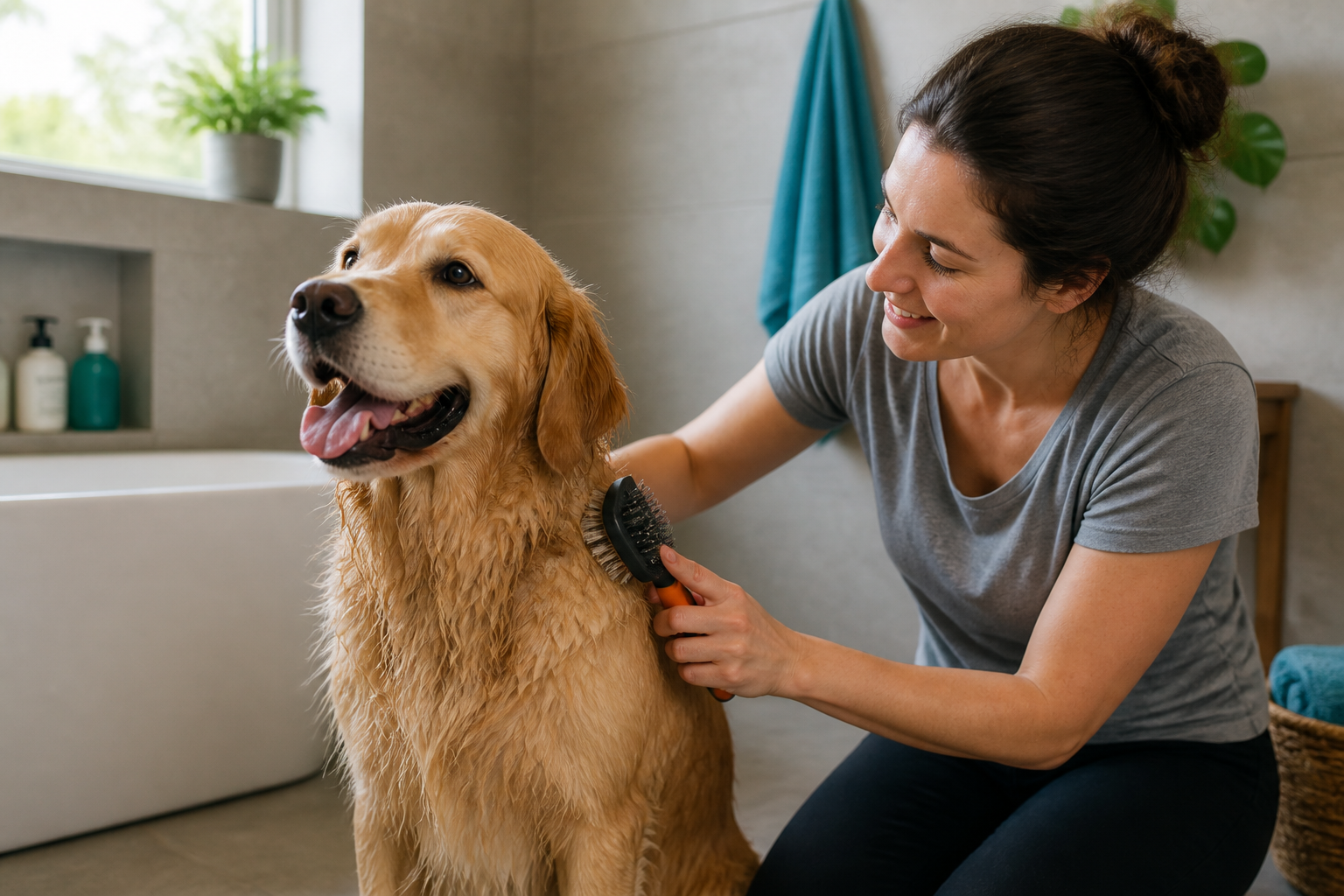
You are standing in the bathroom with a muddy dog and a bottle of shampoo. Your dog might have spent the afternoon digging in the garden or rolling in the grass. You want them clean, but you are looking at a coat full of tangles and loose fur. This is the moment every pet owner faces. Should you grab the brush now or wait until the hair is wet and soapy? At BaxterBoo, we know that the order you choose can make a massive difference in how your dog feels and how clean they actually get. Getting it wrong can lead to painful mats that are nearly impossible to remove. This post covers the best practices for brushing, the science of why water changes hair, and when you might actually want to brush a wet coat. Brushing before the bath is the safest rule for most dogs to ensure a pain-free grooming session.
The Case for Brushing Before the Bath
For the vast majority of dogs, the brush should always come before the water. This is the gold standard for at-home grooming. When a dog is dirty, their coat is full of dust, loose fur, and environmental debris. If you add water to a coat that has not been brushed, you are essentially creating a thick mud inside the fur. This makes it much harder for the shampoo to reach the skin.
Brushing before the bath allows you to remove the "dead" coat. Most dogs shed constantly, and that loose hair sits trapped against the skin. If you do not brush it out first, that loose hair becomes heavy and sodden. It traps soap and prevents a thorough rinse. You might find that after the bath, your dog still smells like "wet dog" because the dirt was never fully washed away from the skin level.
Quick Answer: You should almost always brush your dog before the bath. Water acts like glue for existing tangles and mats, making them much tighter and harder to remove once wet. Brushing first ensures the shampoo can reach the skin and the coat rinses clean.
Preventing the Matting Trap
The biggest reason to brush first involves mats and tangles. A mat is a clump of tangled fur that has become densely packed. When these mats get wet, the hair fibers swell and then shrink as they dry. This process causes the mat to tighten significantly. A small knot that was easy to pick apart before the bath can become a hard, solid lump afterward.
If you try to brush out these water-tightened mats, you will likely cause your dog pain. The brush will tug at the skin, which can lead to "brush burn" or irritation. In many cases, mats that have been tightened by water must be cut out with clippers. Brushing thoroughly beforehand prevents this scenario entirely.
Protecting Your Equipment
If you are using high-quality grooming tools, you want them to last. Dirt and grit are abrasive. When you brush a very dirty dog, that grit can dull the teeth of your metal combs or the pins on your slicker brushes. By removing the bulk of the loose hair and surface dirt before the bath, you are being kinder to your tools. This is even more important if you plan on using clippers. Never use clippers on a dirty coat, as the grit will ruin the blades almost instantly.
The Exceptions: When Brushing Wet Works
While the "brush first" rule is standard, professional groomers sometimes use a different technique. You might see a professional brushing a dog while they are covered in conditioner in the tub. This is usually reserved for specific coat types or dogs with very heavy shedding.
When a coat is saturated with a high-quality conditioner, the hair becomes slippery. This "slip" allows a brush to glide through tangles that might have been too stubborn to handle dry. However, this requires a very specific approach. You must use a tool designed for wet hair, such as a wide-toothed comb or a rubber curry brush.
Brushing During the Blow Dry
Another exception is the post-bath brush during the drying phase. Many professional groomers use a high-velocity dryer to blow the water off the dog. As the air moves through the coat, they use a slicker brush to "line brush" the hair. This technique helps to straighten the fur and remove any remaining undercoat that the bath loosened up.
If you are doing this at home, you must be careful. Brushing wet hair can stretch the hair shaft and lead to breakage. Only attempt this if the coat is clean and you have used a detangling spray or conditioner. For most owners, it is safer to wait until the dog is completely dry before doing the final "finish" brush.
Key Takeaway: Brushing a wet coat is only recommended if you have applied a heavy conditioner or detangling spray to provide "slip." For most home grooming, stick to brushing before the bath and after the coat is fully dry.
Step-by-Step Pre-Bath Brushing Routine
To get the best results, you should follow a systematic approach. Do not just move the brush randomly over the dog. You want to make sure every inch of the coat is prepared for the water. For additional guidance on brushing and coat care, see this dog grooming guide for curly-haired coats.
Step 1: Perform a "feel test" / Run your hands over your dog's entire body. Look for hidden mats behind the ears, under the armpits, and around the tail.
Step 2: Start with a wide-toothed comb / Gently work through the ends of the hair. If the comb catches, you have found a knot. Do not pull. Use your fingers to tease the knot apart before continuing.
Step 3: Use a slicker brush / Work in sections. Pull the hair up and brush the hair underneath, working from the skin outward. This ensures you are not just "skimming" the top of the coat.
Step 4: Check the "high friction" areas / Pay extra attention to where the collar or harness sits. These areas often have the most tangles.
Step 5: The final comb-through / Once you think you are done, run a metal comb through the coat. If it glides from skin to tips without catching, your dog is ready for the tub.
Tools of the Trade
The brush you choose depends entirely on your dog's coat. At BaxterBoo, we carry a wide variety of grooming tools, including options in our dog brushes and combs collection. Using the wrong brush can be ineffective or even uncomfortable for your pet.
- Slicker Brushes: These have fine wire pins. They are excellent for removing loose hair and breaking up small tangles in medium to long-haired dogs.
- Rubber Curry Brushes: These are perfect for short-haired breeds like Labradors or Boxers. You can use these in the bath to massage the skin and pull out loose fur while soaping.
- Undercoat Rakes: If you have a double-coated dog like a Golden Retriever, this tool is essential. It reaches through the top coat to pull out the fuzzy undercoat.
- Metal Combs: These are the "truth-tellers" of grooming. They will catch on any mat that a brush might have missed.
Managing the Bathing Process
Once you have finished the pre-bath brush, the actual washing process becomes much easier. Use a shampoo formulated for dogs. Human shampoo has a different pH level and can dry out a dog's skin. We carry many trusted options in our dog shampoo and conditioner category for those with sensitive skin.
When you apply shampoo, try to massage it in rather than scrubbing vigorously. Scrubbing in circles can actually create new tangles in long-haired dogs. Instead, use a downward motion, following the direction of the hair growth.
Vet Tip: If your dog has a history of ear infections, place a large cotton ball in each ear before the bath. This prevents water from entering the ear canal. Trapped moisture is a leading cause of bacterial growth and discomfort.
The Importance of Rinsing
You must rinse your dog until you think all the soap is gone, and then rinse for two more minutes. Leftover shampoo residue is a major cause of skin irritation. It can make the coat feel sticky or "tacky" once it dries. This stickiness will attract dirt faster and cause the hair to tangle much more quickly than a clean coat would.
For more bathing reminders, read these dos and don'ts for bathing your dog.
The Post-Bath Finish
After the bath, your dog will likely want to do the "zoomies" and shake. Let them shake! It is the most efficient way for them to remove the bulk of the water. When you towel dry, blot the hair rather than rubbing it. Rubbing a long-haired dog with a towel is a guaranteed way to create a "nest" of tangles.
Once the dog is dry, or mostly dry, it is time for the final brush. This is often the most rewarding part of the process. The coat should feel light, soft, and fluffy. This final brush removes any hair that was loosened by the warm water and the scrubbing action.
Bottom line: A final brush after the dog is dry ensures that no new tangles formed during the drying process and leaves the coat looking its best.
Skin Health and When to Seek Help
Grooming is not just about looks. It is a vital health check. While you are brushing before the bath, you should be looking at the skin. If you notice extreme redness, bald patches, or a foul odor that does not go away after a bath, your dog may have an underlying skin condition.
If your dog is constantly itchy or has "hot spots," a regular grooming routine is even more important. However, sometimes a bath is not enough. For chronic skin issues or allergies, we recommend speaking with your veterinarian. Our BaxterBoo pharmacy, in partnership with Pet's Choice, carries a range of FDA-approved medicated shampoos and treatments that can help manage these conditions. You will need a prescription from your vet for many of these products, but they are often the most effective way to provide relief for a suffering pet.
For everyday skin and coat products, explore our dog skin and coat care category.
Signs of Skin Trouble During Grooming:
- Red, inflamed skin that feels hot to the touch
- Excessive flaking or "dandruff"
- Small bumps or pustules
- Brownish staining on the paws or belly (often a sign of yeast)
- Fleas or flea dirt (small black specks that turn red when wet)
Common Grooming Mistakes to Avoid
Many well-meaning owners make simple errors that turn bath time into a chore. Avoiding these common pitfalls will make the experience better for everyone.
- Bathing too often: Most dogs only need a bath once every four to six weeks. Over-bathing can strip the natural oils from the coat, leading to dry, itchy skin.
- Using hot water: Dogs have much more sensitive skin than humans. Use lukewarm water that feels comfortable to your inner wrist.
- Ignoring the nails: While your dog is wet and the nails are softer, it is a great time for a trim. However, many owners skip this, leading to discomfort and posture issues for the dog.
- Neglecting the face: Use a damp washcloth for the face rather than spraying water directly at it. Most dogs hate having water sprayed near their nose and eyes.
Key Takeaway: Consistency is the key to a healthy coat. Regular brushing between baths prevents mats from ever forming and makes the actual bath day much less stressful.
Summary of the Brushing Order
To recap, the best way to handle the "before or after" debate is to realize that both are important, but they serve different purposes.
- Before the bath: Use a brush and comb to remove all mats, tangles, and loose undercoat. This is the heavy lifting of grooming.
- During the bath: Use a rubber brush for short-haired dogs or a wide comb for long-haired dogs only if using a heavy conditioner.
- After the bath: Wait until the coat is fully dry. Perform a light brush to fluff the fur and remove any last bits of shedding hair.
This three-step approach ensures that your dog stays comfortable and your house stays as fur-free as possible. It also protects your plumbing from the "fur-clog" that happens when unbrushed dogs are put straight into the tub.
Conclusion
Deciding whether to brush your dog before or after a bath does not have to be a guessing game. By brushing before the water hits the fur, you protect your dog from painful mats and ensure the shampoo can actually do its job. A clean, well-brushed dog is a happy dog, and a happy dog makes for a much easier grooming experience. We have been helping pet owners find the right tools and health solutions since 2006. Whether you need a new slicker brush or a prescription shampoo from our pharmacy, we are here to support your pet's wellness journey.
- Always brush before the bath to remove tangles.
- Use conditioner to help the brush glide if the coat is prone to matting.
- Check the skin for any signs of irritation or infection.
- Ensure the coat is fully dry before the final finish brush.
For all your grooming needs, visit our Medical & Mobility section or check out our full range of brushes and shampoos. If your dog needs specific skin support, our pharmacy partnership with Pet's Choice is ready to help with your vet's prescription.
FAQ
Why does my dog get more mats after a bath?
This happens because water causes hair to swell and then contract. If there were tiny tangles in the fur before the bath, the drying process causes those tangles to shrink and tighten into hard mats. Always brush your dog thoroughly before they get wet to prevent this "shrinking" effect from creating knots.
Can I brush my dog while they are still wet?
It is generally better to wait until the dog is dry. Wet hair is more elastic and prone to stretching or breaking. If you must brush a wet dog, only do so if you have applied a detangling spray or conditioner. Use a tool with wide teeth or soft rubber pins to avoid pulling on the sensitive wet skin.
How do I get a mat out if I forgot to brush before the bath?
If you find a mat after the bath, do not pull on it with a brush. Apply a generous amount of detangling spray or a leave-in conditioner to the spot. Use your fingers to gently pull the hair apart from the outside in. If the mat is tight against the skin, it is safest to have a professional groomer remove it to avoid cutting the skin.
Is it okay to use human conditioner on my dog's tangles?
You should avoid using human products on your dog. Dogs have a different skin pH than humans, and our conditioners often contain fragrances or chemicals that can irritate their skin. Use a conditioner specifically formulated for dogs. These products are designed to provide the right amount of "slip" while remaining safe for the canine skin barrier.






