
 Save 15% on your 1st Autoship learn more

 Email us
 Live Chat
 FAQs
FAQs





Introduction
You are standing in the treat aisle at the pet store or scrolling through pages of natural chews online. Your dog is likely sitting at your feet with hopeful eyes. You see a bin of large, dried pig ears and wonder if they are more than just a tasty snack. Many pet owners ask if these classic treats can actually help keep a dog's mouth clean. At BaxterBoo, we have spent years helping pet parents navigate the massive world of dog chews and dental health.
This post covers how pig ears work on plaque, the nutritional pros and cons, and the safety steps you should take. While these treats offer a satisfying crunch, they are just one piece of a larger wellness puzzle. We will help you decide if they belong in your dog's treat jar or if another option might be better for their specific needs. Pig ears can support dental hygiene through mechanical action, but they require a careful approach to keep your pet safe and healthy.
How Pig Ears Interact with Your Dog's Teeth
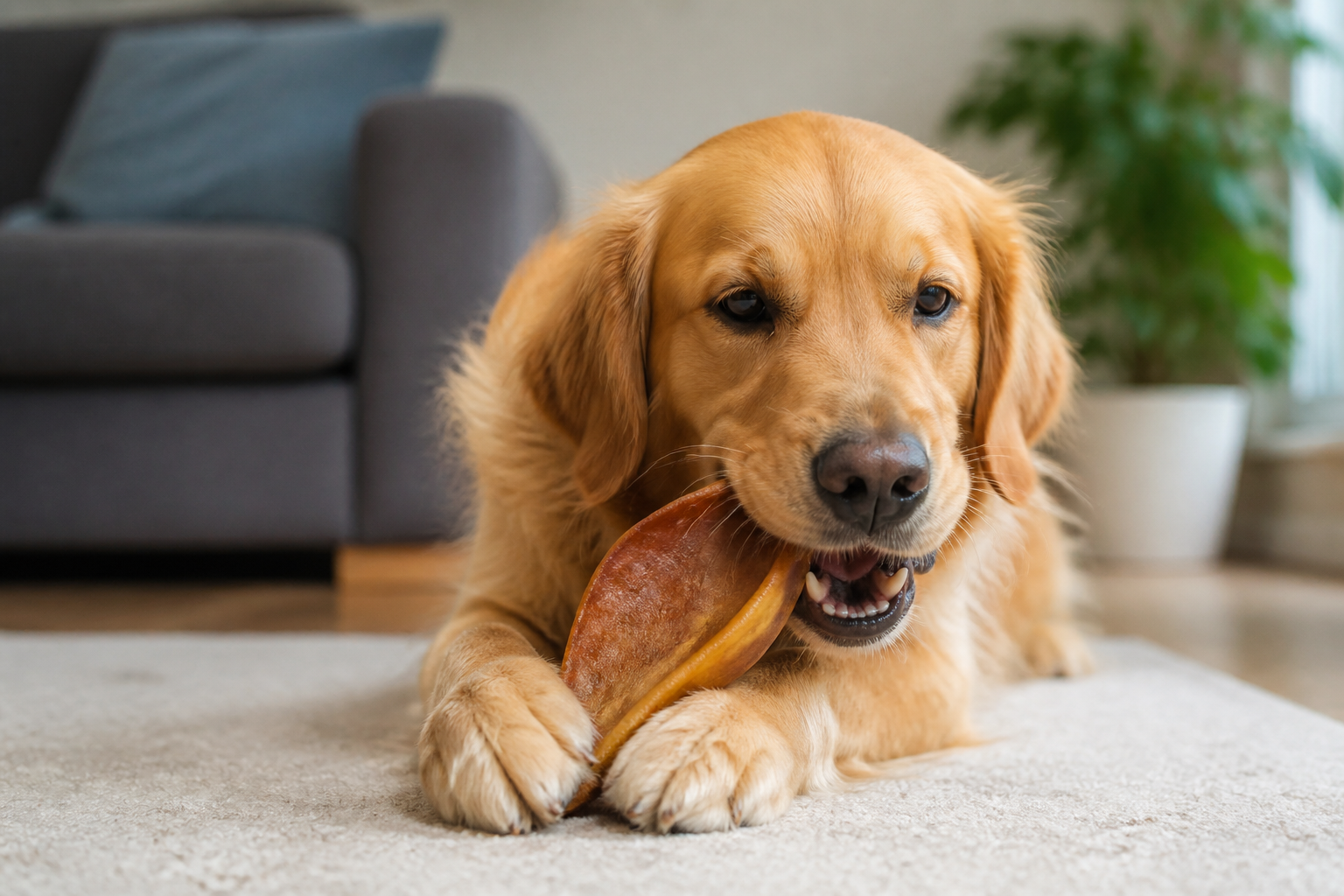
The primary way a pig ear helps clean teeth is through mechanical abrasion. When your dog gnaws on the tough, dried surface, the material rubs against the enamel. This action works much like a very mild sandpaper. As the dog chews, the ear softens and wraps slightly around the edges of the teeth. This helps scrape away soft plaque before it has a chance to harden into tartar.
Unlike hard bones or antlers, pig ears are made of cartilage. Cartilage is tough but has a slight give to it. This makes it a safer option for many dogs because it is less likely to cause tooth fractures. When a dog crunches down, the cartilage provides resistance without being completely unforgiving. This resistance is what helps stimulate the gums and increase saliva production.
Saliva is a natural defense mechanism for a dog's mouth. It contains enzymes that help break down food particles and neutralize acids produced by bacteria. By encouraging a long chewing session, pig ears help keep the mouth rinsed with this beneficial fluid. However, it is important to remember that a treat cannot reach the deep crevices between teeth or under the gum line as effectively as a toothbrush.
Quick Answer: Yes, pig ears help clean teeth by mechanically scraping away plaque during the chewing process. They also stimulate the gums and increase saliva production, which helps rinse the mouth. However, they are not a substitute for regular brushing or professional veterinary cleanings.
The Nutritional Breakdown of a Pig Ear
Understanding what is inside a pig ear is just as important as knowing how it affects the teeth. These treats are almost entirely made of skin and cartilage. This means they are a single-ingredient snack, which is a big plus for owners who want to avoid fillers and artificial dyes. You can compare options in our natural dog chews collection.
Pig ears are naturally high in protein, which supports muscle maintenance and overall body function. They also contain collagen, glucosamine, and chondroitin. These compounds are the building blocks of healthy joints. For a senior dog or a breed prone to mobility issues, these natural nutrients can be a nice bonus to their diet.
The main nutritional concern with pig ears is their fat content. Pigs are naturally fatty animals. A single ear can contain a significant amount of fat and calories. If your dog is on a weight management plan, a pig ear might represent a large portion of their daily caloric limit. It is also a very rich treat that can be hard on sensitive stomachs.
Fat and Calorie Considerations
A typical pig ear can range from 60 to 100 calories or more depending on its size. For a small dog, this could be half of their daily requirement. Feeding these too often can quickly lead to weight gain. Obesity in dogs puts extra stress on the heart and joints, which can negate the benefits of the glucosamine found in the cartilage.
Key Takeaway: Pig ears are rich in protein and joint-supporting nutrients like glucosamine, but they are also high in fat. Use them as an occasional reward rather than a daily staple to avoid unwanted weight gain.
Potential Risks and How to Mitigate Them
No dog treat is completely without risk. When it comes to pig ears, the most common concerns are choking, digestive blockages, and bacterial contamination. Being aware of these risks allows you to take the necessary steps to keep your dog safe while they enjoy their chew.
Choking and Blockages
Pig ears are often categorized as "long-lasting" chews, but this depends entirely on the dog. A "gulper" might try to swallow a large piece of the ear before it is soft enough to digest. This can lead to a choking hazard in the throat or a dangerous blockage in the intestines.
Always supervise your dog when they have a pig ear. If you notice they are trying to swallow large chunks, it might be time to take the treat away. Once the ear gets small enough to fit entirely inside their mouth, it is a good idea to trade them for a different reward to prevent accidental swallowing of the nub. The Canine Butcher Shop Pig Ear Dog Chew is one specific option to review when comparing natural chews.
Digestive Upset
Because pig ears are high in fat, they can cause diarrhea or vomiting in some dogs. This is especially true for dogs with a history of pancreatitis. Pancreatitis is a serious condition where the pancreas becomes inflamed, often triggered by high-fat meals. If your dog has a sensitive stomach, you might want to consider a leaner alternative like a cow ear.
Bacterial Concerns
In the past, there have been recalls related to Salmonella contamination in pig ears. This bacteria can make both dogs and humans sick. To minimize this risk, always wash your hands thoroughly after handling the treats. You should also clean the area where your dog was chewing once they are finished.
Vet Tip: If your dog has a history of pancreatitis or requires a low-fat diet, consult your veterinarian before feeding pig ears. For dogs with ongoing health issues, our dog pharmacy carries a variety of prescription diets and medications through our partnership with Pet's Choice.
Sourcing and Quality: Why It Matters
Not all pig ears are created equal. The way the ear is processed determines both its safety and its nutritional value. At BaxterBoo, we prioritize treats that are sourced and made in the United States. US-sourced treats are subject to stricter quality controls and safety inspections than many imported options.
Processing Methods
You will often see pig ears that are baked, roasted, or smoked.
- Baked or Roasted: These are generally the safest options. They are dried at high temperatures to kill bacteria while preserving the structure of the cartilage.
- Smoked: While many dogs love the flavor of smoked treats, some smoking processes use artificial chemicals or flavors. Natural smoking is better, but any smoked meat should be given in moderation.
- Irradiated: Some manufacturers use radiation to kill bacteria. While the FDA considers this safe, many pet owners prefer non-irradiated options to keep the treat as natural as possible.
Avoid ears that look unnaturally white. This often indicates they have been bleached or treated with harsh chemicals to clean them. A high-quality pig ear should have a natural, golden-brown color and a slightly oily texture.
Bottom line: Choose US-sourced, oven-baked pig ears with no added chemicals to ensure you are giving your dog the safest possible product.
Comparing Pig Ears to Other Natural Chews
If you are looking for dental benefits but are worried about the fat content of pig ears, there are several alternatives. Each chew has its own set of pros and cons depending on your dog's size and chewing style. For more ideas, read 10 Best Dental Chews for Dogs.
| Chew Type | Main Benefit | Fat Content | Durability |
|---|---|---|---|
| Pig Ear | High protein, joint support | High | Medium |
| Cow Ear | Lower fat, dental scraping | Low | Medium |
| Bully Stick | Very high protein, long-lasting | Moderate | High |
| Beef Trachea | Excellent glucosamine source | Moderate | Medium |
| Antler | Extremely long-lasting | Very Low | Very High |
Cow Ears
Cow ears are very similar to pig ears in shape and texture. However, they are naturally much leaner. They provide the same mechanical scraping action for the teeth without the high calorie count. They are often a better choice for dogs watching their weight or those with sensitive tummies.
Bully Sticks
Bully sticks are made from beef muscle. They are much denser than pig ears and take longer for most dogs to finish. This extended chewing time can lead to better dental cleaning because the dog spends more time scraping their teeth against the treat. They are high in protein and generally lower in fat than pig ears.
Building a Complete Dental Routine
While pig ears can help, they should not be the only tool in your dental care kit. Proper oral hygiene for a dog requires a multi-faceted approach. Think of a pig ear as a supplement to the routine, not the foundation. The Top 10 Pet Dental Care Tips offers additional ideas for maintaining your pet's oral health.
Step 1: Daily Brushing / This is the gold standard of pet dental care. Use a dog-specific toothpaste and a soft brush to clean the outer surfaces of the teeth. Even brushing three times a week can make a massive difference.
Step 2: Dental Rinses or Water Additives / These products help reduce the bacterial load in the mouth. They are especially useful for dogs that will not tolerate a toothbrush.
Step 3: Professional Cleanings / Just like humans, dogs need professional help. A veterinarian can perform a deep cleaning under anesthesia to remove tartar that has hardened into stone.
Step 4: Quality Chews / Incorporate safe chews like pig ears, cow ears, or VOHC-approved (Veterinary Oral Health Council) dental treats. These provide the mechanical action needed to keep plaque at bay between brushings.
Key Takeaway: A healthy mouth requires daily attention. Use a combination of brushing, quality chews, and regular veterinary checkups to prevent painful dental disease.
The Role of the Pharmacy in Dental Health
Sometimes, treats and brushing are not enough to manage a dog's oral health. If your dog suffers from chronic gum infections, severe tartar buildup, or has had multiple tooth extractions, your vet may recommend specific medical interventions. This might include prescription dental diets or oral antibiotics to manage infections.
Our pharmacy at BaxterBoo provides access to these necessary medical products through our partnership with Pet's Choice. We carry FDA-approved medications and prescription diets that are formulated specifically to support oral health and manage systemic issues related to dental disease. If your vet provides a prescription for a dental-focused diet, we can help you get it delivered right to your door.
Tips for Introducing Pig Ears Safely
If you have decided that pig ears are right for your dog, follow these steps to ensure a positive experience.
- Check for adult teeth: Ensure your puppy has their full set of adult teeth before offering a tough chew like a pig ear. This usually happens around six months of age. Pet parents can browse our puppy shop for age-appropriate options.
- Start slow: Give your dog only half an ear or let them chew for ten minutes to see how their stomach reacts to the rich fat content.
- Choose a wipeable surface: Pig ears can be a bit greasy. They are best enjoyed on a tile floor, in a crate, or outside to keep your carpets clean.
- Provide fresh water: Chewing is hard work and can make a dog thirsty. Always have a bowl of fresh water nearby.
- Wash your hands: Always clean up after handling any animal-based chew to prevent the spread of bacteria.
Vet Tip: Always monitor your dog's mouth for signs of trouble. If you notice bleeding gums, broken teeth, or a sudden reluctance to chew, stop giving treats and schedule a dental exam with your veterinarian.
Conclusion
Pig ears are a classic, single-ingredient treat that many dogs find irresistible. They offer legitimate dental benefits by scraping away plaque and stimulating the gums through natural chewing. They also provide a healthy dose of protein and joint-supporting nutrients. However, their high fat content and potential for choking mean they must be used thoughtfully.
When you choose pig ears for your dog, prioritize quality and safety. Look for US-sourced, oven-baked options and always supervise your pet while they enjoy their snack. By balancing these treats with regular brushing and professional veterinary care, you can help your dog maintain a bright, healthy smile for years to come.
- Pig ears scrape teeth to remove soft plaque.
- They are high in protein but also high in fat.
- Supervision is essential to prevent choking.
- US-sourced treats are the safest choice.
Bottom line: Pig ears are a helpful tool for dental hygiene when used as an occasional, supervised reward within a complete oral care routine.
Explore our dog dental care products and natural chews to find the perfect fit for your dog's chewing style.
FAQ
How many pig ears can I give my dog per week?
For most medium to large dogs, one or two pig ears per week is a safe limit. Because they are high in calories and fat, giving them more often can lead to weight gain or digestive issues. Always adjust your dog's main meal portion on the days they receive a pig ear to keep their total calorie intake balanced.
Are pig ears safer for teeth than bones?
Generally, yes, because pig ears are made of cartilage rather than hard mineralized bone. Cartilage is more flexible and less likely to cause painful tooth fractures or "slab fractures" which often happen with very hard chews like marrow bones. However, you should still monitor your dog for any signs of dental discomfort or bleeding.
Can puppies chew on pig ears?
It is best to wait until a puppy has all of their adult teeth, usually around six months old, before giving them pig ears. Puppy teeth are more fragile and can be damaged by tough chews. Additionally, the high fat content in pig ears can easily upset a puppy's developing digestive system, so start with very small pieces.
Do pig ears have a strong smell?
Natural pig ears have a mild, meaty scent that dogs find very appealing. If an ear has a very strong, rancid, or chemical odor, it may be spoiled or heavily processed with additives. To keep them fresh and contain the natural scent, store your pig ears in a cool, dry place inside an airtight container.






