
 Save 15% on your 1st Autoship learn more

 Email us
 Live Chat
 FAQs
FAQs





Introduction
You might have chosen a Beagle, Boxer, or Dalmatian specifically because you wanted to avoid the intensive grooming requirements of a Poodle or a Golden Retriever. It is a common assumption that if a dog does not have long, flowing locks, they do not need much maintenance. You likely spend your time playing fetch or hiking rather than untangling mats. However, many owners find themselves surprised by the amount of "dog glitter" that ends up on their furniture and clothes.
At BaxterBoo, we know that every coat type has its own set of rules. While your dog might not need a professional haircut every six weeks, they still require regular brushing to stay healthy and comfortable. This post covers why brushing is vital for short coats, which tools actually work, and how to create a routine that supports your dog’s skin health. Understanding these basics will help you manage shedding and keep your pet’s coat looking its absolute best.
The Mystery of the Short Coat
Short haired dogs often carry an "illusion of low maintenance." Because you cannot see tangles or mats, it is easy to assume that nothing is happening beneath the surface of the fur. In reality, short haired dogs have a high density of hair follicles. Breeds like Labradors or Pugs actually have more hairs per square inch than many long haired breeds.
These hairs have a shorter life cycle. They grow, die, and fall out much faster than the hair on a long haired dog. When these dead hairs are not brushed away, they sit against the skin. This can cause itching, trap heat, and lead to a dull appearance. Brushing is the only way to manually intervene in this cycle and keep the skin clear.
Quick Answer: Yes, short haired dogs need regular brushing. It removes dead hair, exfoliates the skin, and distributes natural oils that keep the coat shiny and healthy.
Why Brushing Matters for Short Haired Dogs
Brushing is not just about aesthetics or keeping your house clean. It is a fundamental part of canine hygiene that affects the largest organ of your dog's body: their skin. When you skip brushing, you miss out on several key health benefits that are unique to smooth and short coats.
Distributing Natural Oils
Your dog’s skin produces sebum. This is a natural oil that protects the skin and gives the coat its shine. On a short haired dog, these oils can sometimes pool at the base of the hair, making the skin feel greasy or causing a "doggy" odor. Brushing acts like a natural conditioning treatment. It pulls those oils from the skin and spreads them down the entire length of the hair shaft.
Exfoliation and Circulation
Just like humans, dogs have dead skin cells that need to be cleared away. A good brushing session acts as a mild exfoliant. The mechanical action of the bristles or rubber nubs stimulates blood flow to the surface of the skin. Increased circulation can promote healthier hair growth and faster skin cell regeneration.
Early Detection of Health Issues
Because short hair is so close to the body, brushing is the perfect time to perform a "hand-on-dog" health check. You are much more likely to feel a small lump, a tick, or a dry patch when you are moving a brush over their body than when you are just petting them.
Vet Tip: Use your weekly brushing session to look for unusual bumps, redness, or signs of parasites like fleas. If you notice any persistent skin irritation or new growths, schedule an appointment with your veterinarian for a proper diagnosis.
The Best Brushing Tools for Short Coats
Using the wrong brush is the most common reason owners give up on grooming their short haired dogs. A traditional pin brush, which is very common in big box stores, is almost useless for a smooth coat. It will simply bounce off the top of the hair without grabbing any of the dead undercoat or exfoliating the skin.
The Rubber Curry Brush
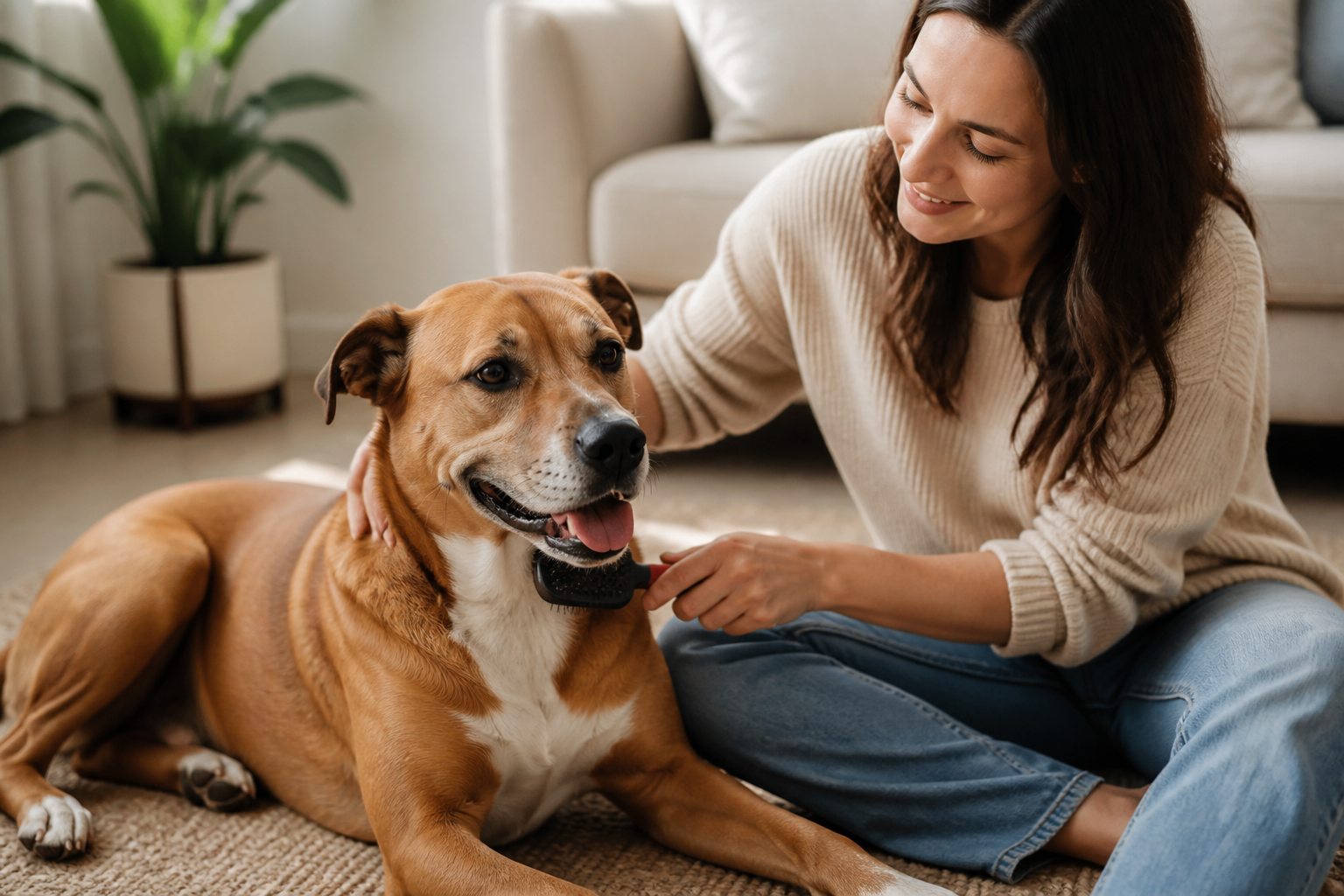
This is the single most important tool for any short haired dog owner. Usually made of soft, flexible rubber, these brushes have thick nubs instead of thin bristles. When you move the curry brush in a circular motion, the rubber creates a magnetic-like pull on dead hair. It is gentle on the skin but incredibly effective at removing the "fine" shedding hair that other brushes miss. You can try a U-Groom Rubber Curry Brush designed for dogs and cats.
The Soft Bristle Brush
A bristle brush is excellent for the finishing touch. Look for one with natural or soft nylon bristles that are packed closely together. This tool is designed to smooth the hair and move the oils around. It is also very gentle on sensitive areas like the belly and the legs where the skin is thinner.
Grooming Gloves
If your dog is nervous about traditional brushes, grooming gloves are a fantastic alternative. They allow you to brush your dog while simply petting them. The palms of the gloves are covered in rubber nodes that collect hair as you go. We carry several types of these in our dog grooming collection for dogs that prefer a more "hands-on" approach to grooming.
| Brush Type | Best Use Case | Benefit |
|---|---|---|
| Rubber Curry | Deep deshedding | Massages skin and pulls loose fur |
| Soft Bristle | Daily smoothing | Distributes oils and adds shine |
| Grooming Glove | Anxious dogs | Feels like petting; great for legs |
| Flea Comb | Pest checks | Catches fine debris and parasites |
Key Takeaway: For short haired dogs, rubber and soft bristles are superior to metal pins. These materials protect the skin while effectively managing the unique shedding patterns of smooth coats.
Step-by-Step: How to Brush Your Short Haired Dog
To get the most out of your grooming routine, you should follow a specific order. This ensures you are removing the maximum amount of hair without irritating the skin.
- Step 1: Start with a rubber curry brush. Move the brush in circular motions against the direction of hair growth first, then with it. This "loosens" the dead hair trapped near the skin.
- Step 2: Follow up with a bristle brush. Use long, sweeping strokes in the direction that the hair grows. Start at the neck and work your way back toward the tail.
- Step 3: Pay attention to the "high-shed" areas. For many breeds, this includes the chest, the back of the thighs, and the "scruff" around the neck.
- Step 4: Wipe them down. Use a damp cloth or a grooming wipe to pick up any tiny hairs that are sitting on top of the coat after you have finished brushing.
Managing Shedding and Skin Health
Short haired dogs can be divided into two categories: single coated and double coated. This distinction changes how much you need to brush and what you should look for in their skin health.
Single Coated Breeds
Breeds like Boxers, Greyhounds, and Pit Bulls have a single layer of hair. They have very little protection from the elements and their skin can be quite sensitive. For these dogs, brushing should be gentle. You are mostly focusing on oil distribution and cleaning the skin. Because they have less "padding," you must be careful not to use any metal-toothed brushes that could scratch their skin.
Double Coated Breeds
Labradors, Pugs, and Beagles may have short hair, but they have a dense, soft undercoat. This undercoat is what causes the "snowstorm" of shedding twice a year. These dogs need more frequent brushing, especially during the spring and fall. A rubber brush is still the best tool here, but you may need to use it more vigorously to reach the bottom layer of the coat.
Bottom line: Identify if your dog has a single or double coat to determine how much pressure and frequency your grooming routine requires.
When Brushing Reveals a Problem
Sometimes, regular brushing is not enough to keep a coat healthy. If you notice your dog has excessively dry skin, "hot spots," or hair loss, it could be a sign of allergies or a nutritional deficiency. Our dog skin and coat care collection includes products that may support your care routine.
If you find that your dog is constantly itchy or has a greasy coat even after a bath and brush, a medicated shampoo or a specific supplement might be necessary. We offer many of these options through the BaxterBoo website, and we can help you coordinate with your vet to get the right prescription products delivered to your door.
Signs Your Dog Needs a Vet Visit:
- Patches of total hair loss (alopecia).
- Skin that is hot to the touch or bright red.
- A strong, yeasty odor that returns immediately after a bath.
- Open sores or scabs discovered during brushing.
The Social and Behavioral Benefits
Brushing is one of the best ways to bond with your dog. In the wild, canines engage in "allogrooming," which is the practice of grooming each other to strengthen social ties. When you brush your dog, you are speaking their language.
It also helps with "handling" training. A dog that is used to being brushed all over their body is much easier for a veterinarian or a professional groomer to handle. They become accustomed to their paws, ears, and tail being touched in a calm environment. This reduces stress for both you and your dog during future medical exams.
Key Takeaway: Regular grooming sessions build trust and make your dog more comfortable with physical touch, which simplifies vet visits and emergency care.
Frequency: How Often Is Enough?
For a short haired dog, you do not need to brush every single day. However, a "once every few months" approach will not provide the health benefits mentioned above.
- Smooth coats (Boxers, Dobermans): Once a week is usually sufficient.
- Dense coats (Labs, Pugs): Two to three times a week, especially during shedding season.
- Sensitive skin dogs: Short, five-minute sessions twice a week to avoid over-stimulating the skin.
If you find it hard to remember, try tying the brushing session to another routine. Many owners find that brushing their dog right before a walk or right after their weekly "nail trim" check makes it easier to stay consistent. Our Autoship programme can help ensure you always have fresh grooming wipes or skin supplements on hand so the routine never gets interrupted.
The Connection Between Bathing and Brushing
A common mistake is bathing a short haired dog without brushing them first. If you put a shedding dog in the tub, the water will "glue" the dead hair to the skin. This makes it much harder to get them truly clean.
Always use your rubber curry brush before the bath to get as much dead hair out as possible. After the bath, once the dog is completely dry, brush them again. The warm water often loosens up even more hair that was ready to fall out. Brushing a clean, dry coat also helps restore the shine by redistributing the oils that might have been stripped away by the shampoo.
For more bath-time guidance, read our tips for bathing your dog.
Conclusion
Short haired dogs may not need a salon visit for a haircut, but they rely on you for their skin and coat health. Regular brushing with the right tools, like rubber curry brushes and soft bristle brushes, keeps their fur shiny and your home cleaner. It is an easy way to monitor for health changes and bond with your pet.
To keep your routine simple, consider these steps:
- Invest in a high-quality rubber curry brush.
- Set a weekly schedule for a ten-minute grooming session.
- Monitor skin health and consult a vet if you notice abnormalities.
You can find a wide selection of grooming tools for dogs and skin health supplies at BaxterBoo to make this process easier. If your vet recommends a specific medicated shampoo or prescription diet for skin issues, our pet pharmacy is ready to help with convenient home delivery.
Bottom line: A short coat is a healthy coat when you commit to a simple, consistent brushing routine.
FAQ
Does brushing a short haired dog actually reduce shedding?
Yes, brushing is the most effective way to manage shedding. While you cannot stop the natural growth and death of hair follicles, brushing removes the dead hair in a controlled way. This prevents the hair from falling out on your furniture and floors throughout the day.
For additional shedding guidance, see our article about managing seasonal dog shedding.
Can I use a human hairbrush on my short haired dog?
It is not recommended to use human brushes on dogs. Human hairbrushes are designed for a different hair texture and density. The bristles may be too sharp for a dog's skin or too weak to actually pull the dead undercoat of a dog. Specialized pet brushes like rubber curry combs are much safer and more effective.
Why does my dog still smell "doggy" even though they have short hair?
The "doggy" smell is often caused by a buildup of oils and dead skin cells on the surface of the skin. If you do not brush your dog, these oils become trapped and can go rancid or attract bacteria. Regular brushing moves these oils and exfoliates the skin, which significantly reduces that characteristic odor.
What should I do if my dog hates being brushed?
Start very slowly with a soft tool like a grooming glove. Use high-value treats to create a positive association with the brush. Only brush for thirty seconds at a time and gradually increase the duration as your dog becomes more comfortable. Most dogs eventually grow to enjoy the massage-like feel of a rubber brush.






