
 Save 15% on your 1st Autoship learn more

 Email us
 Live Chat
 FAQs
FAQs





Introduction
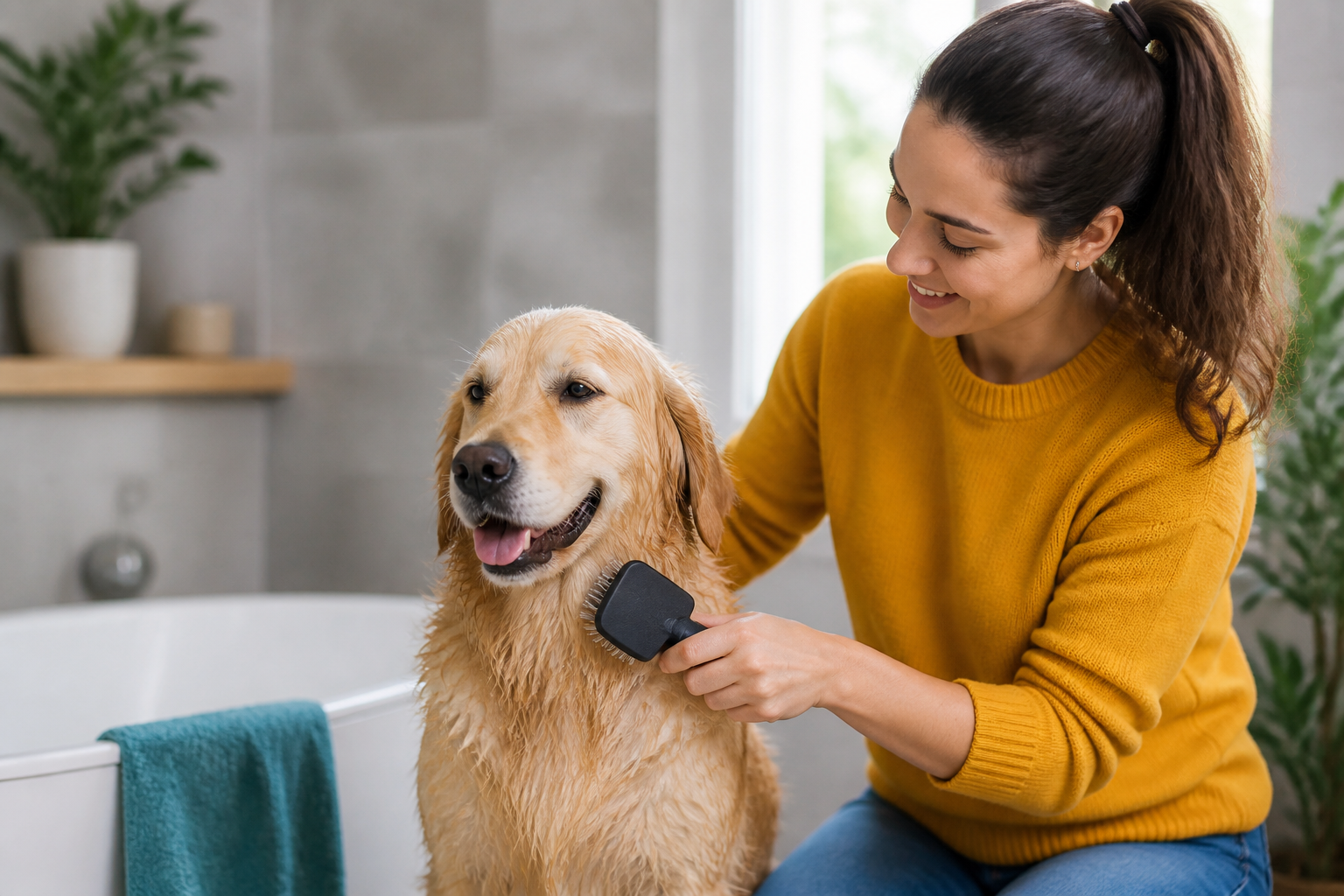
You are standing in the bathroom with a freshly washed dog. Water is shaking off their coat, the bathroom mirror is fogging up, and you are holding a slicker brush. The big question is whether you should start brushing now or wait until the coat is dry. At BaxterBoo, we hear this question from pet parents all the time. While it seems logical to comb through clean hair while it is wet, the timing of your grooming session can actually change your dog's skin health and coat texture.
This guide covers the best practices for brushing before, during, and after the bath. We will look at why wet hair is more fragile and how to avoid the common mistake of tightening knots with water. Our goal is to help you create a stress-free grooming routine that keeps your dog looking great without the pain of pulling at tangles. Brushing a dog after a bath is a specific skill that depends entirely on the tools you use and how well you prepared the coat beforehand.
Quick Answer: You should generally avoid brushing a dog while their coat is soaking wet. Wait until they are fully dry or damp-dry to prevent hair breakage and skin irritation. For the best results, always brush and comb your dog thoroughly before the water ever touches their fur.
The Risks of Brushing a Soaking Wet Coat
Many people assume that dog hair behaves like human hair. We often brush our own hair right out of the shower, but dog fur has a different structure. When a dog’s coat is saturated with water, the individual hair strands become more elastic. This means they can stretch significantly before they snap. While elasticity sounds like a good thing, it actually makes the hair more prone to damage and breakage.
If you pull a brush through a wet, tangled coat, you are stretching those hairs to their limit. This can lead to split ends and a frizzy, dull appearance once the coat dries. More importantly, brushing wet hair often causes the brush to "grab" the coat more aggressively. This pulls at the skin and can make the grooming process painful for your dog. If your pet learns that brushing after a bath hurts, they may start to resist bath time altogether.
The friction is also higher when the hair is wet. Instead of the bristles sliding through the coat, they may snag on the damp fibers. This is especially true for dogs with double coats or curly hair. For these breeds, the water acts like a glue that holds loose hair against the skin. Brushing at this stage often just moves the damp clumps around rather than removing them.
Why the Pre-Bath Brush is Non-Negotiable
The most important step in any bath routine happens before your dog gets wet. We cannot emphasize this enough: always brush your dog before the bath. Water acts as a tightening agent for existing mats and tangles. If your dog has a small knot near their ear, getting it wet will cause the hair fibers to swell and then shrink as they dry. This process cinches the knot tighter, making it almost impossible to remove later.
Brushing a dry coat allows you to find these problem areas while the hair is still manageable. It also removes the bulk of the loose undercoat. If you skip this, all that dead hair will clump together in the tub. This creates a messy "felted" layer that is difficult to wash and even harder to rinse. Removing the dead hair first ensures that the shampoo can actually reach the skin where it is needed most. Our dog brushes and combs can help you prepare different coat types before bath time.
A clean coat starts with a clear path. When the hair is free of tangles, your shampoo and conditioner can distribute evenly. This leads to a deeper clean and a more effective treatment of the skin. If you are using specialized products for allergies or skin health, a pre-brushed coat is the only way to ensure those ingredients make contact with the skin surface.
Key Takeaway: Water makes existing mats tighter and harder to remove. Always perform a full brush-out and a comb-check before you start the bath to save time and prevent your dog from experiencing discomfort later.
The Correct Order for Bath Day Grooming
To get a professional-looking finish at home, follow a structured order of operations. This routine protects the coat and makes the post-bath brush-through much easier.
Step 1: Perform a thorough dry brush-out. Use a slicker brush to remove loose hair and a metal comb to check for hidden mats.
Step 2: Bathe your dog using lukewarm water and a high-quality shampoo. Avoid circular scrubbing motions that can swirl the hair into new tangles.
Step 3: Apply conditioner and let it sit for a few minutes. This helps smooth the hair cuticle and reduces friction for later.
Step 4: Rinse thoroughly. Any leftover soap residue will make the coat feel sticky and cause tangles to form quickly.
Step 5: Towel dry by blotting and squeezing. Never rub the towel vigorously back and forth, as this creates "friction mats."
Step 6: Use a blow dryer on a cool or low-heat setting while gently separating the hair with your fingers.
Step 7: Once the coat is at least 90 percent dry, use your slicker brush and comb for the final finish.
For additional bath-day guidance, see our guide to the dos and don'ts of bathing your dog.
Understanding Different Coat Types
Not every dog needs the same approach when it comes to brushing after a bath. The texture and length of the fur dictate how you should handle the damp stages of grooming.
Short-Haired Breeds
Dogs like Labradors, Beagles, or Boxers have it the easiest. Their hair does not mat, so brushing while damp is less of a risk. You can use a rubber grooming mitt or a soft bristle brush while the dog is still in the tub to help work the shampoo in and pull out dead hair. Once they are dry, a quick pass with a bristle brush will bring out the shine.
Long and Silky Coats
Breeds like Yorkies or Maltese have hair that is very similar to human hair. It is fine and easily broken. For these dogs, waiting until the coat is dry is best. If you must brush while damp, use a high-quality detangling spray and a very soft brush to prevent snapping the delicate strands.
Curly and Wavy Coats
Doodles, Poodles, and Bichons are the most challenging. Their hair traps shed fur, which quickly leads to matting. For these breeds, the "line brushing" technique is essential. You should wait until the dog is mostly dry, then brush section by section from the skin outward. Brushing these dogs while soaking wet is often a recipe for a painful grooming session.
For more help with curly coats, read our guide on how to groom a dog with curly hair.
Double-Coated Breeds
Huskies, Golden Retrievers, and Shepherds have a dense undercoat. If you brush them while wet, you will likely just pull out huge clumps of damp fur that clog your brush. It is much more efficient to use a high-velocity dryer to blow the water and loose undercoat out of the hair. Once the coat is dry, the rake and slicker brush will glide through much more easily.
| Coat Type | Pre-Bath Brush? | Brush While Wet? | Best Post-Bath Tool |
|---|---|---|---|
| Short/Smooth | Optional but helpful | Yes (Rubber brush) | Bristle Brush |
| Long/Silky | Essential | No | Fine-toothed Comb |
| Curly/Wavy | Mandatory | No | Slicker Brush & Comb |
| Double Coat | Essential | No | Undercoat Rake |
Recommended Tools for Post-Bath Brushing
The tools you choose will determine how much hair ends up on your floor versus in the brush. We carry a wide range of expert-selected gear in our dog grooming collection to make this process easier.
The Slicker Brush
A quality slicker brush, like the Flying Pawfect models, is the workhorse of the grooming world. It features fine, short wires close together on a flat or curved surface. These wires are designed to grab the loose hair and gently pull it away from the skin. Use this once the dog is dry to fluff the coat and remove any hair that was loosened during the washing process. The Master Grooming Tools Ergonomic Slicker Dog and Cat Brush is one option designed for brush-outs and mat removal.
The Stainless Steel Comb
A comb is not for the heavy lifting of grooming. It is a diagnostic tool. After you think you are finished brushing, run a metal comb through the coat. If it snags, you have a hidden tangle that the brush missed. This is the only way to truly ensure your dog is mat-free.
Detangling Sprays and Leave-in Conditioners
If you find a knot after the bath, do not try to yank it out. Use a detangling spray to lubricate the hair shafts. This allows the hairs to slide past each other rather than knotting tighter. These sprays also help reduce static, which is a common problem when blow-drying a dog in the winter.
Common Bathing Mistakes That Ruin the Coat
The way you wash your dog actually affects how hard it will be to brush them later. Many pet owners unknowingly create mats during the washing process.
The biggest mistake is the "shampoo scrub." Most people apply shampoo and then rub their hands in fast, circular motions all over the dog's body. This tangles the hair into a birds-nest mess. Instead, you should apply shampoo and massage it into the coat using a downward, smoothing motion. Follow the direction of the hair growth. This cleans the skin without twisting the hair fibers together. You can find shampoos and conditioners suited to bath day in our dog shampoo and conditioner category.
Inadequate rinsing is another major issue. If even a small amount of shampoo stays on the skin, it can cause "shampoo tracks" or sticky patches. These patches attract dirt and cause the hair to clump together as it dries. When you think you have rinsed enough, rinse for two more minutes. The hair should feel squeaky clean, not slippery.
Vet Tip: If your dog has red, itchy skin or a persistent odor despite regular bathing, it may be a sign of a fungal or bacterial infection rather than just a dirty coat. Consult your veterinarian for a proper diagnosis. Our pet pharmacy at BaxterBoo, through our partnership with Pet's Choice, carries FDA-approved medicated shampoos and skin treatments that can address these underlying issues.
Drying Techniques for a Better Finish
How you dry your dog is just as important as how you brush them. If you let a long-haired dog air dry completely, the hair will often dry in "clumps" that are hard to separate.
Blotting with a towel is the first step. Microfiber towels are excellent because they absorb significantly more water than standard cotton towels. Once you have removed the dripping water, you can use a blow dryer. If you use a human hair dryer, keep it on the cool setting. Dogs have much thinner skin than humans and can be burned easily.
For thick-coated dogs, a high-velocity dryer is a great investment. These do not use heat. Instead, they use a powerful blast of air to "shear" the water off the hair shaft. This also helps blow out any loose undercoat that the brush might have missed. As you dry, you can use your hands to "fluff" the hair, which prevents it from drying flat and tangling.
Managing Mats Found After the Bath
Sometimes, despite your best efforts, you will find a mat after the bath. If the mat is small, you can try to pick it apart with your fingers or the end of a metal comb. Start at the very edge of the mat and work your way toward the center.
If the mat is tight and close to the skin, never use scissors to cut it out. A dog's skin is very loose and can easily be pulled up into the mat. It is extremely common for owners to accidentally cut their dog's skin while trying to trim a mat. If the matting is severe, it is safer to use electric clippers or seek the help of a professional groomer.
To prevent these mats from returning, focus on the high-friction areas during your daily brushing sessions. These include:
- Behind the ears (where the collar rubs)
- The "armpits" and groin area
- The tail and the back of the "trousers" on the rear legs
- The chest area where harnesses usually sit
The Role of Skin Health in Grooming
A coat that is easy to brush usually starts with healthy skin. If your dog's skin is dry and flaky, the hair will be brittle and more prone to tangling. Nutrition plays a huge role here. Foods rich in Omega-3 and Omega-6 fatty acids help support a supple skin barrier and a shiny coat.
If your dog is constantly scratching, they are likely creating tangles with their own paws. Allergies are a common culprit for poor coat quality. If your dog has seasonal allergies or food sensitivities, their coat may feel greasy or "dusty." This makes brushing a chore for both of you.
In these cases, grooming is only part of the solution. You may need to work with your vet to find a prescription diet or an allergy medication. Our pharmacy provides access to these specialized treatments, helping you manage the internal health of your pet so their external coat stays manageable.
Bottom line: A healthy, well-nourished coat is naturally more resistant to tangles and much easier to brush after a bath.
Final Thoughts on Bath Day Brushing
Brushing your dog after a bath is a necessary part of the grooming process, but it should never be the first step. By focusing on a thorough pre-bath brush-out, using the correct washing techniques, and waiting until the coat is mostly dry to do your final finishing, you can keep your dog’s fur in peak condition.
Remember to match your tools to your dog's specific coat type and always prioritize their comfort. If you turn grooming into a positive bonding experience with plenty of treats and praise, your dog will eventually look forward to their spa days. We are here to support your journey with the right gear, from premium slicker brushes to professional-grade shampoos.
Check out our full collection of grooming supplies or set up our Autoship programme for your favorite shampoos to ensure you never run out right before bath day.
FAQ
Should I brush my dog while the shampoo is still on them?
For short-haired breeds, using a rubber brush or grooming mitt while lathering can help remove dead hair and massage the skin. However, for dogs with long, curly, or double coats, you should avoid brushing while the shampoo is on. The friction from the soap can cause the hair to tangle and mat while you are working it through.
Can I use a human hairbrush on my dog after a bath?
It is not recommended to use human brushes on dogs. Human brushes are designed for a different hair density and scalp sensitivity. Dog brushes, like slickers or rakes, have specific wire angles and bristle spacing designed to reach through thick fur to the skin without causing scratches. Using the wrong brush can lead to "brush burn" or simply fail to remove the undercoat.
What do I do if my dog’s hair is too matted to brush after a bath?
If you find severe matting after a bath, do not try to brush it out. Wet mats are often tighter and more painful to manipulate. Wait for the coat to dry, apply a detangling spray, and try to gently pick the mats apart. If they are tight against the skin, it is best to consult a professional groomer or your veterinarian to have them safely clipped away.
How do I stop my dog from getting tangles immediately after a bath?
The best way to prevent post-bath tangles is to use a high-quality conditioner during the wash and a leave-in detangling spray while drying. Ensure you are blow-drying the hair thoroughly while brushing in the direction of hair growth. This "sets" the hair in a smooth position and prevents it from curling back on itself and creating new knots as it air dries.






