
 Save 15% on your 1st Autoship learn more

 Email us
 Live Chat
 FAQs
FAQs





Introduction
Standing in front of the bathtub with a shampoo bottle in one hand and a wiggly, muddy dog in the other is a familiar scene for many pet owners. You might be tempted to jump straight into the scrubbing to get the mess over with as quickly as possible. However, the order in which you handle the brush and the bubbles can make the difference between a sleek, happy pet and a matted, frustrated one. At BaxterBoo, we have spent years helping pet parents navigate the nuances of home grooming. We know that the right routine protects your dog's skin and preserves the life of your grooming tools. This guide will explain why the timing of your brushing session matters and how to build a routine that keeps your dog looking and feeling their best. Brushing your dog before the bath is the most important step for most breeds, but a post-bath follow-up is what creates that professional finish.
The Golden Rule: Brush Before the Bath
The most common mistake pet owners make is wetting a coat that is already tangled or matted. It might seem like the water and soap would help lubricate the hair and make knots easier to slide apart. In reality, the opposite happens. Water causes hair to swell and can actually tighten existing knots. When those wet mats dry, they often become even more compact and difficult to remove.
Brushing your dog before they ever touch the water is a non-negotiable step for any dog with medium to long hair. Think of it as a pre-inspection. This is your chance to find hidden burrs, tangles, or thick patches of dead undercoat that would otherwise trap moisture and soap. If you leave these in during the wash, you will likely spend twice as much time trying to work them out later.
Quick Answer: You should always brush your dog before a bath to remove tangles and loose fur. Wetting a matted coat causes the knots to tighten, making them much harder to remove once the hair is dry.
Why Water and Mats Don't Mix
When a dog's coat is dirty, the hair is often coated in oils, dust, and dander. These particles act like a glue that holds tangles together. When you add water, the hair fibers absorb the moisture and expand. If those fibers are already entwined in a knot, they expand against each other, locking the knot in place.
Furthermore, a matted coat prevents water and shampoo from reaching the skin. You might think you are cleaning your dog, but the soap may only be sitting on top of a dense layer of tangled fur. This leads to a dog that still smells like a "wet dog" even after they have been scrubbed.
Protecting Your Drains and Tools
A pre-bath brush also serves a very practical purpose for your home. Dogs shed a significant amount of hair during the bathing process. If all that loose fur goes down the drain, you are looking at a potential plumbing bill. By removing the dead coat beforehand, you keep your tub cleaner and your pipes clear.
This step also protects your grooming equipment. Dirt and grit trapped in a dog's coat act like sandpaper on clipper blades and scissors. If you plan to do any trimming or clipping after the bath, ensuring the coat is brushed and clean will keep your tools sharp for much longer.
Key Takeaway: Pre-bath brushing ensures shampoo reaches the skin and prevents tangles from turning into permanent mats that require shaving.
The Role of Post-Bath Brushing
While the pre-bath brush is the heavy lifter, the post-bath brush is the finishing touch. Once your dog is clean and the coat is free of dirt and excess oils, the hair is in its most manageable state. However, you must be careful about how you approach a wet or damp coat.
Post-bath brushing is primarily about styling, removing any hair loosened by the scrubbing, and ensuring the coat dries evenly. For breeds with long, silky hair or curly coats like Poodles and Doodles, brushing while drying is what prevents the hair from "crimping" or forming new tangles as it sets.
For more bath-time guidance, read our tips for bathing your dog.
Brushing During the Drying Process
If you are using a hair dryer or a high-velocity pet dryer, brushing as you dry is a technique many professional groomers use. The airflow helps lift the hair from the root, while the brush separates the strands. This creates a fluffy, high-volume look that you cannot achieve with air drying alone.
For dogs with thick undercoats, like Huskies or Shepherds, the drying phase often reveals a whole new layer of loose fur. The warm air and the mechanical action of the bath help release the "blown" coat. Brushing at this stage helps you clear out that remaining debris so it doesn't end up on your furniture later that evening.
The Risk of Brushing Wet Hair
It is important to note that hair is at its weakest when it is soaking wet. It has more elasticity, which sounds like a good thing, but it actually means the hair can be stretched and snapped more easily. If you are brushing a wet dog, you must use a gentle touch and the right type of tool.
Avoid using harsh de-shedding tools or fine-toothed metal combs on a soaking wet coat unless you are specifically working through a conditioner treatment. Instead, wait until the dog is about 70 percent dry, or use a brush specifically designed for wet use, such as a rubber curry brush or a wide-spaced pin brush.
Bottom line: Post-bath brushing should be gentle and focused on styling and removing hair loosened during the wash.
Matching the Routine to the Coat Type
Not every dog requires the same level of intervention. The "before and after" rule stays mostly the same, but the tools we use and the time we spend will vary based on what kind of fur your dog has. At BaxterBoo, we carry a wide variety of tools to help you match the brush to the breed.
Short-Haired Breeds
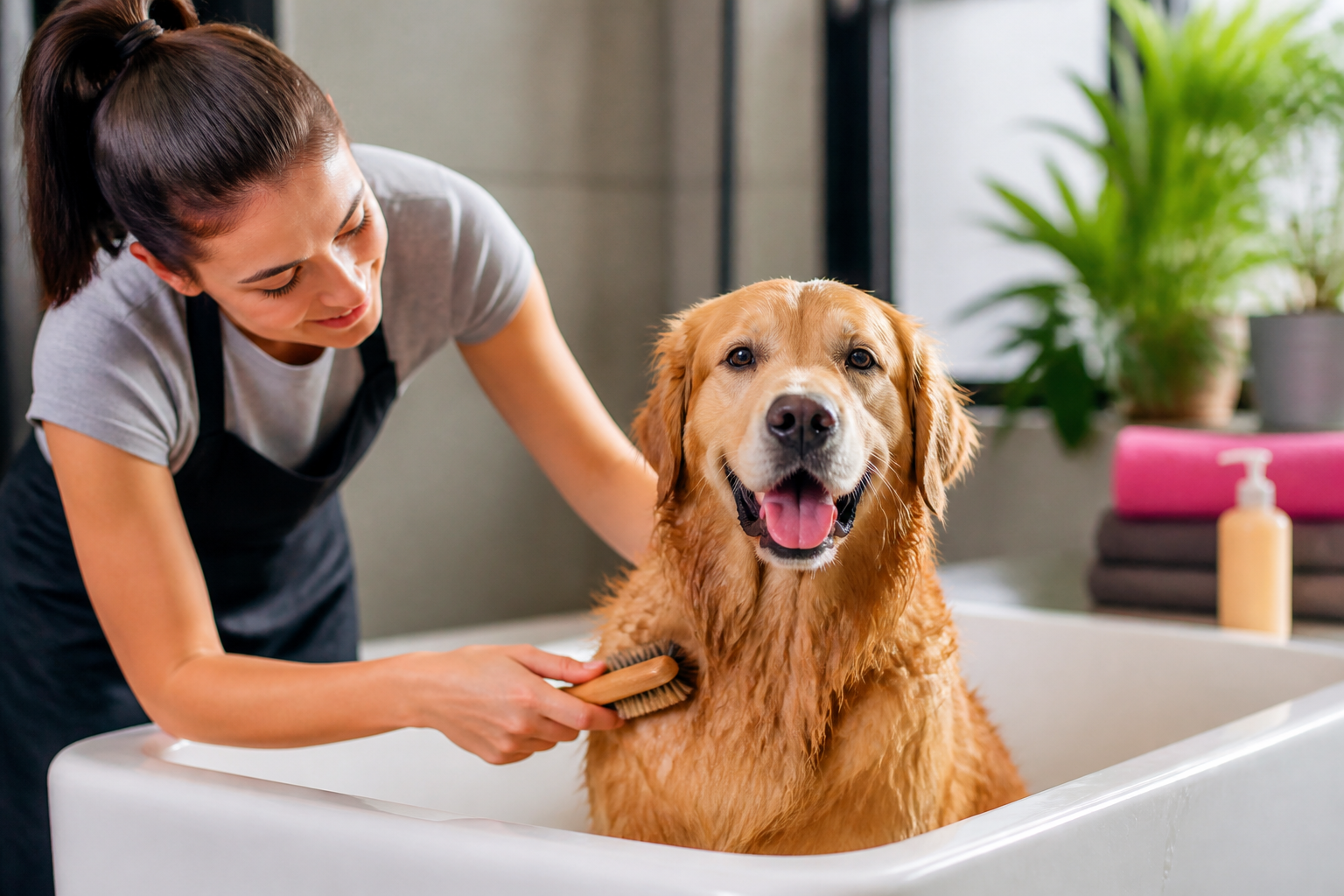
For dogs like Labradors, Boxers, or Beagles, the pre-bath brush is quick. You are mostly looking to remove dust and loose surface hair. A rubber curry brush is perfect for this. It massages the skin and pulls up dead hair without being abrasive. During the bath, you can actually use the rubber brush to work the shampoo into the coat, which feels great for the dog and helps the soap penetrate.
Double-Coated Breeds
Breeds like Golden Retrievers, Newfoundlands, and Huskies have a soft, dense undercoat and a coarser topcoat. These dogs are the champions of shedding. For them, the pre-bath brush should involve an undercoat rake. If you skip this, the water will saturate the undercoat and make the dog incredibly heavy and slow to dry.
Curly and Long-Haired Breeds
Poodles, Bichons, and Yorkies require the most diligence. Their hair is more like human hair and can tangle almost instantly. You should use a slicker brush and a metal comb to ensure you can reach all the way to the skin. If the comb snags anywhere, you haven't finished the pre-bath brush.
For more coat-specific guidance, explore this guide to grooming curly-haired dogs.
Vet Tip: If you discover skin redness, hot spots, or unusual bumps during your pre-bath brush, consult your veterinarian before proceeding with the bath. Some shampoos can irritate existing skin conditions.
Dealing with Severe Matting
Sometimes life gets busy, and you might find that your dog has developed significant mats before their bath. If you find a mat that is tight against the skin, do not try to wash it out. And more importantly, be very careful with scissors. Dog skin is incredibly thin and easy to cut, especially near a tight mat.
The Conditioner Technique
If a mat is not too tight against the skin, you can sometimes save the coat by using a high-quality pet conditioner. In this specific case, you might actually brush during the bath. Apply the conditioner directly to the mat and let it sit for several minutes. Use your fingers to gently pick the mat apart, then use a wide-toothed comb to slowly work from the end of the hair toward the root.
When to Call a Professional
If the mats cover a large portion of the dog's body or are pulled tight against the skin, the most humane option is often a "reset" shave by a professional groomer. Trying to brush out severe matting is painful for the dog and can cause them to develop a fear of grooming. A clean start is often better for the dog's comfort and skin health.
Key Takeaway: Never use scissors to cut out mats near the skin. Use a detangling spray or conditioner, or seek professional help to avoid injury.
Step-by-Step Home Grooming Routine
To get the best results, we recommend following this specific sequence every time you wash your dog. This ensures the coat stays healthy and the experience remains stress-free for your pet.
Step 1: The Pre-Bath Inspection / Run your hands over the dog's entire body to check for lumps, ticks, or mats. Pay close attention to high-friction areas like the armpits, behind the ears, and where the collar sits.
Step 2: The Deep Brush / Use a slicker brush or rake to remove loose fur and tangles. Follow up with a metal comb to ensure you have reached the skin level. If the comb glides through, you are ready for the water.
Step 3: Ear and Eye Prep / Place a large cotton ball in each ear to prevent water from entering the ear canal. This helps prevent painful ear infections. Gently wipe away any "eye goop" with a damp cloth.
Step 4: The Wash / Use lukewarm water and a dog-specific shampoo. Human shampoos have a different pH level and can strip the natural oils from a dog's skin, leading to irritation.
Step 5: The Rinse / This is the most important part of the bath. Rinse until the water runs clear and you no longer feel any "sliminess" on the coat. Leftover soap is a leading cause of itchy skin and dull coats.
Step 6: The Towel Dry / Squeeze the water out of the coat rather than rubbing vigorously. Rubbing can create new tangles in long hair.
Step 7: The Finish Brush / Once the dog is mostly dry, do a final pass with a brush to smooth the hair and remove any last bits of shedding coat.
Beyond the Brush: Skin Health and the Pharmacy
A beautiful coat starts with healthy skin. If you notice that your dog is constantly itchy, has flaky skin, or has a dull coat despite regular grooming, there may be an underlying issue. Sometimes, standard shampoos aren't enough to manage these concerns.
We carry a range of specialty health products to support your dog from the inside out. Our pet pharmacy offers FDA-approved medications through our partnership with Pet's Choice, including prescription shampoos for fungal or bacterial skin infections. These medicated washes are often a critical part of a treatment plan for dogs with severe allergies or chronic skin conditions.
If your dog requires ongoing health management, such as flea and tick preventives or prescription diets that support skin health, we can help you coordinate those needs through the pharmacy. Providing these specialized products is part of our commitment to being a total resource for pet wellness.
Bottom line: A clean coat is a healthy coat, but chronic skin issues should always be discussed with a veterinarian to ensure your grooming routine is supporting their medical needs.
Essential Tools for Your Grooming Kit
Having the right tools makes the job much easier. You don't need a professional salon setup, but a few key items will improve your results significantly.
- Slicker Brush: The workhorse for most breeds. It features fine wire bristles that reach into the coat to pull out loose hair.
- Metal Comb: Often called a "Greyhound comb," this tool is essential for checking your work and finding hidden knots.
- Rubber Curry Brush: Best for short-haired breeds and for massaging the skin during the bath.
- Undercoat Rake: A must-have for heavy shedders to remove the dead fluff before it clogs your drain.
- Detangling Spray: This helps the brush glide through the hair and can reduce static during the winter months.
Find brushes, combs, rakes, shampoos, towels, and more in our dog grooming supplies.
We offer all these essentials and more from over 500 trusted brands. Using the right tool for your dog's specific coat type reduces the time you spend grooming and makes the process much more comfortable for your pet.
Common Grooming Mistakes to Avoid
Even with the best intentions, it is easy to fall into habits that can damage your dog's coat or cause them distress.
Using Human Shampoo
As mentioned earlier, a dog's skin is much more alkaline than human skin. Using your own shampoo can disrupt their "acid mantle," which is the thin layer that protects the skin from bacteria and viruses. This often leads to dryness, redness, and a higher risk of infection.
Forgetting the Nails
Grooming isn't just about the hair. Long nails can change the way a dog walks and lead to joint pain or even arthritis over time. We recommend checking your dog's nails once a month. If you can hear them clicking on the hardwood floor, they are too long.
Washing Too Often
Unless your dog has a skin condition that requires frequent medicated baths, once a month is usually enough for most pets. Washing too often can strip away the natural oils that keep the coat shiny and water-resistant. If your dog gets a little muddy between baths, try using grooming wipes or just a damp cloth for a spot clean.
Ignoring the Ears
Water trapped in the ear canal is a recipe for a yeast infection. Always be careful when washing around the head. Using a washcloth for the face rather than a sprayer can help keep the ears dry and the dog calm.
Making Grooming a Positive Experience
Many dogs find the bath and the brush to be stressful events. You can change this by using positive reinforcement. Keep a bag of high-value treats nearby and reward your dog throughout the process.
Start with short sessions. If your dog is nervous about the brush, just do a few strokes and then give them a treat. Gradually increase the time as they become more comfortable. The goal is to make grooming a bonding experience rather than a chore.
We offer an Autoship programme for your favorite shampoos and treats, so you never run out of the supplies you need to keep your dog's routine consistent. Consistency is the key to a dog that stands calmly in the tub.
Conclusion
Brushing your dog's hair is a task that should happen both before and after the bath, but for different reasons. The pre-bath brush is the essential step that prevents mats from tightening and ensures a deep clean. The post-bath brush is the finishing touch that keeps the coat soft and free of the last remaining shed. By following this order, you protect your dog's skin, your home's plumbing, and your own sanity.
If you are looking for high-quality grooming supplies, medicated shampoos, or expert guidance, we are here to help. Our warehouse in Vernon Hills is stocked with everything you need to maintain your pet's wellness. For those managing skin allergies or chronic conditions, remember that our pharmacy partnership with Pet's Choice provides access to the FDA-approved medications your vet may recommend. Keeping your pet clean is just one part of their overall health, and we are proud to be your partner in every step of that journey.
Bottom line: Brush before to detangle and brush after to style; this simple rule is the secret to a professional-looking groom at home.
FAQ
Can I brush my dog while they are in the bathtub?
You can brush your dog in the tub if you are using a rubber curry brush to work shampoo into the coat or if you are using a comb to work through a deep conditioner. However, avoid using metal slicker brushes on soaking wet hair, as this can cause the hair to stretch and break. Always do your primary detangling before the dog gets wet.
What happens if I don't brush my dog before a bath?
If you skip the pre-bath brush, any existing tangles will likely tighten and become hard mats once they dry. Additionally, the shampoo may not reach the dog's skin through the layers of dead hair, and your bathtub drain will likely become clogged with loose fur. It makes the entire grooming process less effective and more difficult.
Is it okay to let my dog air dry after a bath?
Air drying is perfectly fine for many short-haired breeds. However, for dogs with thick undercoats or long, silky hair, air drying can lead to "tangles" or a musty smell if the coat stays damp for too long. If you do air dry, make sure to give the dog a thorough brushing once they are completely dry to remove any hair that was loosened during the bath.
Why does my dog still smell after a bath?
If your dog still smells after a bath, it is often because they weren't brushed thoroughly beforehand, preventing the soap from cleaning the skin. It can also happen if the dog isn't dried completely, as moisture trapped in a thick coat can lead to bacterial or fungal growth. If the smell persists despite good grooming, consult your vet to rule out a skin infection or ear issue.






