
 Save 15% on your 1st Autoship learn more

 Email us
 Live Chat
 FAQs
FAQs





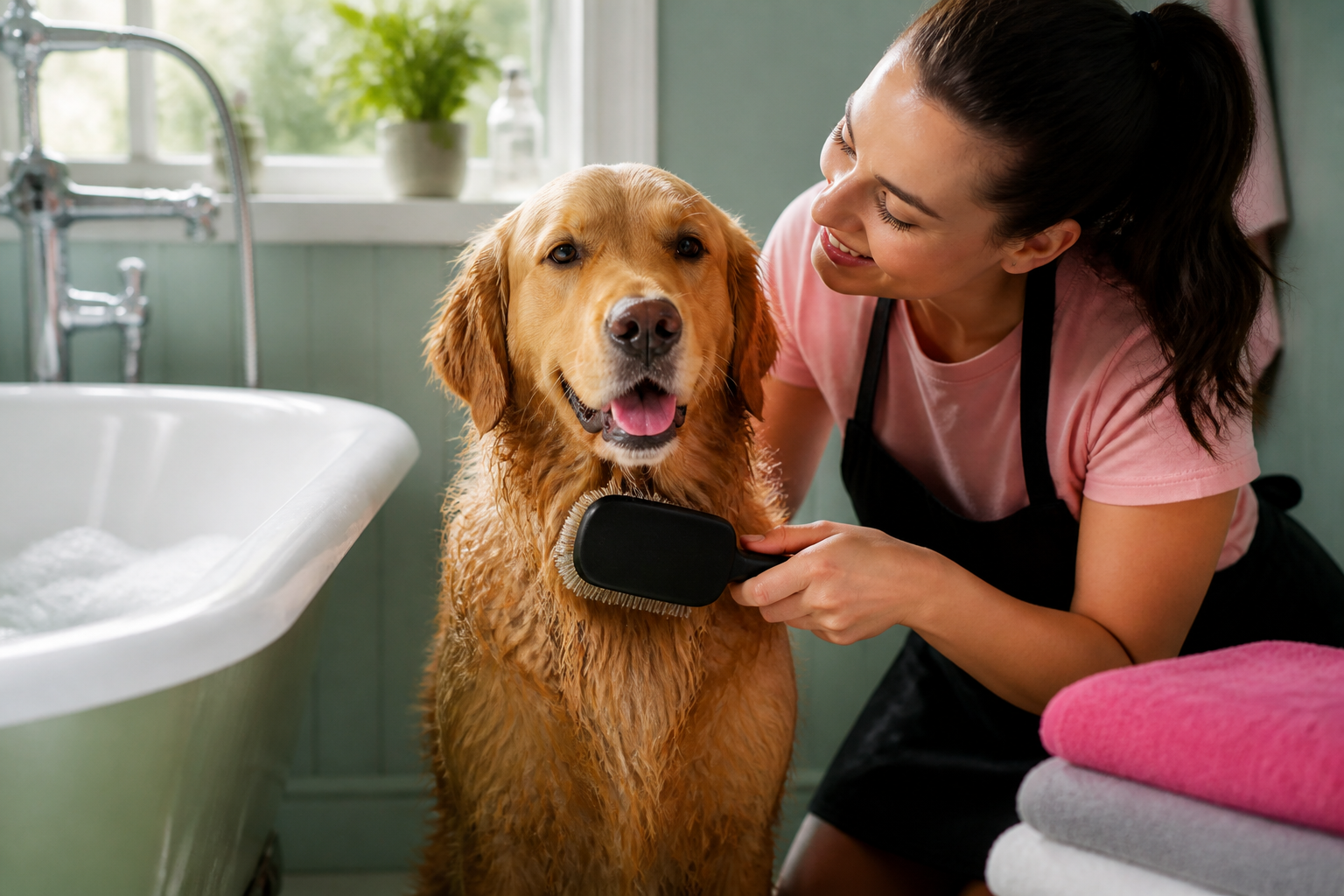
Introduction
You have the shampoo ready and the towels stacked, but your dog is currently a whirlwind of loose fur and tangles. It is a common dilemma for every pet owner standing over a bathtub. You want your dog to be clean, but you also want the grooming process to be as painless as possible. At BaxterBoo, we know that a proper bath starts long before the water begins to run.
This guide covers the essential steps of a successful home grooming routine. We will explain why the timing of your brushing matters for your dog's skin health and coat quality. You will learn the best techniques for pre-bath preparation and post-bath finishing. Our goal is to help you create a stress-free experience that leaves your dog looking and feeling their best.
Quick Answer: You should always brush your dog before a bath to remove loose fur and mats. Brushing again after the coat is completely dry helps remove any remaining shed hair and leaves a polished finish. Never brush a soaking wet coat, as this can cause painful pulling and damage the hair.
The Importance of the Pre-Bath Brush
The most important rule of dog grooming is to brush before the water hits the fur. Water acts like a glue for tangles and mats. If your dog has a small knot before the bath, that knot will likely become a tight, solid mass once it gets wet and then dries. This is especially true for long-haired or double-coated breeds.
When you brush before the bath, you remove a significant amount of "dead" hair. This dead hair is what usually clogs your drain and makes it difficult for shampoo to reach the skin. By clearing out the loose undercoat first, you ensure that the cleaning products can actually do their job.
Brushing also gives you a chance to inspect your dog's skin. You can look for hotspots, ticks, or unusual lumps while the coat is dry and easy to move aside. This pre-wash inspection is a vital part of proactive pet health management.
Why Water Makes Mats Worse
Hair fibers expand when they are wet. In a tangled coat, these expanding fibers twist around each other. As the hair dries, it contracts and tightens. This process turns a simple tangle into a painful mat that sits close to the skin.
Removing these mats after a bath often requires clippers, which can be stressful for both you and your dog. A thorough pre-bath brush prevents this cycle entirely. It saves your dog from the discomfort of having knots pulled and saves you from a difficult grooming session.
Key Takeaway: Brushing before the bath is the best way to prevent permanent matting and ensures that shampoo reaches the skin for a deeper clean.
Managing Different Coat Types
Not every dog requires the same brushing strategy. A short-haired Labrador has different needs than a curly-coated Poodle or a thick-coated Husky. Understanding your dog's specific coat type will help you decide which tools to use before and after the bath.
Short-Haired Breeds
For dogs with short, sleek coats, the pre-bath brush is mostly about deshedding. A rubber curry brush is excellent for these dogs. It massages the skin and pulls up loose fur without being abrasive. You can even use these rubber brushes during the bath to help work the shampoo into the coat.
Double-Coated Breeds
Breeds like Golden Retrievers, Shepherds, and Huskies have a soft undercoat and a tougher outer coat. These dogs require a high-quality undercoat rake before the bath. If you do not remove the loose undercoat first, the water will trap the shed hair against the skin. This can lead to "hotspots," which are painful bacterial skin infections caused by trapped moisture and heat.
Curly and Long-Haired Breeds
Dogs with hair that grows continuously, like Doodles or Shih Tzus, are the most prone to matting. For these dogs, a slicker brush and a metal comb are essential. You must be able to run a comb through the fur all the way to the skin before you start the bath. If the comb catches, you have a mat that needs attention.
For more guidance on curly coats, see our tips for grooming a dog with curly hair.
Vet Tip: If you find severe matting that goes all the way to the skin, do not try to cut it out with scissors. It is very easy to accidentally cut the dog's thin skin. Consult a professional groomer or your veterinarian if the mats are too tight to brush out safely.
The Role of the Bath in Deshedding
While we generally recommend brushing a dry dog, the bath itself is a powerful tool for removing hair. This is why many people think they should only brush after the bath. When you apply a high-quality conditioner, it smooths the hair cuticle. This allows "dead" hair that was stuck in the coat to slide out more easily.
At BaxterBoo, we often suggest using a specialized deshedding shampoo and conditioner for heavy shedders. During the rinsing phase, you will likely see a lot of fur coming off. This is normal and a sign that the products are working.
We carry a wide range of dog grooming supplies that can help manage heavy shedding cycles. Using a rubber brush while the dog is covered in conditioner can help loosen even more hair. However, this is the only time you should "brush" wet hair, and it should only be done with soft rubber tools, never metal pins or combs.
Brushing After the Bath: The Right Way
Once the bath is over, your instinct might be to grab the brush immediately. However, you should wait. Wet hair is incredibly fragile. It stretches more than dry hair, which means it is much more likely to break or snap.
The Drying Process
Start by towel drying your dog. Do not rub the towel vigorously in circles, as this creates tangles. Instead, pat the dog down and squeeze the fur to absorb moisture. If your dog tolerates a hair dryer, use the cool setting. A blow dryer actually helps blow the remaining loose hair out of the coat.
For double-coated dogs, a high-velocity dryer is a favorite tool among professionals. It pushes water and loose undercoat away from the skin. Once the dog is about eighty percent dry, you can begin a light brush-out.
The Finish Brush
The final brush happens when the dog is completely dry. This is when you will see the "fluff" factor. Brushing a clean, dry coat removes the last remnants of loose hair that the bath loosened up. It also distributes the natural oils that the bath might have moved around, giving the coat a healthy shine.
Step 1: Towel dry by blotting and squeezing the fur. Step 2: Use a blow dryer on a cool or low-heat setting. Step 3: Wait until the coat feels dry to the touch. Step 4: Use a slicker brush or comb to fluff the coat and remove final shed. Step 5: Reward your dog with a treat for a job well done.
For additional bath preparation and after-bath care, review these dos and don’ts for bathing your dog.
Bottom line: Wait for the coat to dry completely before doing your final, thorough brushing to prevent hair breakage and skin irritation.
Essential Tools for Your Grooming Kit
To do the job right, you need the correct equipment. Using the wrong brush can be ineffective or even painful for your pet. Our warehouse superstore stocks over 500 trusted brands to ensure you find exactly what fits your dog's coat.
- Slicker Brushes: These have fine wire bristles and are great for removing tangles in medium to long hair.
- Undercoat Rakes: These reach through the topcoat to pull out the fuzzy undercoat on shedding breeds.
- Rubber Curry Brushes: Best for short-haired dogs and for use during the bath.
- Metal Combs: The "gold standard" for checking if you have truly removed all mats.
- Bristle Brushes: Good for finishing a short coat and adding shine.
Browse our dog brushes and combs to compare tools for different coat types.
If your dog has sensitive skin or chronic allergies, grooming is a great time to check for flare-ups. Our pharmacy offers FDA-approved medications and medicated shampoos through our partnership with Pet's Choice. If you notice redness, scaling, or a foul odor during your brushing routine, it is a good idea to consult your veterinarian for a prescription treatment.
Common Grooming Mistakes to Avoid
Many owners make the mistake of over-bathing. Most dogs only need a bath once a month. Bathing every week can strip the skin of essential oils, leading to itchiness and a dull coat.
Another common error is skipping the rinse. Shampoo residue is a major cause of skin irritation. You should rinse until the water runs completely clear and you no longer feel any "slickness" on the fur. Pay close attention to the armpits, belly, and between the toes.
Finally, never use human shampoo on a dog. A dog's skin has a different pH level than human skin. Using our shampoo can disrupt their natural skin barrier, leading to infections or dry, flaky skin. Always choose a formula specifically designed for canines.
Choose from our dog shampoo and conditioner collection when preparing for your next bath.
Professional Results at Home
Achieving a salon-quality look at home is possible with patience and the right routine. By focusing on the pre-bath brush, you eliminate the hardest part of the process. Your dog will be more comfortable, and your home will stay cleaner.
The bond built during grooming is a special part of pet ownership. It is a time of focused attention that helps your dog feel safe and cared for. When you combine a solid routine with high-quality products, you set your dog up for a lifetime of health and comfort.
Key Takeaway: A successful bath is a three-stage process: a thorough dry brush, a deep clean with a dog-specific shampoo, and a final dry brush for a polished finish.
Supporting Your Dog's Overall Health
Grooming is just one piece of the wellness puzzle. A healthy coat starts from the inside out. If you find that your dog's fur is excessively dry or they are shedding more than usual, it may be time to look at their nutrition. We carry premium brands like Farmina, Acana, and Stella and Chewy's that focus on high-quality ingredients for skin and coat health.
For dogs with ongoing health challenges, such as skin infections or flea-related dermatitis, our dog pharmacy can provide the necessary treatments. We offer a hybrid model of shopping that combines the expertise of a local pet store with the convenience of an online pharmacy. This makes it easy to get everything from your favorite Kong toys to your pet's monthly heartworm preventive in one place.
If you find yourself ordering the same grooming supplies and food regularly, our Autoship program is a great way to save. You get a discount on your first order and a free MVP Gold membership, which earns you points on every purchase. It is our way of rewarding the people who make pet health a priority.
Conclusion
Brushing your dog before a bath is the single most effective way to prevent mats and ensure a clean coat. While the bath helps loosen dead hair, the real work happens when the fur is dry. By following a consistent routine of brushing before, washing carefully, and finishing once dry, you can keep your dog's coat in peak condition.
- Always brush before the bath to remove knots.
- Use a dog-specific shampoo to protect their skin pH.
- Wait until the coat is dry before the final brush-out.
- Use the grooming session to check for skin issues or parasites.
Check out our extensive collection of grooming tools and shampoos to find the perfect match for your dog's coat type. If you have questions about skin health or need a specific medicated wash, visit our dog healthcare category to see our range of available options.
FAQ
Can I brush my dog while they are still wet?
It is generally not recommended to brush a soaking wet dog because wet hair is weak and prone to snapping. Brushing wet fur can also be painful as the brush pulls on the skin more easily. If you must brush while wet, use a very soft rubber brush or a wide-toothed comb while the dog is saturated in conditioner.
What happens if I wash my dog without brushing first?
If you wash a dog without brushing, existing tangles and mats will likely tighten as they dry, making them much harder to remove. You will also find that the bath is less effective because the water and shampoo cannot penetrate through the layers of loose, dead hair to reach the skin. This often results in a dog that still smells a bit "doggy" even after a bath.
How do I get a mat out if it got wet?
If a mat has become wet and tightened, do not try to pull it apart with a standard brush. Apply a leave-in detangling spray or a small amount of conditioner to the area once the dog is dry. Use a metal comb to gently pick at the edges of the mat, starting from the ends of the hair and working your way toward the skin.
Does blow drying help with brushing?
Yes, blow drying is very helpful for the grooming process, especially for shedding breeds. The air pressure helps separate the hair fibers and blows out loose undercoat that the brush might have missed. Once the dog is dry from the blow dryer, the final brushing will be much easier and more effective.






