
 Save 15% on your 1st Autoship learn more

 Email us
 Live Chat
 FAQs
FAQs





Introduction
You are standing in the bathroom with a dog that smells like a swamp and looks even worse. The temptation to jump straight into the suds is strong. However, you might be wondering if you should reach for the brush first or wait until the fur is clean. This is one of the most common questions we hear at BaxterBoo. Getting the order right is not just about keeping your dog looking handsome. It is about preventing painful mats and protecting their skin health. This guide covers the science of "wet matting," the best tools for different coat types, and how to handle the brushing process from start to finish. Our goal is to help you create a stress-free grooming routine that leaves your pup feeling their absolute best.
Quick Answer: Most dogs should be brushed thoroughly before a bath. Water can act like a glue that tightens existing tangles into solid mats. Brushing after the bath should only happen once the coat is completely dry to prevent hair breakage and skin irritation.
The Case for the Pre-Bath Brush
The general rule for home grooming is to brush your dog before the water starts running. This is especially true for dogs with medium to long hair or thick undercoats. When hair gets wet, it expands. As it dries, it contracts. If there is a small knot or a cluster of loose undercoat trapped in the fur, the wetting and drying process will shrink that knot into a tight, hard mat.
Professional groomers often refer to this as "setting" the mats. Once a mat is set with water, it is significantly harder to remove. You may find yourself having to use scissors or clippers to cut it out, which can be risky and leave the coat looking patchy. Brushing a dry coat allows you to find these problem areas when they are still manageable.
You should also consider the cleanliness of your tools. Brushing out dirt and debris before the bath means you are not working that grime deeper into the coat while you scrub. It also allows the shampoo to reach the skin. If your dog has a thick layer of dead undercoat, the water and soap might just sit on top of that "fur armor." Removing the loose hair first ensures a much deeper clean.
Key Takeaway: Always perform a thorough "dry brush" before bathing to prevent tangles from becoming permanent mats. This step ensures the shampoo can actually reach the skin for a proper cleaning.
When to Brush During the Bath
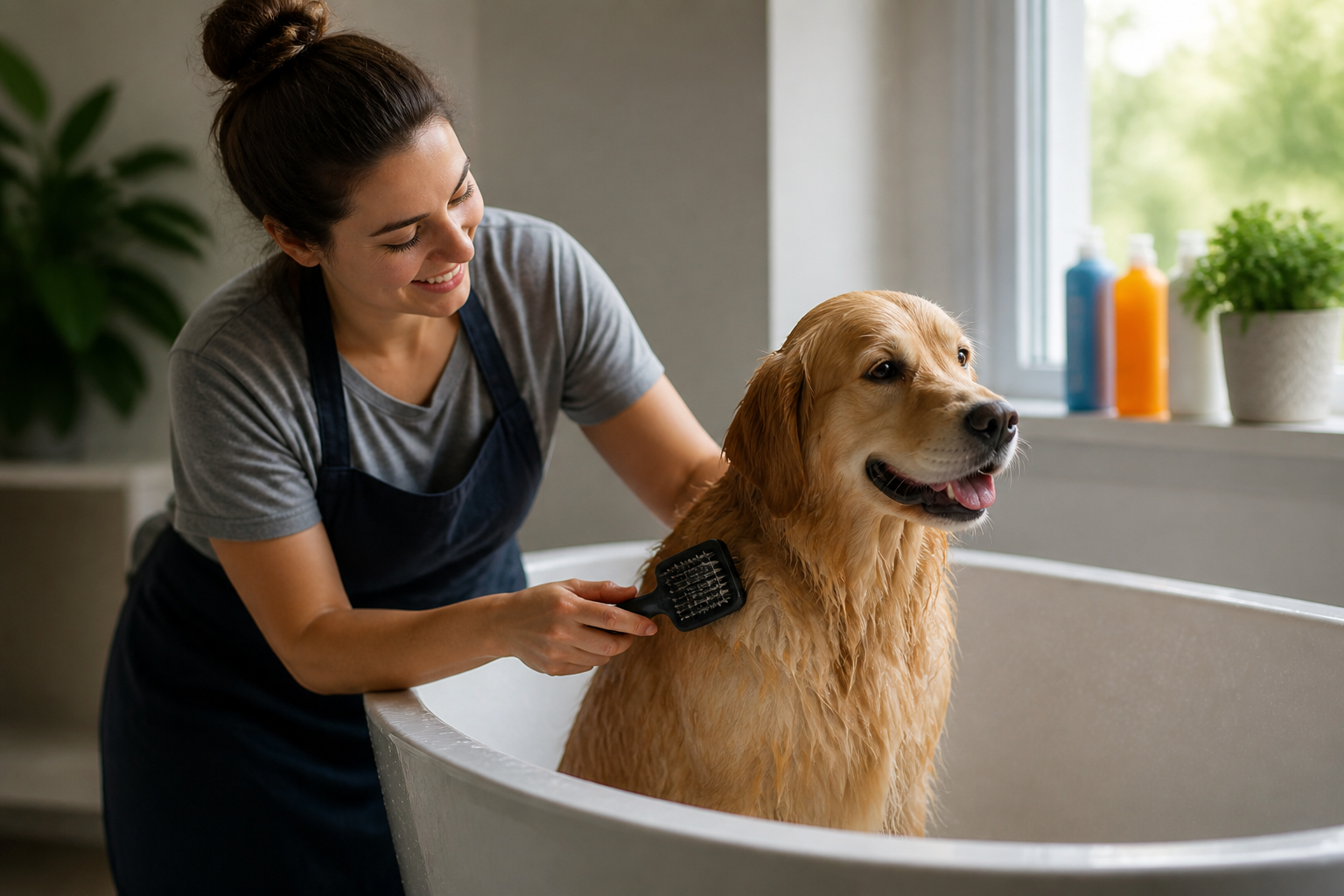
While the pre-bath brush is the standard, there is a specific technique that involves brushing while the dog is in the tub. This is often used for heavy shedders or double-coated breeds like Golden Retrievers or Shetland Sheepdogs. The secret to this method is high-quality conditioner.
Once the dog is washed and rinsed, you can apply a heavy coat of conditioner. While the conditioner is still on the fur, you can use a wide-toothed comb or a specialized rubber brush to gently work through the coat. The conditioner provides "slip," which allows loose hair to slide out of the coat more easily than when it is dry.
This method is helpful for dogs going through a seasonal "blow out" of their undercoat. However, you must be extremely gentle. Wet skin is more elastic and prone to irritation or small tears. If you meet resistance, do not pull. Save the difficult tangles for after the coat is dry and treated with a detangling spray.
Steps for In-Bath Brushing
Step 1: Wash the dog thoroughly with a dog-specific shampoo and rinse completely.
Step 2: Apply a generous amount of conditioner and let it sit for three to five minutes.
Step 3: Use a rubber curry brush or a wide-toothed comb to gently pull loose fur in the direction of hair growth.
Step 4: Rinse with warm water until the water runs clear and no slippery residue remains.
The Danger of Brushing Damp Fur
One of the biggest mistakes a pet owner can make is brushing a dog while their fur is still damp after the bath. Except for the specific "conditioner technique" mentioned above, you should put the brush away until the dog is 100% dry.
Wet hair is weaker than dry hair. It has more "stretch," which means the brush can easily snap the hair shafts. This leads to a frizzy, damaged coat that will actually tangle more easily in the future. Furthermore, pulling on wet hair is more painful for the dog. The friction between the brush and damp skin can cause "brush burn," which is a painful red rash.
If you use a towel to dry your dog, avoid vigorous rubbing. This creates more tangles. Instead, blot the fur and squeeze the moisture out. If your dog allows it, a hair dryer on a cool setting or a dedicated high-velocity pet dryer is the best way to get the coat ready for the final brush.
Vet Tip: If you notice your dog’s skin is red, flaky, or has unusual bumps during the drying process, consult your veterinarian. Chronic skin issues may require medicated shampoos or prescriptions from a pet pharmacy to resolve the underlying irritation.
Understanding Your Dog's Coat Type
The "before or after" debate also depends on what kind of hair your dog has. Not every coat reacts to water the same way. We see a wide variety of coat types at BaxterBoo, and each one needs a slightly different approach.
Short-Haired Breeds
Dogs like Boxers, Labradors, and Beagles have short, smooth coats. These dogs are the exception to the "never brush wet" rule. Since they do not have long hair to tangle or mat, you can use a rubber grooming mitt while they are soapy to help pull out dead hair. A quick brush before the bath is still good for removing surface dust, but the bath itself is where most of the deshedding happens for these breeds.
Long-Haired and Silky Breeds
Yorkshire Terriers, Shih Tzus, and Maltese dogs have hair that is very similar to human hair. It is prone to fine tangles. For these breeds, a pre-bath brush is non-negotiable. You should use a slicker brush followed by a metal comb to ensure you have reached all the way to the skin. If a comb cannot pass through the coat easily, the dog is not ready for the tub.
Double-Coated Breeds
Huskies, German Shepherds, and Newfoundlands have a soft undercoat and a tougher outer coat. These dogs shed in clumps. Brushing before the bath is essential to remove the "bulk" of the hair. If you skip this, your bathtub drain will likely clog, and the dog will stay damp for hours because the trapped undercoat holds onto water.
Curly and Wire-Haired Breeds
Poodles and many "Doodle" mixes have hair that traps shed fur within the curls. This creates thick mats very quickly. These dogs must be brushed and combed before the bath. If they have tight curls, you may also need to do a "line brushing" technique, where you move through the coat section by section to ensure no knots are hidden near the skin.
For more guidance on curly coats, read our guide to grooming a curly-haired dog.
Bottom line: Match your brushing routine to your dog's specific coat type to avoid damaging the hair or causing discomfort.
Essential Tools for the Job
Using the right tool makes the difference between a pleasant bonding experience and a struggle. You do not need a professional salon setup, but a few key items will make your life much easier. We carry a wide range of these tools to suit every dog's needs. Explore our dog brushes and combs to find options for different coat types.
- Slicker Brushes: These have fine wire bristles and are great for removing tangles and smoothing the coat. They work well for most medium to long-haired dogs.
- Undercoat Rakes: These have long, blunt tines that reach through the topcoat to pull out loose undercoat. These are a must-have for heavy shedders.
- Rubber Curry Brushes: These are perfect for short-haired breeds. They massage the skin and pull out loose hair during the bath.
- Metal Greyhounds Combs: These are the ultimate "truth-tellers." Use them after brushing to see if the teeth snag on any remaining knots.
- Detangling Sprays: These can be used on a dry coat before the bath to help work through stubborn spots without pulling the skin.
Choosing the Right Shampoo
The quality of the shampoo you use affects how the hair behaves after the bath. Always use a formula designed specifically for dogs. Human shampoos have a different pH balance and can strip away the natural oils that keep a dog's coat healthy. Browse our dog shampoo and conditioner collection for bathing formulas made for pets.
If your dog has itchy skin or allergies, look for soothing ingredients like oatmeal or aloe. For dogs with ongoing skin conditions, our pharmacy partnership with Pet's Choice provides access to FDA-approved medicated shampoos. These are often necessary for managing yeast infections or bacterial dermatitis that makes grooming uncomfortable for your pet.
Common Grooming Mistakes to Avoid
Even experienced owners can fall into bad habits. Avoiding these common errors will keep your dog's coat in top condition and make your grooming sessions much faster.
Using Human Products
As mentioned, the pH level of dog skin is much more neutral than human skin. Using your own shampoo can lead to dryness and irritation. This irritation makes the dog scratch, which creates more tangles and can lead to "hot spots."
Skipping the Rinse
Shampoo residue is a magnet for dirt. If you do not rinse your dog until the water is completely clear, their coat will feel sticky or "tacky" once dry. This residue can also cause skin peeling and intense itching. Spend twice as long rinsing as you did lathering.
Neglecting the Ears and Nails
Grooming is about the whole dog. Always place cotton balls in your dog's ears before a bath to prevent water from entering the canal. Trapped moisture is a leading cause of ear infections. Additionally, bath time is a great time to check nail length. If you can hear them clicking on the floor, they are too long.
Shaving Double-Coated Dogs
Many owners think shaving a thick-coated dog in the summer helps them stay cool. This is actually a mistake. The undercoat provides insulation against the heat and protects the skin from sunburn. Instead of shaving, focus on deep brushing and deshedding to let the skin breathe.
For additional bath-time reminders, see our guide to bathing your dog.
Vet Tip: If your dog's nails are extremely long and growing into the pads, or if their ears have a strong odor, do not attempt to fix this at home. Seek professional veterinary care to avoid causing injury or missing a deep-seated infection.
How to Handle a Dog That Hates Brushing
Not every dog enjoys the grooming process. If your dog runs away when they see the brush, you need to change their association with the tool. This takes patience and a lot of positive reinforcement.
Start by leaving the brush on the floor near their food bowl. Let them sniff it and give them a treat. Gradually move to touching them with the back of the brush while giving treats. Eventually, do one or two gentle strokes and stop before they get anxious.
Using high-value treats that the dog only gets during grooming can make a huge difference. Many owners find success using a lick mat with a bit of peanut butter (ensure it is xylitol-free) attached to the wall of the tub. This keeps the dog occupied and stationary while you work through their coat.
Creating the Perfect Post-Bath Routine
Once the bath is over and the dog is dry, it is time for the final touch. This is when you can really make the coat shine. A final brush-over removes any hair that was loosened during the washing process but did not fall out. Keep bathing essentials nearby with our bath and shower supplies.
- Check for Dampness: Ensure the "armpits," groin, and behind the ears are fully dry.
- Use a Finishing Spray: A light mist of a shine-enhancing spray can help repel dirt and make the fur feel soft.
- The Comb Test: Run a metal comb through the entire coat. It should glide through from the skin to the tips of the hair.
- Reward: Always end the session with praise or a favorite toy. You want your dog to remember the end of the session as a happy moment.
Bottom line: The post-bath brush is the "polish" that ensures your dog stays mat-free until their next grooming session.
Managing Shedding and Skin Health
Grooming is your first line of defense in monitoring your dog's health. While you brush, you are feeling for new lumps, checking for fleas, and looking at the condition of the skin. If your dog is shedding excessively outside of normal seasonal changes, it could be a sign of a nutritional deficiency or an underlying health issue.
High-quality food plays a massive role in coat health. Ingredients like Omega-3 and Omega-6 fatty acids help maintain the skin's moisture barrier. If your dog's coat remains dull despite regular grooming, you may want to talk to your vet about adding a supplement or switching to a premium diet.
For dogs with chronic allergies that cause them to chew their fur and create mats, grooming alone is not enough. Our pharmacy offers various allergy medications and prescription diets through our partnership with Pet's Choice. Treating the internal cause of skin irritation will make the external grooming process much easier for everyone involved.
Summary Checklist for Your Next Bath
To make your next dog bath a success, follow this simple workflow:
- Perform a thorough dry brush and comb-out before the water touches the fur.
- Check for any mats that need to be carefully teased apart or clipped.
- Protect the ears with cotton balls.
- Use a dog-specific shampoo and rinse twice.
- Use conditioner for long or double coats to help with deshedding.
- Dry the dog completely using towels and a dryer on a cool setting.
- Finish with a final brush once the coat is 100% dry.
- Reward your dog for their cooperation.
By following these steps, you prevent the painful "wet matting" that sends many owners to the professional groomer for a total shave-down. Consistency is the key to a healthy coat. A quick daily brush is much easier than a four-hour marathon session once a month.
We have been helping pet owners navigate these challenges since 2006. Whether you need a new slicker brush, a moisturizing shampoo, or advice on the best treats for bath time, our team is here to support you.
Conclusion
Deciding whether to brush your dog before or after a bath is easy once you understand how water affects the hair. While a clean, dry coat is the easiest to brush, the pre-bath session is the most critical for preventing mats. By investing a little time in the "dry brush" phase, you save your dog from the discomfort of tight knots and save yourself from the frustration of difficult grooming sessions. Remember to always use tools designed for your dog's specific coat type and to keep the experience positive with plenty of rewards. If you ever find that your dog's skin needs more than just a good wash, our pharmacy is a great resource for FDA-approved health solutions.
- Brush before to prevent "set" mats.
- Brush during only with heavy conditioner and a gentle touch.
- Brush after only when the coat is fully dry.
- Check out the MVP Rewards programme to earn points on your grooming supplies.
Key Takeaway: Proper grooming order protects your dog's skin and coat integrity. Start dry, wash thoroughly, and finish dry for the best results.
FAQ
Can I brush my dog while they are still wet from the bath?
It is generally best to wait until your dog is completely dry before brushing. Wet hair is more prone to breakage, and wet skin is easily irritated by brush bristles. The only exception is if you are using a rubber brush or wide-toothed comb specifically to work conditioner through the coat during the bath.
What happens if I wash my dog without brushing out the mats first?
Washing a matted dog usually makes the mats much worse. Water causes the tangled hair fibers to swell and then tighten as they dry, essentially "shrinking" the mat against the dog's skin. This can be very painful for the dog and often requires the mats to be shaved off by a professional.
My dog sheds a lot during the bath. How can I manage this?
To manage heavy shedding, use a rubber curry brush while the dog is lathered in shampoo or conditioner to help pull out loose hair. Using a high-velocity dryer after the bath also helps blow out loose undercoat. Make sure to do a thorough brush-out before the bath to remove the majority of the loose fur first.
Is it okay to use human hair conditioner on my dog to help with tangles?
You should avoid using human conditioners on dogs. Dogs have a different skin pH than humans, and our products can strip their natural oils or cause allergic reactions. Use a conditioner specifically formulated for dogs, which will provide the necessary slip and moisture without compromising their skin health.






