
 Save 15% on your 1st Autoship learn more

 Email us
 Live Chat
 FAQs
FAQs





Introduction
You might notice a fine white dusting on your black leggings after a cuddle session. Or perhaps you hear the rhythmic thump-thump-thump of your dog’s leg hitting the floor as they scratch their ribs. Dry skin is a common struggle for many dogs. It is more than just a cosmetic issue with a few flakes. It can cause genuine discomfort and lead to redness or even secondary infections. At BaxterBoo, we have spent years helping pet owners navigate the complexities of coat care and skin health.
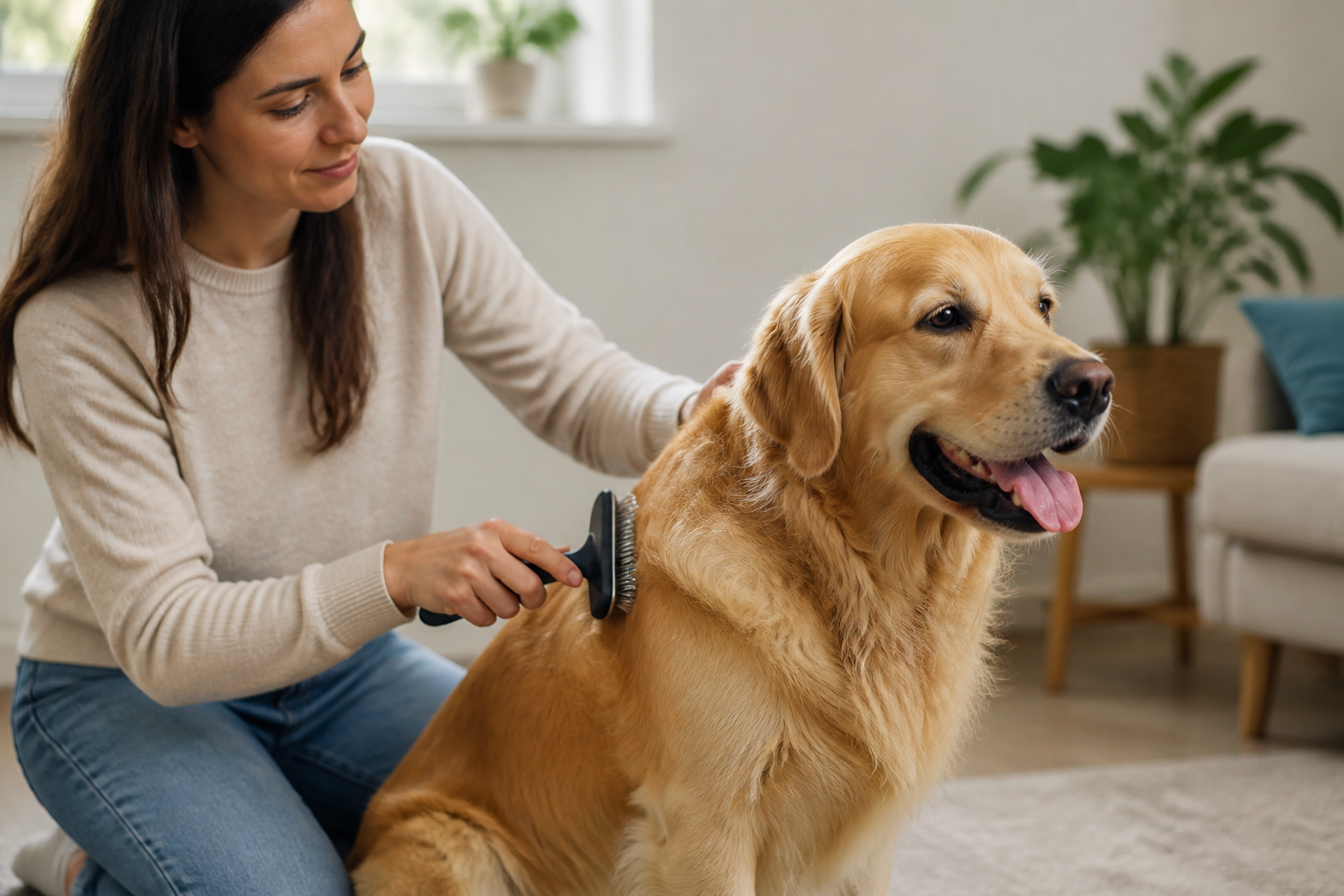
Many owners wonder if a simple brush is enough to solve the problem. Brushing is one of the most effective tools in your grooming kit for managing dry skin. However, you must use the right tools and techniques to see real results. This post covers the science behind brushing, how it helps the skin, and when you might need to look deeper into your dog’s nutrition or medical needs.
Quick Answer: Yes, brushing helps with dry skin by distributing natural oils and removing dead skin cells. It also stimulates blood flow to the skin surface. This encourages healthy hair growth and helps the skin maintain its natural moisture barrier.
The Mechanics of How Brushing Helps Skin
Brushing is essentially a massage for your dog’s largest organ. Their skin relies on sebaceous glands to produce sebum. This is a natural oil that coats the hair and creates a protective barrier on the skin. When a dog is not brushed regularly, these oils sit at the base of the hair follicle. They can become waxy or clogged. Brushing pulls those oils down the length of the hair shaft and spreads them across the skin surface.
The physical action of the bristles also acts as a gentle exfoliant. Just like humans use scrubs, dogs need help shedding dead skin cells. If these cells stay on the body, they can trap moisture and bacteria. This often leads to that "doggy smell" or itchy patches. Brushing clears the debris away. It allows the skin to "breathe" and reduces the risk of irritation.
Brushing also increases local circulation. The gentle tugging and pressure of a brush bring blood to the surface. Blood carries oxygen and vital nutrients to the skin cells. Better circulation means the skin can repair itself faster. This is especially helpful for dogs recovering from a seasonal shed or a minor skin irritation.
Key Takeaway: Brushing acts as a natural moisturizer by moving sebum from the follicles to the skin surface. It also removes dead cells that can trap irritants against the skin.
Choosing the Right Brush for Dry Skin
Not all brushes are created equal. Using the wrong tool can actually scratch the skin and make dryness worse. You want to choose a brush based on your dog's specific coat type and the sensitivity of their skin. Start by exploring our dog brushes and combs to compare options for different coats.
Slicker Brushes
These have fine wire bristles that are slightly hooked. They are excellent for removing loose undercoat and breaking up small tangles. If your dog has dry skin, be very gentle with a slicker brush. The metal pins can be sharp. Look for "soft" slickers or those with protective tips on the pins to avoid scratching the skin.
Bristle Brushes
These are the gold standard for dogs with short hair or highly sensitive skin. They are usually made from natural or synthetic hairs. They are very effective at polishing the coat and distributing oils without any risk of scratching. If your dog is flaking, a firm bristle brush can help sweep away the "dandruff" safely.
Rubber Grooming Gloves and Curry Combs
These are perfect for short-coated breeds like Labs or Boxers. The rubber nubs grab onto loose hair while providing a deep massage. Since the material is soft, you can apply a bit more pressure. This is the best way to stimulate blood flow in dogs that do not have a lot of fur to protect their skin from metal pins.
Pin Brushes
These look like human hairbrushes. They have straight metal pins, often with rounded ends. They are best for dogs with long, silky hair. They help with tangles but are less effective at distributing oils than a bristle brush.
Vet Tip: Always check your dog's skin for redness or sores before you start brushing. If you see open scabs or inflamed "hot spots," avoid brushing that area. Brushing over broken skin can introduce bacteria and cause a painful infection. Consult your vet if you notice any oozing or a foul odor from the skin.
The Importance of Brushing Sprays
One common mistake is brushing a bone-dry coat. If the hair and skin are already brittle, dry brushing can cause static electricity. This static can actually damage the hair cuticle and make the coat feel even more like straw. It can also cause the hair to snap, which leaves the skin more exposed to the elements.
Using a grooming or conditioning spray provides lubrication. It allows the brush to glide through the hair without tugging. Many of these sprays contain ingredients like aloe, oatmeal, or silk proteins. These ingredients sit on the skin and provide immediate relief from itchiness. Our dog grooming supplies include sprays, conditioners, brushes, and other coat-care essentials.
Step 1: Mist the coat lightly with a pet-safe conditioning spray. Do not soak the dog. You just want a very fine dampness.
Step 2: Use your fingers to work the spray down through the hair to the skin.
Step 3: Begin brushing from the neck and work your way back toward the tail.
Step 4: Pay extra attention to "friction areas" like the armpits and behind the ears where mats often start.
Bottom line: Never brush a completely dry, brittle coat. A light mist of conditioning spray protects the hair and adds a layer of moisture to the skin.
Managing the Bathing Schedule
While brushing is a daily or weekly necessity, bathing is something many owners overdo. Water can be very drying to a dog's skin. It strips away the very oils that you are trying to distribute with your brush. If your dog is currently flaking, you might be tempted to wash the flakes away. This often backfires.
Most dogs only need a bath every four to six weeks. If they get muddy in between, try to let the mud dry and then brush it out. You can also use grooming wipes for the paws and belly. When you do bathe them, use a moisturizing shampoo. Look for ingredients like colloidal oatmeal or honey. These help soothe the skin barrier. For more bathing guidance, see our tips for bathing your dog.
Always follow up with a conditioner. Many people skip this step for dogs, but it is vital for those with dry skin. A good pet conditioner helps seal the hair cuticle and replaces the moisture lost during the scrubbing process. Make sure you rinse every bit of soap out. Dried soap residue is one of the most common causes of "contact dermatitis" and itchy skin in pets.
Nutrition and the Skin Barrier
You can brush your dog every day, but if they lack the right nutrients, their skin will stay dry. Skin health starts from the inside. The skin barrier requires specific fats to stay supple. If your dog's diet is low in certain fatty acids, the skin becomes "leaky." This means moisture escapes from the skin, and irritants get in.
Omega-3 and Omega-6 fatty acids are the most important nutrients for coat health. Fish oils, like salmon or pollock oil, are excellent sources. Many owners see a massive difference in "dandruff" after adding a pump of high-quality fish oil to their dog’s dinner for a few weeks. You can also read about supporting skin and coat health during dry winter weather.
Hydration is also a factor. If a dog is mildly dehydrated, the body will pull moisture away from the skin to protect internal organs. Always ensure your dog has fresh, clean water. During the winter, the air in our homes is very dry. This saps moisture from your dog's skin. Using a humidifier in the room where your dog sleeps can make a surprisingly large difference in their comfort level.
Key Takeaway: Brushing is a topical solution, but healthy skin requires internal support through fatty acids and proper hydration.
When Dry Skin Signals a Larger Issue
Sometimes, dry skin is not just a result of the weather or a lack of brushing. It can be a symptom of an underlying medical condition. If you notice that your dog’s skin is not improving despite regular grooming and good food, it is time to look at other possibilities.
Parasites
Fleas are the most common cause of skin irritation. Some dogs are allergic to flea saliva. A single bite can cause a massive "flare-up" that looks like dry, flaky skin. Mites can also burrow into the skin and cause intense itching and scaling.
Allergies
Dogs can be allergic to things in their environment, like pollen or dust mites. They can also have food sensitivities. These often manifest as red, itchy skin, especially on the belly, paws, and ears.
Hormonal Imbalances
Conditions like hypothyroidism or Cushing’s disease can change the texture of a dog’s skin. It may become very thin, very thick, or excessively dry and flaky. These conditions require a diagnosis from a veterinarian through blood work.
Our pharmacy carries a wide range of FDA-approved treatments for these issues. Through our partnership with Pet's Choice, we offer prescription flea and tick preventives, as well as medicated shampoos. If your vet determines that your dog needs a specific prescription diet for skin sensitivities, we can help you fulfill that order easily. We carry brands like Farmina Vet Life that are formulated for specific health needs. Explore our flea and tick collection for preventive-care options.
Vet Tip: If your dog is losing hair in patches, has a strong odor, or is scratching so much they are breaking the skin, skip the grooming session and call your vet. These are signs of infection or systemic illness that brushing cannot fix.
Environmental Adjustments for Skin Health
The environment plays a huge role in how a dog's skin feels. In the US, many regions experience harsh winters with low humidity. This is the "peak season" for dry skin. Central heating systems blow dry, warm air that evaporates moisture from your dog's coat.
You can help by keeping your home a bit cooler or using area rugs on hard floors to reduce static. Also, be mindful of where your dog sleeps. If their bed is right next to a heating vent, their skin is being blasted with dry air all night. Moving the bed to a neutral corner can help.
In the summer, the sun can also cause issues. Short-haired or white-coated dogs can actually get sunburned. This leads to peeling and dry, damaged skin. If you spend a lot of time outdoors, look for pet-safe sun protection or limit their time in direct midday sun.
Establishing a Grooming Routine
Consistency is the secret to healthy skin. A single long grooming session once a month is not nearly as effective as five minutes of brushing every other day.
- Monday: A quick 5-minute brush with a bristle brush to move oils.
- Wednesday: A deeper session with a slicker or pin brush to check for mats.
- Friday: A "skin check" session where you part the hair and look for any redness, fleas, or new lumps.
- Monthly: A bath with a moisturizing shampoo and a leave-in conditioner.
By making brushing a part of your regular life, your dog will become more comfortable with the process. It also strengthens the bond between you. Most dogs eventually find the massage-like action of the brush very relaxing.
Bottom line: Short, frequent brushing sessions are more effective for skin health than occasional deep-cleaning sessions.
Summary of Brushing Benefits
Brushing is a powerful, low-cost way to improve your dog's quality of life. It manages the symptoms of dry skin by clearing away flakes and distributing the oils that nature already provided. While it is not a cure for medical conditions like allergies or thyroid issues, it is a vital part of the overall management plan.
At BaxterBoo, we believe that the best care comes from a combination of the right tools, a good diet, and professional medical advice when needed. Our warehouse is stocked with 500+ brands to help you find exactly what your dog needs to feel their best. Whether you need a soft bristle brush or a high-potency fish oil supplement, we are here to support your journey as a pet owner.
If your dog's skin issues persist, remember to consult your veterinarian. They can provide a specific diagnosis and may suggest a prescription approach. Our pharmacy is a great resource for those specialized needs. For everyone else, keep that brush moving and enjoy the healthy, shiny coat that follows.
Key Takeaway: Brushing is a fundamental part of skin health that stimulates circulation, distributes natural oils, and allows for early detection of skin problems.
FAQ
How often should I brush my dog to help with dry skin?
For most dogs, brushing two to three times a week is sufficient to keep oils moving and remove dead skin. If your dog has a very thick double coat or is prone to heavy flaking, daily brushing for five to ten minutes is even better. Frequent, short sessions are less stressful for the dog and more effective for the skin.
Can I use my own hairbrush on my dog's dry skin?
It is best to use brushes specifically designed for pets. Human brushes are often too soft to reach through a dog's coat or too sharp for their skin. Pet brushes are built to handle the density of fur and the specific pH balance of a dog's skin, ensuring you don't cause accidental scratches or irritation.
Should I wash my dog more often if they have dandruff?
No, you should usually wash them less often. Excessive bathing strips away the natural sebum that protects the skin, which can make dandruff worse. Instead of a full bath, try a thorough brushing session and a moisturizing grooming spray to help clear away the flakes without drying out the skin.
What ingredients should I look for in a brushing spray?
Look for soothing, natural ingredients like aloe vera, oatmeal, or coconut oil. Avoid products with heavy perfumes or alcohols, as these can sting irritated skin and cause further dryness. Ingredients like silk proteins or keratin can also help strengthen the hair and prevent the breakage that often accompanies dry skin.






