
 Save 15% on your 1st Autoship learn more

 Email us
 Live Chat
 FAQs
FAQs





Introduction
Every dog owner knows the sight of fur tumbleweeds drifting across the hardwood floor just minutes after vacuuming. You reach for a fresh shirt only to find it covered in a layer of hair from your favorite four-legged friend. It feels like a losing battle against the fibers of your home. At BaxterBoo, we understand that while you love your dog, you might not love the constant cleanup that comes with certain breeds. Brushing is the most effective way to manage this mess. This post covers why brushing works, which tools suit your dog's coat, and how nutrition affects hair loss. Regular grooming does not stop the biological process of shedding, but it keeps the loose hair on the brush instead of on your sofa.
The Science of Why Brushing Reduces Mess
Brushing is the primary defense against excessive fur in your home. While it cannot change a dog's genetics or stop the natural growth cycle, it manually removes dead hair before it falls out. Most dogs have a coat that goes through three distinct phases: growth, transition, and resting. When a hair reaches the end of the resting phase, it detaches from the follicle. If that hair stays trapped in the coat, it eventually falls out as the dog moves, plays, or leans against your furniture.
By using a brush, you are essentially speeding up the cleanup process. You pull those resting hairs out in a controlled way. This is especially important for double-coated breeds like German Shepherds or Huskies. These dogs have a soft undercoat for insulation and a tougher outer coat for protection. The undercoat is usually the source of the largest fur piles. Brushing reaches into those layers to grab the fuzz before it becomes a problem.
Quick Answer: Yes, brushing helps shedding by manually removing dead hair and dander before they fall onto your floors. It also distributes natural skin oils that strengthen the remaining hair to prevent premature breakage and loss.
Choosing the Right Brush for Every Coat Type
Not every tool works for every dog. Using the wrong brush can be ineffective or even uncomfortable for your pet. We carry over 500 brands to ensure every coat type has the right match. If you use a tool that is too harsh, you might irritate the skin. If it is too soft, you will only reach the surface and miss the bulk of the loose undercoat. Browse our dog brushes and combs to compare tools for different coat types.
Short and Smooth Coats
Dogs like Beagles, Boxers, and Labradors have short hair that often feels like it sticks to everything. For these breeds, a rubber curry comb or a grooming mitt is ideal. These tools use friction to pull loose hair away while providing a massage. You can also use a soft bristle brush to add shine by spreading oils across the skin.
Long or Silky Coats
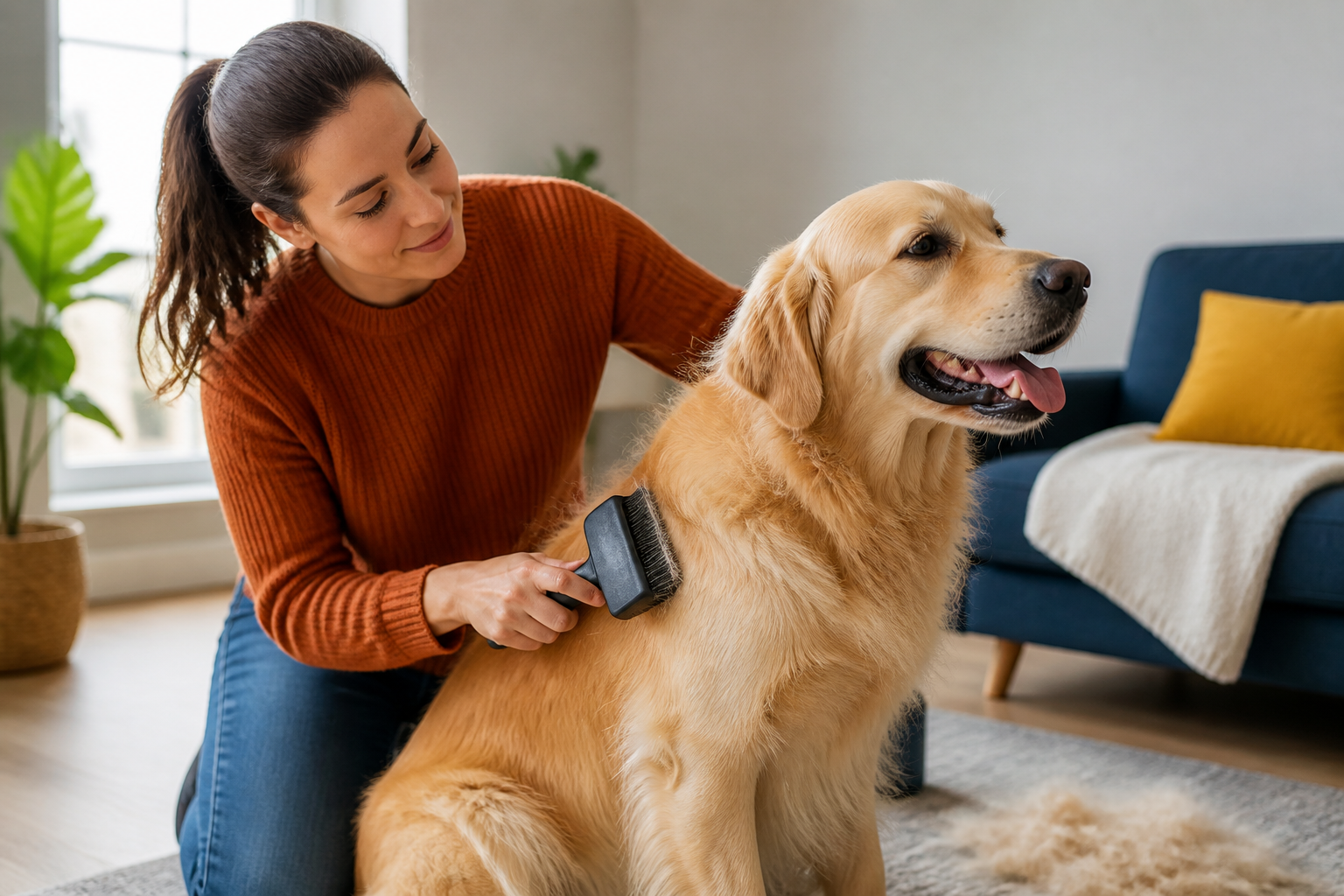
Breeds like Golden Retrievers or Setters need tools that can penetrate deeper without causing pain. A slicker brush is the standard here. These brushes have fine, short wires close together on a flat or curved surface. They are excellent for removing tangles and grabbing the fine hairs of the undercoat.
Curly or Wiry Coats
Poodles and Bichon Frise dogs do not shed in the traditional sense. Their hair stays trapped within the curls. However, this means they are prone to matting. A pin brush with rounded tips helps get through these curls safely. Regular brushing for these breeds is more about health and preventing mats than cleaning your floors. For additional grooming guidance, read how to groom a dog with curly hair.
Heavy Double Coats
For dogs that "blow" their coats twice a year, a de-shedding rake is a necessity. These tools have long, sturdy pins that reach through the topcoat to pull out the thick, woolly undercoat. Safari shedding combs are among the specialized options available for different hair lengths.
Key Takeaway: Match the brush to the coat. Rubber mitts work for short hair, slicker brushes for long hair, and undercoat rakes for heavy shedders.
Step-by-Step Brushing Technique
To get the best results, you need a routine. Simply dragging a brush over your dog's back for a few seconds will not do much. Follow these steps for a more thorough grooming session.
Step 1: Inspect the skin. / Look for any red spots, bumps, or parasites before you begin. This ensures you do not irritate an existing issue.
Step 2: Brush against the grain. / For short-haired dogs, a quick pass in the opposite direction of hair growth can loosen stubborn dead hairs.
Step 3: Work in sections. / Start at the head and move toward the tail. Focus on the chest, belly, and "trousers" on the back legs where fur tends to clump.
Step 4: Use long, gentle strokes. / Avoid staying in one spot for too long to prevent "brush burn" or skin irritation.
Step 5: Finish with the grain. / Once you have removed the loose fur, brush in the direction of growth to smooth the coat and distribute oils.
How Bathing Complements Brushing
Bathing is a secret weapon in the fight against shedding. Water and shampoo help to loosen the hair follicles and release the undercoat. However, the timing of the brushing matters just as much as the bath itself. For more bath-time guidance, see these dos and don'ts for bathing your dog.
We recommend brushing your dog thoroughly before the bath to remove as much loose hair and as many tangles as possible. Once the dog is in the tub, use a de-shedding shampoo. These formulas often contain omega fatty acids and proteins that strengthen the hair. While the shampoo is sitting, you can use a rubber curry brush to work the suds down to the skin. This helps pull even more hair free.
After the bath, drying is the final step. A high-velocity dryer is a favorite tool of professional groomers. It literally blows the remaining loose hair off the dog. If you are using a standard towel, be sure to pat the dog rather than rubbing vigorously. Rubbing can cause tangles and breakage. Once the dog is dry, give them one final brush to catch anything the water loosened.
Vet Tip: Avoid over-bathing your dog. Too many baths can strip the skin of essential oils, leading to dry skin and even more shedding. Once every four to six weeks is usually plenty for most breeds.
Nutrition and the Role of the Pharmacy
Sometimes shedding is not just a grooming issue. It can be a sign of what is happening inside your dog's body. Hair is made mostly of protein. If a dog is not getting enough high-quality protein or essential fats, their coat will be the first thing to suffer. The hair becomes brittle and falls out more easily.
A diet rich in omega-3 and omega-6 fatty acids can make a visible difference. These fats nourish the skin and help keep the hair firmly rooted in the follicle. You can find these in premium foods like those from Acana or Orijen. If your dog has a sensitive stomach or skin allergies, you might need something more specialized. Explore our dog skin and coat care products for nutritional and topical options.
Our pharmacy provides access to FDA-approved medications and prescription pet foods through our partnership with Pet's Choice. If your veterinarian determines that your dog's shedding is caused by an underlying health condition like hypothyroidism or a severe skin infection, our pet pharmacy is the place to get the necessary treatments. We offer prescription diets specifically formulated for skin and coat health that you can order for home delivery.
Bottom line: Good grooming handles the hair that has already died, while good nutrition keeps the current hair healthy and strong.
Seasonal Shedding and the Blow Out
Many owners notice a massive increase in fur during the spring and fall. This is known as "blowing the coat." It is a biological response to changing daylight and temperatures. In the spring, dogs lose their heavy winter undercoat to stay cool. In the fall, they shed their lighter summer coat to make room for the winter fluff.
During these windows, your brushing schedule should increase. If you normally brush once a week, you may need to move to a daily routine for fourteen to twenty-one days. This is the period where many owners consider using a professional-grade de-shedding tool. These tools are designed to remove a large volume of hair quickly. You can find additional seasonal guidance in our guide to Australian Shepherd shedding.
If you find that the hair is still overwhelming, consider a "blow-out" session with a high-velocity dryer. You can do this at home or at a self-wash station. The air pressure removes the fine undercoat much more effectively than a brush alone. Just remember to use cool or low-heat settings to protect your dog's skin.
When Shedding Becomes a Medical Concern
While shedding is normal, there are times when it indicates a problem. You should be able to tell the difference between a natural coat change and hair loss caused by illness. Normal shedding happens evenly across the body. You might see more fur on your floor, but your dog still has a full, healthy coat.
Watch for these warning signs:
- Bald patches or thinning spots where the skin is visible
- Red, inflamed, or scaly skin under the fur
- Excessive itching, biting, or licking at the skin
- A foul odor coming from the coat or skin
- Symmetry in hair loss, such as thin spots on both flanks
If you notice these symptoms, it is time to consult your veterinarian. These can be signs of parasites like fleas or mites, or they could indicate hormonal imbalances. Our pharmacy carries a variety of flea and tick preventives that can help if the shedding is caused by biting pests. Medications for skin infections or allergies can also be filled through our Pet's Choice partnership once you have a prescription.
Vet Tip: If your dog is losing hair in patches or has itchy, red skin, skip the grooming tools and call your vet first. Brushing irritated skin can make the discomfort worse and spread potential infections.
Creating a Positive Brushing Experience
Not every dog enjoys being brushed. Some see the tool and run the other way. To make your life easier, you should turn grooming into a bonding activity. Start when your dog is young if possible, but older dogs can also learn to enjoy it.
Keep sessions short at first. Start with just two or three minutes and lots of praise. Use high-value treats to create a positive association with the brush. If your dog is particularly anxious, try using a lick mat with some peanut butter to keep them distracted while you work.
Always be gentle around sensitive areas like the ears, tail, and belly. If you hit a tangle, do not pull. Use your fingers to gently work it apart or apply a detangling spray. If you make the experience painful, your dog will fight you the next time. Consistency is more important than duration. Five minutes of brushing every day is much more effective than an hour once a month.
Key Takeaway: Use treats and short sessions to help your dog enjoy grooming. A calm dog is much easier to brush thoroughly.
Common Myths About Dog Shedding
There is a lot of misinformation about how to stop a dog from shedding. Understanding the facts will save you time and money.
Myth: Shaving a double-coated dog will stop shedding. This is actually harmful. Shaving a dog like a Husky or a Lab does not stop the hair from falling out; it just makes the hairs shorter and sharper. More importantly, the undercoat provides insulation against both heat and cold. Shaving can lead to heatstroke and permanent damage to the coat.
Myth: There are "non-shedding" breeds. Every animal with hair sheds to some degree. Even Poodles and Doodles shed, but the hair gets caught in their curls rather than falling on the floor. This is why they require professional haircuts and frequent brushing to prevent painful mats.
Myth: Frequent brushing will make a dog shed more. Brushing does not increase the rate of hair loss. It only removes the hair that was already destined to fall out. If you see a lot of hair in the brush, it means you are successfully preventing it from ending up on your rugs.
Myth: Supplements can stop shedding entirely. Shedding is a natural biological process. While supplements can make the coat healthier and reduce "excessive" shedding caused by poor nutrition, they will never stop a dog from shedding their seasonal coat.
Managing the Fur in Your Home
Even with the best brushing routine, some hair will escape. Managing your environment is the final piece of the puzzle. We recommend keeping a few essential tools on hand for quick cleanups.
- Lint rollers: Keep these in your car and by the front door for your clothes.
- Rubber squeegees: These are surprisingly effective at pulling pet hair out of carpets and car upholstery.
- High-efficiency vacuum: Look for one with a HEPA filter to catch dander as well as fur.
- Washable furniture covers: These protect your sofa and can be thrown in the laundry easily.
For your dog's bedding, look for materials that do not trap hair. Some synthetic fabrics allow fur to slide off, while fleece and wool tend to hold onto it. Regular washing of their bed will also reduce the amount of dander and loose hair that circulates through your home.
Bottom line: A combination of daily brushing, good nutrition, and the right cleaning tools is the only way to truly manage a shedding household.
Conclusion
Brushing is your most powerful tool for keeping a clean home while living with a dog. It removes dead hair, distributes healthy oils, and gives you a chance to check your pet's skin health. While you can never stop shedding entirely, you can certainly control it with the right equipment and a consistent routine. We have been helping pet owners find the best solutions since 2006, from premium brushes to specialized skin supplements.
To keep your grooming supplies stocked and your dog's coat at its best, consider using our Autoship program. You can get regular deliveries of de-shedding shampoos, skin and coat treats, or even prescription diets from our pharmacy. You will save on your orders and earn MVP Rewards points on every purchase. Taking care of your dog's coat is a lifelong commitment, but the reward is a healthier pet and a much cleaner living room.
FAQ
How often should I brush my dog to help with shedding? For most dogs, brushing two to three times a week is enough to keep the hair under control. However, during the heavy shedding seasons of spring and fall, you may need to brush daily. Short-haired breeds may only need a quick weekly rubdown with a grooming mitt, while thick-coated breeds require more frequent attention to prevent mats.
Can I use a human hairbrush on my dog? Human hairbrushes are not designed for the density or texture of dog fur. They often fail to reach the undercoat where the most shedding occurs and can sometimes scratch a dog's sensitive skin. It is much more effective and safer to use a brush specifically designed for your dog's coat type, such as a slicker brush or a rubber curry comb.
Does bathing a dog make them shed more or less? Bathing actually helps the shedding process by loosening the dead hair so it can be washed away or brushed out more easily. If you use a de-shedding shampoo and brush your dog while they are soapy, you will remove a significant amount of fur in the tub. This means you will see much less hair on your furniture in the following days.
Why is my dog shedding so much even though I brush them? If your dog is shedding excessively despite regular grooming, look at their diet or stress levels. Poor nutrition can lead to weak hair follicles that drop hair prematurely. It could also be a sign of a medical issue like allergies or a hormonal imbalance. If the shedding is accompanied by bald spots or red skin, we recommend consulting your veterinarian for a professional diagnosis.






