
 Save 15% on your 1st Autoship learn more

 Email us
 Live Chat
 FAQs
FAQs





Introduction
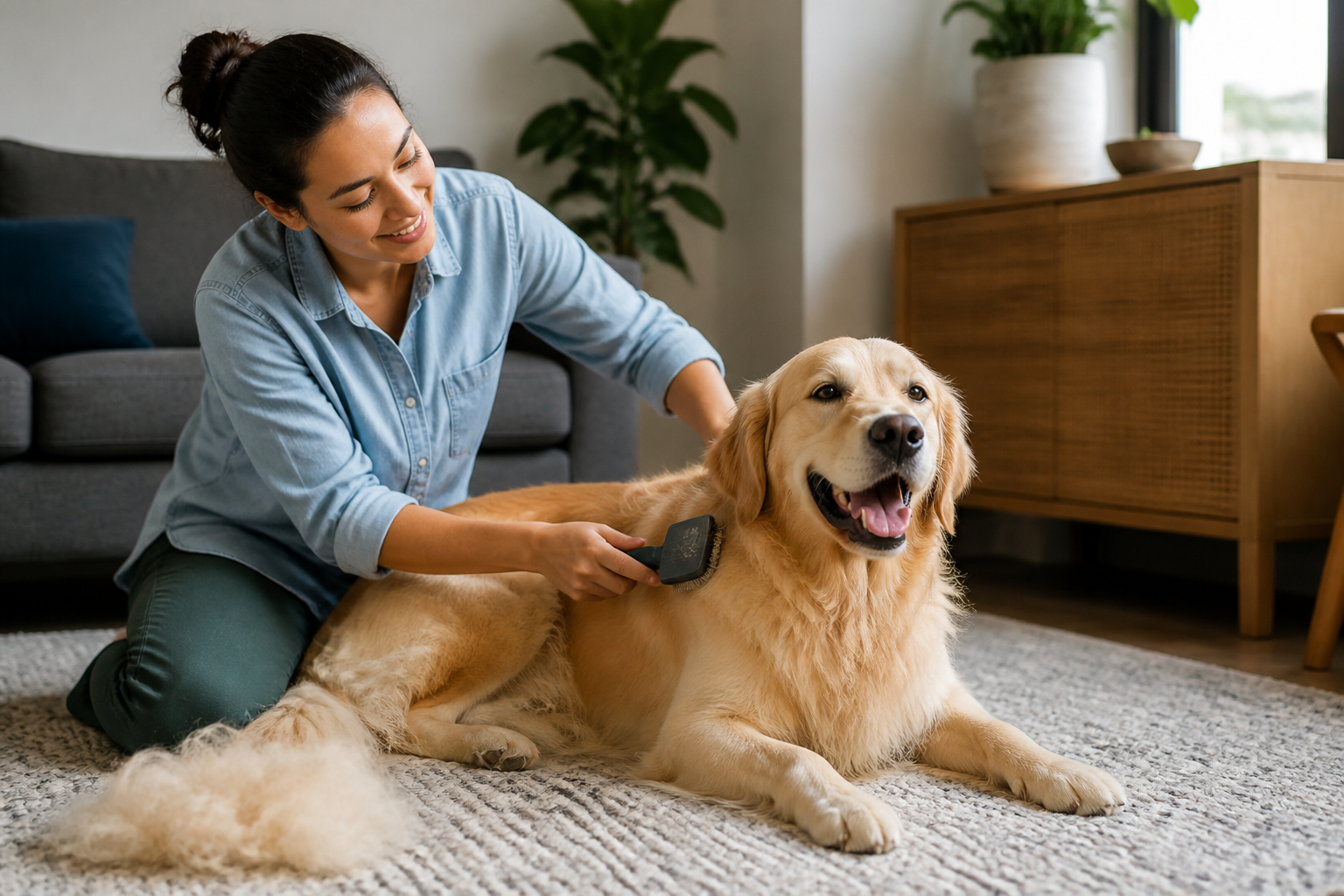
It is a familiar sight for many pet owners. You finish a deep clean of your living room only to spot a fresh "tumbleweed" of fur drifting across the hardwood floor five minutes later. For those of us living with heavy shedders, dog hair becomes a permanent part of our wardrobe and home decor. You might wonder if your daily efforts with a brush actually make a difference or if you are simply fighting a losing battle against biology. At BaxterBoo, we know that while you cannot stop shedding entirely, you can certainly manage it. This post covers why brushing is your best defense, which tools work for specific coat types, and how nutrition impacts the hair on your floor. Brushing is the most effective way to intercept loose fur before it migrates to your furniture.
Quick Answer: Yes, regular brushing is the most effective way to reduce shedding by removing dead hair and undercoat before it falls out naturally. It also distributes skin oils, which keeps the coat healthy and reduces the rate of hair breakage.
The Science of Why Brushing Works
Shedding is a natural part of a dog's life cycle. Every hair on your dog’s body goes through a growth phase, a resting phase, and a shedding phase. When a hair reaches the end of its life, it releases from the follicle to make room for new growth. Without intervention, that hair stays trapped in the coat until gravity or movement knocks it loose. This is where your brush comes in.
When you brush your dog, you are manually performing the "shedding" process in a controlled environment. Instead of the hair falling onto your rug or sticking to your favorite black sweater, it is captured in the bristles of your tool. Furthermore, brushing stimulates the skin. This stimulation increases blood flow to the surface, which delivers more nutrients to the hair follicles.
Healthier follicles mean stronger hair. When hair is strong and well nourished, it is less likely to become brittle and snap off prematurely. Brushing also helps move natural sebum, the oil produced by the skin, down the length of the hair shaft. This oil acts as a natural protectant and moisturizer. A well lubricated coat is less likely to tangle, and it sheds more predictably than a dry, neglected coat.
Selecting the Right Tool for the Job
Not all brushes are created equal. Using a tool designed for a Poodle on a Labrador will likely produce poor results and may even irritate the skin. We carry a wide variety of options because we understand that different textures require different approaches. Explore our dog grooming supplies to find tools for different coat types.
Short and Smooth Coats
Dogs like Boxers, Beagles, and Labradors have short, dense fur that can be surprisingly difficult to manage. Their hairs are often stiff and "needle-like," meaning they weave themselves into upholstery. For these dogs, a rubber curry brush or a grooming mitt is usually the best choice. These tools use friction to pull loose hair from the skin without scratching.
Double Coats
Breeds such as German Shepherds, Huskies, and Golden Retrievers have a soft undercoat and a tougher outer coat. During "blowout" seasons in the spring and fall, the undercoat comes out in massive clumps. A deshedding rake or a slicker brush is necessary here. The rake reaches through the topcoat to grab the fuzzy undercoat, while the slicker brush smooths the top layer. Our dog brushes and combs include options for undercoats and everyday grooming.
Long or Silky Coats
Dogs with long, flowing hair like Yorkies or Setters need a pin brush. These have long, widely spaced teeth that reach down to the skin without pulling too hard on the delicate hair. If your dog has a long coat, you are also managing tangles. A metal finishing comb is helpful for checking your work and ensuring no mats are forming behind the ears or under the legs.
Key Takeaway: Matching the grooming tool to your dog's specific coat type is the only way to effectively remove dead hair without causing skin irritation or coat damage.
The Proper Brushing Technique
How you brush is just as important as what you use. If you only brush the very top layer of hair, you are missing the bulk of the shed. This is a common mistake that leads owners to believe brushing is not working.
Step 1: Start at the head and work toward the tail. / Always move in the direction of hair growth first to get your dog comfortable with the sensation.
Step 2: Use "line brushing" for thick coats. / Part the hair with one hand and brush from the skin outward in small sections to ensure you are hitting the undercoat.
Step 3: Pay attention to the "hot spots." / Focus extra time on the chest, the "trousers" on the back legs, and the base of the tail, as these areas tend to hold the most loose fur.
Step 4: Finish with a soft bristle brush. / This helps smooth the coat and distribute those healthy oils you just stimulated.
For dogs with very short hair, you can use circular motions with a rubber mitt. This mimics a massage and helps loosen hair that is stuck in the follicles. Most dogs find this very relaxing, making it a great way to bond while keeping the house clean.
The Role of Bathing and Drying
While brushing is the primary tool, a bath can significantly speed up the deshedding process. Water and shampoo help loosen the hair that is ready to fall out. We recommend using a specific deshedding shampoo. These formulas often contain ingredients like omega fatty acids or aloe vera to hydrate the skin and weaken the "grip" of dead hair. See our dog shampoo and conditioner selection for bathing supplies.
The real secret weapon used by professionals is the high velocity dryer. Unlike a human hair dryer, which uses high heat, these pet dryers use a powerful stream of cool air to literally blow the water and loose undercoat right off the dog. If you use one of these after a bath, you will see a "snowstorm" of fur. It is messy, so it is often best to do this outside or in a dedicated grooming area.
For additional bathing guidance, read our tips on bathing your dog.
Vet Tip: Always ensure your dog's skin is completely dry after a bath. Damp skin trapped under a thick coat can lead to "hot spots" or bacterial infections. If your dog has sensitive skin, consult your veterinarian before choosing a scented or heavy deshedding shampoo.
Nutrition and the Internal Coat Health
If your dog is shedding excessively outside of the normal seasonal changes, the problem might be in their bowl. A dog’s skin and coat require a significant amount of protein and fat to stay healthy. In fact, a large percentage of a dog's daily protein intake goes specifically toward maintaining their skin and hair.
We often recommend looking for foods rich in Omega-3 and Omega-6 fatty acids. These are commonly found in fish oils, like salmon or pollock oil. These fats strengthen the hair shaft and keep the skin supple. If the skin is dry and flaky, the hair follicles become weak, leading to more shedding.
Hydration also plays a major role. Dehydrated skin is tight and prone to inflammation. This causes hair to fall out more easily. Ensure your dog always has access to fresh, clean water. If they are a picky drinker, adding a bit of water or wet food to their kibble can help boost their moisture intake.
When Shedding Indicates a Health Problem
It is important to distinguish between normal shedding and hair loss caused by a medical condition. While brushing helps with the former, it cannot fix the latter. If you notice any of the following, it is time to schedule a visit with your veterinarian:
- Bald patches or areas where the hair is visibly thinning
- Red, inflamed, or bumpy skin under the fur
- Sores or scabs
- Excessive licking or scratching in one specific area
- A foul odor coming from the skin
These can be signs of allergies, parasites like fleas or mites, or even hormonal imbalances like hypothyroidism. Our pharmacy carries a variety of FDA approved medications for skin infections and allergies. If your vet determines that your dog has a chronic condition like atopic dermatitis, they may prescribe a medicated shampoo or a specific prescription diet. Getting the right diagnosis is the first step to a healthy coat. You can explore our pet pharmacy for pharmacy-related needs.
Key Takeaway: Brushing manages the hair that is supposed to fall out, but medical treatment is required for hair that is falling out due to illness or irritation.
Managing the Seasonal Blowout
Most dogs experience a significant increase in shedding twice a year. This is often called "blowing the coat." It happens as the daylight hours change, signaling the dog's body to swap their heavy winter coat for a lighter summer one, or vice versa.
During these windows, your grooming routine needs to ramp up. What was a weekly brushing might need to become a daily task. This is the best time to utilize our Autoship programme for your favorite deshedding tools and shampoos. Having your supplies arrive right when the seasons change ensures you are never caught off guard by the first sign of a blowout.
- Increase brushing frequency to once a day.
- Use a deshedding tool specifically designed for undercoats.
- Consider a professional grooming visit for a "deep deshed" treatment.
- Keep a lint roller near the front door for quick clothing touch ups.
Bottom line: Consistent daily brushing during seasonal shifts can reduce the amount of hair in your home by up to 80 percent.
For another perspective on seasonal coat changes, read how Australian Shepherds shed.
The Benefits Beyond a Clean House
While the main goal might be a hair-free sofa, brushing offers other advantages. It allows you to perform a mini health check on your dog. As you move through the fur, you can feel for new lumps, bumps, or hidden ticks that you might otherwise miss.
It is also an incredible stress reliever for many pets. The repetitive motion of the brush can be very soothing. If you start this routine when they are young, they will learn to see grooming as a positive experience rather than a chore. For older dogs with joint stiffness, a gentle brushing session can act like a light massage, helping to relax tight muscles.
Conclusion
Brushing your dog is the single most effective way to keep shedding under control. By selecting the right tools for your dog's coat and staying consistent with your routine, you can significantly reduce the time you spend vacuuming. Remember that a healthy coat starts from the inside with good nutrition and proper hydration. We are here to help you find the best brushes, shampoos, and supplements to keep your pet looking their best. If you notice unusual hair loss or skin irritation, always reach out to your veterinarian for guidance. For all your grooming and health needs, visit our pharmacy or explore our collection of grooming supplies.
FAQ
Does shaving my dog stop them from shedding?
No, shaving does not stop the biological process of shedding. It only makes the hairs that fall out shorter and sharper, which can actually make them harder to remove from fabric. Shaving a double coated dog can also permanently damage their coat and hinder their ability to regulate their body temperature.
How often should I brush my dog to see a difference?
For most dogs, brushing two to three times a week is sufficient to manage normal shedding. However, during peak shedding seasons in the spring and fall, daily brushing is highly recommended to keep up with the volume of loose undercoat being released.
Can I use a human hairbrush on my dog?
It is not recommended because human brushes are designed for human hair density and scalp sensitivity. Dog brushes have specific bristle lengths and tensions designed to penetrate thick fur and reach the skin without causing scratches or discomfort. Using the wrong brush can lead to skin irritation or "brush burn."
Why is my dog shedding so much in the winter?
Indoor dogs often shed year round because artificial heating and cooling can confuse their natural biological clocks. If your home is very warm in the winter, your dog's body may decide it does not need a thick winter coat, leading to increased shedding during the colder months.






