
 Save 15% on your 1st Autoship learn more

 Email us
 Live Chat
 FAQs
FAQs





Introduction
You just finished a deep clean of your living room. The floors are spotless and the rugs look brand new. Five minutes later, a massive clump of fur drifts across the hardwood like a tiny tan tumbleweed. It is a frustrating reality for many pet parents. When you pick up a brush to solve the problem, you might be shocked by how much hair comes off. It can feel like you are stripping your dog bare, leading many to wonder if the grooming itself is causing more hair to fall out. At BaxterBoo, we help owners navigate these fuzzy situations every day. This post will explain why brushing is your best tool for a cleaner home. We will look at how grooming captures loose fur and how to avoid skin irritation. Brushing does not biologically increase shedding, but it does change where that hair ends up.
The Science of the Hair Growth Cycle
To understand why your brush fills up so fast, you have to understand how dog hair grows. Every single hair on your dog goes through a specific life cycle. This cycle has four stages: growth, transition, resting, and shedding. The length of these stages depends on the breed, the environment, and the individual health of the dog.
The final stage is the telogen phase. This is when the hair is no longer growing and is essentially dead. It stays in the follicle until something pushes it out or pulls it out. This "something" is often a new hair growing underneath it. When that dead hair is pushed out, it becomes what we call a shed. Brushing targets these dead hairs that are already at the end of their life.
Quick Answer: Brushing does not biologically cause your dog to grow more hair or lose it faster. It simply accelerates the removal of dead fur that was already loose and destined to fall out. By doing this, you capture the fur in the brush instead of finding it on your clothes.
Capture Versus Creation
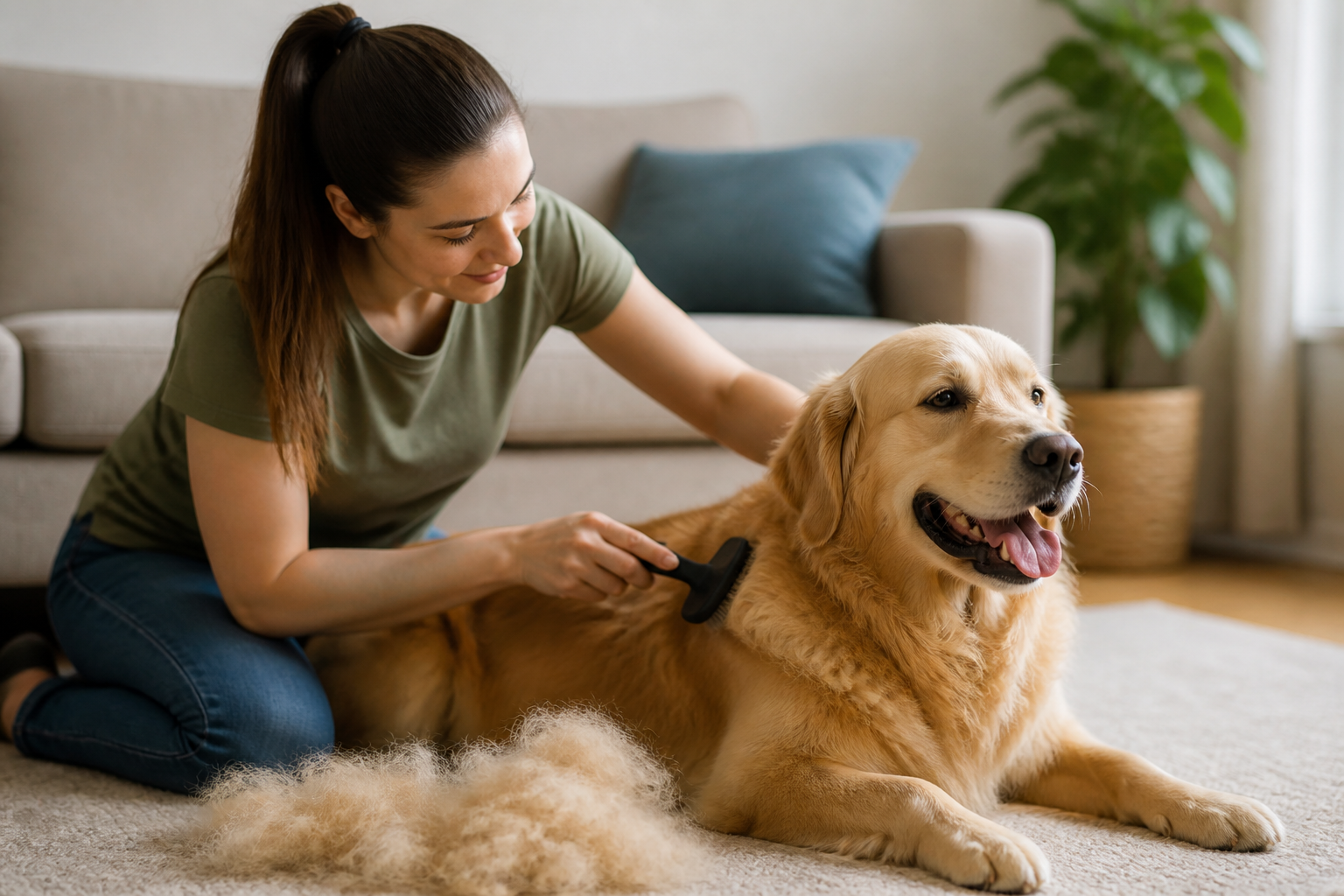
When you see a mountain of fur on the floor after a grooming session, it is easy to think you have done something wrong. It looks like the brush is creating hair out of nowhere. However, you are not creating hair. You are capturing it. If you did not use the brush, that exact same amount of hair would eventually fall out on its own.
Without brushing, those dead hairs stay trapped in the coat for a while. They get caught in the healthy, growing hairs. This is especially true for double-coated breeds like Golden Retrievers or Huskies. These dogs have a soft undercoat that sheds heavily twice a year. If you do not brush them, that undercoat stays matted against the skin. Brushing simply pulls those "trapped" dead hairs out all at once. This is why it looks like the dog is shedding more during the process. For more seasonal shedding guidance, read about how Golden Retrievers shed.
The Risk of Over-Brushing
While brushing itself does not cause more hair to grow, doing it incorrectly can cause problems. This is often where the myth that brushing causes shedding comes from. If you use a tool that is too sharp or if you press too hard, you can cause brush burn. This is a form of skin irritation that makes the skin red and tender.
In some cases, using the wrong tool can actually cut the healthy hair instead of just pulling out the dead hair. This is common with some types of de-shedding rakes that have bladed edges. If you over-use these, you are essentially giving your dog a very uneven haircut. This damage can make the coat look thin or patchy. It is not an increase in shedding, but rather a result of physical damage to the hair shafts.
Key Takeaway: Always use light pressure and the correct tool for your dog's specific coat type. If you notice the skin turning pink or your dog pulling away, you are likely brushing too hard or for too long.
Matching the Brush to the Coat
Different coats require different approaches. Using a tool meant for a Husky on a Beagle will not yield great results and might even hurt. We carry a wide variety of dog brushes and combs to help you find the perfect match for your pet.
Short, Smooth Coats
For dogs like Boxers, Pugs, or Labradors, a rubber curry comb is often the best choice. These tools use soft rubber nubs to massage the skin and lift away short, prickly hairs. They do not have sharp teeth, so the risk of skin irritation is very low. You can use these in a circular motion to loosen the fur and then sweep it away.
Double Coats and Thick Fur
Dogs with a thick undercoat need something that can reach deep. A slicker brush or an undercoat rake is the standard here. A slicker brush has fine, bent wire bristles that grab the loose fuzzy undercoat without pulling too hard on the top coat. An undercoat rake has long, blunt metal tines that reach through the outer guard hairs to pull out the dead fluff underneath.
Curly or Long Coats
Poodles, Doodles, and long-haired Terriers need frequent brushing to prevent mats. A pin brush is a great daily tool for these breeds. It looks like a human hair brush but has wider spacing between the pins. This helps detangle the hair without breaking the strands.
- Slicker Brushes: Best for removing dander and loose undercoat.
- Rubber Mitts: Perfect for massaging short coats and removing surface hair.
- Pin Brushes: Ideal for long hair that needs detangling without static.
- Bristle Brushes: Great for finishing a groom and adding shine to the top coat.
Why Seasonal Changes Matter
Many owners notice a massive spike in hair loss during the spring and fall. This is often called "blowing the coat." This is a biological response to changing daylight and temperatures. In the spring, dogs shed their heavy winter undercoat to prepare for the heat. In the fall, they shed their lighter summer coat to make room for thick, insulating fur.
If you start brushing more during these times, it will definitely feel like the brushing is making it worse. You might brush for twenty minutes and still see hair coming off. This is simply because the volume of dead hair is much higher during these few weeks. Consistent daily brushing during a blowout can shorten the amount of time your house is covered in fur. It helps the dog transition to their new coat faster. See how regular grooming helps manage seasonal shedding in Australian Shepherds.
The Secret Power of the Bath
Bathing is one of the most effective ways to manage shedding, but it must be done carefully. Water and shampoo help loosen the dead hair from the follicle. When you scrub your dog, you are physically displacing thousands of hairs that were ready to fall out.
If you have a heavy shedder, using a de-shedding shampoo can help. These formulas often contain omega fatty acids that help moisturize the skin. Healthy, hydrated skin holds onto hair better than dry, flaky skin. After the bath, while the dog is still damp, a gentle brush through can remove a massive amount of fur. Our dog grooming collection includes brushes, shampoos, conditioners, and other grooming supplies.
Vet Tip: Avoid bathing your dog too frequently. Once a month is usually plenty for most breeds. Over-bathing can strip the skin of natural oils, leading to dryness and irritation. This can actually cause more hair loss as the skin becomes unhealthy.
For additional bath-care guidance, review these dos and don'ts for bathing your dog.
Nutrition and Coat Integrity
If your dog is shedding excessively and it is not a seasonal change, you should look at their diet. Hair is mostly made of protein. If a dog is not getting high-quality protein or enough healthy fats, their hair will be weak. Weak hair breaks easily and falls out before it has finished its full growth cycle.
We recommend looking for foods that list real meat as the first ingredient. Brands like Farmina, Orijen, or Stella and Chewy's focus on nutrient-dense recipes that support skin health. You can explore our dog food selection when reviewing your dog's current diet. Adding a supplement can also make a big difference. Omega-3 fatty acids, often found in fish oil, are the gold standard for coat health. They reduce inflammation in the skin and keep the hair follicles strong.
- Check the protein source in your current food.
- Look for "Omega-3" or "DHA" on the label.
- Ensure your dog has constant access to fresh, clean water.
- Monitor for signs of food allergies, such as red paws or itchy ears.
When Shedding is a Medical Issue
Sometimes, shedding is more than just a grooming problem. If you notice bald patches, symmetrical hair loss, or red, irritated skin, it is time to visit the veterinarian. Excessive shedding can be a symptom of several underlying health issues. These include:
- Hormonal Imbalances: Conditions like hypothyroidism or Cushing’s disease often cause coat changes.
- Parasites: Fleas, ticks, and mites can cause itching that leads to self-inflicted hair loss.
- Allergies: Both food and environmental allergies can cause a dog to lose hair in specific areas.
- Infections: Bacterial or fungal infections of the skin can damage the hair follicles.
Our dog pharmacy carries prescription medications that may be available when your veterinarian identifies a medical need. Through our partnership with Pet's Choice, we can fulfill prescriptions for allergy medications, thyroid support, and flea and tick preventives. If your vet determines that your dog's shedding is due to a medical need, we can help you get the treatment they require.
Bottom line: Brushing is a maintenance tool, but it cannot fix a medical problem. If your dog has skin sores or bald spots, see a vet before you continue a heavy grooming routine.
Creating a Positive Grooming Routine
If your dog hates being brushed, it will feel like a chore for both of you. Many dogs find the sensation of a brush pulling on their hair to be stressful. To make it easier, start slow. Use a very soft brush at first and offer plenty of high-value treats.
Focus on one small area of the body at a time. If your dog is comfortable with their back being brushed, start there. Avoid sensitive areas like the belly, ears, or tail until the dog is relaxed. Keeping grooming sessions short—around five to ten minutes—can prevent the dog from becoming overwhelmed. Over time, many dogs grow to enjoy the massage-like feeling of a good brush. A Master Grooming Tools Self-Cleaning Slicker Brush can make routine brush clean-up easier.
Capturing the Mess at the Source
One of the biggest benefits of regular brushing is the cleanliness of your home. A single grooming session can remove enough hair to fill a grocery bag. If that hair is in the bag, it is not on your sofa. It is not stuck to your favorite black leggings. It is not clogging up your vacuum cleaner.
For people with allergies, regular brushing is essential. It removes the dander and dried saliva that often stick to loose fur. By brushing your dog outside or in a dedicated grooming area, you keep these allergens out of your main living spaces. It is a simple habit that makes living with a high-shedding breed much more manageable.
Key Takeaway: Consistency is the most important factor in shedding management. Five minutes of brushing every day is significantly more effective than an hour of brushing once a month.
Managing the Aftermath
Even with the best brushing routine, some hair will still end up on your furniture. We suggest using a variety of cleaning tools to handle the leftovers. Rubber squeegees or lint rollers are great for quick cleanups on upholstery. For your laundry, there are special dryer sheets and balls designed to help fur release from fabric and move into the lint trap.
If you find that the volume of hair is still too much to handle, consider using our Autoship program for your grooming supplies. You can have fresh brushes, de-shedding shampoos, and skin supplements delivered right to your door on a schedule. This ensures you never run out of the tools you need to keep the fur under control. Plus, Autoship customers enjoy savings on their orders and a free MVP Gold membership.
Conclusion
Brushing your dog does not make them shed more in a biological sense. It simply brings the hair to the surface where you can see it. It is a vital part of pet care that keeps the skin healthy, prevents painful mats, and keeps your home much cleaner. By choosing the right tools for your dog's coat and maintaining a consistent schedule, you can turn a frustrating chore into a bonding moment with your pet.
- Match your brush to your dog's coat type to avoid irritation.
- Brush daily during seasonal "blowouts" to speed up the transition.
- Support coat health from the inside with high-quality protein and Omega-3s.
- Consult a vet if you see bald spots or red, inflamed skin.
If you are dealing with a sudden spike in shedding that seems unusual, remember that our pharmacy is here to help with any prescription needs your vet might identify. You can also join the MVP Rewards programme to earn points on every grooming tool and supplement you purchase. Keeping your dog's coat in top shape is a journey, but with the right approach, you can win the battle against the fur.
FAQ
Why does my dog seem to shed more right after I brush them?
Brushing loosens many hairs that were already dead but still sitting in the follicle. After you stop brushing, some of those loosened hairs may fall off as the dog moves around. A quick wipe down with a damp cloth after brushing can help catch these last few stragglers.
Can I use a human hairbrush on my dog?
It is generally not recommended because human hairbrushes are designed for a different hair texture and scalp sensitivity. Dog brushes are built to handle thicker fur and reach through dense undercoats without scratching the skin. Using a pet-specific tool ensures you are effectively removing loose fur without causing discomfort.
How do I know if I am brushing my dog too much?
Signs of over-brushing include skin redness, small scratches, or your dog flinching when they see the brush. If the coat starts to look thin or broken rather than just clean, you might be using too much pressure or a tool that is too aggressive. Give the skin a few days to rest if you notice any irritation.
Does shaving my dog stop the shedding?
No, shaving does not stop shedding. It just means the hairs that fall out will be shorter and sharper, which can actually make them harder to clean out of fabrics. Shaving can also damage a double coat permanently and interfere with a dog's ability to regulate their body temperature. Brushing remains the safest and most effective way to manage hair loss.






