
 Save 15% on your 1st Autoship learn more

 Email us
 Live Chat
 FAQs
FAQs





Introduction
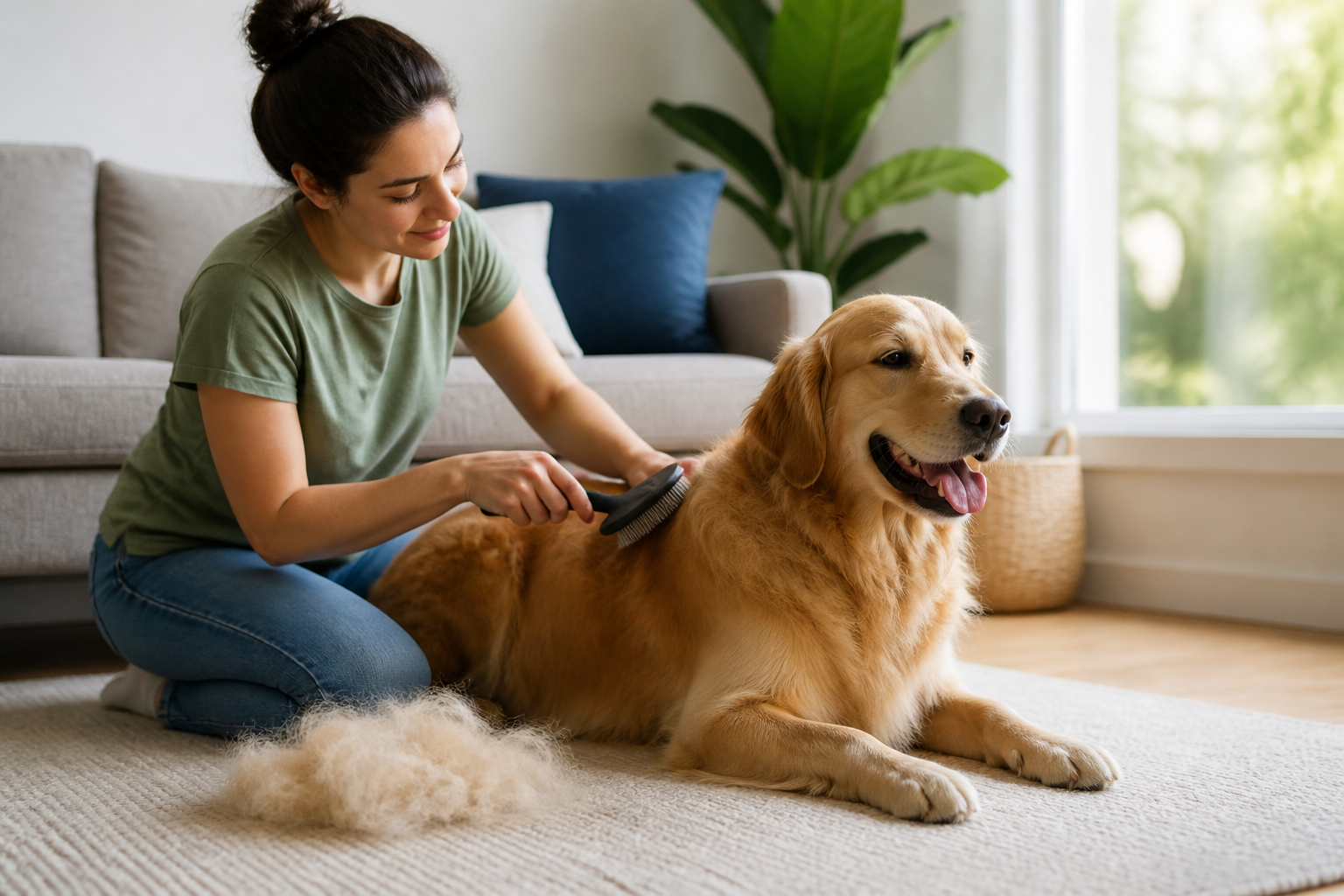
You just finished vacuuming the living room, but five minutes later, a fresh tumbleweed of fur drifts across the hardwood floor. It is a familiar sight for most dog owners, especially during the change of seasons when the vacuum seems to live in the middle of the room. At BaxterBoo, we understand that while you love your dog, you probably do not love wearing their coat on your black trousers. Many owners wonder if the time spent with a brush actually makes a dent in the mess. The short answer is yes. Brushing is the most effective manual way to reduce shedding by capturing loose fur before it ends up on your furniture. This article explains how brushing works, which tools fit your dog's coat type, and when shedding might signal a need for a trip to the veterinarian.
Quick Answer: Yes, regular brushing significantly reduces the amount of hair your dog drops around the house. It works by removing dead fur from the undercoat and distributing natural skin oils to keep the remaining hair healthy and rooted.
The Mechanics of Brushing and Hair Loss
Shedding is a natural process where old or damaged hair falls out to make room for new growth. Every dog sheds to some degree, even those labeled as low-shedding or hypoallergenic. Brushing does not stop the biological process of hair growth and loss, but it gives you control over where that hair ends up. When you brush your dog, you are essentially performing a controlled shed. You pull away the loose, dead hairs that are already detached from the follicle but are trapped in the coat.
Without brushing, these loose hairs eventually work their way free as your dog moves, leans against the sofa, or shakes. By removing them with a tool, you keep them contained in the bristles or a pile on the floor. Brushing also helps prevent mats and tangles. Mats are clumps of dead hair that have become entwined with live hair. These clumps trap moisture and heat against the skin, which can lead to irritation or infections. Regular sessions keep the coat separated and allow the skin to breathe.
Moving Natural Oils
Brushing serves a second purpose beyond just hair removal. Your dog's skin produces natural oils that protect the coat and keep it shiny. These oils often sit at the base of the hair follicle. When you brush, you distribute these oils down the entire length of the hair shaft. This keeps the hair supple and less likely to break. Brittle hair breaks easily, which adds to the volume of "fuzz" you find on your rugs. A well-oiled coat is a stronger coat.
Choosing the Right Tool for the Job
Not all brushes are created equal. Using the wrong tool can be ineffective or even uncomfortable for your dog. If the bristles are too short, they will not reach the undercoat where the real shedding happens. If they are too sharp, they can scratch the skin. Explore our dog grooming supplies to find brushes, combs, shampoos, and other care essentials.
| Brush Type | Best For | Purpose |
|---|---|---|
| Slicker Brush | Long hair, curly coats, or thick undercoats | Removing mats and fine loose hair |
| Bristle Brush | Short-haired breeds or finishing long coats | Smoothing the coat and distributing oils |
| Rubber Curry Brush | Short, smooth-coated breeds (Labs, Boxers) | Massaging skin and pulling up short loose hairs |
| Undercoat Rake | Heavy shedders with double coats (Huskies, Shepherds) | Reaching deep to pull out the "blowout" fur |
| Deshedding Tool | Most shedding breeds | Using fine teeth to grab dead undercoat hair |
The Slicker Brush
The slicker brush is a staple for many owners. It features fine wire bristles that are slightly angled. This design allows the brush to grab loose hair and debris without pulling too hard on the skin. It is excellent for breeds with medium to long hair that tends to tangle. We often recommend this for everyday maintenance because it is versatile. You can also browse our dog brushes and combs for tools suited to different coat types.
The Rubber Curry Brush
If you have a short-haired dog like a Beagle or a Pit Bull, a wire brush might be too harsh. A rubber curry brush or a grooming mitt is a better choice. The rubber nubs act like a magnet for short, stiff hairs. As you move the brush in a circular motion, it stimulates the skin and pulls those stubborn little hairs out. It is also a very relaxing experience for most dogs because it feels like a firm massage.
Key Takeaway: Matching the tool to your dog's coat type is essential. A tool that is too aggressive can cause brush burn, while a tool that is too soft will leave the undercoat full of dead hair.
Establishing a Brushing Routine
Consistency is the secret to a hair-free home. Brushing your dog once a month will not do much to stop the daily accumulation of fur. The frequency of your sessions should depend on the length and density of your dog's coat.
Step 1: Assess the coat.
Look for mats behind the ears, under the legs, and near the tail. These are high-friction areas where hair clumps quickly.
Step 2: Start with a wide-tooth comb or rake.
If your dog has a thick coat, use a rake first to loosen the dense undercoat. Work in sections rather than trying to do the whole back at once.
Step 3: Move to a finer brush.
Follow up with a slicker or bristle brush to catch the smaller hairs the rake might have missed. This also smooths the top layer for a finished look.
Step 4: Reward the behavior.
Give your dog a small treat after the session. This builds a positive association and makes future grooming easier.
Daily vs. Weekly Brushing
For long-haired dogs or those with thick double coats, daily brushing is ideal during the peak shedding seasons of spring and fall. Even five minutes a day can make a massive difference. For short-haired breeds, a thorough session once or twice a week is usually enough to keep the house clean. If you notice an increase in hair on your clothes, it is a sign you need to bump up the frequency.
For additional guidance on brushing techniques and coat maintenance, read our guide to grooming a curly-haired dog.
The Role of Nutrition in Shedding
You cannot brush away a poor diet. If your dog's skin is dry and their hair is brittle, they will shed more than a dog with a healthy, nourished coat. The hair follicles need specific nutrients to hold onto the hair shaft effectively.
Omega-3 and Omega-6 fatty acids are the most important nutrients for coat health. These fats are often found in fish oils or flaxseed. Many premium dog foods include these, but some dogs benefit from a dedicated supplement. When the skin is hydrated, the hair stays rooted longer. This reduces the overall volume of shedding.
If your dog has persistent skin issues or extreme shedding, it might be due to a food sensitivity. Some dogs react to common proteins or grains with skin inflammation. In these cases, a prescription diet may be necessary. Our dog food selection includes a range of formulas for different nutritional needs. Our pharmacy offers prescription pet foods and FDA-approved medications through our partnership with Pet's Choice. If your veterinarian recommends a specific therapeutic diet to manage skin allergies, we can help you get those supplies delivered to your door.
Vet Tip: If you notice bald patches, red skin, or if your dog is scratching constantly, consult your veterinarian. These symptoms often indicate allergies, parasites, or hormonal imbalances rather than normal seasonal shedding.
Bathing as a Deshedding Tool
Bathing and brushing go hand-in-hand. A bath helps loosen the dead hair that is stuck deep in the coat. However, the real work happens during the drying process. Many professional groomers use high-velocity dryers to "blow out" the coat. This removes a significant amount of fur that a brush might miss.
At home, you can use a deshedding shampoo. These formulas often contain ingredients like aloe vera or oatmeal to soothe the skin, along with proteins that strengthen the hair. When you apply the shampoo, spend a few minutes massaging it deep into the fur. This mechanical action helps the loose hair slide out.
Don't Over-Bathe
While baths are helpful, doing them too often can have the opposite effect. Over-bathing strips the skin of the natural oils we mentioned earlier. This leads to dry, flaky skin and more shedding. For most dogs, a bath every four to six weeks is plenty. Always brush your dog before the bath to remove as much hair as possible. If you put a matted dog in the tub, the water will often make the mats tighter and harder to remove.
For more bathing guidance, read our tips for bathing your dog.
Bottom line: A bath should always be preceded and followed by a thorough brushing session to maximize hair removal.
Managing the Seasonal Blowout
Most dogs experience a "blowout" twice a year. This usually happens in the spring as they lose their heavy winter coat and in the fall as they prepare for colder weather. During these times, it can feel like your dog is losing enough hair to create a second dog.
During a blowout, the undercoat comes out in large tufts. This is especially common in breeds like German Shepherds, Huskies, and Golden Retrievers. Standard brushing might not feel like enough. This is when specialized deshedding tools become vital. These tools have fine, stainless steel teeth that reach past the topcoat to grab the fuzzy undercoat.
Using these tools once or twice a week during the blowout can cut down on the house mess by up to 90 percent. Just be careful not to over-use them in one spot. Since they are very effective, it is easy to accidentally thin out the coat too much if you stay in one area for too long.
Common Brushing Mistakes to Avoid
Even well-meaning owners can make mistakes that lead to skin irritation or ineffective grooming. One common error is only brushing the top layer of fur. This is called "surface brushing." If you do not get down to the skin, the undercoat will continue to mat and shed.
Another mistake is brushing a dry coat that is already tangled. Pulling on dry mats can be painful and may cause your dog to hide when the brush comes out. If you encounter a tough knot, use a detangling spray to provide some "slip" to the hair. This allows the brush to slide through more easily.
Finally, do not forget the "hidden" spots. The belly, the back of the thighs, and the area under the collar often get overlooked. These are the places where loose hair accumulates and forms mats. Make it a point to check these areas every time you sit down for a grooming session.
- Brush in the direction of hair growth.
- Use light pressure to avoid scratching the skin.
- Check for lumps, bumps, or ticks while you brush.
- Keep the sessions short and positive.
Beyond the Brush: Other Ways to Help
While brushing is the primary way to reduce shedding, other lifestyle factors play a role. Hydration is key. A dehydrated dog will have dry skin, and dry skin leads to hair loss. Ensure your dog always has access to fresh, clean water.
You should also keep an eye on your home's humidity. During the winter, indoor heating can make the air very dry. This dries out your dog's coat just as it dries out your own skin. Using a humidifier in the room where your dog sleeps can help maintain coat moisture and reduce static and breakage.
If you find that the shedding is still unmanageable despite regular brushing and a good diet, consider your dog's stress levels. Dogs often "stress shed." If there has been a major change in the house, such as a move or a new baby, you might notice more hair on the floor. In these cases, calming aids or extra exercise can help settle their nerves and their coat.
Key Takeaway: Shedding is a holistic issue. Brushing manages the symptoms, but diet, hydration, and stress management address the root causes.
Using the BaxterBoo Pharmacy for Coat Health
Sometimes shedding is more than just a seasonal change. Chronic skin conditions, fungal infections, or thyroid issues can all cause excessive hair loss. If your vet determines that your dog needs medical intervention, our pet pharmacy is a resource you can trust. We carry FDA-approved medications for allergies and skin infections through our partnership with Pet's Choice.
Ordering through our pharmacy is a simple way to manage your pet's long-term health needs. Whether it is a medicated shampoo for a skin condition or a prescription supplement for coat health, we provide a reliable way to get what you need without extra trips to the clinic. This is especially helpful for owners managing senior dogs or pets with chronic allergies who need consistent care to keep their coats in top shape.
Conclusion
Brushing your dog is a simple, low-cost way to keep your home cleaner and your pet more comfortable. It removes dead hair, prevents painful mats, and gives you a chance to check your dog for any new health concerns. While you cannot stop shedding entirely, a consistent routine with the right tools can make it a minor inconvenience rather than a household crisis. At BaxterBoo, we recommend starting with a high-quality brush suited for your dog's coat and pairing it with a healthy diet rich in fatty acids. For those items you use most, like shampoos or supplements, our Autoship programme can help you save money and ensure you never run out. By making grooming a regular part of your life, you can spend less time vacuuming and more time enjoying your dog's company.
FAQ
Does shaving my dog stop shedding?
No, shaving does not stop shedding; it just makes the shed hairs shorter. Shaving can actually be harmful to many breeds because it removes their natural insulation and protection against sunburn. It can also permanently damage the texture of a double coat when it grows back.
How often should I use a deshedding tool?
For most dogs, using a heavy-duty deshedding tool once a week is sufficient. Over-using these tools can irritate the skin or thin out the coat too much. Use a regular slicker or bristle brush for daily maintenance and save the deshedding tool for a more thorough weekly session.
Why does my dog shed more in the spring?
Dogs shed their thick winter undercoat in the spring to prepare for warmer temperatures. This is often called "blowing the coat." The increase in daylight triggers a hormonal change that tells the body it is time to drop the heavy fur and grow a lighter summer coat.
Can a bath make my dog shed more?
A bath will cause a temporary increase in shedding immediately after the wash because the water and soap loosen hairs that were already dead but still attached. This is actually a good thing, as it allows you to brush those hairs out all at once rather than finding them on your furniture later.






