
 Save 15% on your 1st Autoship learn more

 Email us
 Live Chat
 FAQs
FAQs





Introduction
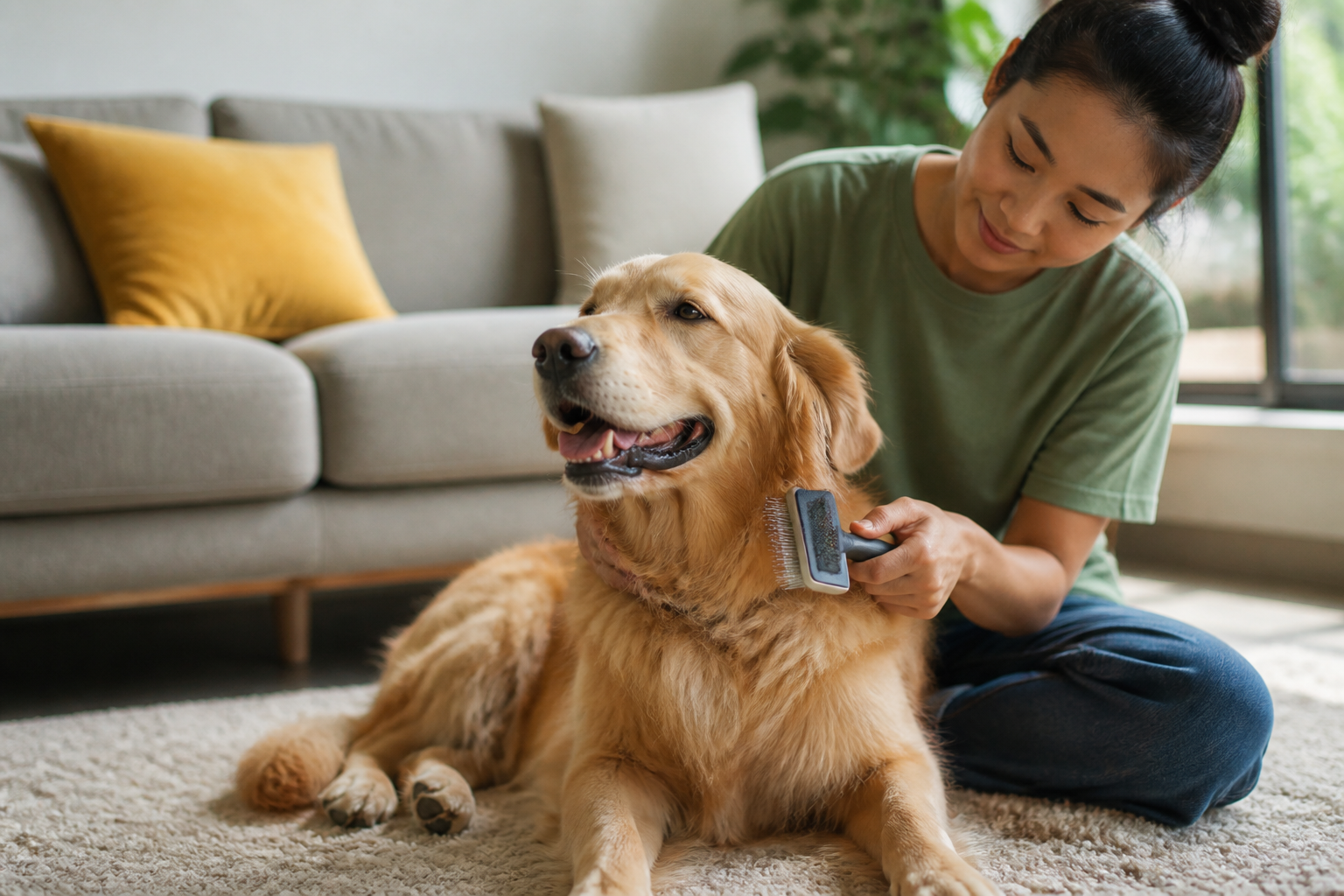
You just finished vacuuming the living room and putting away the cleaning supplies. You sit down on the sofa with a cup of coffee, only to see a fresh tumbleweed of white fur drifting across the hardwood floor. It feels like a losing battle. If your dog is a heavy shedder, you know that the "fur-niture" is a real thing, and your black pants are never truly safe. Here at BaxterBoo, we talk to pet owners every day who are looking for a way to reclaim their homes from the constant layer of loose hair. This article covers why dogs shed, how the right tools make a difference, and the specific ways brushing keeps your home cleaner. You will learn that while you cannot stop shedding entirely, the right routine can significantly reduce the mess.
How Brushing Manages the Shedding Cycle
Brushing is the most effective way to control shedding because it physically removes dead hair before it falls off the dog. Most dogs go through a natural growth cycle where hair reaches a certain length and then dies. This dead hair usually sits loosely in the follicle or gets trapped in the surrounding coat. If you do not remove it with a brush, gravity and movement will eventually deposit it on your rugs.
The process of brushing also helps distribute natural oils across the skin. These oils act as a barrier and keep the hair hydrated. When a dog's skin is dry, the hair becomes brittle and breaks easily. This creates "false shedding" where the hair is actually snapping off rather than completing its natural cycle. Regular sessions with a brush keep the skin healthy and the hair more resilient.
Quick Answer: Yes, regular brushing is the most effective way to reduce shedding. It removes dead hair directly from the coat before it falls onto your floors and keeps the skin healthy to prevent excessive hair breakage.
The Stages of Hair Growth
Understanding the science of your dog's coat helps you see why brushing is a daily or weekly necessity. Hair growth happens in four distinct phases:
- Anagen phase: The active growth stage where new hair forms.
- Catagen phase: A transitional stage where the hair stops growing.
- Telogen phase: The resting stage where the hair is mature but still attached.
- Exogen phase: The final stage where the hair falls out to make room for new growth.
Brushing is specifically designed to target hair in the exogen and telogen phases. By pulling these hairs out early, you control where they land.
Choosing the Right Tools for Your Dogs Coat
Not every brush is built for every dog. Using the wrong tool can be ineffective or even painful for your pet. We carry over 500 trusted brands at BaxterBoo, and we have seen how the right match changes the grooming experience. If you use a tool that is too harsh, your dog will learn to hide when the brush comes out. If the tool is too soft, it will only glide over the top of the fur without reaching the undercoat. You can compare options in our dog brushes and combs collection.
Bristle Brushes and Rubber Mitts
For dogs with short, smooth coats like Boxers or Labradors, a simple bristle brush is often enough. These brushes have tightly packed, natural or synthetic bristles that grab loose surface hair. Rubber grooming mitts, such as the KONG Zoom Groom Natural Rubber Dog Grooming Brush, are also excellent for these breeds. The rubber nubs act like a magnet for loose fur and provide a massage that most dogs enjoy.
Slicker Brushes and Rakes
Dogs with longer hair or thick undercoats need something more robust. A slicker brush has fine wire pins that are slightly angled. This design allows the pins to reach through the topcoat to grab the fuzzy undercoat. Undercoat rakes are even more specialized. They have long, blunt metal teeth designed to pull out the thick "wool" that many breeds shed during seasonal changes.
Key Takeaway: Matching the brush to the coat type is essential. Short-haired dogs need rubber mitts or soft bristles, while double-coated dogs require slicker brushes or rakes to reach the shedding undercoat.
The Professional Technique for Maximum Hair Removal
The way you brush matters as much as the tool you use. Many owners simply swipe the brush across the dog's back a few times and call it a day. To truly reduce the hair in your home, you need a more systematic approach. This ensures you are reaching all the areas where hair tends to accumulate, such as the "pants" on the back legs and the thick fur around the neck.
Step 1: Start at the head and work your way back. Use gentle, short strokes to avoid pulling on the skin. Step 2: Brush in the direction of hair growth first to remove the obvious loose fur. Step 3: For thick-coated dogs, try "line brushing." Part the hair with one hand and brush from the skin outward to ensure you are reaching the base of the coat. Step 4: Use a finishing comb to check for any missed tangles or clumps of dead hair.
Managing the Seasonal Blow
Twice a year, many dogs "blow their coat." This usually happens in the spring and fall as the body prepares for temperature changes. During these times, you may need to increase your brushing frequency to once or even twice a day. This is a temporary spike in shedding, but it can be overwhelming without a consistent routine.
- Increase frequency to daily sessions during peak seasons.
- Use a de-shedding tool specifically designed for undercoats.
- Perform grooming sessions outside to keep the flying fur out of the house.
- Follow up with a damp cloth to pick up any remaining loose strands on the surface.
Bathing and Brushing: A Powerful Duo
Bathing is a great way to loosen up dead hair, but it can be a disaster if you do it in the wrong order. You should always brush your dog before the bath. Water can act like glue for dead hair, causing it to mat and tangle. If you put a shedding dog in the tub without a pre-brush, you might end up with tight knots that are difficult to remove. For additional bath-time guidance, see our tips on bathing your dog.
Once the dog is in the tub, using a de-shedding shampoo can help. These formulas often contain ingredients like omega fatty acids or aloe to moisturize the skin. While the dog is lathered up, you can use a rubber grooming mitt to work the shampoo down to the skin. This mechanical action helps release even more hair into the drain rather than onto your carpet.
Vet Tip: Always dry your dog thoroughly after a bath. Use a towel or a pet-specific dryer on a cool setting. Leaving the coat damp can lead to skin irritation or "hot spots," especially in dogs with very thick fur.
Nutrition and Its Impact on Hair Loss
If your dog is shedding excessively despite regular brushing, the problem might be internal. A dog's coat is a direct reflection of their overall health. If they are not getting the right nutrients, the hair follicles will be weak. This leads to constant shedding throughout the year rather than just seasonal shifts.
High-quality food is the first line of defense. Look for diets that prioritize real meat and include healthy fats. Omega-3 and Omega-6 fatty acids are particularly important for skin elasticity and hair strength. If your dog has a sensitive stomach or skin allergies, you might notice even more hair loss. In these cases, a prescription diet might be necessary. Our guide to pet supplements and nutritional support offers another resource for exploring coat-health considerations.
Our pharmacy at BaxterBoo offers a wide range of prescription pet foods and medications through our partnership with Pet's Choice. If your veterinarian identifies an underlying health issue or a severe allergy, our pet pharmacy can help you find prescription products for your dog's ongoing care.
Useful Supplements for Coat Health
- Salmon oil or fish oil supplements.
- Biotin and Zinc.
- Coconut oil (used topically or in small amounts in food).
- Flaxseed meal.
Key Takeaway: Internal health dictates external coat quality. A balanced diet rich in fatty acids can strengthen hair follicles and reduce the amount of hair your dog loses daily.
When Shedding Indicates a Health Problem
While shedding is normal, there are times when it is a symptom of a larger issue. It is important to know the difference between a heavy seasonal shed and a medical concern. If you notice any of the following signs, you should consult your veterinarian for a professional diagnosis:
- Symmetrical bald patches or thinning spots.
- Red, inflamed, or scaly skin under the fur.
- A foul odor coming from the skin or coat.
- Constant scratching, licking, or biting at the skin.
- Lethargy or changes in appetite accompanying the hair loss.
Conditions like hypothyroidism, Cushing’s disease, or parasitic infections like mange can all cause a dog to lose hair in an unnatural way. Your vet may recommend skin scrapings or blood work to rule these out. Once a diagnosis is made, our pharmacy is a resource for managing ongoing health needs with prescription treatments.
Bottom line: Brushing helps manage normal shedding, but it cannot fix hair loss caused by underlying medical conditions or parasites.
The Role of Hydration in Coat Maintenance
Dehydration is a common but overlooked cause of excessive shedding. When a dog's body is low on water, it prioritizes keeping vital organs functioning. The skin and coat are often the first areas to lose moisture. Dry skin leads to brittle hair that breaks and falls out prematurely.
Ensure your dog always has access to clean, fresh water. If you have a dog that is reluctant to drink, consider adding a bit of water or bone broth to their dry food. You can also incorporate wet food into their diet to increase their overall moisture intake. A well-hydrated dog will have more elastic skin and a coat that stays attached longer.
Managing the Mess in Your Home
Even with a perfect brushing routine, some hair will still find its way into your living space. Managing a shedding dog is about a multi-pronged approach. Brushing the dog is the primary step, but managing your environment helps keep your sanity.
- Use washable furniture covers or throws.
- Choose flooring like tile or wood over high-pile carpet.
- Use a high-quality vacuum with a HEPA filter designed for pet hair.
- Keep lint rollers in the car and near the front door.
By combining consistent grooming with a few household changes, the "hair problem" becomes much more manageable. Remember that grooming is also a great bonding time. Most dogs grow to love the attention of a good brushing session, especially if it is followed by a healthy treat or a game of fetch.
Conclusion
Brushing your dog is a simple act that yields massive results for your home and your pet's comfort. It removes dead hair, stimulates healthy skin oils, and prevents painful mats from forming. While you will never stop the natural cycle of shedding, you can certainly control where that hair ends up. By using the right tools for your dog's specific coat type and maintaining a consistent schedule, you can keep the "fur tumbleweeds" to a minimum.
Be sure to check out our selection of grooming tools and supplements at BaxterBoo to find the perfect match for your dog. If you are starting a new grooming routine, consider signing up for our Autoship programme to save on the supplies you use most.
Bottom line: Consistent brushing combined with proper nutrition is the only way to effectively manage dog shedding and keep your home hair-free.
FAQ
Can I brush my dog too much?
While daily brushing is safe for most breeds, you must be careful not to cause "brush burn." This happens when you apply too much pressure or use a harsh tool repeatedly on the same area of skin. Always check your dog's skin for redness and use a gentle touch, especially around sensitive areas like the stomach.
Does shaving my dog stop shedding?
No, shaving does not stop shedding. A shaved dog still sheds, but the hairs are simply shorter and pricklier. For many breeds, especially those with double coats, shaving can permanently damage the fur and interfere with the dog's ability to regulate their body temperature. It is much better to manage the coat with regular brushing.
Why does my dog seem to shed more right after a bath?
The warm water and the mechanical action of scrubbing loosen up dead hairs that were previously trapped in the coat. This is actually a good thing, as it means those hairs are coming out in the tub rather than on your carpet. To minimize the post-bath mess, always give your dog a thorough brushing once they are completely dry.
What is the best brush for a dog with very short hair?
For breeds like Boxers, Pugs, or Beagles, a rubber grooming mitt or a natural bristle brush is best. These tools are gentle on the skin and very effective at grabbing the short, stiff hairs that these breeds lose. Avoid using heavy-duty undercoat rakes on short-haired dogs, as the metal teeth can scrape their skin.






