
 Save 15% on your 1st Autoship learn more

 Email us
 Live Chat
 FAQs





Introduction
A dog boot that slips off in the snow or twists around on a walk is frustrating for both of you. The right pair should fit your dog’s paws, suit the surface underfoot and stay secure without squeezing.
At BaxterBoo, we know that a Chihuahua’s winter boot and a large dog’s trail shoe may need very different designs. Even dogs of the same breed can have different paw shapes. The best place to start is with your dog’s measurements and the conditions you expect to encounter.
Below, we’ll help you compare materials, closures and sizes, then show you how to introduce boots comfortably. Fit and function matter more than a size label or a five-star rating.
What Kind of Dog Boots Do You Need?
Dog shoes and boots can add a layer between paws and rough, wet or cold surfaces. They aren’t necessary for every dog on every walk, and no boot protects against every hazard.
| Use | What to look for | Tradeoff |
|---|---|---|
| Snow and winter walks | A secure closure, suitable traction and a water-resistant or waterproof exterior | Insulated or taller boots can feel bulky |
| Rain and puddles | A waterproof lower section and an opening that fits closely around the leg | Water can still enter over the top |
| Summer pavement | A lightweight, breathable upper and a protective sole | Mesh styles usually let water in |
| Hiking and rough trails | A flexible sole with tread and an upper suited to abrasive terrain | Heavier soles can make some dogs walk awkwardly |
| Indoor slippery floors | Lightweight, flexible footwear with grip on the bottom | Outdoor tread may feel too stiff indoors |
| Running, hunting or sledding | A secure, flexible boot suited to the terrain and activity | Lightweight fabric may wear faster on rough ground |
For hot weather, boots are not a reason to keep walking on an unsafe surface. Choose cooler times and shaded routes when you can. In snow, look beyond warmth: the boot also needs to stay in place and provide useful footing.
For hunting, check that straps and openings won’t easily catch on brush. For sledding or other snow sports, soft, lightweight booties can allow more paw movement than a rigid shoe, but thin fabric may offer less traction and wear faster on abrasive ground.
Dog Boots & Shoes




Measure Your Dog’s Paws Before You Shop
A size marked XXS, XS, medium, XL or XXL is only a starting point. Each manufacturer has its own sizing chart, so measure for the particular boot you’re considering. Breed and weight alone won’t tell you whether the sole will fit.
How to Measure
Step 1: Gather paper and a pencil. Place the paper on a firm, flat surface where your dog can stand comfortably.
Step 2: Measure a weight-bearing paw. With your dog standing, mark the widest points of the paw. Measure the distance between the marks.
Step 3: Check the length if the chart asks for it. Follow the manufacturer’s directions for measuring from the back of the paw to the front, including nails if instructed.
Step 4: Measure the other paws. Front and back paws can differ. Check each paw and compare the measurements with the size chart.
Step 5: Check the boot’s shape and opening. Width is useful, but a long, narrow paw may not fit the same shoe as a round paw of equal width. Look at the leg opening and closure as well.
Your dog should be able to place the paw fully inside the boot without the toes bunching. The boot should not twist around easily or leave the paw sliding back and forth.
Keep this checklist handy while comparing options:
- Use the size chart for the exact boot, not a chart from another brand.
- Check front and back paws separately.
- Compare both paw width and length when the maker provides them.
- Look at whether boots are sold individually, in pairs or in sets of four.
- If measurements fall between sizes, follow the maker’s guidance rather than assuming that larger is always better.
Finding Boots for Different Breeds and Leg Shapes
Tiny dogs, including Chihuahuas, Yorkies and Pomeranians, may need a lightweight XXS or XS boot with a narrow opening. A sole that’s too wide can feel clumsy, even if the strap pulls tight. Check the actual measurements rather than buying the smallest label available.
For large dogs, including pit bulls and Rottweilers, look for a sole wide enough for the weight-bearing paw and a closure that adjusts around the leg. XL and XXL labels vary, so a boot marketed for big dogs still needs a measurement check. Huskies may need the same careful fit for snow boots, even when a product picture shows a similar-looking dog.
Leg shape matters, too. Dachshunds and corgis have shorter legs, so a tall shaft may interfere with movement. Greyhounds, Italian greyhounds and whippets often have slim legs, making the fit around the opening worth checking.
Pugs and other compact dogs can also have paws that differ from what a generic breed chart suggests. Whatever your dog’s size, watch how the boot fits the individual paw and leg.
How to Choose Dog Boots That Stay On
A secure boot starts with the correct sole size. If the foot slides inside, tightening the strap may not fix the problem. A boot that is too small can press on toes or make walking uncomfortable.
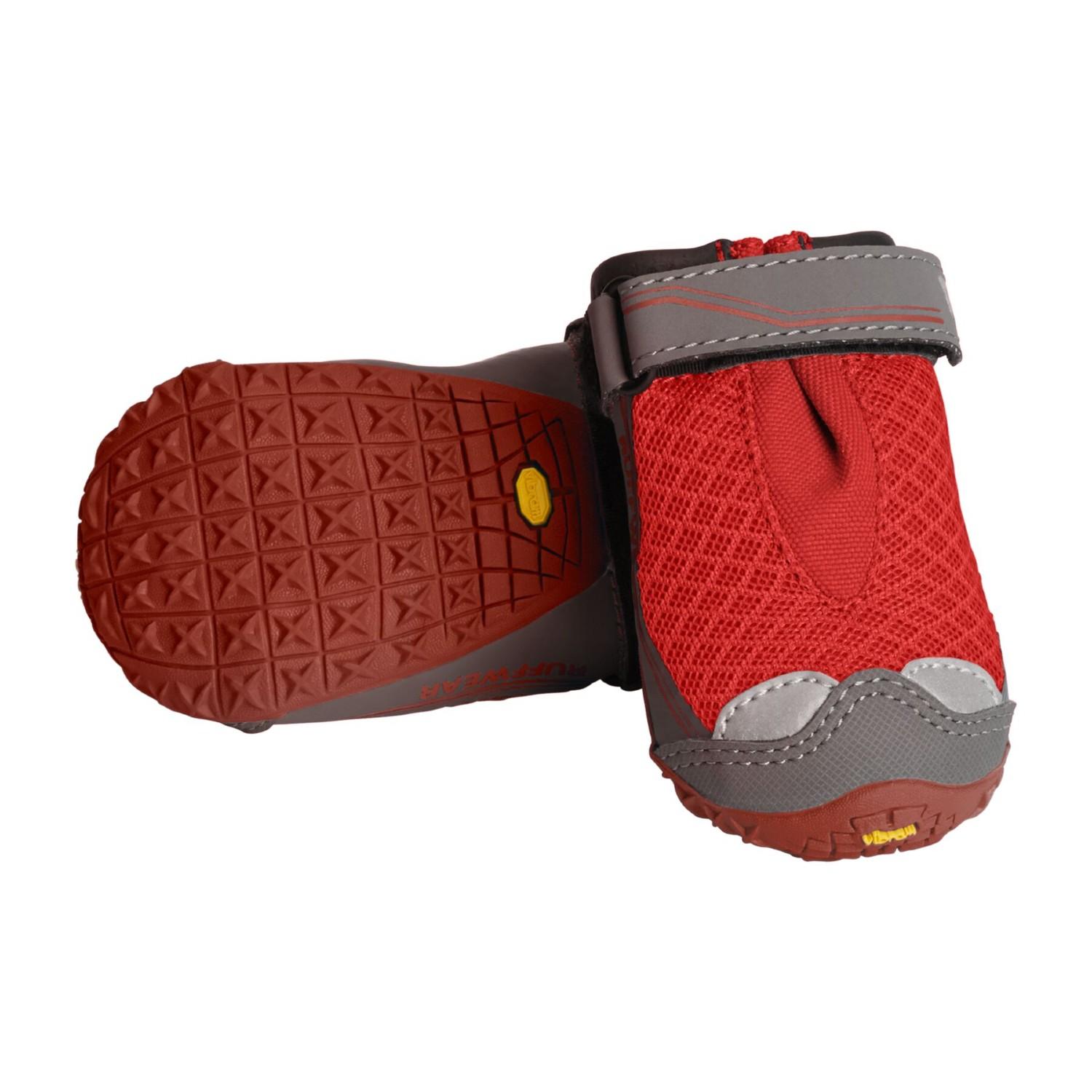
Look for a closure that adjusts around your dog’s leg without bunching the fabric. Hook-and-loop straps, often called Velcro straps, are common and quick to adjust. Some boots have two straps, while others use a zipper or a wide wraparound opening.
Zippers and wide openings may make a boot easier to put on, but check that hair and skin are clear before fastening. A taller boot may help keep snow out, though height alone does not guarantee that it will stay on.
Some designs use gaiters or a suspender-style connection to help keep footwear in position. These add more material and adjustment points, so make sure your dog can move freely and that nothing rubs the legs or body.
Check the Fit in Motion
Have your dog walk indoors, then take a short supervised walk outside. Stop if a boot rotates, slips down or changes how your dog moves. Reposition it and check the size and closure before trying again.
Afterward, remove each boot and look for rubbing, redness or trapped debris, including around the dewclaws. Don’t overtighten straps to keep a poorly fitting boot on.
Compare Boot Materials and Closures
The most comfortable dog boots are the ones your dog can wear and move in without irritation. Material affects flexibility, warmth, water resistance and how easily a boot dries.
Mesh and Lightweight Fabric
Mesh uppers allow more airflow than solid waterproof materials. They can be useful for warm, dry walks when paired with a sole suited to the surface. They are not the best choice when keeping paws dry is your main goal.
Soft fabric and fleece boots feel less structured than many rubber-soled shoes. Fleece can be cozy in dry conditions, but check whether the outer material resists moisture. A wet lining needs to dry before the next wear.
Neoprene, Silicone and Rubber
Neoprene can make a flexible boot upper, but water resistance depends on the full design, including seams and openings. Check the product description rather than assuming every neoprene boot is waterproof.
Silicone or rubber boots can be useful for wet walks when the design keeps water out. Some are stretchy and close-fitting, which may make them harder to put on than a boot with a wide opening. Check the sole for tread if your dog needs grip.
Water-resistant boots can handle some moisture, while waterproof designs are intended to keep water from passing through the specified material or construction. Neither label means water cannot enter through the top. Remove wet footwear after the walk and dry your dog’s paws.
Duck-Style, Tall and All-Weather Boots
Dog duck boots generally have a more substantial lower section with a taller upper. They may appeal for wet or wintry walks, but check the actual materials and closure instead of judging by the style name.
All-weather boots aim to work across several conditions. They can be convenient for everyday walks, though one pair may not be ideal for both deep snow and hot, dry pavement. Choose for the conditions you encounter most often.
Introduce Boots Without Rushing
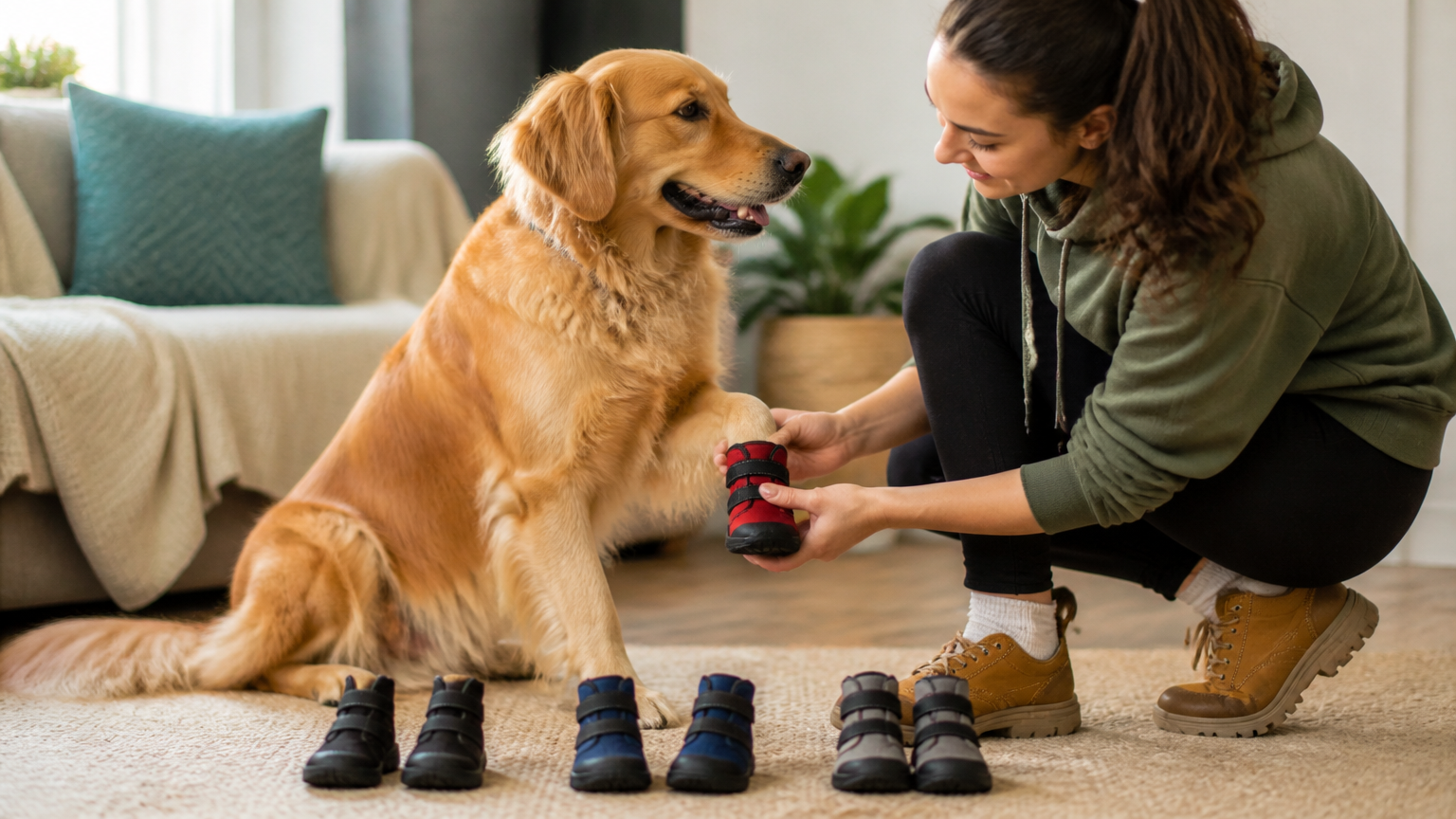
Many dogs need time to get used to something on their paws. An exaggerated first few steps can happen, but persistent discomfort or resistance is a reason to stop and reassess the fit.
Step 1: Let your dog investigate. Place the boots nearby and reward calm interest. You can also practice gently handling each paw.
Step 2: Try one boot. Put it on, fasten it according to the maker’s instructions and offer a small treat. Remove it after a brief, positive session.
Step 3: Practice with the other paws. Once your dog accepts one boot, introduce the others. Keep sessions short and take breaks.
Step 4: Walk on a safe indoor surface. Encourage a few steps and check that the soles don’t slide. Watch for twisting or a strap that shifts.
Step 5: Take a short outdoor walk. Inspect the fit during the walk and check the paws after removing the boots. Build up gradually if your dog is comfortable.
Never leave your dog unattended in new boots. Stop using a pair that causes rubbing, limping or repeated attempts to bite it off.
Can You Make Dog Boots From Socks?
A sock can be a simple, temporary indoor covering, but it is not a substitute for a fitted outdoor boot. Ordinary socks may slide on smooth floors, absorb water and wear through quickly.
For a brief, supervised try-on, choose a clean sock that fits loosely enough not to squeeze the paw or leg. Avoid rubber bands, tight tape or other makeshift fasteners. Remove the sock if it slips, bunches or bothers your dog.
If you need traction, choose a dog sock or boot with a grip surface rather than relying on an ordinary sock. For an injured paw or a bandage, ask your veterinarian what covering is appropriate before putting anything over it.
Vet Tip: Contact your veterinarian if your dog has a sore paw, persistent limping or redness that does not resolve. Boots should not replace an examination or a recommended treatment.
How to Read Dog Boot Reviews
Top-rated dog boots can be a useful starting point, but a high rating doesn’t tell you whether a boot will fit your dog. Look for reviews from owners whose dogs have similar paw shapes and who use the boots in comparable conditions.
For winter boots, check comments about snow entering the opening, traction and whether the boots stayed on during walks. For hiking or running, look for observations about rubbing, sole wear and movement. Pay attention to recurring fit concerns as well as praise.
Photos can help you see the boot’s shape, but measurements and the manufacturer’s chart are more useful than appearance alone. Choose red, pink, blue, black or a designer style after you’ve checked the fit and materials.
Conclusion
The right dog shoes or boots fit the paw, stay secure during movement and match the conditions outside. Start with measurements, then give your dog time to get comfortable wearing them.
- Choose traction, insulation and water protection for the surfaces you use.
- Check each paw and follow the specific boot’s size chart.
- Inspect paws and closures after every new or longer outing.
Bottom line: Browse the dog clothing and gear category at BaxterBoo, and check each listing for current sizes and availability.
FAQ
What are the best dog boots for winter that stay on?
Look for a properly sized boot with an adjustable closure, suitable tread and an exterior made for the wet or snowy conditions you expect. Test the fit on a short walk, since no design will stay on every dog.
How do I keep small dog boots from falling off?
Measure your dog’s paws while they’re standing and compare them with the exact boot’s size chart. A lightweight boot with an adjustable opening may be easier to fit, but it should not be tightened enough to squeeze the leg.
Are waterproof dog boots good for summer?
They can help keep paws dry on wet walks, but solid waterproof materials may offer less airflow than mesh. For hot, dry conditions, consider a breathable design with a suitable sole and avoid walking on excessively hot pavement.
Where can I buy dog boots?
You can look for dog boots at pet stores and online, including through BaxterBoo. Check the product listing for measurements, materials and the number of boots included before ordering.




- Site & Contents BaxterBoo.com. BaxterBoo is located in the United States.
- Privacy & Security
- Terms of Use
- Accessibility Statement
