Save 15% on your 1st Autoship learn more

 Email us
 Live Chat
 FAQs
FAQs





Introduction
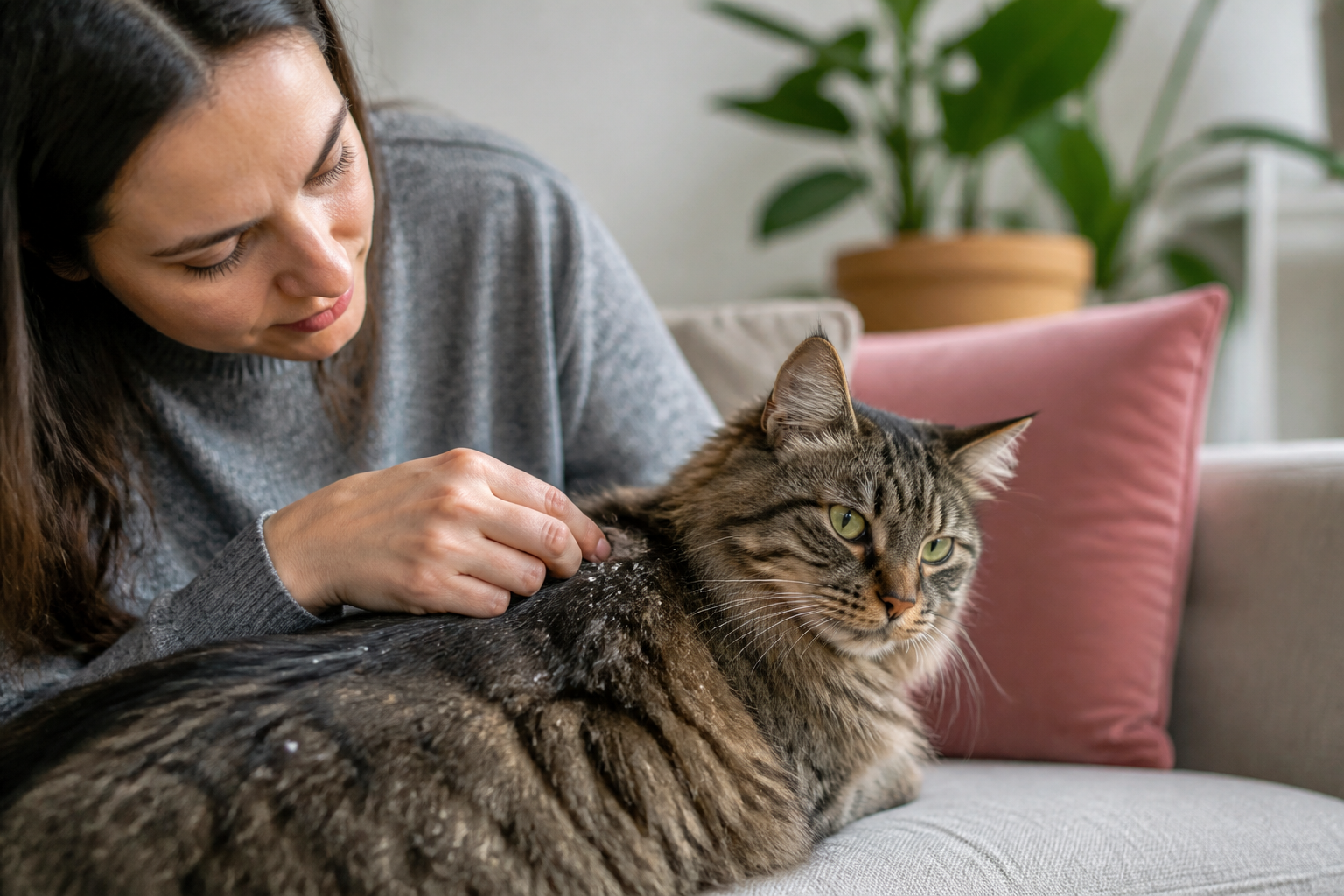
You are relaxing with your cat when you notice a dusting of white flakes on their dark fur. It looks like a light sprinkling of salt along their back. While you might first think of human dandruff, these flakes are a common sight for many cat owners. At BaxterBoo, we know that skin health is a big part of your cat’s overall comfort. This guide explains why these flakes appear and which cat dandruff products can help restore a healthy shine to their coat. We will cover everything from grooming tools to nutritional support. Most importantly, we will help you understand when a simple brush will do and when it is time to call the veterinarian. Our goal is to give you practical steps to keep your feline friend flake-free.
Quick Answer: Cat dandruff is often caused by dry air, poor grooming, or a lack of fatty acids in the diet. You can manage it using regular brushing, specialized cat shampoos, and Omega-3 supplements.
What Is Cat Dandruff?
Many people use the terms dander and dandruff interchangeably, but they are quite different. Dander consists of microscopic skin cells that all healthy cats shed naturally. You cannot see dander with the naked eye, but it is often what triggers allergies in humans. Dandruff is much larger. These are visible white or grey flakes of dead skin that have clumped together.
Dandruff is not a disease itself. It is a symptom that something is out of balance. It might mean the skin is too dry, or it could mean the skin is producing too much oil. Sometimes, it simply means your cat is not grooming as well as they used to. You will usually see these flakes most clearly along the lower back and near the base of the tail.
Key Takeaway: Dander is a normal, invisible part of skin shedding. Visible flakes are dandruff, which usually points to an underlying issue like dry skin or reduced grooming.
Top Reasons Your Cat Has Flaky Skin
Before choosing cat dandruff products, you need to understand why the flakes are there. Several factors can cause the skin to become dry or irritated.
Grooming Challenges and Mobility
Cats are famous for their grooming habits. A healthy cat spends a large portion of their day cleaning themselves. This process removes dead skin cells and distributes natural oils across the fur. If a cat stops grooming effectively, those dead skin cells build up and turn into dandruff.
Obesity is a leading cause of grooming trouble. If a cat is overweight, they may not be able to reach their lower back or hindquarters. Senior cats often face similar issues due to arthritis. If it hurts to twist and reach, they will simply stop cleaning those areas. You will notice the coat becoming dull, greasy, or flaky in the spots they can no longer reach.
Environmental Factors and Dry Air
The air inside your home plays a major role in skin health. During the winter months, indoor heating systems strip moisture from the air. This dry environment pulls moisture out of your cat's skin. This often leads to seasonal dandruff that disappears when the weather warms up.
Nutritional Gaps
Skin requires specific nutrients to stay supple and strong. If a cat's diet is low in essential fatty acids, their skin barrier can weaken. Omega-3 and Omega-6 fatty acids are crucial for maintaining the moisture seal in the skin. Without them, the skin becomes brittle and prone to flaking.
Essential Cat Dandruff Products for Home Care
If your cat is generally healthy but has some visible flakes, a few specific products can make a world of difference.
Grooming Tools and Brushes
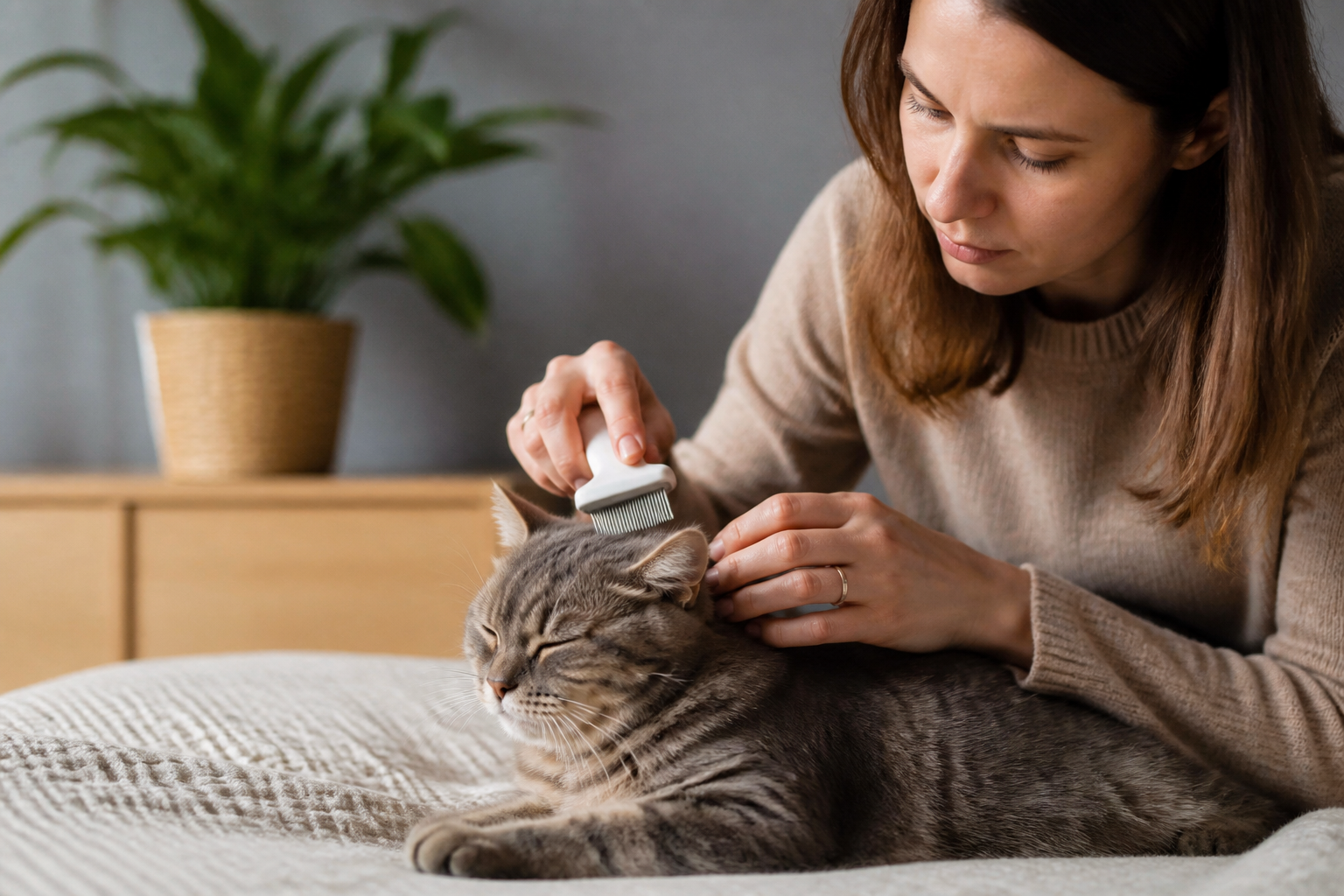
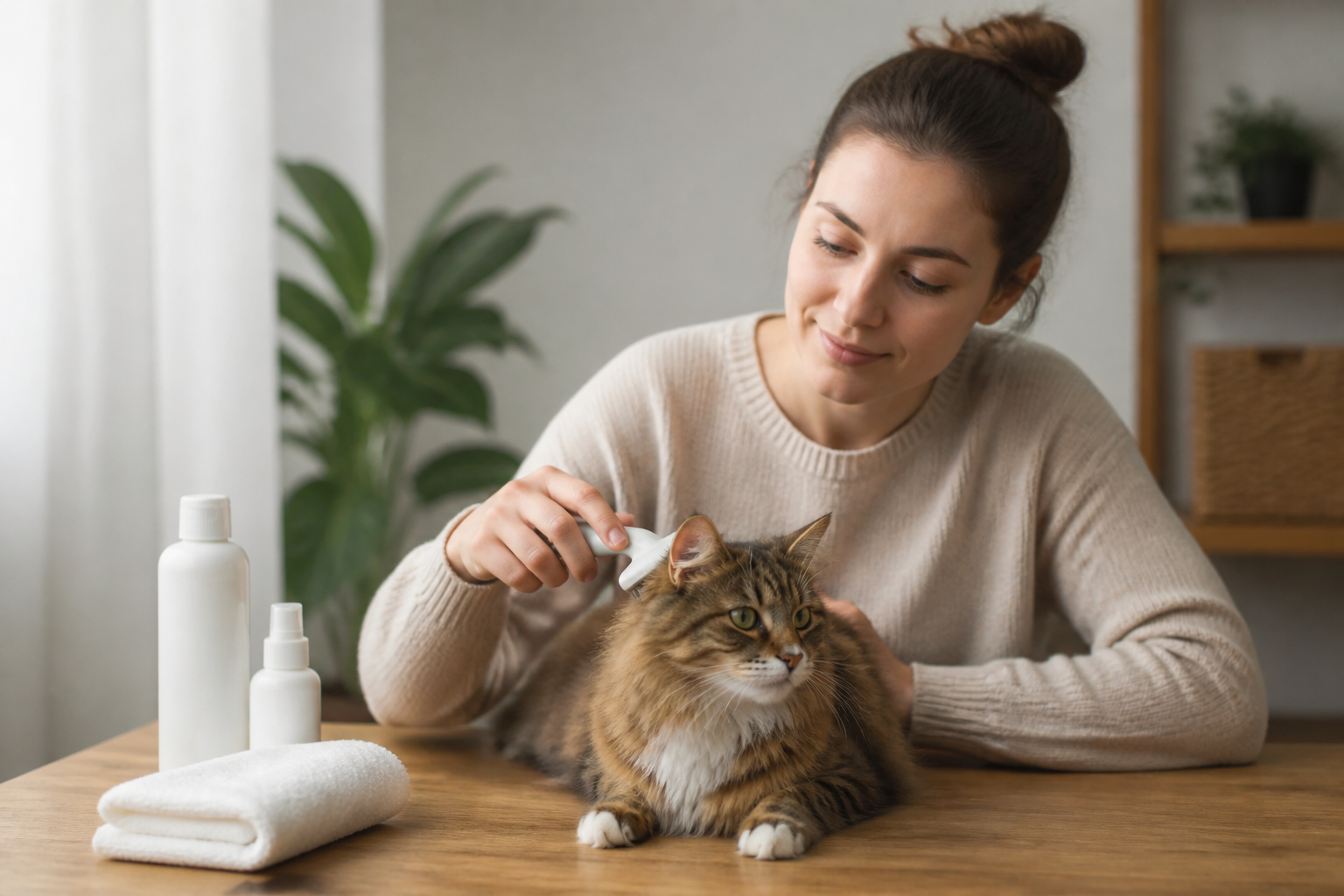
Brushing is the most effective way to manage mild dandruff. It manually removes the flakes and stimulates the skin to produce healthy oils. Our cat grooming collection includes brushes, combs, grooming wipes, and other coat-care tools.
- Slicker Brushes: These have fine wire bristles that reach through the topcoat to remove loose fur and skin.
- Rubber Grooming Mitts: Brands like Kong make rubber brushes that are very gentle. These are excellent for cats who are sensitive to metal bristles.
- Fine-Tooth Combs: A metal comb is perfect for lifting flakes away from the skin so they can be brushed out of the coat.
Step 1: Choose a quiet time when your cat is relaxed.
Step 2: Start brushing in the direction of hair growth using very light pressure.
Step 3: Focus on the lower back and base of the tail where flakes congregate.
Step 4: Offer a small treat after the session to create a positive association.
For an all-purpose option, the U-Groom Combo Brush for Dogs and Cats can help remove loose fur and debris during regular grooming.
Shampoos and Topical Treatments
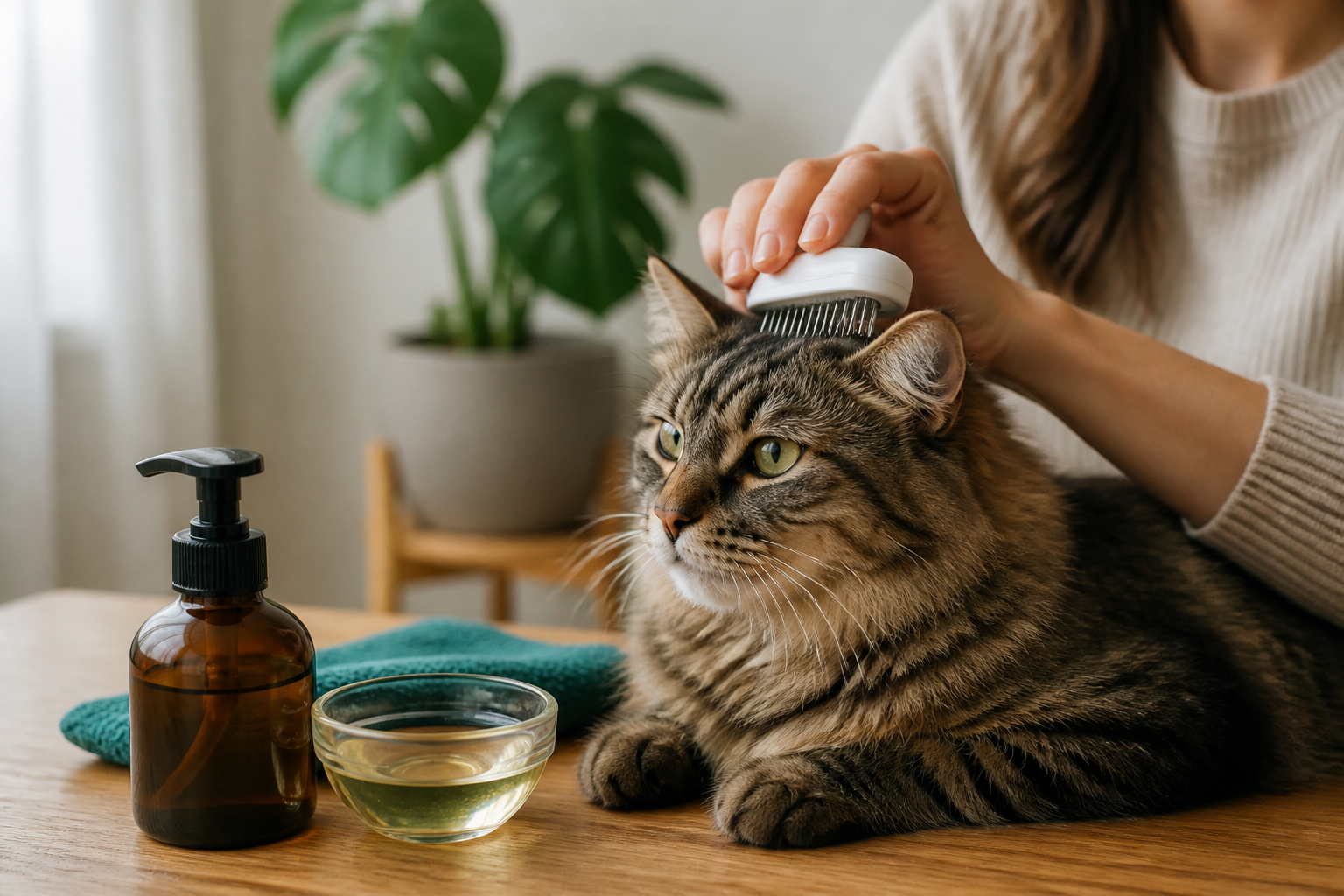
Most cats do not need regular baths. However, if the dandruff is heavy or greasy, a targeted cat shampoo can help. Look for "soap-free" or "hypoallergenic" formulas. Burt’s Bees offers gentle options that use ingredients like honey or oatmeal to soothe the skin. Our cat skin and coat care products include shampoos, wipes, supplements, and other options for routine coat support.
If your cat hates water, consider a waterless shampoo or grooming foam. You can apply these to the fur and towel them off without ever turning on the faucet. This removes the flakes and moisturizes the skin without the stress of a traditional bath.
Vet Tip: Never use human dandruff shampoos on your cat. These products often contain ingredients like zinc or salicylic acid that can be toxic if your cat licks their fur after the bath.
Nutritional Support and Supplements
What goes into your cat is just as important as what you put on their fur. If the skin is dry from the inside out, topical sprays will only provide temporary relief.
Omega Fatty Acids
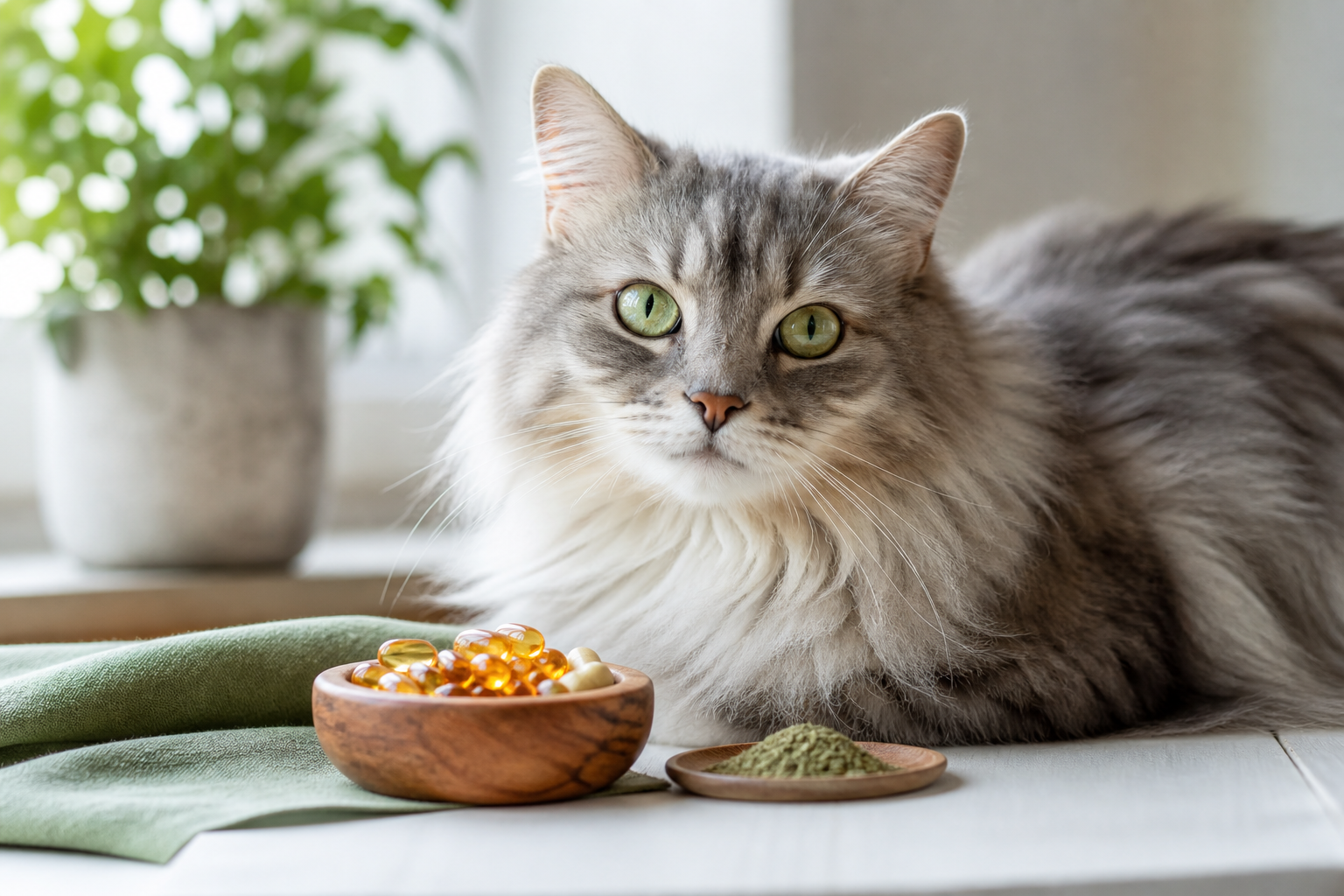
Adding a high-quality fish oil or plant-based Omega supplement can improve skin elasticity. Products from brands like Zesty Paws or Honest Paws are formulated specifically for pets. These supplements help support the skin barrier. Within a few weeks of starting a supplement, many owners notice a softer coat and fewer flakes.
You can browse Omega supplements for cats to compare fish oils and other fatty-acid products for skin and coat support.
The Role of Hydration
Cats are not always great at drinking enough water. Chronic low-level dehydration can lead to dry, inelastic skin. Switching part of your cat's diet to wet food can significantly increase their moisture intake. Wet food provides hydration that helps keep the skin cells plump and healthy. You can also try a pet water fountain to encourage more frequent drinking.
Key Takeaway: Long-term skin health often requires a combination of regular brushing and a diet rich in moisture and essential fatty acids.
Managing Medical Causes and the BaxterBoo Pharmacy
Sometimes, dandruff is a sign of a medical problem that products alone cannot fix. In these cases, you need to look closer at the skin and the cat’s behavior.
Walking Dandruff and Parasites
If you see the white flakes moving, your cat may have Cheyletiella mites. This is often called walking dandruff. It is highly contagious and requires medical treatment. Fleas and ticks can also cause skin irritation that leads to flaking. For additional parasite-prevention guidance, read our article on flea and tick prevention products.
Our pharmacy carries FDA-approved flea and tick preventives through our partnership with Pet’s Choice. These products help eliminate parasites that cause itching and dandruff. If you suspect mites or a heavy flea burden, your veterinarian can provide a prescription for professional-strength treatments.
Underlying Health Conditions
Dandruff can be a secondary symptom of systemic issues. Conditions like diabetes, hyperthyroidism, and kidney disease can change how a cat’s body processes nutrients. These illnesses often make a cat feel too unwell to groom themselves. If you notice changes in your cat’s thirst, appetite, or litter box habits along with dandruff, a vet visit is essential.
Our warehouse in Vernon Hills stays stocked with a variety of specialized foods. For cats with diagnosed medical needs, we offer prescription pet foods through the cat pharmacy. Brands like Farmina Vet Life provide targeted nutrition for weight management and other health concerns. Managing the primary illness often causes the dandruff to clear up on its own.
Vet Tip: If your cat’s skin is red, scabby, or has a strong odor, do not try to treat it at home with over-the-counter products. These signs suggest an infection or a more serious skin condition that needs a professional diagnosis.
Creating a Flake-Free Routine
Managing cat dandruff is about consistency. You do not need a complicated 10-step process. A few simple habits will keep the skin healthy and the fur shiny.
- Weekly Brushing: Even five minutes of brushing twice a week can prevent flake buildup.
- Monitor Weight: Keep your cat at a healthy weight so they can reach every part of their body.
- Humidify: Use a humidifier in the winter to keep the air from drying out your cat’s skin.
- Quality Food: Ensure their diet meets the standards for essential vitamins and minerals.
We are here to help you find the right tools for the job. Whether you need a new slicker brush or a skin-support supplement, our selection is handpicked by people who love pets. Regular grooming can also support broader feline wellness, as discussed in our guide to building a strong feline immune system.
Bottom line: Most cat dandruff is manageable with better hydration, regular grooming, and the right nutritional support.
Conclusion
Cat dandruff is usually a manageable issue that responds well to the right products and a bit of extra care. By identifying the cause, you can choose the best brushes, shampoos, and supplements for your cat’s specific needs. Remember that a shiny, flake-free coat starts with good nutrition and a stress-free grooming routine. If home care does not show results within a few weeks, or if your cat seems uncomfortable, your veterinarian is your best resource for a check-up. We invite you to explore our wide range of cat grooming supplies and supplements to find exactly what your feline friend needs. For those managing ongoing health conditions, our pharmacy and Autoship programme make it easy to stay consistent with the care your cat deserves.
FAQ
Is it normal for cats to have a little bit of dandruff?
A few small flakes can be normal, especially during seasonal changes or in very dry climates. However, if the dandruff is constant, covers large areas, or is accompanied by itching, it usually indicates an underlying issue. Regular brushing and improving hydration are the best first steps to take.
Can I use my own dandruff shampoo on my cat?
No, you should never use human dandruff shampoos on cats. Many human products contain chemicals like zinc pyrithione or selenium sulfide which are toxic to cats if ingested. Always use a shampoo specifically formulated for felines to ensure it has the correct pH balance and safe ingredients.
How long does it take for cat dandruff products to work?
Topical products like grooming wipes or waterless shampoos can remove existing flakes immediately. However, if you are using supplements or changing their diet, it typically takes four to six weeks to see a significant change. This is because it takes time for new, healthier skin cells to grow and replace the old ones.
When should I be worried about my cat's dandruff?
You should consult a veterinarian if the dandruff is accompanied by hair loss, redness, or scabs. If your cat is scratching excessively or if the flakes seem to be moving, those are signs of parasites or infection. Sudden changes in grooming habits in older cats also warrant a professional exam to check for arthritis or other health issues.