
 Save 15% on your 1st Autoship learn more

 Email us
 Live Chat
 FAQs
FAQs





Introduction
You lean in for a happy dog kiss only to be met with a whiff of bad breath and a glimpse of yellowing teeth. It is a common moment for many pet owners. That yellow tint is more than just a cosmetic issue. It is often the first sign that plaque has hardened into tartar. At BaxterBoo, we know that dental health is a cornerstone of overall wellness. In this guide, we will cover how to safely clean yellow teeth at home, the best tools for the job, and when it is time to call the veterinarian. We will also look at how professional care and prescription diets can help manage advanced buildup. Our goal is to help you build a routine that keeps your dog's mouth healthy and their breath fresh.
Understanding Why Dog Teeth Turn Yellow
Yellowing usually begins with plaque. This is a sticky film of bacteria and food particles that forms on the teeth after eating. If it is not brushed away, it reacts with minerals in your dog's saliva. Within about 48 hours, that soft plaque begins to harden into tartar, also known as calculus. Tartar has a rough, porous texture that makes it easy for even more bacteria to latch on.
Once plaque turns into tartar, it becomes much harder to remove with a simple toothbrush. This buildup often starts at the gumline and works its way up the tooth. You might notice it most on the large premolars and canines. Small dog breeds are especially prone to this because their teeth are often crowded together. This crowding creates tiny gaps where bacteria can hide and flourish.
Age also plays a role in dental health. Older dogs have had more time for minerals to build up on their enamel. However, yellow teeth are not just an old dog problem. Many dogs show signs of dental disease by age three. Recognizing the difference between a light stain and a thick layer of tartar is the first step in deciding how to clean your dog's teeth. For additional warning signs, read about how to recognize bad teeth in dogs.
Quick Answer: Clean yellow teeth by brushing daily with enzymatic toothpaste and providing dental chews. If the yellow buildup is hard and crusty, it is likely tartar and requires a professional veterinary cleaning to remove safely.
The Best Tools for Home Dental Care
To tackle yellowing effectively, you need the right supplies. Never use human toothpaste on your dog. It contains ingredients like xylitol or fluoride that are toxic to pets. It also foams, which can cause your dog to choke or get upset. Dog-specific toothpaste is designed to be swallowed and comes in flavors like poultry or beef. You can compare options in our dog dental care category.
Toothbrushes come in several styles. A standard pet toothbrush has a long handle and angled bristles to reach the back molars. A finger brush is a small rubber cap that fits over your index finger. This is often better for dogs who are nervous about having their mouths touched. It allows you to feel exactly where you are cleaning.
Another option is the dental wipe. These are textured pads pre-soaked with cleaning agents. While they cannot get between teeth as well as a brush, they are excellent for wiping away surface plaque. If your dog has very sensitive gums, a soft-bristled finger brush or a piece of clean gauze wrapped around your finger may be the best starting point.
Choosing an Enzymatic Toothpaste
Enzymatic toothpaste is the gold standard for home care. It contains enzymes that help break down food particles and bacteria even after you stop brushing. This is helpful if your dog only lets you brush for a few seconds. The enzymes continue to work on the tooth surface to slow down the formation of new tartar.
Selecting the Right Brush
- Standard Pet Toothbrush: Best for large dogs and deep cleaning.
- Finger Brush: Best for puppies and dogs new to brushing.
- Triple-Headed Brush: Cleans the top and both sides of the tooth at once.
- Gauze or Microfiber Cloth: Good for extremely sensitive or tiny mouths.
A Step-by-Step Guide to Brushing
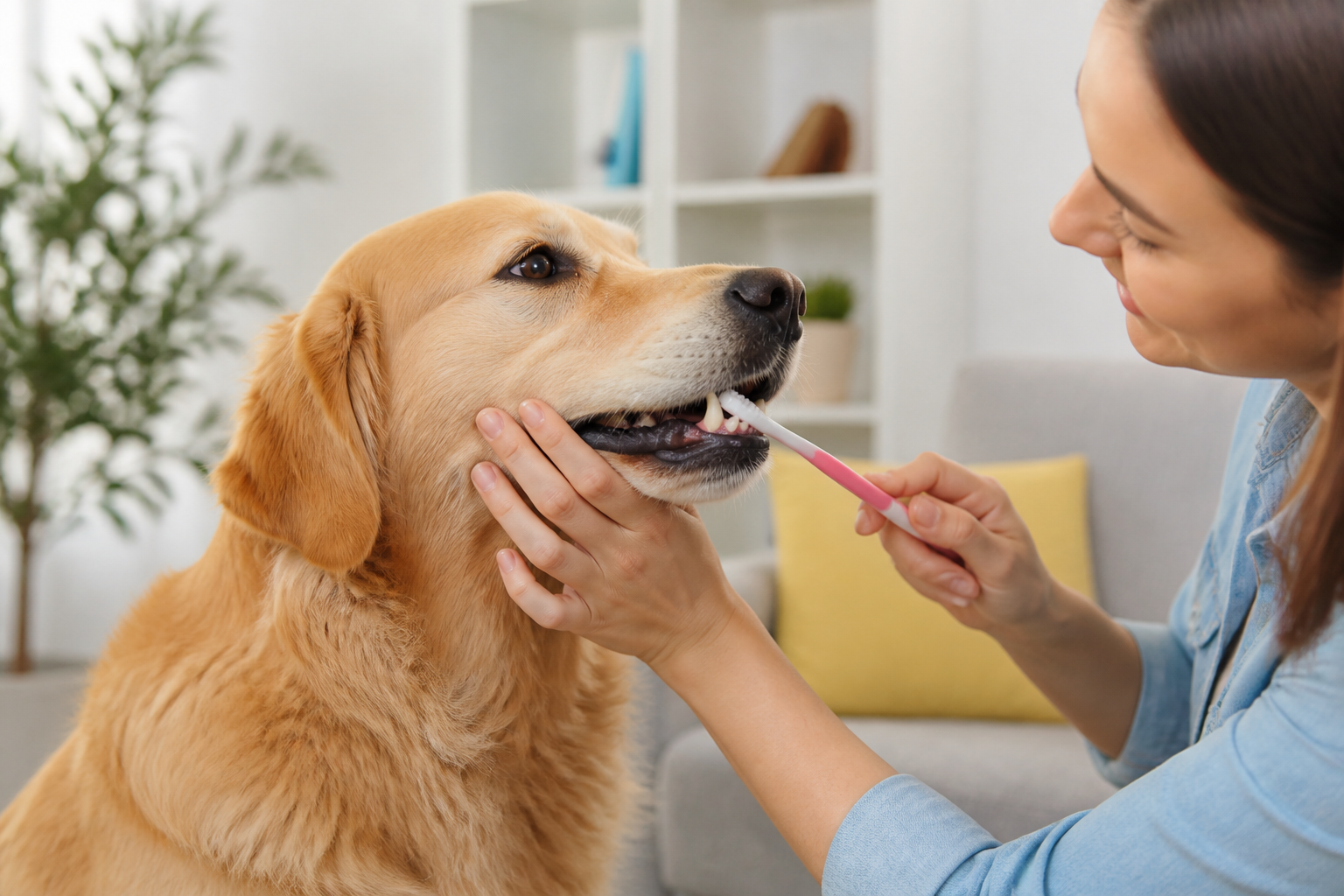
Brushing is the most effective way to clean yellow teeth at home. However, you cannot expect your dog to sit perfectly the first time. It is a process that requires patience and positive reinforcement. These gradual steps are also covered in our pet dental care tips.
Step 1: Introduce the taste. / Let your dog lick a small amount of pet toothpaste off your finger. This helps them associate the flavor with a reward.
Step 2: Touch the mouth. / Gently lift your dog's lips to expose the teeth and gums. Reward them with praise or a small treat for staying calm.
Step 3: Introduce the brush. / Put a small dab of toothpaste on the brush and let your dog lick it. Do not try to brush yet. Just let them get used to the sensation of the bristles.
Step 4: Start brushing. / Aim for the gumline at a 45-degree angle. Use small circular motions on the outside of the teeth. Focus on the upper back molars, as these usually have the most buildup.
Step 5: Increase the duration. / Gradually work your way around the entire mouth. You do not need to worry about the inside of the teeth as much because the tongue helps keep those surfaces clean.
Key Takeaway: Consistency is more important than perfection when brushing a dog's teeth. Brushing for 30 seconds every day is more effective than a ten-minute session once a month.
Alternatives for Dogs Who Hate Brushing
If your dog refuses a toothbrush, you still have options to help manage yellowing. While these methods are not as thorough as brushing, they are much better than doing nothing.
Dental chews are a popular choice. These treats are designed with a specific texture that scrapes away plaque as the dog chews. Look for products with the Veterinary Oral Health Council (VOHC) seal. This seal means the product has been tested and proven to reduce plaque or tartar. Brands like Greenies are well-known for this. Browse our dental treats for dogs to compare chew options.
Water additives are another easy solution. You simply add a small amount of the liquid to your dog's water bowl. These additives often contain enzymes or zinc to kill bacteria and freshen breath. They work every time your dog takes a drink. This is a great "hands-off" approach for difficult pets.
Dental toys, such as those made by Kong, can also help. Some rubber toys have grooves designed to hold pet toothpaste. As your dog chews on the toy, the rubber nubs rub against the teeth and the toothpaste is distributed throughout the mouth. This turns cleaning time into playtime.
When Yellow Teeth Mean More Than Just Stains
Sometimes yellow teeth are a symptom of a deeper problem. If the yellowing is accompanied by a thick brown crust, it is likely advanced tartar. This cannot be brushed away. At this stage, the bacteria may have already started to move under the gumline.
This leads to periodontal disease. It causes the gums to become red, swollen, and painful. You might notice your dog dropping food, chewing on one side of their mouth, or avoiding hard treats. If left untreated, the infection can enter the bloodstream. This can eventually lead to issues with the heart, liver, or kidneys.
Our pharmacy carries specific medications and prescription diets that may be necessary if your dog is diagnosed with oral health issues. Through our partnership with Pet's Choice, we provide access to FDA-approved treatments that your veterinarian might prescribe for gum infections or chronic dental pain. If you see bleeding or loose teeth, our pet pharmacy is one place to explore prescription support after speaking with your veterinarian.
Vet Tip: If your dog has persistent bad breath, bleeding gums, or seems to be in pain while eating, please consult your veterinarian. They can perform a full oral exam and determine if a professional cleaning under anesthesia is required to protect your dog's long-term health.
Professional Cleaning Versus Home Care
It is important to understand the difference between what you do at home and what a vet does in the clinic. Home care is about prevention. It stops plaque from turning into tartar. Professional cleaning is about treatment. It removes the tartar that is already there.
During a professional dental cleaning, your dog is usually placed under general anesthesia. This allows the vet to clean deep under the gumline where you cannot reach. They use ultrasonic scalers to vibrate the tartar off the teeth. They also take X-rays to check for bone loss or abscesses hidden beneath the surface.
| Feature | Home Cleaning | Professional Cleaning |
|---|---|---|
| Purpose | Prevents new plaque and tartar | Removes existing tartar and treats disease |
| Tools | Toothbrush, chews, water additives | Ultrasonic scalers, X-rays, polishers |
| Reach | Visible surfaces of the teeth | Above and below the gumline |
| Frequency | Daily is ideal | Once a year or as recommended |
| Anesthesia | Not required | Required for safety and thoroughness |
Dietary Support for Dental Health
What your dog eats can affect how fast their teeth turn yellow. Some dog foods are specifically formulated to help clean teeth. These kibbles are often larger and have a fibrous texture. Instead of crumbling immediately, the kibble stays intact longer so it can scrub the tooth as the dog bites down.
We carry premium brands like Farmina and Royal Canin that offer specialized dental support diets. Some of these are prescription-based and are available through our pharmacy partnership. These diets often contain calcium-chelating agents. These agents bind to the calcium in the saliva, preventing it from mineralizing into tartar on the teeth.
In addition to specific foods, consider the treats you give. Avoid very hard treats like cow hooves or natural bones. While people think these "scrape" the teeth, they are actually hard enough to cause slab fractures. A fractured tooth is porous and will turn yellow or brown very quickly, often leading to a painful infection.
Implementing a Weekly Dental Routine
Building a routine makes dental care feel less like a chore. You do not have to do everything every day. A layered approach often works best for busy pet owners.
- Daily: Brush the teeth with enzymatic toothpaste. If you skip a day, use a dental wipe or a water additive.
- Every Other Day: Give a VOHC-approved dental chew or a toy stuffed with dental-safe paste.
- Monthly: Perform a "mouth check." Lift the lips and look for new yellowing, red gums, or broken teeth.
- Annually: Schedule a wellness exam with your vet to have their teeth professionally evaluated.
We find that most owners have the most success when they tie dental care to another habit. For example, brush your dog's teeth right after you brush your own. This keeps the supplies handy and ensures you do not forget.
Key Takeaway: A multi-pronged approach using brushing, dental treats, and regular veterinary checks is the most effective way to keep your dog's smile bright and healthy.
Special Considerations for Senior Dogs
As dogs age, their dental needs change. Senior dogs may have receding gums or sensitive teeth that make traditional brushing uncomfortable. If your senior dog has yellow teeth, be very gentle. Use a soft cloth or a sponge-tipped applicator instead of a firm brush. For more senior nutrition considerations, see our guide to wet and dry food for senior dogs.
Older dogs are also more likely to have underlying health conditions that make dental hygiene even more critical. Since their immune systems may not be as strong, an oral infection can take a greater toll on their body. If your senior dog needs a professional cleaning but you are worried about anesthesia, talk to your vet. Many clinics perform advanced blood work and use specialized monitoring to ensure the procedure is as safe as possible for older pets.
If your senior dog is already managing a condition like kidney disease or heart issues, your vet may recommend specific dental products. Our pharmacy offers a range of supportive care items that can be shipped directly to your door through our partnership with Pet's Choice.
Maintaining the Results
Once you have managed to get your dog's teeth clean, the work does not stop. Plaque begins to form again within hours of a cleaning. If you have just invested in a professional veterinary cleaning, this is the perfect time to start a daily brushing routine. The smooth, polished enamel will be easier to keep clean than the rough, tartar-covered surface you had before.
We offer an Autoship program that can help you stay consistent. You can set up recurring deliveries for toothpaste, toothbrushes, and dental treats. This ensures you never run out of supplies. Plus, Autoship customers receive savings on their orders and a free MVP Gold membership, making it easier to afford the best care for your pet.
Conclusion
Cleaning your dog's yellow teeth is an essential part of being a responsible pet owner. While yellowing is common, it should always be addressed to prevent pain and more serious health problems. By combining daily brushing with the right tools and regular veterinary checkups, you can keep your dog's mouth in excellent shape. At BaxterBoo, we are here to support you with a curated selection of over 500 brands and a dedicated pharmacy for your pet's medical needs. Taking a few minutes each day to care for your dog's teeth will pay off in the form of better health and much fresher kisses.
Bottom line: Start a daily brushing habit today to prevent plaque from turning into permanent yellow tartar.
FAQ
How often should I clean my dog's teeth to remove yellowing?
You should aim to brush your dog's teeth every single day. Plaque can begin to harden into tartar in as little as 48 hours, so daily sessions are the best way to keep the enamel white. If daily brushing is not possible, try to do it at least three times a week and supplement with dental chews or water additives.
Can I use baking soda to clean my dog's yellow teeth?
It is generally not recommended to use baking soda for cleaning a dog's teeth. Baking soda has a high alkaline content that can upset a dog's stomach if swallowed in large amounts. It also lacks the enzymes found in pet-specific toothpaste that are necessary to break down bacteria effectively.
Is it possible to remove hard yellow tartar at home?
No, you should not attempt to remove hard, crusty tartar at home. This requires professional tools like ultrasonic scalers to remove the buildup without damaging the tooth enamel. Trying to scrape tartar off yourself can lead to gum injuries or cracked teeth, so this task is best left to your veterinarian.
Why does my dog's breath still smell bad after brushing?
If your dog's breath remains foul after you have cleaned their teeth, there may be an underlying issue. Persistent bad breath can be a sign of an infection deep under the gumline, a rotting tooth, or even internal health problems like kidney disease. If brushing does not help the smell, you should schedule a veterinary exam to rule out serious conditions.






