
 Save 15% on your 1st Autoship learn more

 Email us
 Live Chat
 FAQs
FAQs





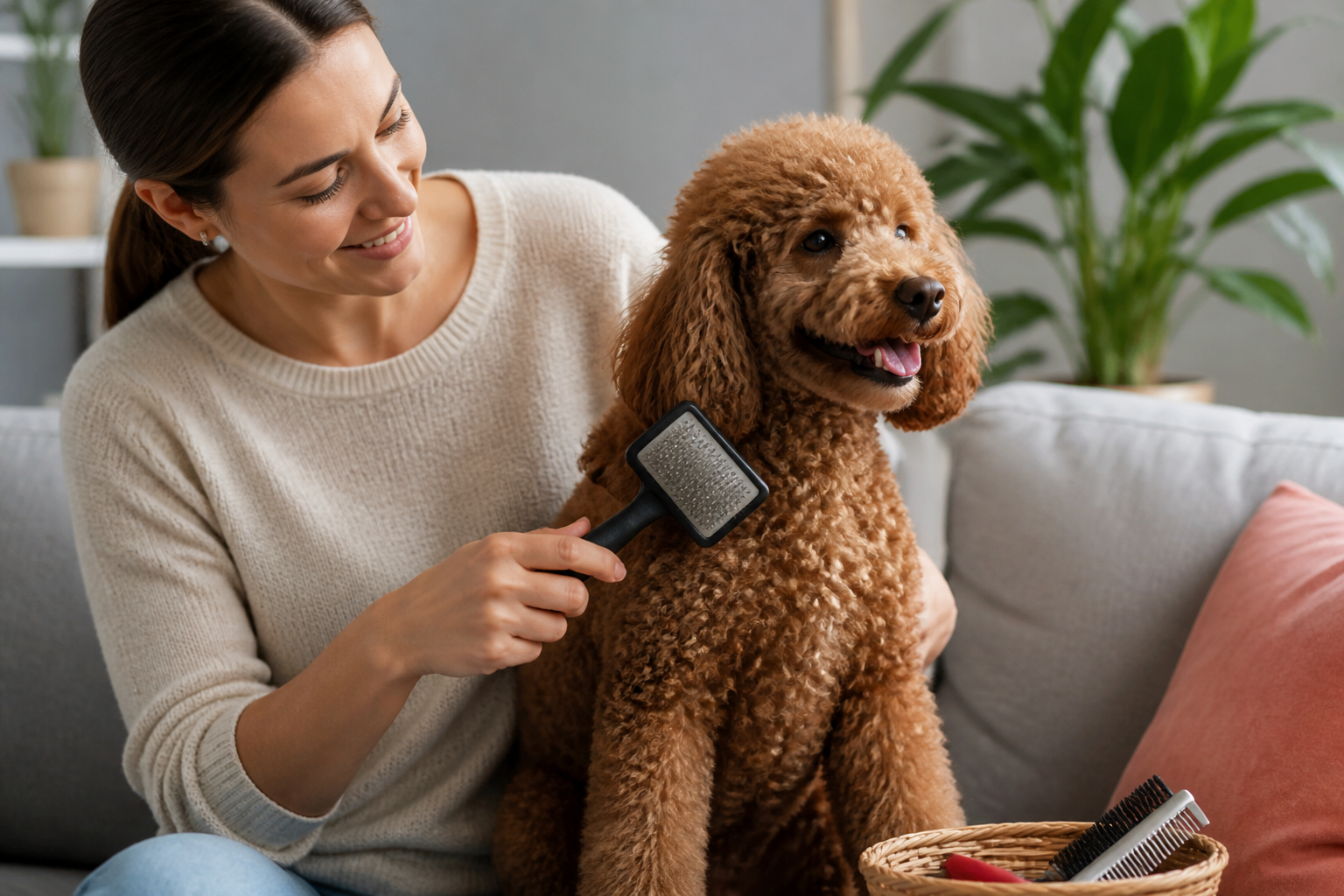
Introduction
You are sitting on the floor with your Poodle, running your fingers through those dense, velvet curls, when you feel it. A tight, hard knot right behind the ear that refuses to budge. Poodle coats are famously beautiful but notoriously difficult to manage without the right equipment. Here at BaxterBoo, we have spent years helping owners navigate the unique needs of curly-coated breeds. This guide will help you identify the specific tools needed to keep that wool coat healthy and tangle free. Choosing the right brush is the difference between a happy grooming session and a stressful struggle for both you and your dog. We will look at why slicker brushes and metal combs are the gold standard for this breed. Finding the best tools ensures your Poodle stays comfortable and mat free.
Understanding the Poodle Coat
To understand why certain brushes work better than others, you have to look at the science of Poodle hair. Unlike most dogs, Poodles do not have fur. They have a single-layered coat of hair that grows continuously. This hair is often called wool because of its density and curl pattern. While many people think Poodles do not shed, they actually do. The difference is that the shed hair does not fall onto your carpet. Instead, it gets trapped inside the tight curls of the coat.
If that trapped hair is not brushed out, it begins to wrap around the healthy, growing hair. This process creates a knot. When multiple knots join together, you get a mat. Mats are not just an aesthetic problem. They can pull tightly against the skin, causing pain, bruising, and even skin infections. Because the Poodle coat is so deep, a standard brush often only reaches the top layer. This leaves a hidden layer of tangles close to the skin.
Quick Answer: The best dog brush for a Poodle is a high-quality slicker brush with long, flexible pins. This must be paired with a stainless steel "Greyhound" style metal comb to ensure you are reaching the skin and removing trapped hair.
The Slicker Brush: The Essential Tool
If you could only own one grooming tool for your Poodle, it would be the slicker brush. These brushes have a flat or slightly curved head filled with many fine wire pins. These pins are usually angled to help grab loose hair and break up small tangles without scratching the skin. You can explore our dog brushes and combs to compare grooming tools for different coat types.
For a Poodle, the length of the pin is the most important factor. A slicker brush with short pins will only groom the surface of a Poodle's thick coat. You need a long-pin slicker brush to penetrate through the curls all the way to the base of the hair. This ensures you are removing the shed hair that causes matting.
Flexible vs. Firm Slicker Brushes
Slicker brushes come in different densities. A firm slicker brush is best for adult Poodles with very thick, coarse hair. It provides the resistance needed to pull through dense curls. A flexible slicker brush has a head that bends. This is often better for Poodles with more sensitive skin or for use on the legs and neck where the body is more angular.
Handle Ergonomics
Do not overlook the handle when choosing your brush. Brushing a Poodle can take a significant amount of time. You want a handle with a comfortable, non-slip grip. Many of the professional-grade brushes we carry at BaxterBoo feature ergonomic handles designed to reduce wrist fatigue. If the brush is uncomfortable for you to hold, you are less likely to stick to a daily grooming routine.
Key Takeaway: Look for a slicker brush with pins that are at least one inch long. This length is necessary to reach the skin through a Poodle's dense, curly coat.
The Metal Comb: The Truth Teller
While the slicker brush does the heavy lifting, the metal comb is the most important tool for verification. Professional groomers often call this a Greyhound comb. It typically has two sections: one with widely spaced teeth and one with closely spaced teeth.
After you finish brushing a section with your slicker brush, you must run the metal comb through it. If the comb snags, you still have a tangle. If the comb glides through from the skin to the tips of the hair, that section is truly clear. The slicker brush can sometimes skip over deep knots, but the comb will always find them.
How to Use the Two Sides
- Start with the wide-toothed side. This side is more forgiving and helps you identify where the larger tangles are located.
- Once the wide teeth pass through easily, switch to the fine-toothed side.
- The fine-toothed side picks up smaller bits of debris and tiny knots that could grow into larger mats later.
Bottom line: A slicker brush makes the coat look good, but a metal comb ensures the coat is actually healthy and mat free.
Comparing Poodle Brushing Tools
| Tool Type | Primary Purpose | Best For |
|---|---|---|
| Long-Pin Slicker | Removing trapped hair and tangles | Daily maintenance of the main body |
| Metal Greyhound Comb | Checking for mats and finishing | Identifying hidden knots after brushing |
| Pin Brush | Fluffing and show-style finishing | Topknots, ears, and long-coated tails |
| Bristle Brush | Distributing oils and adding shine | Very short "kennel cuts" or puppy coats |
| Dematting Rake | Cutting through existing mats | Emergency use only for severe tangles |
Specialized Brushes for Specific Needs
While the slicker and comb are your primary tools, other brushes can help with specific parts of the Poodle grooming process.
The Pin Brush
A pin brush looks similar to a human hairbrush. It has straight metal pins, often with rounded tips. These are not effective for removing mats. However, they are excellent for "fluffing" a Poodle's coat after it has been dried. If you keep your Poodle's ears or topknot long, a pin brush is a gentle way to keep those areas looking voluminous without breaking the hair.
The Bristle Brush
A bristle brush is generally not useful for a Poodle in full coat. However, if you keep your dog in a very short "kennel cut" or "utility cut," a soft bristle brush can help. It stimulates the skin and distributes natural oils. This is also a good introductory tool for very young puppies who are still getting used to the sensation of being handled.
Dematting Tools
Sometimes, despite your best efforts, a mat will form. A dematting rake has sharp, serrated blades designed to cut through the knot. Use these with extreme caution. The blades are sharp enough to cut the dog's skin if they jump or pull away. Always place your thumb between the tool and the dog's skin to act as a guard.
Vet Tip: If you find a mat that is tight against the skin, do not try to cut it out with scissors. It is very easy to accidentally snip the skin. Instead, use a dematting tool or see a professional groomer who can safely shave the mat away.
Puppy Grooming vs. Adult Grooming
Poodle puppies have a much softer, wavier coat than adults. Around the age of nine to eighteen months, the Poodle will go through a coat change. The soft puppy hair falls out, and the stiff, curly adult hair grows in.
This period is the most difficult time for Poodle owners. The combination of falling puppy hair and rising adult hair creates mats almost instantly. During this phase, you must brush your dog every single day. Using a gentle slicker brush during the puppy months helps build a positive association with grooming before the difficult coat change begins. Families preparing for this stage can also browse our puppy shop for grooming essentials.
Introducing the Brush
- Keep sessions short, no more than five minutes.
- Use high-value treats to reward your puppy for standing still.
- Start with the legs and tail, as these are often less sensitive than the face or belly.
- Gradually increase the time as the puppy becomes more comfortable.
The Line Brushing Technique
If you simply brush the top of the coat, your Poodle will eventually become "pelted." This means a solid layer of matting forms close to the skin while the top looks fluffy. To avoid this, use a technique called line brushing. For another perspective on caring for curly coats, read this guide to grooming curly-haired dogs.
Step 1: Section the hair. Use your hand to push the hair upward, exposing a "line" of skin. Step 2: Brush downward. Use your slicker brush to pull small amounts of hair from the top section down into the brushed area. Step 3: Move the line. Once that small section is clear, move your hand up about an inch and repeat the process. Step 4: Check with the comb. After you finish a whole leg or side, run your metal comb through to ensure you didn't miss any spots.
Skin Health and Grooming
Regular brushing is about more than just tangles. It is also your best opportunity to check your Poodle's skin health. Because their hair is so thick, it is easy to miss bumps, rashes, or parasites like fleas and ticks.
If you notice your Poodle is excessively itchy or has red, inflamed skin, it may be a sign of allergies or a skin infection. Our dog pharmacy offers a range of FDA-approved treatments and medicated shampoos through our partnership with Pet's Choice. If grooming reveals persistent skin issues, consult your veterinarian for a formal diagnosis. They may recommend prescription diets or medications that can be conveniently filled through our pharmacy.
Key Takeaway: Brushing is a health check. Pay attention to changes in skin color, new lumps, or signs of irritation every time you groom.
Maintaining Your Grooming Tools
Even the best dog brush will not work well if it is dirty or damaged. Hair and dander build up in the base of a slicker brush, which can reduce the effectiveness of the pins.
Cleaning Your Brushes
Remove the hair from your slicker brush after every session. You can use your metal comb to "rake" the hair out of the pins. Periodically wash your brushes with warm water and a mild soap. Ensure they are completely dry before using them again, as moisture can cause the metal pins to rust or the rubber padding to degrade.
When to Replace
Inspect the pins of your slicker brush regularly. If the pins become bent or the protective tips wear off, the brush can become scratchy and uncomfortable. A damaged brush can cause "brush burn," which is a painful skin irritation. Replace your tools as soon as they show signs of significant wear.
The Role of Supplements in Coat Health
A good brush is only half the battle. A healthy coat starts from the inside. Poodles benefit from diets rich in Omega-3 and Omega-6 fatty acids. These nutrients help maintain the elasticity of the hair and the moisture levels of the skin.
We carry a variety of supplements like Cosequin and Zesty Paws that support overall wellness, including skin and coat health. If your Poodle's hair is brittle or lacks shine, a supplement might provide the boost they need. Always check with your vet before starting a new supplement routine, especially for senior Poodles or those with existing health conditions.
Seasonal Grooming Considerations
While Poodles do not have a seasonal "blow out" like Huskies or Labs, the weather still affects their coat. In the winter, snow can get trapped in the curls and form ice balls. These ice balls can lead to mats if the hair is not dried and brushed immediately after a walk.
In the summer, many owners choose a shorter clip to keep the dog cool. However, even with a short clip, the skin still needs protection. Brushing helps remove dust and pollen that can get trapped in the hair during outdoor play. This is particularly important for Poodles with environmental allergies.
Setting Up Your Grooming Station
Having a dedicated space for grooming makes the process much easier. You do not need a professional table, but a non-slip surface is essential.
- Lighting: Ensure you have bright, clear light so you can see down to the skin.
- Table: A waist-high surface prevents back strain for you.
- Non-slip Mat: A rubber mat keeps your Poodle feeling secure and prevents slipping.
- Storage: Keep your slicker brush, comb, and detangling spray within arm's reach.
Using a detangling spray can significantly reduce the tension on the hair. Spritz the coat lightly before you begin line brushing. This provides "slip," which allows the slicker brush to glide through tangles without breaking the hair shafts.
Bottom line: Preparation reduces stress. Having your tools organized and your dog secure makes grooming a bonding experience rather than a chore.
Summary of Best Practices
Caring for a Poodle is a commitment, but the reward is a beautiful, soft companion. By choosing a long-pin slicker brush and a high-quality metal comb, you are setting yourself up for success.
- Brush at least three times a week, but daily is better for longer coats.
- Always use the line brushing technique to reach the skin.
- Verify every section with a metal comb.
- Maintain your tools and replace them when pins become bent.
- Watch for skin issues and utilize the pharmacy for any medicated needs.
Our MVP Rewards program is a great way to earn points on these essential grooming supplies. Since you will be replacing brushes and stocking up on detangling sprays regularly, earning 5% back on your purchases adds up quickly.
FAQ
How often should I brush my Poodle?
You should aim to brush your Poodle at least three times a week. If you keep your Poodle in a longer clip or a show-style cut, daily brushing is necessary to prevent mats from forming close to the skin. Frequent brushing sessions also help your dog stay used to being handled, making professional grooming visits much easier.
Can I use a human hairbrush on my Poodle?
Human hairbrushes are generally not effective for Poodles because they cannot penetrate the dense, curly wool. A human brush will only smooth the very top layer of hair, leaving the under layers to become tangled and matted. It is best to invest in a dedicated long-pin slicker brush and a stainless steel grooming comb designed specifically for dogs.
What should I do if I find a large mat?
If you find a large mat, do not pull on it with a brush, as this is very painful for the dog. Use a detangling spray to saturate the area and gently try to pick it apart with your fingers or the end of a metal comb. If the mat is too tight, use a dematting tool with caution or consult a professional groomer to have it safely clipped out.
Does a Poodle puppy need a different brush than an adult?
A Poodle puppy can start with a softer slicker brush or even a bristle brush to get used to the sensation. However, as they approach the coat change around one year of age, you will need to transition to a firm, long-pin slicker brush. Starting early with any brush helps build the habit of grooming, which is vital for this high-maintenance breed.






