
 Save 15% on your 1st Autoship learn more

 Email us
 Live Chat
 FAQs





Introduction
Petting your cat is one of life's simple joys. It is frustrating when you pull your hand away only to find your palm covered in white flakes. You might notice these specks on their favorite dark blanket or clustered near the base of their tail. At BaxterBoo, we know that a flaky coat is often the first sign that something in your cat's environment or health needs attention. While a few flakes might seem minor, they usually tell a story about skin hydration, grooming habits, or internal wellness. This post will help you understand why your cat is shedding dandruff and how to restore their coat to its natural shine. We will cover environmental triggers, nutritional needs, and the specific signs that indicate a trip to the vet is necessary.
Understanding the Difference Between Dander and Dandruff
It is common to use the terms dander and dandruff interchangeably, but they are not the same thing. Every healthy cat produces dander. These are microscopic skin cells that shed naturally as the skin renews itself. Because dander is so small, you generally cannot see it with the naked eye. It is the material that carries proteins from cat saliva, which often triggers allergies in humans.
Dandruff is much different. These are larger, visible flakes of dead skin that have clumped together. When you see white or gray specks on your cat's fur, you are looking at dandruff. This occurs when the skin's normal shedding process is interrupted or accelerated. It can also happen when a cat stops removing those dead cells through their daily grooming routine.
Quick Answer: Cat dandruff consists of visible white flakes of dead skin on the fur. It is usually caused by dry air, poor nutrition, or underlying health issues that prevent effective grooming.
Cat Skin & Coat Care













Common Environmental Triggers for Flaky Skin
The air inside your home plays a major role in your cat's skin health. During the winter months, many owners notice an increase in flakes. This is often due to low humidity caused by central heating systems. Forced air heat strips moisture from the environment and, by extension, from your cat's skin.
Low humidity causes the skin to lose its elasticity and natural oils. When the skin becomes too dry, it cracks and sheds in larger pieces. You might see this most prominently along the spine, where the skin is often the thinnest. Using a humidifier in the rooms where your cat spends the most time can often resolve mild cases of seasonal dandruff.
Stress is another environmental factor that people often overlook. When a cat is stressed by a new pet, a move, or a change in routine, their body may react physically. Stress can trigger a sudden "flare" of dandruff. This is sometimes called a stress shed. In these cases, the flakes appear almost instantly when the cat is handled or frightened.
The Relationship Between Grooming and Dandruff
Cats are famous for their cleanliness. They typically spend up to half of their waking hours grooming. This process does more than just keep them clean. Their tongue acts like a natural brush that removes dead skin cells and distributes natural oils across the coat. If this process stops, dandruff builds up quickly. Explore our cat grooming supplies for brushes, combs, wipes, and shampoos that can support a regular routine.
Physical Limitations and Aging
As cats get older, they may develop osteoarthritis. This makes it painful to twist and reach certain parts of their body. The lower back and the base of the tail are the most common areas for dandruff to accumulate because they require the most flexibility to reach. If you notice your cat has a "patch" of flakes in one specific spot, it might be because they can no longer reach it comfortably.
The Impact of Obesity
Weight is a significant factor in skin health. Overweight cats often have physical barriers to grooming. If a cat cannot reach around their midsection to clean their back or hindquarters, the skin in those areas will become dry and flaky. This can lead to a cycle of poor skin health and even skin infections if the oils and dead cells are left to sit. For additional context, read our guide to helping an indoor cat lose weight.
Key Takeaway: Dandruff is often a secondary symptom of a physical limitation. If your cat is older or overweight, they may need your help to keep their skin clear.
Nutritional Requirements for a Healthy Coat
What your cat eats directly impacts how their skin looks and feels. The skin is the largest organ in a cat's body. It requires a significant amount of protein and specific fats to remain healthy. If their diet is lacking, the skin is often the first place to show signs of trouble. Our cat healthcare collection includes wellness products and supplements for everyday support.
Essential Fatty Acids
Omega-3 and Omega-6 fatty acids are the building blocks of healthy skin. These fats help create a barrier that locks in moisture. Many commercial dry foods are processed at high heat, which can degrade these sensitive fats. Adding a high-quality fish oil supplement can often help replenish these oils. We carry several supplement options that support skin and coat health through our curated selection of wellness products.
Hydration and Wet Food
Cats have a low thirst drive. In the wild, they get most of their water from their prey. A diet consisting only of dry kibble can lead to mild, chronic dehydration. This lack of internal moisture often manifests as dry, flaky skin. Incorporating wet cat food into their daily routine is one of the simplest ways to improve skin hydration. Wet food provides the moisture their body needs to keep the skin supple.
Identifying Parasites and "Walking Dandruff"
Not all flakes are just dry skin. Some parasites can mimic the appearance of dandruff. It is important to distinguish between simple dryness and an active infestation.
Cheyletiella Mites
There is a specific condition called Cheyletiellosis, which is often referred to as walking dandruff. This is caused by large mites that live on the surface of the skin. To the naked eye, these mites look like small white flakes. If you look closely, you might actually see the "flakes" moving. This condition is highly contagious between pets and requires specific medical treatment.
Fleas and Flea Dirt
Fleas can also cause skin irritation that leads to flaking. However, owners sometimes confuse flea dirt with dandruff. Flea dirt looks like small black or brown specks, similar to ground pepper. If you see white flakes mixed with black specks, your cat likely has both dry skin and a flea problem. The itching caused by fleas leads to excessive scratching, which further damages the skin barrier and increases dandruff. Learn more about prevention options in our guide to flea and tick products.
Vet Tip: If you notice your cat is itching intensely or if the dandruff seems to be moving, consult your veterinarian immediately. They can perform a skin scraping to identify parasites and prescribe the correct FDA-approved treatment.
Managing Dandruff with Regular Brushing
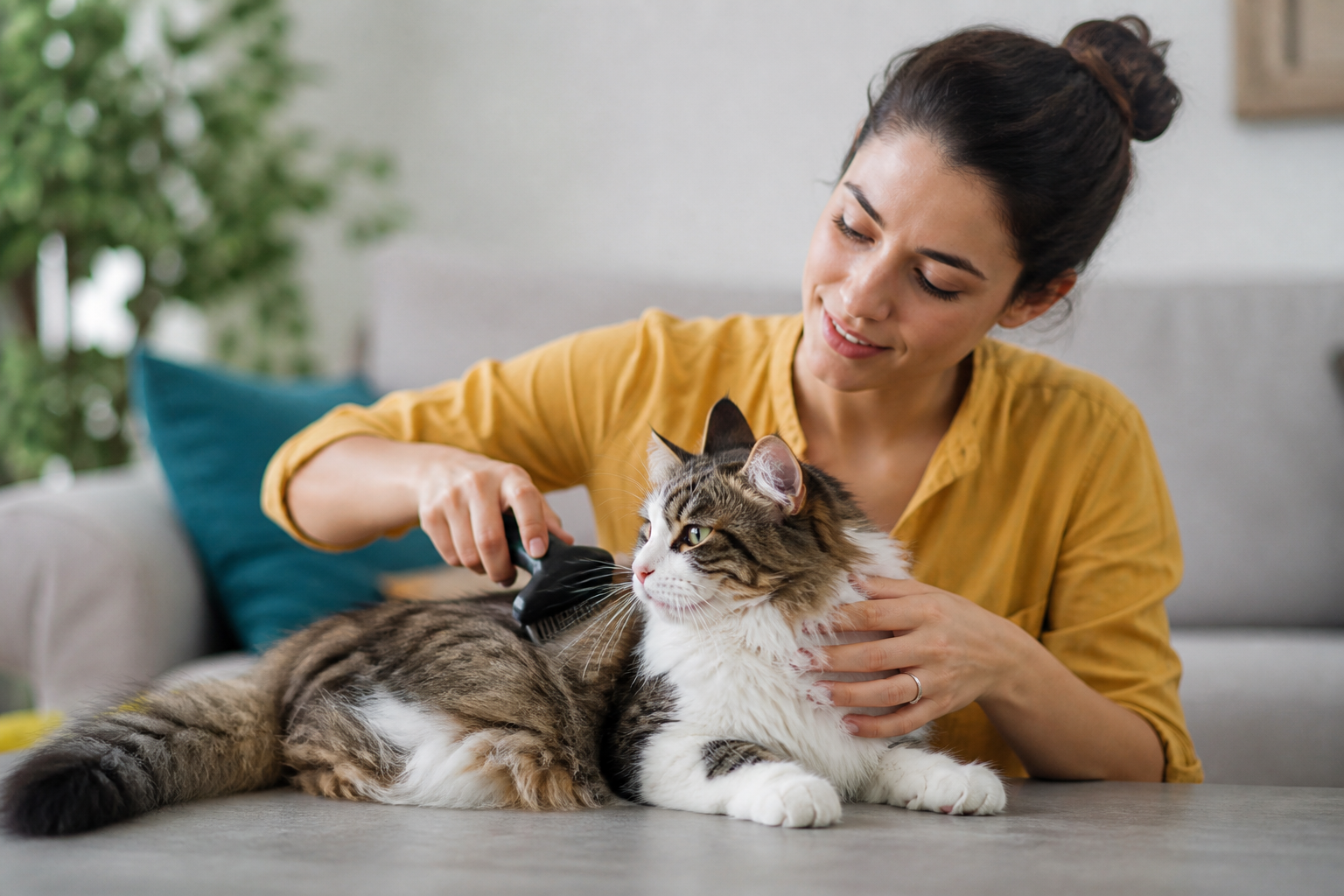
If your vet has ruled out medical issues, a consistent grooming routine is the best way to manage flakes. Brushing does more than just remove loose fur. It stimulates the blood flow to the skin surface and encourages the production of natural oils.
Choosing the Right Tools
The type of brush you use depends on your cat's coat length.
- Short-haired cats: A soft rubber curry brush or a fine-toothed comb works well to massage the skin.
- Long-haired cats: A slicker brush or a long-toothed comb is necessary to reach through the undercoat.
- Senior cats: Use a very soft brush, as their skin can be thinner and more sensitive to pressure.
The Brushing Routine
Step 1: Start when your cat is relaxed. / Choose a time after a meal or during a quiet afternoon.
Step 2: Brush in the direction of hair growth. / Use short, gentle strokes to avoid pulling the skin.
Step 3: Focus on the "dandruff zones." / Pay extra attention to the lower back and base of the tail where flakes congregate.
Step 4: Wipe down with a damp cloth. / After brushing, a quick wipe with a warm, damp cloth can help lift away the remaining loose flakes.
When to Consult Your Veterinarian
While most dandruff is a minor cosmetic issue, it can sometimes be a sign of a systemic illness. The skin often reflects the health of internal organs. If the skin's environment changes drastically, it may be because of a deeper issue.
Conditions like hyperthyroidism, diabetes, and kidney disease can all cause changes in the skin and coat. These illnesses often change a cat's metabolism or hydration levels. This leads to a coat that looks dull, greasy, or excessively flaky. You should seek veterinary advice if you notice any of the following:
- Redness or inflammation under the flakes
- Patches of hair loss or thinning fur
- A foul odor coming from the skin
- Changes in thirst or appetite
- Vomiting or lethargy
Vet Tip: Your veterinarian can perform blood work to rule out metabolic conditions that might be causing poor coat quality. This is especially important for senior cats showing sudden skin changes.
The Role of the BaxterBoo Pharmacy
When dandruff is caused by more than just dry air, you may need specific medications or therapeutic diets. Our pet pharmacy offers a wide range of FDA-approved products through our partnership with Pet's Choice. This includes prescription flea and tick preventives, which are essential for treating parasitic causes of dandruff.
We also carry prescription diets formulated for skin sensitivities and weight management. If your vet determines that your cat's flakes are due to a food allergy or obesity that prevents grooming, a specialized diet may be the solution. Having access to a real pharmacy means you can get your cat's professional healthcare needs delivered alongside their favorite toys and treats.
Cleaning the Home Environment
Dandruff doesn't just stay on your cat. It ends up on your furniture, carpets, and bedding. If your cat has a parasite like walking dandruff, cleaning the environment is just as important as treating the pet.
Wash all pet bedding in hot water and vacuum your home thoroughly. This removes the shed skin cells and any potential mites or flea eggs. For cats with environmental allergies, reducing dust and using unscented cleaning products can help lower skin irritation. A cleaner environment leads to a more comfortable cat with less reason to scratch and flake.
Bathing and Topical Treatments
Most cats do not need regular baths. In fact, bathing too often can strip away the oils they need, making dandruff worse. However, in cases of greasy dandruff or skin infections, a therapeutic shampoo may be helpful.
Always use a shampoo specifically formulated for cats. Human shampoos have a different pH balance and can be very irritating to feline skin. Look for ingredients like oatmeal or aloe vera, which provide a soothing effect. If your cat is terrified of water, there are waterless foam shampoos that you can massage into the coat and towel off. These can help break down oils and lift flakes without the stress of a full bath. Consider our grooming tools and supplies when building a low-stress care routine.
Bottom line: Only use medicated shampoos under the guidance of a veterinarian to ensure you aren't making the skin irritation worse.
Supporting Long-Term Skin Health
Healthy skin is a long-term commitment. It requires a balance of proper hydration, quality nutrition, and routine care. By monitoring your cat's coat, you can catch health changes early.
Consider joining our MVP Rewards program to earn points on the skin-support supplements and high-quality foods your cat needs. This helps you provide the best care while managing your budget. Our Autoship programme is also a great way to ensure you never run out of the flea preventives or Omega fatty acids that keep those white flakes away.
Summary of Care for Flaky Cats
Managing cat dandruff involves looking at the whole pet rather than just the flakes. Start by assessing their environment for dryness and their body for any signs of discomfort or weight issues.
- Increase humidity in the home during winter months.
- Ensure the diet includes adequate moisture and essential fatty acids.
- Help older or overweight cats with daily brushing.
- Watch for signs of parasites or internal illness.
By taking these steps, you can help your cat feel more comfortable and keep your home flake-free.
Conclusion
Cat dandruff is a common issue that often points to simple needs like more moisture or a little help with grooming. Whether it is a seasonal change or a sign that your cat needs a diet adjustment, addressing the flakes early makes a big difference. We are here to help you navigate these small health hurdles with expert-picked products and reliable advice. If your cat's skin issues persist, the best next step is to consult your veterinarian and explore our Medical and Mobility section for specialized care. Check out our Medical and Mobility section to find the tools that make grooming easier for senior or overweight cats.
FAQ
Is cat dandruff the same as human dandruff?
While they look similar, the causes are often different. In humans, dandruff is often linked to a fungus, while in cats, it is usually caused by dry skin, poor grooming, or nutritional gaps. You should never use human dandruff shampoo on a cat, as the ingredients can be toxic if ingested during grooming.
Can I use olive oil on my cat's skin to stop dandruff?
It is generally better to provide oils through their diet rather than applying them topically. Applying oils like olive oil to the fur can make the coat greasy and may encourage the cat to over-groom the area. Instead, look for fish oil supplements designed for felines that provide Omega-3 fatty acids from the inside out.
Why is the dandruff only at the base of my cat's tail?
The base of the tail and the lower back are common areas for flakes because they are the hardest spots for a cat to reach. If a cat has any mobility issues or is carrying extra weight, they will likely stop grooming this area first. Regular brushing in this specific spot can help clear the buildup.
Will bathing my cat get rid of dandruff?
A single bath might remove the flakes currently on the fur, but it often dries out the skin further, leading to more flakes later. Unless your vet recommends a specific medicated bath for an infection, it is usually more effective to focus on brushing, nutrition, and environmental humidity.






- Site & Contents BaxterBoo.com. BaxterBoo is located in the United States.
- Privacy & Security
- Terms of Use
- Accessibility Statement
