
 Save 15% on your 1st Autoship learn more

 Email us
 Live Chat
 FAQs
FAQs





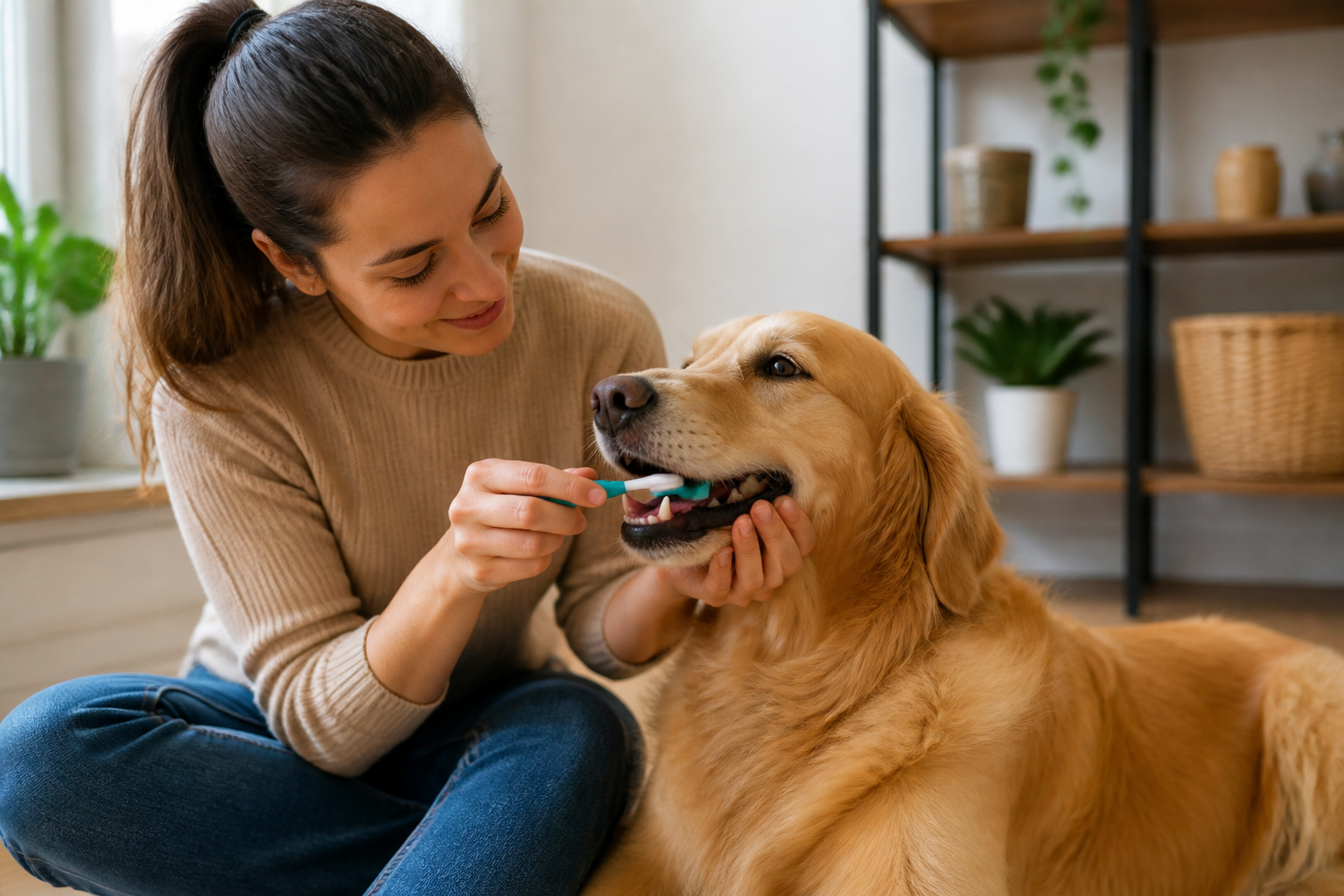
Introduction
You lean in for a friendly lick or a snuggle, only to be met with a puff of breath that smells like a swamp. While we often joke about "dog breath," persistent odor is usually the first sign that bacteria are moving in. Most pet owners know that dental health is important, but the actual process of scrubbing a reluctant pup's pearly whites can feel like a daunting chore. At BaxterBoo, we talk to pet owners every day who want to protect their dogs from dental disease without making every morning a battle. This guide will walk you through the exact steps to clean your dog’s teeth effectively, the tools you need to succeed, and how to handle a dog that really hates the toothbrush. Taking care of your dog's mouth is one of the best ways to ensure they live a long, comfortable life.
Quick Answer: Cleaning a dog's teeth involves using a dog-specific toothbrush and enzymatic toothpaste to gently scrub the outer surfaces of the teeth in circular motions. For the best results, aim for a daily routine, but even brushing three times a week significantly reduces plaque and tartar buildup.
Why Dog Dental Health Cannot Be Ignored
Many owners assume that because dogs in the wild did not brush their teeth, our modern pets do not need to either. However, our dogs live much longer lives than their ancestors and eat different diets. By the time most dogs are three years old, nearly 80 percent show some sign of periodontal disease. This is not just a problem for their mouth. Bacteria from the gums can enter the bloodstream and travel to the heart, liver, and kidneys.
Plaque is a sticky film of bacteria that forms on the teeth within hours of eating. If it is not brushed away, it mixes with minerals in the saliva and hardens into tartar, also known as calculus. Once tartar forms, you cannot simply brush it off at home. It requires a professional cleaning from a veterinarian. Consistent home care is about stopping that plaque from turning into a permanent, rock-hard problem.
Key Takeaway: Regular dental care at home prevents painful infections and helps avoid the high costs associated with professional dental surgeries and extractions later in life.
Gathering Your Dental Care Supplies
You cannot use your own toothpaste on your dog. Human toothpaste often contains xylitol, which is a sweetener that is highly toxic to dogs. It also usually contains fluoride and foaming agents that can upset a dog’s stomach since they do not know how to spit. You need supplies specifically designed for canine mouths. Our dog dental care collection includes toothbrushes, toothpaste, wipes, water additives, and other oral-care options.
Choosing the Right Toothbrush
There are several types of brushes to choose from depending on your dog's size and comfort level:
- Standard Pet Toothbrush: These look like human brushes but have a curved handle to reach the back molars more easily.
- Finger Brushes: These are small silicone or plastic caps with bristles that fit over your index finger. They are great for beginners or small dogs because they give you more control.
- Dual-Headed Brushes: These have bristles on both sides to clean the top and bottom of the tooth at the same time.
- Small Child Brushes: If you have a toy breed, a soft-bristled toothbrush for human toddlers can work well in a pinch.
Enzymatic Toothpaste
Dog toothpaste comes in flavors like poultry, beef, peanut butter, and malt. Most of these are enzymatic, meaning they contain proteins that help break down plaque even if you do not get a perfect scrub every time. Let your dog sample a few flavors to see which one they treat like a reward.
Essential Supply Checklist
- Dog-specific enzymatic toothpaste
- A toothbrush or finger brush suited for your dog’s size
- High-value treats for positive reinforcement
- A calm environment with good lighting
Step by Step: How to Brush Your Dog's Teeth
If you try to jam a toothbrush into a dog's mouth for two minutes on the first try, you will both end up frustrated. The goal is to build a positive association with the process. For additional guidance, review these pet dental care tips.
Step 1: Introduce the flavor. / Let your dog lick some toothpaste off your finger. Do this for a few days without any brushing so they think the toothpaste is a treat.
Step 2: Get them used to mouth handling. / Gently lift your dog’s lip and rub your finger along their gums and teeth. This mimics the feeling of the brush and builds trust.
Step 3: Introduce the brush. / Put some toothpaste on the bristles and let them lick it off the brush. Do not try to scrub yet. Just let them get used to the texture of the bristles.
Step 4: Start with the front teeth. / Gently lift the lip and brush the large canine teeth in the front. Use small, circular motions. Most plaque accumulates on the outside surface of the teeth near the gum line.
Step 5: Reach the back molars. / This is where most tartar builds up. Slide the brush along the inside of the cheek to reach the very back. You do not need to worry about the inside of the teeth as much, as the dog's tongue does a decent job of cleaning those surfaces.
Step 6: Reward and praise. / Always end the session with a treat or a favorite game. You want your dog to look forward to the routine.
Vet Tip: If you notice your dog’s gums are bleeding heavily or they seem to be in pain when you touch a specific tooth, stop brushing and call your veterinarian. These can be signs of advanced gum disease or a fractured tooth that requires professional attention.
Managing a Dog That Resists Brushing
Not every dog is going to sit still for a dental scrub. If your dog is head-shy or snaps when you touch their mouth, you have to prioritize safety and look for alternative methods. You can still maintain their oral health using products that require less direct contact. This guide to warning signs of bad teeth can also help you recognize when professional attention may be needed.
Dental Wipes
Dental wipes are pre-moistened pads that you wrap around your finger. They are less invasive than a brush and can be a great middle ground for dogs that do not like the sensation of bristles. You simply wipe the surface of each tooth to remove the daily film of plaque.
Water Additives
These are tasteless liquids that you add to your dog's water bowl. They contain ingredients that help kill bacteria and freshen breath. While they are not as effective as physical brushing, they are an excellent "set it and forget it" tool for busy owners or difficult dogs.
Dental Chews and Toys
Specific treats like Greenies dental dog chews or other VOHC-approved chews are designed to scrape away plaque as the dog bites down. Look for toys with nubby textures or rope fibers that act like floss. These are helpful, but they should be used to support brushing, not replace it entirely.
Bottom line: Even if your dog only allows you to brush for thirty seconds, that is significantly better for their health than skipping it altogether.
When Professional Help is Necessary
Home cleaning is a preventive measure, not a cure for existing disease. If your dog already has thick, brown tartar buildup or red, swollen gums, brushing might actually be painful for them. In these cases, you need a professional veterinary dental cleaning.
Our pet pharmacy carries a wide range of FDA-approved medications and prescription products that may be necessary if your vet identifies an infection or chronic dental condition. We partner with Pet's Choice to provide access to these specialized needs, including prescription dental diets like those from Farmina Vet Life. These diets are specially formulated to have a specific kibble size and texture that helps scrub teeth as the dog eats.
Signs it is time for a vet visit:
- Extreme bad breath that does not improve with brushing
- Yellow or brown crust on the teeth
- Loose or missing teeth
- Difficulty eating or dropping food
- Pawing at the mouth
- Blood on chew toys or in the water bowl
Maintaining the Routine with MVP Rewards
The secret to clean teeth is consistency. Plaque can turn into tartar in as little as 24 to 48 hours. This means brushing once a month is not doing much for your dog's health. You want to aim for at least three times a week, though daily is the gold standard.
To make this easier on your wallet, we recommend joining our MVP Rewards program. You can earn points on every purchase of toothpaste, brushes, and dental treats. This helps you keep the supplies you need on hand without overspending. For the items you use every single day, like dental chews or water additives, our Autoship program is a great way to save money and ensure you never run out.
Key Takeaway: Using a combination of mechanical brushing, dental treats, and regular veterinary checkups is the most effective way to manage your dog's oral health for the long term.
Senior Dogs and Dental Care
As dogs age, their dental needs become more critical. Senior dogs are more prone to systemic issues that can be worsened by mouth bacteria. However, they may also have more sensitive gums or existing tooth decay. When cleaning a senior dog's teeth, be extra gentle and use a soft-bristled brush. For more senior-care guidance, read about nutrition considerations for senior dogs.
If your senior dog needs a professional cleaning, your vet might recommend blood work first to ensure they are healthy enough for anesthesia. This is a standard safety precaution. Once their mouth is professionally cleaned, you can resume a gentle home care routine to keep it that way. We carry various mobility and health supplements that can support older dogs through these life stages.
Conclusion
Learning how to clean your dog's teeth is one of the most practical skills you can develop as a pet owner. It may take some patience and a few peanut-butter-flavored messes, but the payoff is a healthier pet and fewer expensive vet bills. Start slowly, use the right tools, and keep things positive. If you find that your dog needs a more specialized approach, remember that our pharmacy is here to help with prescription diets and medications through our partnership with Pet's Choice.
- Always use dog-specific toothpaste, never human versions.
- Focus on the gum line where plaque is most likely to hide.
- Supplement brushing with dental chews and water additives.
- Consult your vet if you see signs of pain or heavy tartar.
For all your dental care needs, from enzymatic toothpaste to VOHC-approved chews, explore our dog dental care category to find the perfect tools for your dog's smile.
FAQ
How often should I realistically brush my dog's teeth?
Ideally, you should brush your dog's teeth every day to prevent plaque from hardening into tartar. If a daily schedule is not possible, aim for at least three times per week to maintain a basic level of oral hygiene. Consistency is more important than a single deep cleaning once a month.
Can I use baking soda to clean my dog's teeth?
It is best to avoid using baking soda because it has a high alkaline content that can upset your dog's stomach if swallowed. Most dogs do not like the taste of baking soda, which can make them resist the brushing process even more. Stick to pet-specific enzymatic toothpastes that are safe to swallow and taste good to dogs.
My dog's gums bleed a little when I brush. Is this normal?
Minor bleeding can be a sign of mild gingivitis, similar to when humans start a new flossing routine. If the bleeding is light and stops quickly, continue brushing gently to help improve gum health. However, if the bleeding is heavy, persistent, or accompanied by signs of pain, you should stop and consult your veterinarian.
What if my dog refuses to let me put a brush in their mouth?
If your dog is very resistant to a toothbrush, try using dental wipes or a silicone finger brush, which are often less intimidating. You can also rely on dental water additives and VOHC-approved dental chews to help manage plaque. For very difficult cases, speak with your vet about prescription dental diets that clean teeth through chewing.






