
 Save 15% on your 1st Autoship learn more

 Email us
 Live Chat
 FAQs
FAQs





Introduction
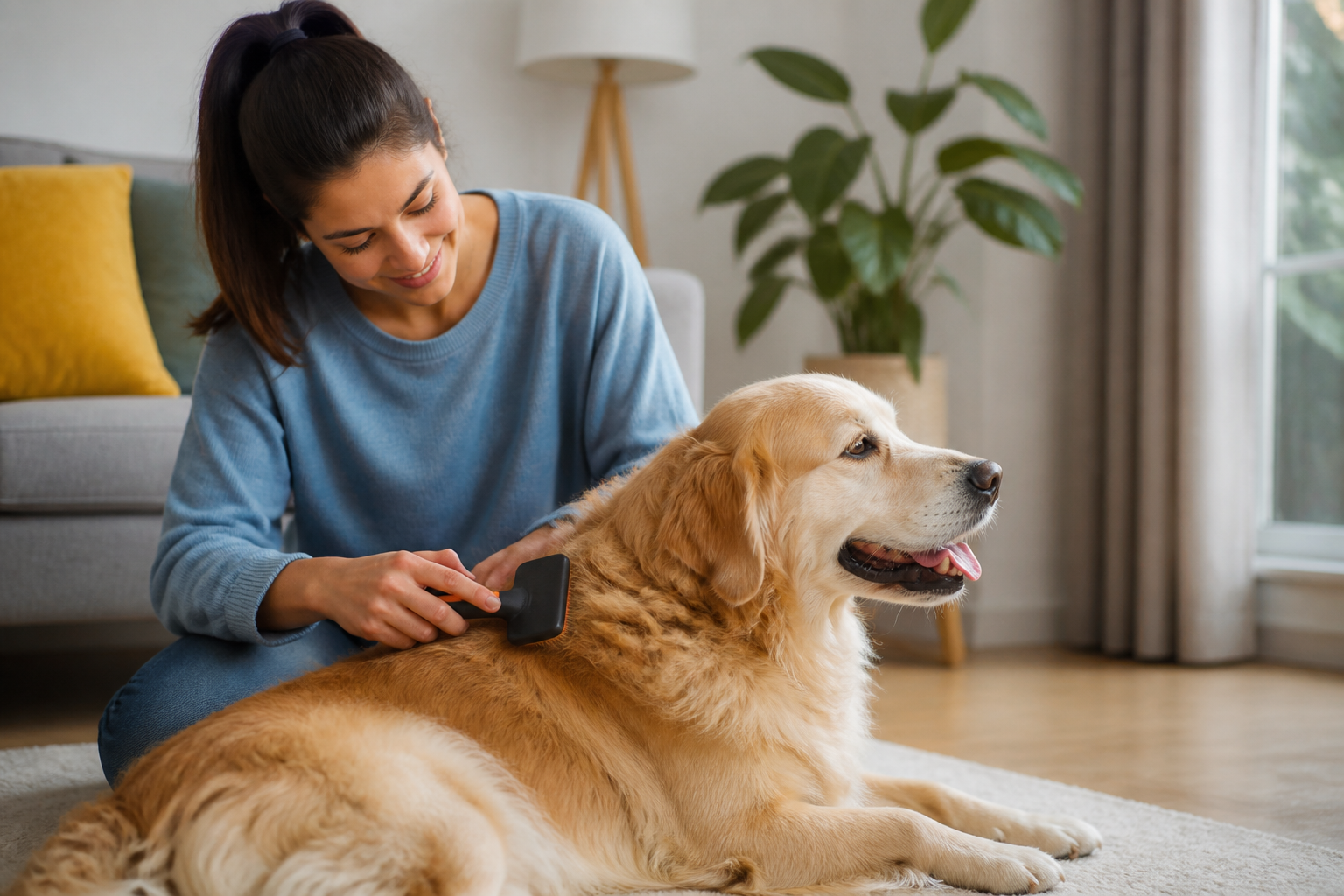
You are sitting on the floor with a mountain of fur growing next to you. Every time you pull the slicker brush through your dog’s coat, another cloud of hair appears. It feels like you could brush for three days straight and still find more. This is a common frustration for many pet owners, especially those with double-coated breeds during shedding season. At BaxterBoo, we talk to owners every day who wonder if they are actually helping or if they are just pulling out perfectly good hair. This post covers the specific signs that tell you when a grooming session is successfully finished. We will look at the physical checks you can perform on the coat and how to watch for signs of skin sensitivity. By the end of this article, you will know exactly when to put the brush down and give your dog a well-deserved treat.
The Comb Test: The Surest Way to Know You Are Done
The most reliable way to tell if you have finished brushing is what groomers call the comb test. Once you think you have removed all the loose fur and tangles with your main brush, pick up a high-quality metal comb. This tool is often called a Greyhound comb or a finishing comb. You want a comb with both fine and coarse teeth to get the best results. You can find options in our dog brushes and combs collection.
Start at the neck and gently run the coarse end of the comb through the fur. You should move from the skin outward to the tips of the hair. If the comb glides through without catching on any small knots or clumps of undercoat, that section is likely finished. If the comb snags or stops, it means there is still dead hair trapped in the coat or a small mat forming.
Quick Answer: You should stop brushing your dog when a metal finishing comb can pass smoothly through the coat from skin to tip without catching. You also need to stop immediately if you notice the skin turning a bright red color or if your dog shows signs of discomfort.
The fine-tooth side of the comb is for the final check. This side catches the smallest bits of debris and the finest hairs. If you can pull the fine teeth through the “furnishings” on the legs and the fluff behind the ears without resistance, you have done a thorough job. Using the comb test ensures you are not just smoothing over the top layer of hair while leaving a mess underneath.
How to Perform a Proper Check
- Section the hair using your fingers so you can see the skin.
- Place the comb teeth parallel to the skin at the base of the hair.
- Pull the comb gently away from the body.
- Repeat this in high-friction areas like the armpits and behind the ears.
- If the comb moves freely, move to the next section.
Why the Hair Seems to Never Stop Coming Out
If you are using a deshedding tool like a Furminator, it can feel like you are harvesting a whole new dog every time you sit down. This happens because some tools are designed to reach deep into the undercoat. Double-coated breeds, such as Huskies, Golden Retrievers, and Shepherds, have a soft, dense layer of fur beneath their outer coat. This undercoat is constantly cycling and shedding, especially during the spring and fall.
It is important to realize that you do not need to remove every single loose hair in one sitting. Brushing should be a regular maintenance task rather than a marathon event. If you have been brushing for twenty minutes and the hair is still coming out in large volumes, it might be time to take a break. Your dog’s skin can only handle so much friction before it becomes irritated.
Key Takeaway: Brushing is about removing dead hair and preventing mats, not achieving 100% hairlessness. A double coat will always have some loose fibers, so focus on removing the bulk of the “blown” coat rather than every individual strand.
When the undercoat “blows,” it often comes out in tufts. You will know you are nearing the end of a session when those large tufts stop appearing and you are only seeing a few stray hairs in the brush. If the volume of hair drops significantly compared to when you started, you have likely cleared out the oldest, loosest fur. For more guidance on seasonal shedding, read our guide to managing a double-coated dog’s shedding.
Signs You Might Be Over-Brushing
Over-brushing is a real concern that can lead to “brush burn.” This is a form of skin irritation caused by the bristles or pins of a brush repeatedly scraping the skin. Because dogs cannot tell us when their skin feels raw, we have to look for physical cues.
Check the skin frequently by parting the fur. Healthy skin should be a pale pink or white, depending on your dog's natural pigmentation. If you see areas that look angry, bright red, or have small red dots, you must stop immediately. These are signs that the skin is being abraded. Some dogs are more sensitive than others, particularly those with thin coats or light-colored skin.
Physical Cues from Your Dog
- Flinching: If your dog pulls away when you touch a certain area, the skin may be tender.
- Licking: If the dog starts licking the area you just brushed, it might be itchy or painful.
- Whining: Some dogs will vocalize if the constant pulling on the hair becomes too much.
- Looking at the brush: If they keep turning their head to watch the tool, they are likely feeling overstimulated.
Vet Tip: If you notice persistent redness, bumps, or flaky skin after grooming, consult your veterinarian to rule out skin infections or allergies. Our dog pharmacy offers products for pet care needs.
Identifying Your Dog’s Coat Type
The finish line for a grooming session looks different for a Poodle than it does for a Beagle. Understanding your dog's specific coat type will help you set realistic goals for your brushing sessions. We carry a wide variety of tools for every coat type, and choosing the right one is the first step toward a successful groom. Explore our dog grooming supplies to compare brushes, combs, shampoos, and other grooming essentials.
Short-Haired Breeds
For dogs like Boxers or Pugs, you are mostly removing surface dust and dead hair from the topcoat. You do not need to spend hours on these dogs. A five- to ten-minute session with a rubber curry brush, like a KONG Zoom Groom Natural Rubber Dog Grooming Brush, is usually enough. You know you are done when the coat looks shiny and the amount of hair on the rubber nubs is minimal.
Double-Coated Breeds
These dogs require the most work. You have to navigate both the guard hairs and the downy undercoat. For these breeds, the goal is to prevent the undercoat from “pelting” or turning into a solid wall of matted fur. You are finished when the coat feels airy and light, and you can see all the way to the skin when you part the fur.
Long or Curly-Haired Breeds
Breeds like Yorkies or Doodles are prone to tangles and mats. For these dogs, brushing is less about shedding and more about detangling. You are done when you can run a comb from the base of the ear to the tip of the tail without a single snag. If you find a mat that will not come out, do not keep pulling at it. Use a dematting tool or a small amount of detangling spray.
Bottom line: Your stopping point is defined by the goal of the session, whether that is removing seasonal undercoat or ensuring a long coat is free of tangles.
Using the Right Tools to Finish Faster
Using the wrong tool can make it feel like you are getting nowhere. If you use a soft bristle brush on a thick-coated dog, you are only touching the surface. You will never reach the finish line because you aren't actually removing the hair that needs to go.
Step 1: Choose a slicker brush for most medium to long coats. This tool has fine, bent wire pins that grab onto loose hair and pull it away from the body. It is excellent for “fluffing” the coat. A Master Grooming Tools Ergonomic Slicker Dog and Cat Brush is one option for brush-outs and mat removal.
Step 2: Use an undercoat rake for heavy shedders. These tools have long, blunt tines that reach through the topcoat to pull out the dead undercoat without cutting the fur.
Step 3: Finish with a metal comb. As mentioned earlier, this is your quality-control tool. It tells you if the other brushes missed anything.
We recommend checking your tools regularly. If the pins on your slicker brush are bent or the tips have lost their protective coating, they can scratch the skin. High-quality tools from trusted brands make the process more efficient and more comfortable for your pet.
The Secret of the Pre-Brush Bath
Many people believe you should only brush a dry dog. However, professional groomers often find that brushing a clean, conditioned coat is much easier. Dirt and oils can act like glue, holding dead hair inside the coat. When you wash the dog with a high-quality shampoo and a heavy-duty conditioner, the hair “slips” out more easily. For bath-time ideas, see our dog shampoo and conditioner collection.
If you decide to brush during or after a bath, make sure the coat is properly prepared. Brushing a soaking wet coat can sometimes cause the hair to stretch and break. The best method is to apply a conditioner, let it sit for a few minutes, and then use a wide-tooth comb or a wet-rated brush to gently work through the fur while the dog is still in the tub.
Once the dog is dry, you will find that the remaining loose hair comes out with very little effort. If you use a high-velocity dryer, much of the shedding hair will blow right out, saving you a significant amount of manual brushing time. This “prep work” helps you reach the point where you can stop brushing much sooner than if you started with a dirty, dry coat. You can also review these dog-bathing tips before your next grooming session.
Managing Your Dog’s Mental Limits
Sometimes you have to stop brushing before the coat is perfect because your dog has reached their limit. Grooming can be stressful for some pets. If your dog is starting to get wiggly, panting heavily, or trying to hide, it is better to stop and finish the job tomorrow.
We want grooming to be a positive bonding experience. If you force a dog to stay still for an hour while you pull at their fur, they will learn to hate the brush. Shorter, more frequent sessions are almost always better than one long, exhausting session. Aim for 10 to 15 minutes of productive brushing. If you haven't finished the whole dog, just do the front half today and the back half tomorrow.
Key Takeaway: A dog's patience is a finite resource. Stopping a session while the dog is still behaving well is better for long-term training than pushing until they become reactive.
By keeping the sessions short, you can earn your dog's trust. Always follow up a grooming session with something they love. This could be a high-value treat, a game of fetch, or a long walk. This helps create a positive association with the grooming tools.
Skin Health and When to Visit the Vet
As you brush, you have a unique opportunity to inspect your dog's skin and body. This is a great time to check for lumps, bumps, or parasites like fleas and ticks. If you notice your dog is shedding excessively in patches, or if the skin is flaky and smelly, brushing alone won't solve the problem.
Excessive shedding or a dull coat can sometimes indicate underlying health issues. These might include thyroid problems, nutritional deficiencies, or allergies. While regular grooming helps, it is not a substitute for medical care. If you find something unusual during your grooming session, a trip to the vet is the right next step.
Vet Tip: Regular grooming is the best way to catch skin masses or external parasites early. If you find fleas or ticks, our pharmacy carries products for pet care needs.
Monitoring the coat's texture is also important. If a normally soft coat suddenly feels brittle or greasy, it might be time to look at your dog's diet. We carry many premium food brands that are formulated to support skin and coat health. Sometimes, adding a fish oil supplement can make the brushing process easier by improving the elasticity of the hair and the moisture levels of the skin.
Final Steps for a Finished Groom
Once the comb test is passed and your dog is still happy, you can do a few finishing touches. Wipe down the coat with a damp cloth to pick up any tiny “floaty” hairs that are sitting on the surface. This prevents them from ending up on your sofa the moment the dog stands up.
Check the “sanitary” areas and the paw pads. Hair often gets matted between the toes, which can be painful for the dog to walk on. Use a small pair of safety shears or a dedicated trimmer to keep these areas neat. At BaxterBoo, we emphasize that grooming is a full-body task, not just a coat task.
Bottom line: Knowing when to stop is a balance of checking the coat's physical state and respecting your dog's comfort levels.
If you are a frequent shopper, consider joining the MVP Rewards programme. You can earn points on every grooming tool, shampoo, and treat you buy, which helps you save on future purchases. We also offer our Autoship programme for items you use regularly, like deshedding sprays or skin supplements, so you never run out during the height of shedding season.
FAQ
How can I tell if I am brushing my dog too hard?
You can tell you are brushing too hard if the skin turns a bright red or if your dog flinches when the brush touches them. You can also test the brush on the inside of your own forearm; if it feels scratchy or painful to you, it is likely too rough for your dog's sensitive areas. Always use a light touch and let the pins of the brush do the work rather than pressing down.
Why does my dog keep shedding even after I brush for an hour?
Shedding is a continuous biological process, and for double-coated breeds, there can be thousands of loose hairs trapped in the undercoat at any given time. If you use a tool that only reaches the topcoat, the shedding undercoat will continue to fall out. Additionally, during “coat blowing” season, the hair is being released faster than you can realistically brush it all out in a single sitting.
Is it okay to stop brushing if my dog gets upset?
Yes, it is highly recommended to stop if your dog shows signs of stress, such as growling, snapping, or extreme trembling. Forcing a dog through grooming can lead to long-term behavioral issues and make future sessions even harder. It is much better to do five minutes of successful brushing and stop on a positive note than to push the dog to their breaking point.
Should I brush my dog every single day?
The frequency depends on your dog's coat type and the current season. Long-haired breeds or those prone to matting often benefit from a quick daily brush to prevent tangles from forming. However, for most dogs, two to three times a week is sufficient. During heavy shedding seasons in the spring and fall, you may need to increase the frequency to manage the volume of loose fur.






