
 Save 15% on your 1st Autoship learn more

 Email us
 Live Chat
 FAQs
FAQs





Introduction
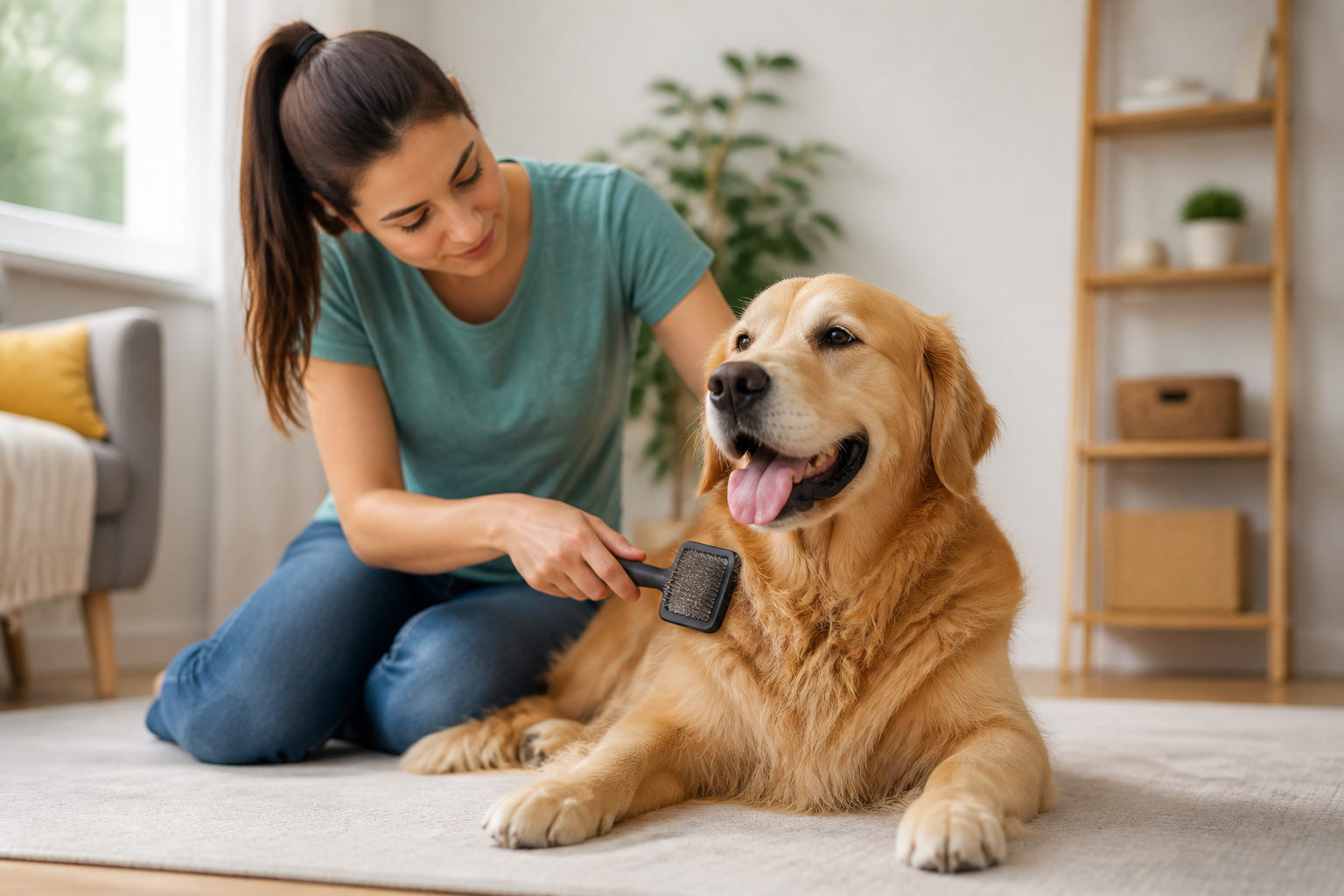
You are sitting on the rug with your dog after a long day. You pick up the brush and start a few strokes. A mountain of fur begins to form on the floor. You might wonder if you are finished after five minutes or if you need to keep going until the floor is covered. Knowing how long a grooming session should last is a common question for many pet owners. At BaxterBoo, we see thousands of different coats every year through the products we stock and the customers we serve. This article covers exactly how much time you should spend on your dog's coat based on their hair type and lifestyle. You will learn how to tell when you are truly done and how to make the process faster. Effective brushing is less about the clock and more about the technique and tools you use.
Factors That Determine Brushing Time
Not every dog needs a marathon grooming session. The time you spend with a brush in your hand depends on several factors. Your dog's breed is the biggest indicator. A smooth-coated breed like a Boxer requires far less time than a thick-coated breed like a Great Pyrenees. Length and texture also play a role. Curly hair traps shed fur more easily than straight hair.
Lifestyle is another factor to consider. If your dog spends all day hiking through brush and tall grass, you will spend more time removing debris. A dog that mostly stays indoors on the sofa stays cleaner and tangles less. Finally, the season matters. Many dogs "blow their coats" twice a year. During these heavy shedding windows, you might need to double your usual brushing time.
Quick Answer: Most short-haired dogs only need 5 to 10 minutes of brushing once or twice a week. Long-haired or double-coated breeds often require 15 to 30 minutes of dedicated work several times a week to prevent mats.
Brushing Based on Coat Type
We categorize dogs into four main coat types to help you set a timer. Each one requires a different approach.
Short and Smooth Coats
Dogs like Beagles, Pointers, and Labradors fall into this category. Their hair is close to the skin and does not tangle. You are not brushing to remove knots. You are brushing to remove loose hair and distribute skin oils.
For these dogs, 5 to 10 minutes is plenty. Use a rubber curry brush or a grooming glove. These tools massage the skin and pull away dead hair without scratching. Because the hair is short, you do not need to work in sections. Just follow the direction of hair growth from head to tail.
Double Coats
Breeds like Huskies, Golden Retrievers, and German Shepherds have a soft undercoat and a tougher outer coat. This is where things get time-consuming. The undercoat sheds heavily and can get trapped under the top layer.
Plan for 15 to 20 minutes for a standard session. If they are shedding their winter coat, this can easily jump to 30 or 40 minutes. You must reach the skin to be effective. If you only brush the top, the bottom layer will eventually form thick mats. For additional guidance on seasonal shedding, read about how dogs manage heavy shedding and undercoats.
Long and Silky Coats
Yorkshire Terriers and Afghan Hounds have hair that is very similar to human hair. It grows continuously and tangles easily. These dogs need 10 to 15 minutes of brushing every single day. If you skip a few days, those 10 minutes turn into an hour of careful detangling. Use a pin brush for the main body and a fine-tooth comb for areas like the ears and legs where mats hide.
Wiry and Curly Coats
Terriers often have wiry coats, while Poodles and Doodles have curly ones. These coats do not shed much, but they trap everything. Dirt, leaves, and loose hair get stuck in the curls.
Plan for 20 minutes a few times a week. Use a slicker brush to pull through the curls. For wiry coats, a metal comb is essential to make sure you are getting through the dense texture.
Key Takeaway: The goal of brushing is to reach the skin. If your brush only glides over the top layer, you are not removing the hair that causes mats and skin irritation.
How to Know When You Are Done
It can be tempting to keep brushing until not a single hair comes out. However, most dogs shed constantly. You could brush for three hours and still see some fur. You need a better metric than "zero hair."
The best way to tell you are finished is the "comb test." After you have used your main brush, take a medium-to-fine metal comb. Run it through the coat from the skin outward. If the comb glides through without catching on any tangles or pulling out clumps of dead hair, you are finished. You can find finishing combs and other tools in our dog brushes and combs collection.
Check specific "hot spots" before you put the tools away. These include:
- Behind the ears
- In the armpits
- Around the collar area
- The "trousers" on the back legs
- The base of the tail
If these areas are clear and the comb runs smooth, your job is done for the day.
The Importance of the Right Tools
Using the wrong brush is the fastest way to turn a ten-minute job into an hour of frustration. At BaxterBoo, we carry a wide variety of brands like Kong, Greenies, and RC Pets because we know one size does not fit all. Having the right kit saves your back and your dog's patience. Browse our dog grooming supplies to compare brushes, combs, conditioners, and other grooming essentials.
- Slicker Brushes: These have fine wire bristles. They are the workhorses of the grooming world. They are great for pulling out loose undercoat and breaking up small tangles.
- Pin Brushes: These look like human hairbrushes but with longer, widely spaced pins. They are best for long-haired dogs to prevent breakage.
- Rubber Brushes: These are ideal for short hair. They act like a magnet for loose fur.
- Metal Combs: These are essential for the finishing touch. They find the mats that brushes miss.
- Deshedding Tools: Brands like those we carry at BaxterBoo are designed to reach deep into the undercoat. Use these sparingly, perhaps once a week, to avoid irritating the skin.
For a closer look at slickers, combs, and undercoat tools, explore our selection of Master Grooming Tools products.
Vet Tip: If you notice your dog's skin is red, bumpy, or has bald patches after brushing, you may be using too much pressure or the wrong tool. Consult your veterinarian if you see signs of skin infections or heavy irritation during your grooming sessions.
Brushing Wet vs. Dry
There is a common debate among pet owners about whether to brush a dog when they are wet. Generally, you should brush your dog before a bath. Water can act like glue for existing mats. If you put a matted dog in the tub, those knots will tighten as they dry. They can become nearly impossible to remove without clippers.
However, many professional groomers use a technique called "wet brushing" during the bath. They apply a high-quality conditioner and use a brush to work it through the coat. This provides "slip" which allows the brush to glide through tangles without pulling.
If you choose to brush a wet dog, ensure they are saturated with conditioner. Never brush a damp, clean dog without some kind of detangling spray or conditioner. Hair is more elastic and prone to breakage when it is wet. For more bath-time guidance, read these dos and don'ts for bathing your dog.
Step-by-Step for an Efficient Session
If you want to keep your sessions under 15 minutes, follow a routine. This prevents you from going over the same spot twice while missing others.
Step 1: Start with a visual inspection. / Look for burrs, ticks, or large mats that need immediate attention.
Step 2: Use your primary brush. / Work from the head toward the tail. Use long, gentle strokes.
Step 3: Focus on the undercoat. / If your dog has a double coat, use a deshedding tool or a slicker brush to pull out the fuzzy dead hair.
Step 4: The Finishing Comb. / Run a metal comb through the coat to check for any missed tangles.
Step 5: Reward and Praise. / Give your dog a treat to ensure they associate brushing with a positive experience.
Benefits Beyond a Clean House
Brushing is about more than just keeping fur off your sofa. It is a vital part of your dog's health routine. When you brush, you are doing a "hands-on" check of their entire body. This is the best time to find small lumps, skin tags, or parasites like fleas and ticks.
Brushing also stimulates the skin. It increases blood flow to the surface and spreads natural oils. These oils act as a waterproof barrier and give the coat its shine. Regular sessions also reduce the amount of dander in your home. This is helpful for family members with mild allergies.
If you find that your dog has persistent skin issues or excessive scratching, it may be time to look closer at their health. Our pharmacy at BaxterBoo, in partnership with Pet's Choice, offers FDA-approved medications for skin allergies and flea prevention. Sometimes a grooming problem is actually a medical one.
Key Takeaway: Regular brushing is a form of preventative healthcare. It allows you to spot changes in your dog's body early when they are easiest to treat.
Managing a Dog Who Hates Brushing
If your dog runs away when they see the brush, you cannot expect a 20-minute session. You have to start small. Begin with just 30 seconds of brushing. Feed them high-value treats while you do it.
Slowly increase the time as they become more comfortable. You can also try different tools. Some dogs hate the "scritch" of a metal slicker brush but love the feel of a soft rubber curry brush. Our BASS Brushes selection includes options for different coat-care routines.
Keep the sessions calm. If you are stressed or rushing, your dog will pick up on that energy. Turn on some music and make it a bonding moment. If they become too agitated, stop. It is better to have four five-minute sessions throughout the week than one twenty-minute battle that leaves everyone upset.
Senior Dogs and Puppies
Life stage affects grooming time. Puppies need short, frequent sessions. They are not very hairy yet, but they need to learn that brushing is normal. Spend two minutes a day just touching them with the brush.
Senior dogs may have different needs. They often develop lumps, bumps, or sensitive joints as they age. You may need to be much gentler. They might not be able to stand for a long time, so let them lie down while you work. If your senior dog has mobility issues that make grooming difficult, consider supplements. We carry various joint supports in our Medical and Mobility section to help them feel more comfortable during daily care.
Bottom line: Adjust your brushing time and intensity to match your dog's age and physical comfort.
Common Brushing Mistakes to Avoid
Many owners accidentally make grooming harder than it needs to be. One common mistake is "surface brushing." This happens when you use a soft brush on a thick coat. It looks good on the outside, but a thick layer of felted hair forms underneath. This can lead to skin infections because the skin cannot "breathe."
Another mistake is brushing too hard. This is called "brush burn." If you see red streaks on the skin, you are pressing too firmly. Let the bristles do the work. You do not need to push the brush into the skin.
Finally, do not forget the "forgotten" areas. Dogs often get mats in their "armpits" and between their toes. These areas are sensitive, so owners often skip them. However, mats in these spots can be very painful and even affect how a dog walks.
Summary of Brushing Times
To help you plan your week, here is a quick reference for average brushing times:
| Coat Type | Frequency | Session Length |
|---|---|---|
| Smooth (Lab, Boxer) | 1x Weekly | 5-10 Minutes |
| Double (Husky, GSD) | 3x Weekly | 15-20 Minutes |
| Long (Yorkie, Afghan) | Daily | 10-15 Minutes |
| Curly (Poodle, Doodle) | 3x Weekly | 20-30 Minutes |
| Wiry (Terrier) | 2x Weekly | 10-15 Minutes |
Using Nutrition for a Better Coat
If you find yourself brushing for a long time and the coat still looks dull or brittle, the issue might be internal. Nutrition plays a massive role in coat health. Foods rich in Omega-3 and Omega-6 fatty acids help the skin stay hydrated.
We carry premium brands like Farmina, Orijen, and Acana that focus on high-quality proteins and healthy fats. When a dog is well-nourished, their hair is stronger and more elastic. It tangles less and shines more. If you are dealing with chronic skin issues, our pharmacy can help with prescription diets designed specifically for skin and coat health.
Conclusion
Brushing your dog is a simple act that yields big rewards. For most dogs, a dedicated 10 to 15 minutes a few times a week is the "sweet spot" for a healthy coat. Remember to always use the right tools for your specific breed and to check your work with a metal comb. This routine keeps your home cleaner and your dog more comfortable.
- Match your brush to your dog's coat type to save time.
- Always reach the skin to prevent hidden mats.
- Use the "comb test" to know exactly when you are done.
- Check for lumps, bumps, and ticks during every session.
To keep your grooming kit updated, explore our full range of brushes, combs, and deshedding tools. Whether you are looking for a gentle rubber brush for a new puppy or a heavy-duty slicker for a shedding senior, we have the gear to help you get the job done right.
FAQ
Can you brush a dog too much?
Yes, you can over-brush a dog and cause skin irritation known as brush burn. This usually happens if you use a stiff-bristled brush with too much pressure or stay in one small area for too long. Stick to the recommended times for your dog's coat type and always watch for redness on the skin.
Why does my dog still shed after I brush them for twenty minutes?
Dogs shed continuously, and a single brushing session only removes the hair that has already detached from the follicle. Some breeds have millions of hairs, so there is always more ready to fall out. Regular brushing reduces the amount of hair on your furniture, but it will never stop shedding entirely.
What should I do if I find a mat that won't come out?
If you find a stubborn mat, do not pull on it with a brush, as this is painful for your dog. Try applying a detangling spray or a small amount of conditioner and gently teasing it apart with your fingers or a metal comb. If the mat is tight against the skin, it is safest to have a professional groomer or vet clip it out to avoid cutting the skin.
Is it better to brush a dog before or after a bath?
It is almost always better to brush your dog before a bath. Water causes existing mats to shrink and tighten, making them much harder to remove once the dog is dry. Brushing before the bath also removes loose hair that would otherwise clog your drain or make lathering the shampoo more difficult.






