
 Save 15% on your 1st Autoship learn more

 Email us
 Live Chat
 FAQs
FAQs





Introduction
You are finally sitting down on the sofa after a long day when your dog nudges your hand for a scratch. As you run your fingers through their fur, you hit a tight, painful knot behind their ear that was not there yesterday. Moments like these make every pet owner wonder if they are spending enough time with the brush or if they are just scratching the surface. At BaxterBoo, we know that grooming is about much more than just looking good for the neighborhood walk. It is a vital part of your dog’s health that prevents skin infections and keeps them comfortable. This post covers exactly how much time you should spend brushing based on coat type, the best techniques for efficiency, and how to spot health issues during your routine. Effective grooming depends on your dog’s specific needs rather than a one size fits all timer.
Quick Answer: A typical brushing session should last between 10 and 30 minutes depending on your dog’s coat length and thickness. Short-haired breeds may only need 5 to 10 minutes of surface brushing, while long-haired or double-coated breeds often require 30 minutes or more to reach the skin and remove trapped undercoat.
The General Timing Guidelines for Dog Brushing
Most pet owners find that a solid 15 minute session a few times a week is the sweet spot for a healthy dog. This duration allows you to cover the entire body without causing your dog to become restless or bored. If you have a puppy, you might start with just two minutes a day to get them used to the sensation. For an adult dog with a manageable coat, the goal is to work through the fur until the brush glides through without catching on tangles.
The time you spend will fluctuate based on the season. During the spring and fall, many dogs blow their coats. This is when the undercoat sheds in large clumps to make way for a new seasonal layer. During these weeks, you may need to double your brushing time to keep up with the volume of loose fur. Spending an extra 20 minutes now can save you hours of vacuuming your carpets later.
Factors That Add or Subtract Time
- Coat length: Longer hair naturally takes more time to navigate.
- Coat density: A thick undercoat requires multiple passes with different tools.
- Recent activity: A dog that just ran through the woods will need a longer session to remove burrs and debris.
- Tolerance level: If your dog is anxious, you may need to break one 30 minute session into three 10 minute sessions.
Key Takeaway: Quality matters more than the clock. If the brush moves freely from head to tail, you have likely spent enough time, regardless of whether it took 10 minutes or 20 minutes.
Short and Smooth Coats: The Five Minute Refresh
Dogs like Boxers, Great Danes, and Pugs have short hair that many owners think requires zero maintenance. While they do not get traditional mats, they still need regular brushing to distribute natural skin oils and remove dead hair. A session for a short-haired dog usually takes about 5 to 10 minutes.
You should use a rubber grooming mitt or a soft bristle brush. These tools massage the skin and pull away loose fur that would otherwise end up on your furniture. Because the hair is short, you do not have to worry about sections or layers. Simply move in the direction of hair growth from the neck down to the tail.
Vet Tip: Even short-haired dogs can develop skin irritations or dry patches. Use your short brushing sessions to look for redness, bumps, or signs of fleas. If you notice persistent scratching or hair loss, consult your veterinarian to rule out allergies or skin infections.
Double Coated Breeds: The Twenty Minute Deep Dive
Breeds like Labrador Retrievers, German Shepherds, and Huskies have a dense undercoat protected by a tougher outer layer. Brushing these dogs usually takes 15 to 25 minutes. If you only brush the surface, the undercoat will become packed against the skin. This prevents air from circulating and can lead to "hot spots" or skin infections.
For these dogs, we recommend a two-stage process. First, use a slicker brush or an undercoat rake to pull out the loose, fuzzy hair from the bottom layer. This usually takes about 15 minutes. Once the rake comes out clean, spend another 5 minutes with a standard brush to smooth the topcoat. At BaxterBoo, we carry a wide variety of dog brushes and combs specifically designed for these heavy shedders.
Step-by-Step for Double Coats
Step 1: Start at the rear. / Work from the back of the dog toward the front, as this is often where the heaviest shedding occurs.
Step 2: Use the rake. / Pull the undercoat rake gently through the fur in the direction of growth.
Step 3: Check the belly and legs. / These areas have thinner hair but can still hold onto loose fluff.
Step 4: Finish with a surface brush. / This smooths the guard hairs and gives the coat a finished shine.
Bottom line: Double coated dogs require a deeper reach than smooth coats, so plan for at least 20 minutes to prevent the undercoat from matting.
Long and Silky Coats: The Thirty Minute Precision Session
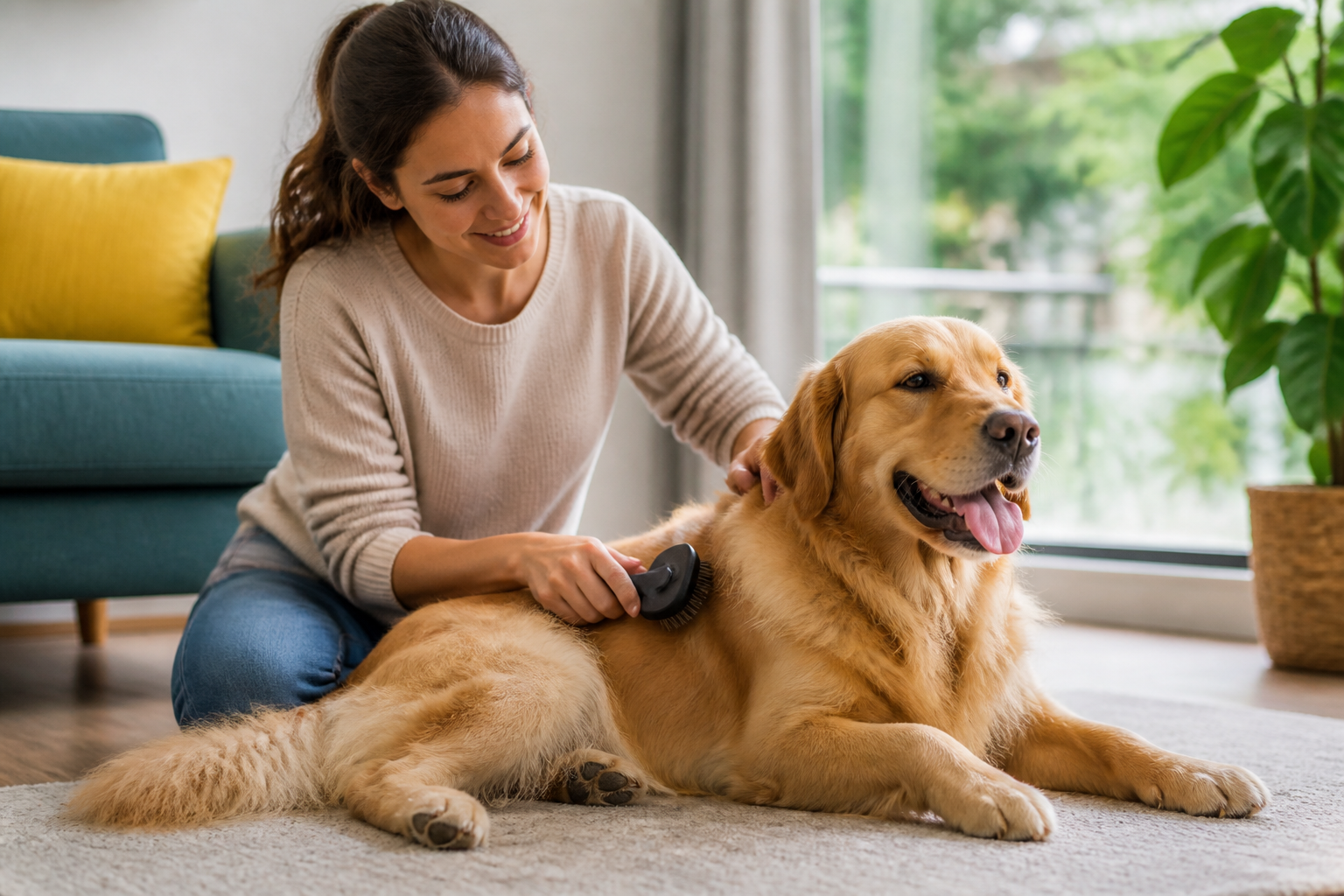
Golden Retrievers, Irish Setters, and Yorkshire Terriers have hair that can grow quite long. These coats are the most prone to tangles and mats. A thorough session for a long-haired dog typically takes 30 minutes or more. To do this correctly, you should use a technique called line brushing.
Line brushing involves parting the hair with one hand and brushing from the skin outward with the other. This ensures you are not just "skimming" the top of the hair while knots form underneath. Because you are working in small sections, it takes significantly longer than other coat types. If you rush this process, you will likely miss small mats that will eventually require cutting or shaving.
If you keep your long-haired dog in a "puppy cut" or a shorter trim, your brushing time will drop significantly. However, for a full show coat or long natural fringe, expect to spend about 45 minutes once or twice a week. Consistency is the key to keeping these sessions from becoming a marathon.
Curly and Wavy Coats: The Daily Ten Minute Habit
Poodles, Goldendoodles, and Bichon Frises have hair that does not shed out in the traditional sense. Instead, the hair that falls out gets trapped in the curls. If you do not remove that hair, it forms massive mats very quickly. For these breeds, a daily 10 to 15 minute "maintenance brush" is much better than a weekly one hour session.
Using a slicker brush followed by a metal comb is the best approach. The slicker brush breaks up the curls to release trapped hair, while the comb acts as a final check. If the comb catches on anything, you know there is a tangle that needs attention. Many doodle owners find that the hair behind the ears and under the armpits mats the fastest, so spend extra time in those friction zones.
Key Takeaway: For curly breeds, daily short sessions are essential because their hair acts like a trap for debris and dead fur.
Tools That Help You Work Faster
The right tools can cut your grooming time in half. Using a brush that is too small for your dog’s size or the wrong type for their coat will only lead to frustration. We stock professional grade options from brands like KONG and Master Grooming Tools that are designed for ergonomic use.
- Slicker Brushes: Best for removing debris and loose hair from most coat types.
- Pin Brushes: Ideal for longer hair to prevent breakage while detangling.
- Undercoat Rakes: Essential for double-coated breeds to reach the bottom layer.
- Rubber Brushes: Great for short-haired dogs and for use during baths.
- Metal Combs: The ultimate tool for checking your work and finding hidden knots.
Choosing the correct tool for the job ensures you are actually removing hair rather than just moving it around. This makes each stroke more effective and allows you to finish the job sooner.
The Role of the Bath in Your Brushing Routine
A common mistake is trying to brush a dirty, matted dog. Dirt and grit can actually make the hair more difficult to work through and can even dull your expensive grooming tools. However, you should always brush your dog before they get into the tub. Water acts like glue for mats. If you get a mat wet, it often tightens and becomes nearly impossible to remove without clippers.
After the bath, once the dog is mostly dry, another quick 10 minute brush will help fluff the coat and remove any hair that was loosened by the shampoo. If you use a conditioner or a detangling spray, the brush will glide through much easier. This post bath session is often the fastest of the week because the hair is clean and hydrated. For additional bathing guidance, read our tips for bathing your dog.
Spotting Health Issues During Brushing
Brushing is the best time to perform a "body scan" on your dog. As you spend those 15 to 20 minutes working through the coat, you have the chance to see and feel things that are normally hidden. This is a critical habit for catching health problems early.
Look for small black specks which might indicate flea dirt, or check for ticks after a walk in the woods. You might also find new lumps, bumps, or areas where the skin looks crusty or inflamed. Our flea and tick collection offers a variety of flea and tick preventatives and medicated shampoos. If you find something concerning during your grooming session, it is a great time to consult your vet. They can provide a prescription that we can fill for you, ensuring your dog gets the exact care they need for skin or parasite issues.
Vet Tip: If your dog suddenly starts reacting with pain when you brush a specific area, stop immediately. This could indicate an underlying joint issue, a hidden wound, or a severe skin infection. A quick vet visit is the safest way to identify the cause of sudden grooming sensitivity.
How to Shorten Your Brushing Sessions
If you find that grooming is taking too long, there are ways to streamline the process. The biggest time saver is frequency. Brushing for 5 minutes every day is far more effective than brushing for 35 minutes once a week. Frequent sessions prevent the small tangles from ever becoming large mats.
You can also use grooming sprays. These products add a bit of "slip" to the hair, allowing the brush to pass through knots with less resistance. This is safer for the dog and faster for you. Finally, keep your tools clean. A brush that is clogged with hair cannot pick up any more, so clear the bristles every few strokes.
Bottom line: Frequency and the right products are the best ways to reduce the total time you spend holding a brush.
Training Your Dog to Enjoy Brushing
A dog that wiggles, hides, or nips at the brush will easily double your grooming time. If your dog is difficult to handle, spend a few minutes each day on "cooperative care" training. Start by showing the dog the brush and giving them a high value treat. Then, touch them with the back of the brush and treat again.
Gradually move toward actual brushing. If you keep the sessions short and positive, most dogs will eventually learn to relax. Some even grow to love the attention. Using a long-lasting treat like a stuffed toy or a chew can keep them occupied while you work on the more difficult areas like the back legs or the tail.
Conclusion
Brushing your dog is a fundamental part of responsible pet ownership that goes far beyond aesthetics. Whether you are spending 5 minutes on a smooth coated Boxer or 45 minutes on a thick coated Husky, the goal is the same: a comfortable, healthy pet. By understanding your dog’s specific coat needs and using the right tools from our dog grooming collection, you can make this a stress-free bonding activity. Remember to check the skin for any changes and consult your vet if you notice anything unusual. To make sure you never run out of grooming sprays or shampoos, consider signing up for our Autoship programme. It is the easiest way to save on essentials while keeping your dog’s coat in peak condition year round.
Summary Checklist
- Identify your dog's coat type to set a realistic time goal.
- Use a slicker brush for general debris and a rake for undercoats.
- Brush before baths to prevent mats from tightening.
- Perform a skin health check during every session.
- Keep sessions positive with treats to build a better routine.
FAQ
Is it possible to brush my dog for too long?
Yes, over brushing can cause "brush burn," which is skin irritation caused by the bristles repeatedly scraping the skin. This is especially common with slicker brushes or deshedding tools if you stay in one spot for too long. If you see the skin turning pink or red, it is time to stop and move to a different area or end the session.
Why does my dog's hair mat so quickly after I just brushed them?
Mats often form due to friction in areas like the armpits, behind the ears, or where a harness rubs against the fur. If the hair is dry or damaged, it will also tangle much faster. Using a conditioning spray can help strengthen the hair and provide a protective layer that resists tangling between your regular grooming sessions.
Can I just use a human hairbrush on my dog to save time?
Human brushes are rarely effective for dog coats because the bristle density and strength are designed for human scalp hair. Dog brushes are engineered to penetrate thick fur, pull out dead undercoat, and massage canine skin. Using the wrong brush often means you are only smoothing the top layer while leaving mats to grow underneath.
My dog hates being brushed, should I just shave them?
While a shorter clip can reduce brushing time, shaving is not always the best solution, especially for double-coated breeds. A dog’s coat provides insulation against both heat and cold, and shaving can permanently damage the way the fur grows back. It is usually better to work on positive reinforcement training and use better tools before deciding on a full shave.






