
 Save 15% on your 1st Autoship learn more

 Email us
 Live Chat
 FAQs
FAQs





Introduction
You might notice a few stray hairs on your favorite sweater or see a small mat forming behind your dog's ears. These moments often lead to one common question for every pet owner. You want to know exactly how much grooming is necessary to keep your dog comfortable and your home tidy. At BaxterBoo, we see many owners who struggle to find a routine that works for their specific dog. The truth is that there is no single answer for every breed. Brushing frequency depends on your dog's coat type, their activity level, and the current season. This guide explains how to build a grooming schedule that supports healthy skin and a shiny coat. We will help you identify the right tools and techniques for your dog's unique needs.
Quick Answer: Most dogs benefit from a thorough brushing at least two to three times a week. Dogs with long, curly, or double coats may require daily brushing to prevent painful mats and manage heavy shedding.
The Importance of Regular Brushing
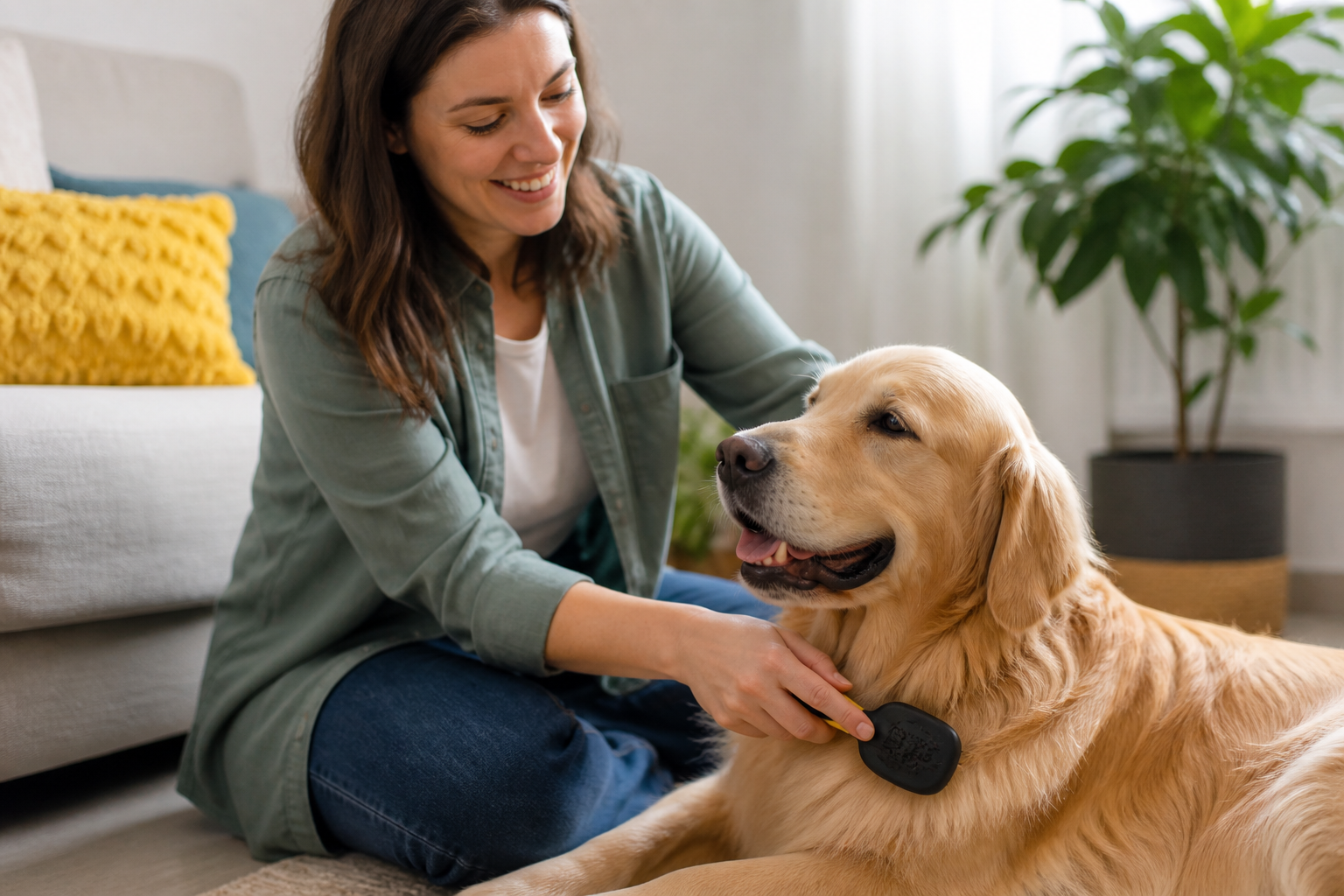
Brushing is about much more than just removing loose fur. It is a vital part of your dog's overall health and well-being. When you run a brush through your dog's coat, you are stimulating the skin and distributing natural oils. These oils act as a protective barrier and give the fur a healthy shine. Without regular brushing, these oils can build up or remain trapped near the skin, leading to a dull coat or even skin irritation.
Regular sessions also allow you to check for hidden issues. You might find a small tick, a new lump, or a patch of dry skin that needs attention. It is much easier to manage a small skin irritation before it becomes a major problem. For many pets, this time becomes a quiet bonding ritual. If you start slow and use positive reinforcement, your dog will likely come to enjoy the extra attention.
Brushing also helps regulate body temperature. A common myth suggests that brushing away a thick undercoat makes a dog colder in the winter. In reality, a coat filled with dead hair and debris cannot trap heat effectively. Keeping the coat clean and separated allows air to circulate. This keeps your dog warmer in the cold and cooler in the heat.
Frequency by Coat Type
The length and texture of your dog's hair are the biggest factors in your grooming schedule. A smooth-coated dog has very different needs than a dog with a thick, wooly undercoat.
Short and Smooth Coats
Dogs like Boxers, Labradors, and Beagles have short hair that lies close to the skin. You might think they do not need much brushing because they do not get tangles. However, these breeds can be heavy shedders. Brushing them once or twice a week is usually enough to keep shedding under control. Using a rubber curry brush or a soft bristle brush helps lift away dead hair and dander. It also massages the skin, which most short-haired dogs love.
Long and Silky Coats
Breeds such as Yorkies, Spaniels, and Setters have hair that grows continuously. This hair is prone to tangles and can easily pick up burrs or dirt from outside. You should aim to brush these dogs every day or at least every other day. If you skip too many days, small knots can quickly turn into tight mats. These mats pull on the skin and cause significant discomfort.
Curly and Wooly Coats
Poodles, Doodles, and Bichon Frise dogs have hair that traps shed fur within the curls. Because the hair does not fall out onto your floor, it stays in the coat and creates mats. These dogs require daily brushing with a slicker brush. You must reach all the way down to the skin to ensure no mats are forming at the base of the hair. Many owners of curly-coated dogs find that a "line brushing" technique is the most effective way to manage the coat.
Double Coats
Huskies, German Shepherds, and Border Collies have a harsh outer coat and a soft, dense undercoat. These dogs "blow" their coats twice a year, usually in the spring and fall. During these times, you should brush your dog every single day. During the rest of the year, two to three times a week is usually sufficient. An undercoat rake is the best tool for these breeds as it reaches through the top layer to pull out the loose fluff underneath.
Key Takeaway: Match your brushing frequency to the coat type. Short coats need weekly care, while long, curly, or double coats often require daily attention to prevent matting and skin issues.
Understanding Shedding Cycles
Shedding is a natural process influenced by light and temperature. Most dogs will shed more during the spring as they lose their heavy winter protection. They also shed in the fall to make room for a thicker coat. If you live in an area with dramatic seasonal shifts, you will need to increase your brushing frequency during these transitions.
Indoor dogs may shed more consistently throughout the year because of artificial lighting and climate control. Their bodies do not always receive the clear environmental signals that trigger a massive seasonal shed. For these pets, a steady routine of three sessions per week helps keep the hair off your furniture. For more guidance on seasonal shedding and undercoat care, read our guide to whether dogs shed seasonally.
If you notice sudden or excessive hair loss, it could be a sign of an underlying issue. Allergies, poor nutrition, or stress can all lead to increased shedding. Sometimes, a change in skin health requires a more specialized approach. Our pharmacy carries FDA-approved treatments and prescription diets through our partnership with Pet's Choice. These can help manage chronic skin conditions that contribute to hair loss or irritation.
Essential Tools for Your Grooming Kit
Using the wrong brush can make the process difficult for you and uncomfortable for your dog. Your kit should be tailored to the specific hair your dog grows. You can compare brushes, combs, and clippers in our dog brushes and combs collection.
- Slicker Brushes: These have fine wire bristles that are slightly angled. They are excellent for removing mats and tangles in long-haired or curly breeds.
- Bristle Brushes: These are best for short-haired dogs. They help distribute oils and remove surface dirt.
- Undercoat Rakes: These tools have long, blunt tines that reach deep into thick coats to remove dead undercoat hair without damaging the topcoat.
- Rubber Curry Brushes: These are perfect for short-haired dogs and for use during baths. They help loosen hair and stimulate the skin.
- Metal Combs: A sturdy metal comb is the best way to check your work. If the comb can slide through the coat from skin to tip, your dog is tangle-free.
When using a slicker brush, be careful around areas with thin skin. The belly, armpits, and ears are very sensitive. Pressure that feels fine on the back might be too much for these delicate spots. Always use a light touch and watch your dog's body language for signs of discomfort.
Vet Tip: If you notice your dog is itching excessively or has red, inflamed skin during brushing, consult your veterinarian. They can help diagnose whether the issue is related to environmental allergies, parasites, or diet.
How to Start a Brushing Routine
If your dog is not used to being brushed, you should start slowly. The goal is to make the experience pleasant so they do not try to hide when the brush comes out.
Step 1: Choose a quiet time. / Pick a moment when your dog is relaxed, such as after a long walk or a meal.
Step 2: Let them sniff the tools. / Place the brush on the floor and let your dog investigate it. Give them a treat for showing curiosity.
Step 3: Start with short sessions. / Brush a small, non-sensitive area like the shoulder for just one or two minutes. Use very light pressure.
Step 4: Offer constant rewards. / Give small, high-value treats while you brush. This creates a positive association with the tool.
Step 5: Gradually increase the duration. / As your dog becomes more comfortable, slowly move to other areas like the legs and belly.
Step 6: End on a high note. / Always stop before your dog gets restless. Finish with a favorite treat or a short play session.
Bottom line: A consistent, positive routine is more important than a long grooming session.
Managing Mats and Tangles
Mats are more than just an eyesore. They can trap moisture against the skin, which leads to bacterial or fungal infections. They can also become so tight that they restrict the dog's movement or pinch the skin every time they walk.
If you find a mat, do not reach for the scissors. It is very easy to accidentally cut a dog's thin skin, especially if the mat is tight. Instead, try to work the knot apart with your fingers or the end of a metal comb. Use a detangling spray to help the hair slide apart. If the mat is too close to the skin or too large to handle at home, it is best to visit a professional groomer.
Checklist for Tangle Prevention
- Check "high friction" areas daily: armpits, behind the ears, and under the collar.
- Always brush your dog thoroughly before a bath. Water can make existing mats much tighter.
- Use a leave-in conditioner or detangling spray for dogs with long or silky hair.
- Keep the hair around the paws and sanitary areas trimmed short.
- Check for burrs or sticky seeds immediately after walks in tall grass.
Brushing for Senior Dogs and Puppies
Life stage plays a role in how you approach grooming. Puppies need to learn that grooming is a normal part of life. Even if your puppy does not have much hair yet, go through the motions of brushing. This prepares them for the more intense grooming they will need as adults. New puppy owners can also explore our puppy supplies as they build a grooming routine.
Senior dogs may have different needs due to thinning skin or arthritis. They might find it difficult to stand for long periods. You may need to brush your senior dog while they are lying down on a soft orthopedic bed. Be extra gentle around joints that might be stiff or sore. Regular grooming is still important for seniors because they may stop grooming themselves as effectively as they once did.
Health Benefits Beyond the Coat
While we focus on the fur, brushing also involves the mouth and skin. Some owners find that a weekly grooming session is the perfect time to check their dog's teeth. Dental health is closely linked to overall health. Bacteria from the mouth can enter the bloodstream and affect the heart, liver, and kidneys.
Daily tooth brushing is the gold standard for pet health. If that is not possible, aim for at least three times a week. Use a toothpaste specifically formulated for dogs. Human toothpaste contains ingredients like xylitol that are toxic to pets. Our selection at BaxterBoo includes various brushes and flavored pastes to make this chore easier. For additional ideas, read these pet dental care tips.
Regularly handling your dog's paws, ears, and mouth during brushing makes veterinary visits much less stressful. Your dog will be used to being touched in these sensitive areas. This allows your vet to perform a more thorough exam without the dog becoming anxious or reactive.
Common Grooming Mistakes to Avoid
Many owners accidentally make grooming harder by falling into a few common traps. One major mistake is only brushing the top layer of a double coat. If you do not reach the undercoat, a thick layer of dead hair will eventually form a solid sheet of matting near the skin. This is often called "pelting."
Another mistake is brushing too hard. It is easy to cause "brush burn," which is a skin irritation caused by the metal bristles of a slicker brush scraping the skin. Always test the brush on the inside of your own forearm. If it feels scratchy or painful to you, it is likely too much for your dog.
Finally, do not forget the tail and the ears. These areas are often overlooked but are very prone to matting. Tail mats can be particularly painful because the tail is an extension of the spine and very sensitive to pulling.
When to See a Professional
While home brushing is essential, it does not replace the need for professional grooming for some breeds. A professional can handle deep deshedding, sanitary trims, and nail clipping that might be difficult to do at home. They also have high-powered dryers that can blow out loose undercoat hair more effectively than any brush. For everyday supplies, browse our dog grooming collection.
If your dog's coat has become severely pelted, a professional is the only safe option. They have the equipment to shave the mats away without hurting the dog. Once the coat is cleared, you can start fresh with a new daily brushing routine to prevent the mats from returning.
For dogs with recurring skin issues or those needing prescription shampoos, our pharmacy can help. We work with Pet's Choice to provide access to medicated grooming products that your vet may recommend. These are often necessary for managing conditions like seborrhea or yeast infections on the skin.
Summary of Brushing Best Practices
Maintaining a healthy coat is a lifelong commitment. By understanding your dog's specific coat type and using the right tools, you can keep them looking and feeling their best. Remember that consistency is better than intensity. A few minutes of brushing every day is much more effective than a two-hour marathon once a month.
- Brush most dogs 2 to 3 times per week.
- Increase frequency during seasonal shedding periods.
- Use an undercoat rake for double-coated breeds.
- Use a slicker brush for curly or long-haired breeds.
- Always check for mats before bathing your dog.
- Keep the experience positive with plenty of treats and praise.
Regular grooming is an investment in your dog's health. It reduces the amount of hair in your home and helps you catch medical issues early. Whether you are managing a heavy-shedding Husky or a curly-coated Doodle, the effort you put into brushing will pay off in a happier, healthier pet.
To keep your grooming kit stocked, consider setting up our Autoship programme for your favorite brushes and shampoos. This ensures you never run out of the supplies you need. Plus, our MVP Rewards program helps you earn points on every purchase, including grooming gear and pharmacy items.
FAQ
Can I brush my dog too much?
You generally cannot brush a dog too often as long as you are using the correct technique and tools. However, over-brushing with a harsh tool like a slicker brush can cause skin irritation or "brush burn." Always use a light touch and monitor the skin for any redness or signs of discomfort.
What should I do if my dog hates being brushed?
Start by using a very soft brush and keeping sessions extremely short, even just thirty seconds. Pair every session with high-value treats that your dog rarely gets otherwise. Gradually increase the time as they become more comfortable, and never force them to stay if they are showing signs of high stress or fear.
Does brushing my dog help with their allergies?
Yes, regular brushing can help by removing environmental allergens like pollen, dust, and grass from your dog's fur. This prevents these irritants from sitting against the skin or being licked off during self-grooming. If your dog has severe allergies, our pharmacy offers various medications and prescription diets through our partnership with Pet's Choice.
Why does my dog still shed so much even though I brush them?
Brushing removes loose hair, but it does not stop the natural growth and shed cycle. Some breeds simply produce more hair than others. If the shedding seems excessive or is accompanied by bald patches, consult your vet to rule out nutritional deficiencies or hormonal imbalances.






