
 Save 15% on your 1st Autoship learn more

 Email us
 Live Chat
 FAQs
FAQs





Introduction
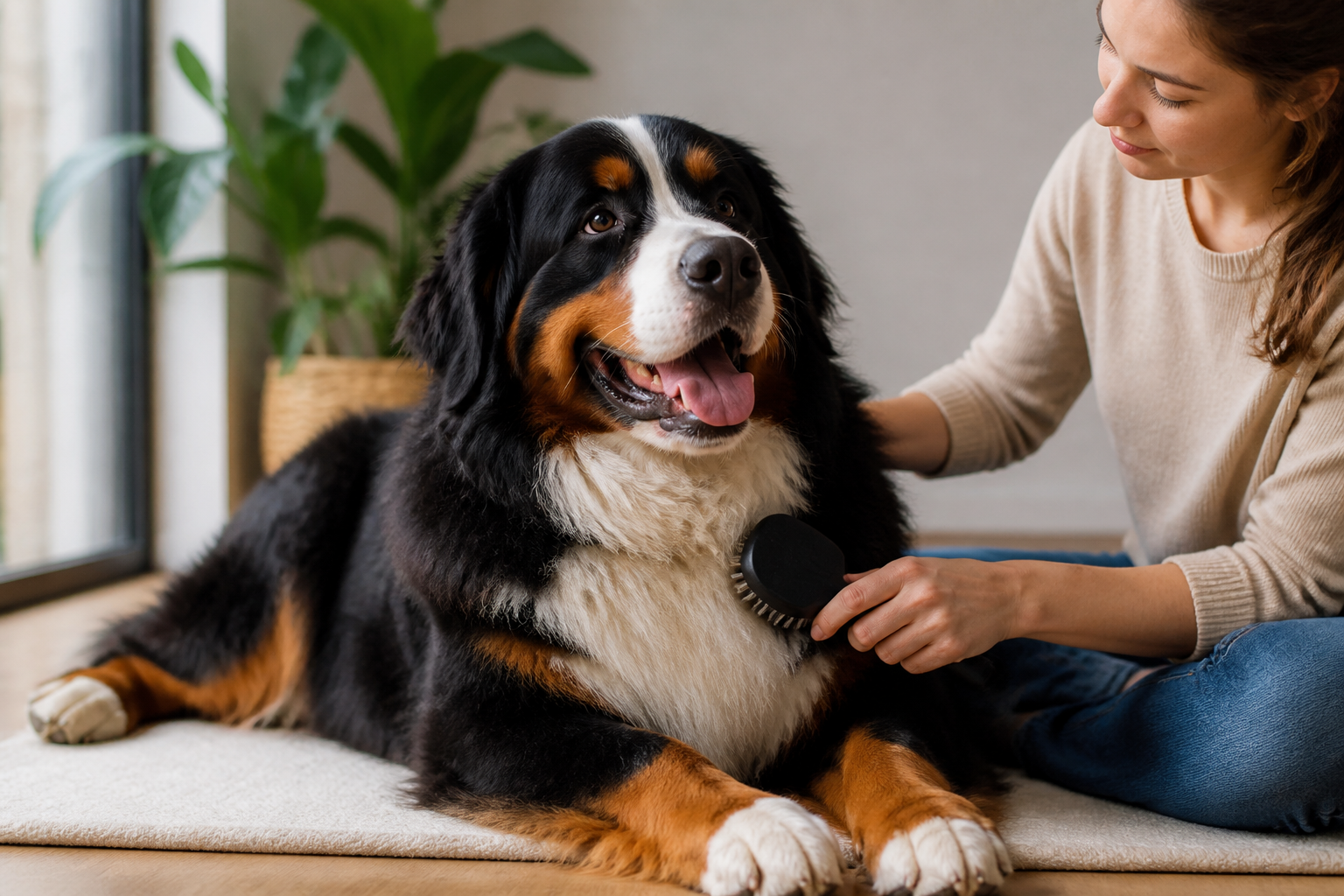
If you have ever seen a tumbleweed of black and tan fur rolling across your hardwood floor, you know the Berner struggle. Owners of this breed often find themselves wondering if they should just live with the fur or if there is a better way to manage it. At BaxterBoo, we know that the Bernese Mountain Dog coat is one of the most beautiful in the canine world. It is also one of the most demanding. This thick double coat was built for the Swiss Alps. It keeps them warm in the winter and protects them from the sun in the summer. However, without a strict routine, that coat can quickly become a tangled mess of mats and skin irritation. This guide covers the ideal brushing frequency for your Berner and the best tools for the job. We will also look at how to handle shedding season and keep their skin healthy.
Quick Answer: You should brush your Bernese Mountain Dog at least two to three times per week to prevent mats. During the heavy shedding seasons in spring and fall, you should brush them every single day to manage the loose undercoat.
The Unique Bernese Mountain Dog Coat
Before we talk about frequency, we need to understand what we are actually brushing. A Bernese Mountain Dog has a double coat. This means they have two distinct layers of fur that serve different purposes. The outer coat is long and slightly wavy. It is designed to repel dirt, water, and debris. This layer stays relatively consistent throughout the year.
The undercoat is a different story. This layer is thick, soft, and wooly. It acts as insulation for the dog. Because this fur is so dense, it does not always fall away from the body when it dies. Instead, it gets trapped by the long outer guard hairs. This is where the trouble begins. If that dead undercoat stays trapped, it begins to knot. These knots eventually turn into tight mats that pull on the dog's skin.
Key Takeaway: Brushing a Berner is not just about looks. It is about removing dead undercoat before it causes painful skin mats.
How Often to Brush During the Year
For most of the year, you can maintain a Berner's coat by brushing it three times a week. This schedule is usually enough to keep the tangles at bay. You should focus on high friction areas. These include the hair behind the ears and the "britches" on the back of the thighs. These areas mat much faster than the fur on the dog's back.
However, your schedule must change when the seasons turn. Bernese Mountain Dogs "blow" their coat twice a year. This usually happens in the spring and the fall. During these windows, the undercoat comes out in large clumps. If you skip a day of brushing during this time, you will find piles of fur all over your house. Daily brushing during these heavy shedding weeks is non negotiable for most owners.
- Standard Weeks: 2 to 3 times per week.
- Shedding Season: 7 times per week (Daily).
- Puppy Phase: 3 to 4 times per week to build the habit.
For additional grooming guidance, explore our dog grooming supplies.
Essential Tools for Your Berner
You cannot groom a Bernese Mountain Dog with a standard human brush. You need tools that can penetrate that thick undercoat. We carry several brands at BaxterBoo that are specifically designed for these heavy coats. Using the wrong tool will only skim the surface. This leaves the mats to grow underneath.
The Slicker Brush
A slicker brush has fine wire pins. These pins are slightly bent. This tool is excellent for the first pass of grooming. It grabs loose hair from the outer coat. It also helps to smooth out small tangles before they get worse. We often recommend brands like Kong or Artero for their durability.
The Undercoat Rake
This is the most important tool in your kit. An undercoat rake has long, metal tines. These tines reach through the top layer of fur to the wooly layer beneath. As you pull the rake through the coat, it catches the dead hair that is ready to fall out. You will be amazed at how much fur comes out with just a few passes.
The Stainless Steel Comb
A wide tooth metal comb is your final check. Once you think you are finished brushing, run the comb through the long "feathers" on the legs and tail. If the comb catches, you still have a tangle to work out. Metal combs are also great for the delicate hair behind the ears.
Key Takeaway: A slicker brush clears the surface, but an undercoat rake prevents the mats. You need both to do the job right.
Step By Step Brushing Technique
Simply dragging a brush over your dog's back is not enough. You need to reach the skin to ensure the undercoat is clear. This process is often called "line brushing." It ensures that every inch of the dog gets attention. For more coat-care ideas, see this guide to grooming dogs with thick, tangle-prone coats.
Step 1: Partition the coat. / Use one hand to pull a section of fur upward. This should expose the skin and the base of the hair.
Step 2: Brush the base. / Use your slicker brush to brush the hair downward from the skin. Work in small sections starting at the bottom of the leg or tail.
Step 3: Move upward. / Once one section is clear, drop a small amount of the hair you are holding. Brush that new section. Continue this until you have reached the top of the dog's back.
Step 4: Check with the comb. / Run your metal comb through the entire area you just brushed. If it glides through, you are done with that section.
Vet Tip: Check for "hot spots" or red areas while you brush. These are common in double coated breeds. If you see a raw or oozing patch of skin, contact your veterinarian immediately for a diagnosis.
Managing the Bathing Schedule
Bathing is a part of grooming, but it should happen less often than brushing. You should bathe your Bernese Mountain Dog every 6 to 8 weeks. If you bathe them too often, you can strip the natural oils from their skin. This leads to dry, itchy skin and a dull coat.
Always brush your dog thoroughly before the bath. Water acts like glue for mats. If you get a mat wet, it will tighten and become almost impossible to remove without scissors. Once the dog is clean, you must dry them completely. A damp undercoat is the perfect breeding ground for bacteria and yeast. This can lead to painful skin infections. For more bath-time guidance, read these dog bathing dos and don'ts.
- Frequency: Every 6 to 8 weeks.
- The Rule: Brush before the bath, never after.
- The Dry: Use a high velocity dryer or a regular dryer on a cool setting until the skin is dry to the touch.
Nutrition and Coat Health
What you put into your dog's body shows up on their coat. A dog with a poor diet will often have a brittle coat that tangles more easily. High quality fats are essential for skin health. Look for foods that are rich in Omega-3 fatty acids. Brands like Farmina and The Honest Kitchen often include these healthy fats. You can browse our selection of Farmina and The Honest Kitchen products.
If your Berner has chronic skin issues or allergies, a prescription diet may be necessary. Through our partnership with Pet's Choice, the BaxterBoo pharmacy carries a range of prescription pet foods. These diets are formulated to support the skin barrier. If your vet suggests a specific diet like Farmina Vet Life, you can find it through our pet pharmacy.
Bottom line: A healthy coat starts with high quality nutrition and plenty of hydration.
Dealing with Stubborn Mats
Even with regular brushing, mats can happen. They often appear overnight in high friction spots like the armpits or where the collar sits. Do not try to pull a mat out with a standard brush. This is painful for the dog and will make them hate grooming sessions.
If you find a mat, try to pick it apart with your fingers first. You can also use a small amount of dog safe detangling spray. If the mat is too tight, you may need to use a de-matting tool. These tools have small blades that safely cut through the knot without harming the dog. If a mat is very close to the skin, it is safest to have a professional groomer or your vet remove it.
Puppy Grooming Habits
It is vital to start grooming your Bernese Mountain Dog when they are still a puppy. A full grown Berner can weigh over 100 pounds. You do not want to be fighting a dog of that size every time you pick up a brush. Start with very short sessions. Even if they do not have their adult coat yet, go through the motions.
Give your puppy plenty of treats during the process. We suggest using small, high value treats to keep them focused. Touch their paws, their ears, and their tail often. This desensitizes them to the feeling of being handled. By the time they have their thick adult coat, brushing will just be a relaxing part of their day.
Seasonal Gear and Protection
Because Berners have so much fur, they are prone to overheating. In the summer, you might be tempted to shave them. You should never shave a double coated dog. Shaving removes their natural insulation against the heat. It also exposes their skin to sun damage. The coat actually helps them stay cool by trapping a layer of air.
Instead of shaving, focus on keeping them cool with gear. Cooling vests or mats can help them manage the temperature. During the winter, their coat is their best friend. However, salt and ice can get trapped in the fur between their toes. You should trim the hair on the bottom of their paws so it is flush with their pads. This prevents ice balls from forming and causing pain.
Common Skin Concerns in Berners
The thick fur of a Bernese Mountain Dog can hide a variety of skin issues. You should be on the lookout for flakes, redness, or a strange smell. A "yeasty" smell often indicates a fungal issue on the skin or in the ears. Because their ears are floppy, they do not get much airflow. This makes them a prime spot for infections.
If your dog is constantly scratching or licking a specific spot, they may have an allergy. This could be a food allergy or an environmental one. Our dog healthcare collection includes products for common care needs, while prescription options are available through our dog pharmacy. Always consult your vet if you notice persistent itching or hair loss.
Vet Tip: Clean your Berner's ears once a week with a vet-approved cleaner. This is especially important if they enjoy swimming or living in humid climates.
Grooming as a Bonding Experience
While it may feel like a chore, grooming is a wonderful way to bond with your dog. Most Bernese Mountain Dogs love the attention. It is a time for you to slow down and focus on your pet. Regular sessions also mean you will notice new lumps or bumps early. In a breed prone to certain health issues, early detection is very important.
Make your grooming station comfortable. Use a non-slip mat so your dog feels secure. If you are grooming a senior dog, be mindful of their joints. They may need more breaks or a different position to stay comfortable. We find that a consistent routine makes the dog feel safe and cared for.
Key Takeaway: Brushing is the best way to keep your home clean and your dog healthy. Consistency is more important than the length of the session.
Summary of the Brushing Routine
To keep your Bernese Mountain Dog looking their best, follow this simple framework. It will save you hours of work in the long run. It will also keep your dog much more comfortable throughout the changing seasons.
- Weekly: 2-3 sessions of 15 minutes each.
- Tools: Slicker brush, undercoat rake, metal comb.
- Technique: Line brushing from the bottom up.
- Health Check: Look for mats, hot spots, and ear wax.
- Maintenance: Bathe every 2 months and dry fully.
Conclusion
Caring for a Bernese Mountain Dog is a big commitment, and their coat is a major part of that. By brushing your Berner two to three times a week, you prevent painful mats and keep shedding under control. Remember that shedding season requires a daily effort, but the right tools from our selection at BaxterBoo make the job much easier. Keeping your dog's skin healthy and their coat shiny is a team effort between you, your vet, and the right supplies.
Bottom line: Regular brushing is the only way to manage a Berner's double coat and keep their skin healthy.
If you are ready to build your grooming kit, browse our full collection of brushes and grooming supplies. You can also sign up for our MVP Rewards program to earn points on every grooming purchase.
FAQ
How do I stop my Bernese Mountain Dog from shedding so much?
You cannot stop a Berner from shedding, as it is a natural part of their biology. However, you can manage it by brushing them daily with an undercoat rake to catch loose fur before it ends up on your furniture. High quality nutrition with Omega fatty acids also helps keep the hair strong and reduces excessive breakage.
Is it okay to shave my Bernese Mountain Dog in the summer?
No, you should never shave a Bernese Mountain Dog. Their double coat acts as insulation that protects them from both heat and cold. Shaving them can cause their fur to grow back incorrectly and increases the risk of heatstroke and sunburn.
Why does my Bernese Mountain Dog get mats behind the ears?
The fur behind a Berner's ears is very fine and silky, which makes it more prone to tangling. Friction from the dog scratching or even from their collar can cause these fine hairs to knot quickly. Checking this area with a metal comb every few days is the best way to prevent these mats.
What should I do if I find a hot spot on my dog?
A hot spot is a red, moist, and inflamed patch of skin that can spread quickly. You should prevent your dog from licking the area and consult your veterinarian immediately for treatment. Our pharmacy carries various medications that can help treat the underlying cause of hot spots once your vet provides a prescription.






