
 Save 15% on your 1st Autoship learn more

 Email us
 Live Chat
 FAQs
FAQs





Introduction
Finding tumbleweeds of fur drifting across your hardwood floors is a familiar sight for many dog owners. You might find yourself lint-rolling your favorite black sweater for the third time today or vacuuming the rug only to see it covered in hair an hour later. Shedding is a natural part of life with dogs, but it often feels like an uphill battle. At BaxterBoo, we know that managing a shedding coat is about more than just keeping your house clean. It is about maintaining your dog's skin health and overall comfort. This guide explores the ideal brushing schedule based on coat type, the best tools for the job, and how nutrition impacts hair loss. Understanding the right frequency for your specific dog will help you reclaim your furniture and keep their coat in top condition.
Quick Answer: Most dogs benefit from brushing two to three times a week to significantly reduce shedding. However, double-coated breeds and heavy shedders may require daily brushing during peak seasonal changes in the spring and fall.
Understanding the Shedding Process
Shedding is the natural way a dog’s body gets rid of old, broken, or unneeded hair. Every hair on your dog’s body follows a specific life cycle. It starts with the anagen phase, which is the period of active growth. Next is the catagen phase, where the hair stops growing and the follicle shrinks. Finally, the hair enters the telogen phase, a resting period before it eventually falls out to make room for new growth.
Different breeds have different cycle lengths. For example, breeds with hair that grows continuously, like Poodles, have a very long anagen phase. This means they shed very little because the hair stays attached for a long time. Conversely, breeds like Labradors or Huskies have shorter growth cycles. This results in more frequent hair turnover and, consequently, more fur on your floor.
Seasonal changes also play a massive role. Many dogs "blow their coat" twice a year. This usually happens in the spring as they lose their heavy winter undercoat and again in the fall as they prepare for colder weather. During these transitions, the amount of loose fur can double or triple. Brushing is the most effective way to intercept this hair before it leaves the dog’s body.
Key Takeaway: Shedding is a biological necessity for most dogs to regulate temperature and maintain skin health. Brushing helps move this process along more cleanly.
Brushing Frequency by Coat Type
The answer to how often you should brush your dog depends mostly on their coat type. A one-size-fits-all approach does not work because a short-haired Beagle has very different needs than a thick-coated Samoyed.
Short and Smooth Coats
Dogs with short, sleek fur like Boxers, Pugs, and Great Danes are often mistaken for low-maintenance shedders. While their hair is short, they often shed year-round. For these dogs, brushing once or twice a week is usually sufficient. Using a rubber curry brush or a soft bristle brush helps pull away loose hairs and distributes natural skin oils. This keeps the coat shiny and reduces the "prickly" hairs that get stuck in fabric.
Double Coats
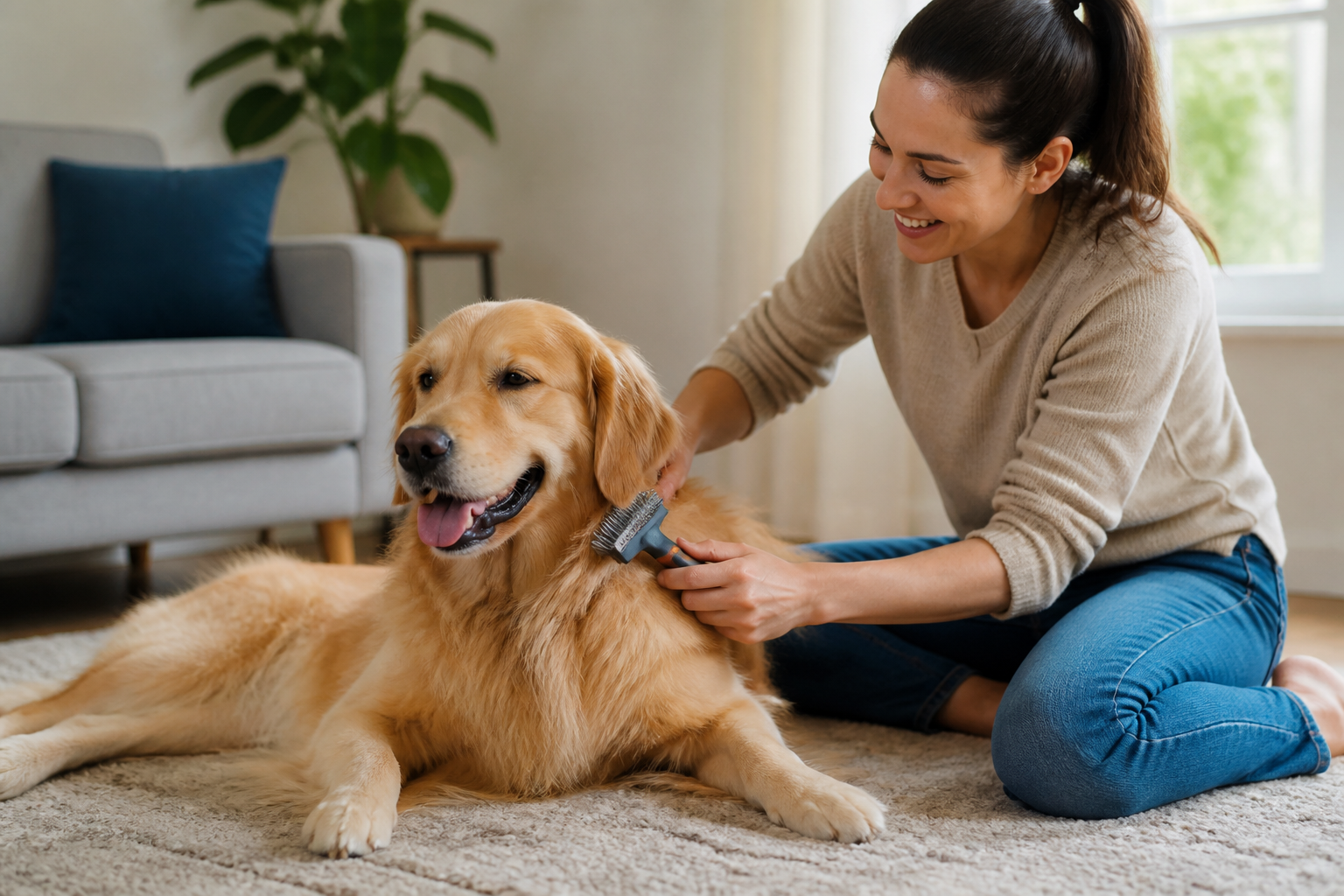
Breeds like German Shepherds, Golden Retrievers, and Border Collies have a dense undercoat protected by a coarser topcoat. These dogs are heavy shedders. To keep the fur under control, you should brush them at least three times a week. During the heavy shedding seasons of spring and fall, daily brushing is often necessary. If the undercoat is not removed, it can become trapped against the skin, leading to mats and hot spots.
Long or Silky Coats
Dogs with long hair, such as Shih Tzus or Yorkshire Terriers, may not shed as much in terms of volume, but their hair is prone to tangling. You should brush these dogs daily. Even if they are not leaving much fur on the furniture, daily maintenance prevents painful mats from forming. When hair mats, it traps moisture and bacteria against the skin, which can cause infections.
Wire Coats
Terriers with wire coats, like Airedales or Schnauzers, have a unique texture. Their hair does not fall out as easily as other breeds. They require brushing two to three times a week with a slicker brush. Many wire-haired dogs also need "stripping," which is the process of pulling out dead hair by the root. This is often done by a professional, but regular brushing at home keeps the coat manageable between appointments.
Choosing the Right Brushing Tools
Using the wrong brush can be ineffective or even uncomfortable for your dog. Our warehouse at BaxterBoo stocks a variety of specialized tools because we know that the right equipment makes the job faster and more effective. Explore our dog brushes and combs to find tools for different coat types.
- Slicker Brushes: These have fine wire bristles on a flat or curved head. They are excellent for removing mats and loose hair from medium to long-haired dogs. They are the workhorse for breeds like Golden Retrievers.
- Bristle Brushes: Best for short-haired or smooth-coated dogs. The tightly packed natural or synthetic bristles remove surface debris and add a healthy shine.
- Deshedding Rakes: These tools feature long, sturdy pins designed to reach through the topcoat and pull out the loose undercoat. They are essential for double-coated breeds.
- Rubber Curry Brushes: These are perfect for short-haired dogs or for use during bath time. The rubber nubs massage the skin and pull away loose fur without any risk of scratching the skin.
- Finishing Combs: A simple metal comb is the best way to check your work. If the comb can slide through the coat without catching, you have successfully removed the loose hair and tangles.
Vet Tip: Always be gentle when using tools with metal pins or blades, such as deshedding rakes or slicker brushes. If you press too hard, you can cause "brush burn," which is a painful skin irritation. Always check the skin for redness during your grooming session.
The Role of Bathing in Shedding Control
Bathing is a powerful supplement to brushing. While you should not bathe most dogs too frequently, a regular bath every four to six weeks can help loosen the dead undercoat. This makes your brushing sessions much more productive.
When you bathe a dog to reduce shedding, the choice of shampoo matters. Look for formulas specifically labeled for shed control. These often contain ingredients like oatmeal, aloe vera, and omega fatty acids. These ingredients help strengthen the hair shaft and moisturize the skin. Healthy skin holds onto hair better, which can reduce excessive "drop" between grooming sessions. For additional bathing guidance, read our tips on how to bathe your dog.
The drying process is just as important as the wash. After the bath, towel dry your dog thoroughly. If your dog is comfortable with it, use a blow dryer on a cool or warm setting. The airflow helps push out the loose hairs that were loosened by the warm water. Following a bath and blowout with a thorough brushing session will often remove more hair than three regular dry-brushing sessions combined.
Nutrition and its Impact on Hair Loss
A dog's coat is often a direct reflection of their internal health. If your dog is shedding excessively outside of the normal seasonal changes, the culprit might be their diet. Hair is made mostly of protein. If a dog is not getting high-quality protein in their food, their body will prioritize internal organs over hair strength. This leads to brittle fur that falls out easily.
Omega-3 and Omega-6 fatty acids are crucial for skin and coat health. Many premium brands, such as Farmina or Royal Canin, formulate their recipes with these oils to support the skin barrier. You can also add supplements like fish oil or flaxseed oil to their meals. These fats help "anchor" the hair in the follicle and reduce inflammatory skin conditions that cause scratching and hair loss.
In some cases, excessive shedding is caused by food sensitivities or allergies. If your dog is constantly licking their paws or has red, itchy skin along with hair loss, a change in diet may be necessary. We carry many limited-ingredient and prescription diets through our pharmacy partnership with Pet's Choice. These specialized foods are designed for dogs with chronic skin issues.
Key Takeaway: Proper nutrition is the foundation of a healthy coat. If brushing alone is not working, evaluate the quality of your dog's protein and fat intake.
When Shedding Becomes a Medical Concern
While shedding is normal, there are times when it signals an underlying health problem. It is important to know the difference between a heavy seasonal shed and a medical issue. Normal shedding is usually symmetrical across the body and does not leave the skin looking bare or irritated.
Signs that you should consult a veterinarian include:
- Bald spots or patches of very thin hair.
- Sores, scabs, or red bumps on the skin.
- A dry, brittle coat that lacks shine despite grooming.
- Excessive scratching, biting, or licking of the skin.
- A foul odor coming from the skin or ears.
Several medical conditions can cause hair loss. These include hormonal imbalances like hypothyroidism or Cushing’s disease. Parasites like fleas, ticks, and mites are also common culprits. Even if you do not see fleas, some dogs are hypersensitive to flea saliva. A single bite can cause a massive inflammatory reaction and hair loss.
Vet Tip: If your dog is losing hair in patches or seems itchy, do not try to fix it with grooming alone. Schedule a visit with your vet to rule out infections, parasites, or hormonal issues. Our pharmacy offers FDA-approved flea and tick preventives and allergy medications that can help resolve these issues once diagnosed.
How to Establish a Brushing Routine
The best way to reduce shedding is consistency. Brushing once a month will not make a visible difference in the amount of fur in your home. You need a routine that your dog looks forward to. For additional coat-care ideas, explore our dog grooming supplies.
Step 1: Start young.
If you have a puppy, start brushing them immediately. Even if they don't have much to shed yet, it gets them used to the feeling of the tools.
Step 2: Use positive reinforcement.
Keep a bag of small, high-value treats nearby. Give your dog a treat after every few minutes of calm brushing. This builds a positive association with the activity.
Step 3: Work in sections.
Do not try to brush the whole dog at once if they are restless. Start with the shoulders, move to the back, and then the sides. Save sensitive areas like the belly and tail for last.
Step 4: Follow the grain.
Always brush in the direction the hair grows. Brushing against the grain can be uncomfortable and may cause the hair to break rather than pull free from the follicle.
Step 5: Inspect as you go.
Use the brushing time to check for lumps, bumps, or ticks. It is a great way to monitor your dog's physical health.
Bottom line: A consistent routine of 10 minutes of brushing three times a week is more effective than one long hour-long session once a month.
Managing the Environment
No matter how often you brush, some hair will still end up in your home. You can manage this by choosing the right fabrics for your furniture and bedding. Microfiber and leather are generally easier to clean than woven fabrics like tweed or linen, which trap hair in the fibers.
Using washable furniture covers can also save you a lot of time. Instead of vacuuming the sofa, you can simply toss the cover in the washing machine once a week. High-quality air purifiers with HEPA filters are also beneficial. They capture airborne dander and fine hair, which can be a huge relief for people in the house with mild pet allergies.
Regularly cleaning your grooming tools is also essential. Hair, skin oils, and dander build up on brushes over time. Wash your brushes with warm, soapy water every few weeks to ensure they remain effective and hygienic.
Why You Should Never Shave a Double Coat
When the shedding gets intense, it is tempting to think that shaving the dog's fur off will solve the problem. However, for double-coated dogs like Shepherds or Huskies, this can be very damaging. The double coat acts as insulation. It keeps them warm in the winter and cool in the summer by trapping a layer of air against the skin.
When you shave a double coat, you remove that insulation. This makes the dog more prone to heatstroke and sunburn. Furthermore, the hair may not grow back correctly. The soft undercoat often grows back faster than the guard hairs, leading to a patchy, fuzzy texture that is even more prone to matting and trapping heat.
Instead of shaving, stick to the "bath and blowout" method. Using a high-velocity dryer to blow out the dead undercoat is much safer and more effective at reducing shedding than a pair of clippers.
Conclusion
Managing shedding is a commitment, but the rewards are a cleaner home and a healthier, more comfortable dog. By brushing your dog two to three times a week with the correct tools, you can intercept loose fur before it reaches your furniture. Remember that shedding is also influenced by what goes into your dog's body. High-quality food and fatty acid supplements provide the building blocks for a strong, shiny coat.
If you notice your dog is shedding excessively or has irritated skin, please consult your veterinarian. Our BaxterBoo pharmacy carries a wide range of prescription diets and medications to help manage underlying health issues. To make your grooming routine even easier, consider signing up for our Autoship program. You can have your favorite shed-control shampoos and supplements delivered right to your door, ensuring you never run out when shedding season hits.
FAQ
Can I brush my dog too much?
While it is hard to brush too often, you can brush too hard. Over-brushing the same spot with a firm slicker brush or deshedding tool can cause skin irritation or "brush burn." Always use a light touch and stop if you see the skin turning pink or red.
Does a deshedding tool actually stop shedding?
No tool can completely stop a dog from shedding because it is a natural biological process. However, a deshedding rake or tool can reduce the amount of hair that falls out around your house by up to 90 percent. It does this by removing the loose undercoat before it has a chance to drop naturally.
Why does my dog shed more in the spring?
Most dogs shed more in the spring because they are losing their thick winter undercoat. As the days get longer and the temperature rises, their body triggers the release of the heavy fur that was needed for warmth. This is often referred to as "blowing the coat" and usually lasts for two to four weeks.
Will a better diet really help with shedding?
Yes, nutrition plays a massive role in coat health. A diet lacking in essential fatty acids or high-quality protein can lead to a weak hair follicle and increased hair fall. Adding an Omega-3 supplement or switching to a premium food can often result in a noticeably thicker, shinier coat and less shedding over time.






