
 Save 15% on your 1st Autoship learn more

 Email us
 Live Chat
 FAQs
FAQs





Introduction
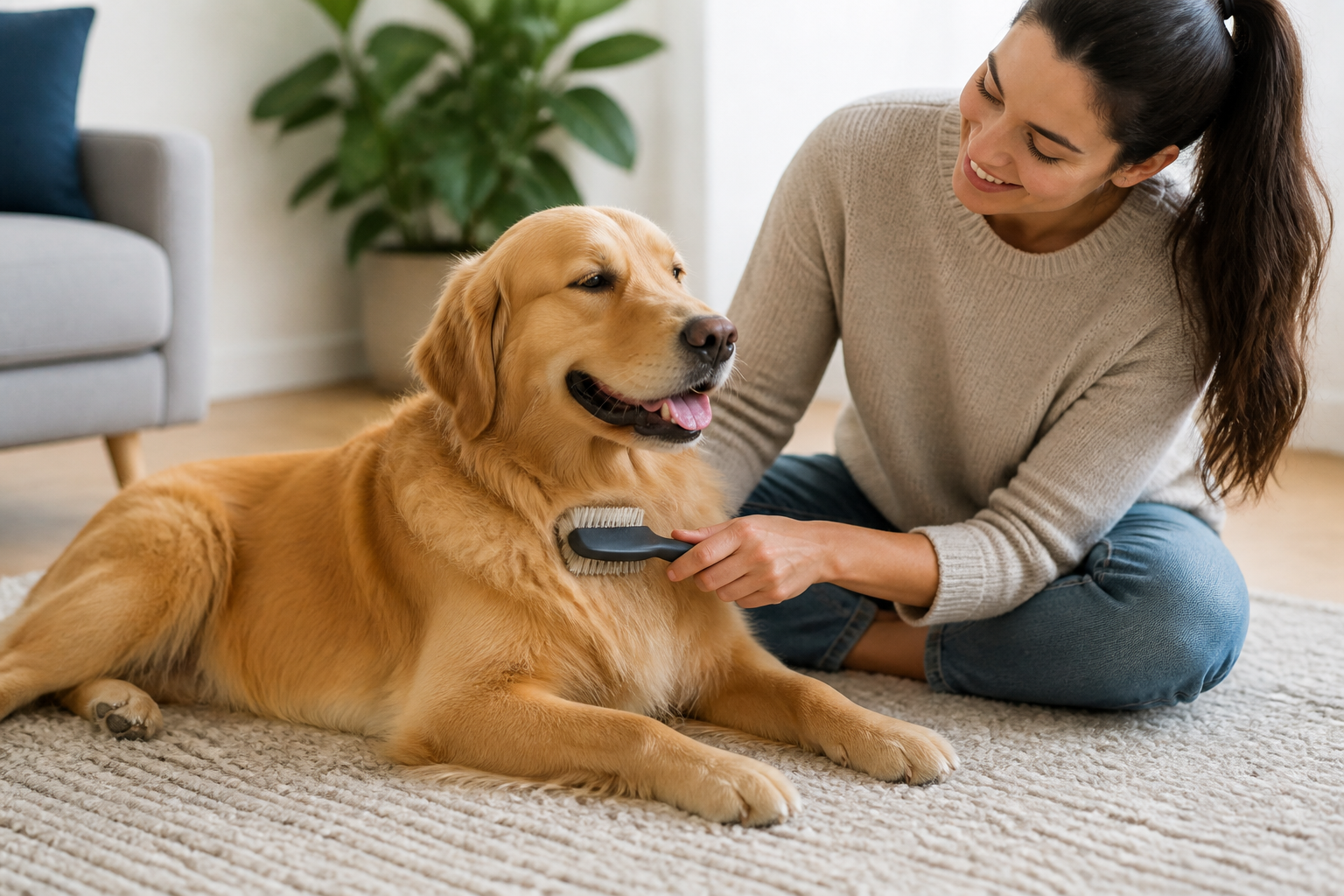
You are sitting on the living room rug when you notice a thick layer of fluff on your favorite sweater after a quick play session. Or maybe you reach down to scratch behind your dog's ears and feel a hard, tangled knot that was not there yesterday. These moments are when most owners realize their grooming routine might need an update. At BaxterBoo, we know that keeping up with a coat can feel like a full-time job. Brushing is about much more than just keeping your house clean. It is a vital part of your dog's physical health and a great way to check for skin issues. This guide covers how coat type determines your schedule, the best tools to use, and how to make the process easier for your pet. Consistent brushing prevents painful mats and keeps the skin healthy.
Quick Answer: Most dogs need brushing at least once a week to remove dirt and loose hair. However, dogs with long, silky, or curly coats usually require daily attention to prevent mats, while short-haired breeds may only need a session every two weeks.
Why Coat Type Dictates Your Schedule
Every dog has a unique coat that serves as a protective barrier. The texture and length of that hair determine how often you need to reach for a brush. If you have a smooth-coated breed, the hair stays close to the body and rarely tangles. These dogs usually only need a quick session once a week or even every other week. The goal here is mainly to remove dust and spread natural oils.
Dogs with double coats have a soft undercoat and a tougher outer layer. These breeds include many working and herding dogs. They require more frequent work because that undercoat constantly sheds. You should aim for two to three times a week for these pets. If they are currently in a heavy shedding season, daily brushing is necessary to keep the hair from taking over your home. For additional shedding guidance, read about how Australian Shepherds shed.
Long-haired and curly-coated dogs are the most high-maintenance. Breeds like Poodles, Doodles, and Malteses have hair that traps loose strands instead of letting them fall to the ground. This leads to instant matting. For these dogs, daily brushing is the gold standard. Missing even two days can result in knots that are difficult to remove without professional help.
Key Takeaway: Frequency is not one-size-fits-all. Match your brushing schedule to the length and texture of your dog's specific coat type to prevent skin irritation.
Brushing Requirements for Different Coats
To keep your dog comfortable, you must understand what their specific hair type needs. We see many owners struggle because they use the same brush for a Boxer as they do for a Golden Retriever. You can find tools for different coat types in our dog brushes, combs, and clippers category.
Short and Smooth Coats
These dogs are the easiest to manage. Think of Boxers, Pugs, or Great Danes. Their hair is short and lies flat. Brushing once a week is usually enough to keep them looking great.
- Focus on removing dead skin cells and loose topcoats.
- Use a soft bristle brush or a rubber grooming mitt.
- This process helps stimulate the skin and improve circulation.
Double-Coated Breeds
Huskies, Labradors, and German Shepherds fall into this category. They have a thick underlayer that regulates their temperature.
- Brush these dogs two or three times a week.
- During spring and fall, they blow their coats. This is a period of intense shedding where you should brush them every day.
- Use an undercoat rake to reach the loose fluff buried beneath the top layer of hair.
Long and Silky Coats
Yorkies and Afghan Hounds have hair that is very similar to human hair. It is fine and easily tangled by friction from collars or harnesses.
- Daily brushing is highly recommended.
- Pay close attention to high-friction areas like the armpits and behind the ears.
- A pin brush and a metal comb are essential for these breeds.
Curly and Corded Coats
Poodles and Bichons have hair that continues to grow rather than shedding out. This hair catches any loose strands, creating a dense web.
- Brush daily to keep the curls from turning into solid mats.
- Always use a slicker brush to get through the density of the curls.
- Never skip a day if the dog has been wearing a sweater or raincoat.
For more guidance on curly coats, see how to groom a dog with curly hair.
The Health Benefits of Regular Brushing
Brushing is a form of preventative medicine. When you run your hands and a brush over your dog's body, you become familiar with their normal anatomy. This makes it much easier to spot something that does not belong.
Regular sessions help distribute sebum. This is the natural oil produced by the skin. When these oils stay at the base of the hair, the skin can become greasy or irritated. Brushing pulls those oils down the hair shaft. This provides a natural shine and creates a waterproof barrier for the coat. Our dog grooming supplies include tools and products for maintaining your dog's coat.
You can also catch parasites early. Fleas and ticks love to hide in thick fur. By brushing frequently, you can spot these pests before an infestation takes hold. If you notice your dog has persistent itchy skin or red patches while you are brushing, it might be time for a vet visit. Our pet pharmacy for dogs provides prescription medications for veterinary care.
Vet Tip: Use grooming time to check for new lumps, bumps, or tender spots. If your dog flinches when you brush a specific area, or if you find a growth that looks irregular, schedule a veterinary exam to rule out underlying health issues.
Understanding the Danger of Mats
Matting is not just an aesthetic issue. It is a serious health concern. When loose hair gets tangled with live hair, it forms a knot. Over time, that knot pulls tighter against the skin. This can cut off blood flow to the area and cause extreme pain for the dog.
Mats also trap moisture against the skin. This creates a warm, damp environment where bacteria and fungi thrive. If a dog stays matted for too long, they can develop hot spots or severe skin infections. In extreme cases, the matting can become so tight that it restricts the dog's movement or hides deep wounds.
Bottom line: Brushing is the only way to prevent painful matting that can lead to skin infections and costly veterinary bills.
Essential Tools for Every Owner
Using the wrong tool can make brushing painful for your dog. It can also be ineffective for you. Having the right kit makes the job go faster.
| Tool Type | Best For | Purpose |
|---|---|---|
| Bristle Brush | Short/Smooth Coats | Removes surface dirt and spreads oils. |
| Slicker Brush | Curly/Double Coats | Untangles mats and removes loose undercoat. |
| Pin Brush | Long/Silky Coats | Gentle detangling for fine, long hair. |
| Undercoat Rake | Thick Double Coats | Pulls out dead undercoat during shedding season. |
| Metal Comb | All long-haired breeds | Checks for hidden knots and finishes the coat. |
How to Use a Metal Comb
The metal comb is your best friend for long-haired dogs. After you finish with a slicker or pin brush, run the comb through the hair. If the comb catches, you have found a hidden knot. This is the only way to be 100 percent sure that you have brushed all the way down to the skin.
Training Your Dog to Enjoy Brushing
Many dogs run away when they see the brush. This usually happens because they have had a painful experience with a knot in the past. You can change this behavior with a slow, positive approach.
Step 1: Introduce the brush / Let your dog sniff the tool while it is on the floor. Give them a high-value treat just for being near it.
Step 2: Mimic the motion / Use the back of the brush to stroke your dog's side. This gets them used to the feeling of the tool without any pulling.
Step 3: One gentle stroke / Perform one real brush stroke on a non-sensitive area like the shoulder. Follow it immediately with a treat.
Step 4: Gradually increase time / Slowly add more strokes each day. Keep sessions short, around two to three minutes, until your dog is fully relaxed.
Seasonal Changes in Grooming
Your dog’s coat changes with the environment. Most dogs grow a thicker coat in the winter and shed it in the spring. This is often called blowing the coat. During this time, you might find clumps of hair all over your house.
You must increase your brushing frequency during these seasonal shifts. If you usually brush twice a week, move to a daily schedule for a few weeks. This helps the new coat grow in properly and prevents the old hair from matting. Using a de-shedding tool during these times is very effective. We offer various de-shedding options and supplements that support healthy skin and coat growth through our dog skin and coat care selection.
Managing Shedding Through Nutrition
While brushing is the primary way to manage hair, what your dog eats matters too. A coat that is dry and brittle will break and tangle more easily. High-quality fats are essential for a healthy coat.
Look for foods or supplements that contain Omega-3 and Omega-6 fatty acids. These nutrients strengthen the hair shaft and moisturize the skin from the inside out. When the hair is strong and hydrated, it is much easier to brush through. Many of our customers use our Autoship program to stay stocked up on these essential skin and coat supplements.
Key Takeaway: A healthy coat starts with good nutrition. Strong, hydrated hair is less likely to break or form stubborn mats.
When to Seek Professional Help
There are times when a home brushing session is not enough. If your dog is severely matted, do not try to cut the mats out with scissors. A dog's skin is very thin and moves easily. It is incredibly common for owners to accidentally cut their dog while trying to remove a knot.
A professional groomer has specialized tools and experience to safely shave under a mat. If the matting is close to the skin, it is better to start fresh with a shorter haircut than to pull on the dog's sensitive skin for hours.
You should also see a professional if your dog shows signs of aggression during grooming. If your pet growls or snaps when you reach for a specific area, they may be in pain. A vet should check the area for underlying issues like arthritis or skin infections.
Grooming for Different Life Stages
Puppies need to learn that brushing is a normal part of life. Even if your puppy has very little hair, you should go through the motions daily. This builds trust and makes future sessions much easier. Use a soft brush and keep the mood light and fun.
Senior dogs require a gentler touch. As dogs age, their skin becomes thinner and less elastic. They may also develop bumps or skin tags that you need to be careful around. Older dogs often have joint pain, so be mindful of how you move their legs during a grooming session. Using a soft-bristled brush can provide a soothing massage for an aging pet.
Common Brushing Mistakes to Avoid
One of the biggest mistakes is only brushing the top layer of hair. This is very common with double-coated or curly-coated dogs. The dog looks fluffy and brushed, but beneath the surface, a solid sheet of matting is forming against the skin. Always ensure your brush or comb is reaching all the way through the hair.
Another mistake is brushing a dirty or wet coat. If your dog has mats, water will act like a glue and shrink the knots even tighter. Always brush your dog thoroughly before giving them a bath. If they have a muddy coat, let the mud dry and brush it out before using water. For additional bathing guidance, review these dos and don'ts for bathing your dog.
- Never use human hair products on dogs unless directed by a vet.
- Avoid pulling hard on a knot; hold the base of the hair to prevent pulling the skin.
- Don't forget the tail and the "trousers" on the back legs.
- Avoid using sharp scissors for DIY mat removal.
Summary of Brushing Frequency
To keep things simple, follow these general guidelines based on coat type. Remember that individual dogs may vary based on their activity level and environment.
- Smooth/Short: Once a week.
- Double-Coated: 2–3 times a week (Daily during shedding).
- Wire-Haired: 2–3 times a week.
- Long/Silky: Daily.
- Curly/Wavy: Daily.
Regular grooming is a commitment, but it is one that pays off in your dog's comfort and health. At BaxterBoo, we are here to support your pet care journey with the right gear and expert advice. Whether you need a new slicker brush or prescription skin support from our pet pharmacy, we have you covered. Keeping your dog brushed is one of the kindest things you can do for them.
FAQ
Can I brush my dog too much?
It is difficult to brush a dog too much as long as you are using the correct tools and a gentle technique. However, if you use a harsh brush with too much pressure, you can cause brush burn, which is skin irritation. Always watch for redness and ensure your dog remains comfortable during the session.
Why does my dog's hair mat so quickly?
Matting often happens due to friction, moisture, or a lack of deep brushing. If you only brush the surface, the hair near the skin continues to tangle. Environmental factors like wearing a harness or playing in wet grass can also speed up the knotting process in certain coat types.
Do short-haired dogs really need to be brushed?
Yes, short-haired dogs benefit from brushing because it removes dead hair that would otherwise end up on your furniture. It also helps distribute natural oils that keep their skin healthy and their coat shiny. Regular sessions are also a great opportunity to check for fleas, ticks, or unusual skin bumps. You can explore our flea and tick collection for additional grooming and preventative-care options.
What should I do if I find a large mat?
If you find a large mat, try to gently pull it apart with your fingers or the end of a metal comb. You can use a pet-safe detangling spray to help the hair slide. If the mat is tight against the skin or causing your dog pain, it is safest to have a professional groomer or vet remove it.






