
 Save 15% on your 1st Autoship learn more

 Email us
 Live Chat
 FAQs
FAQs





Introduction
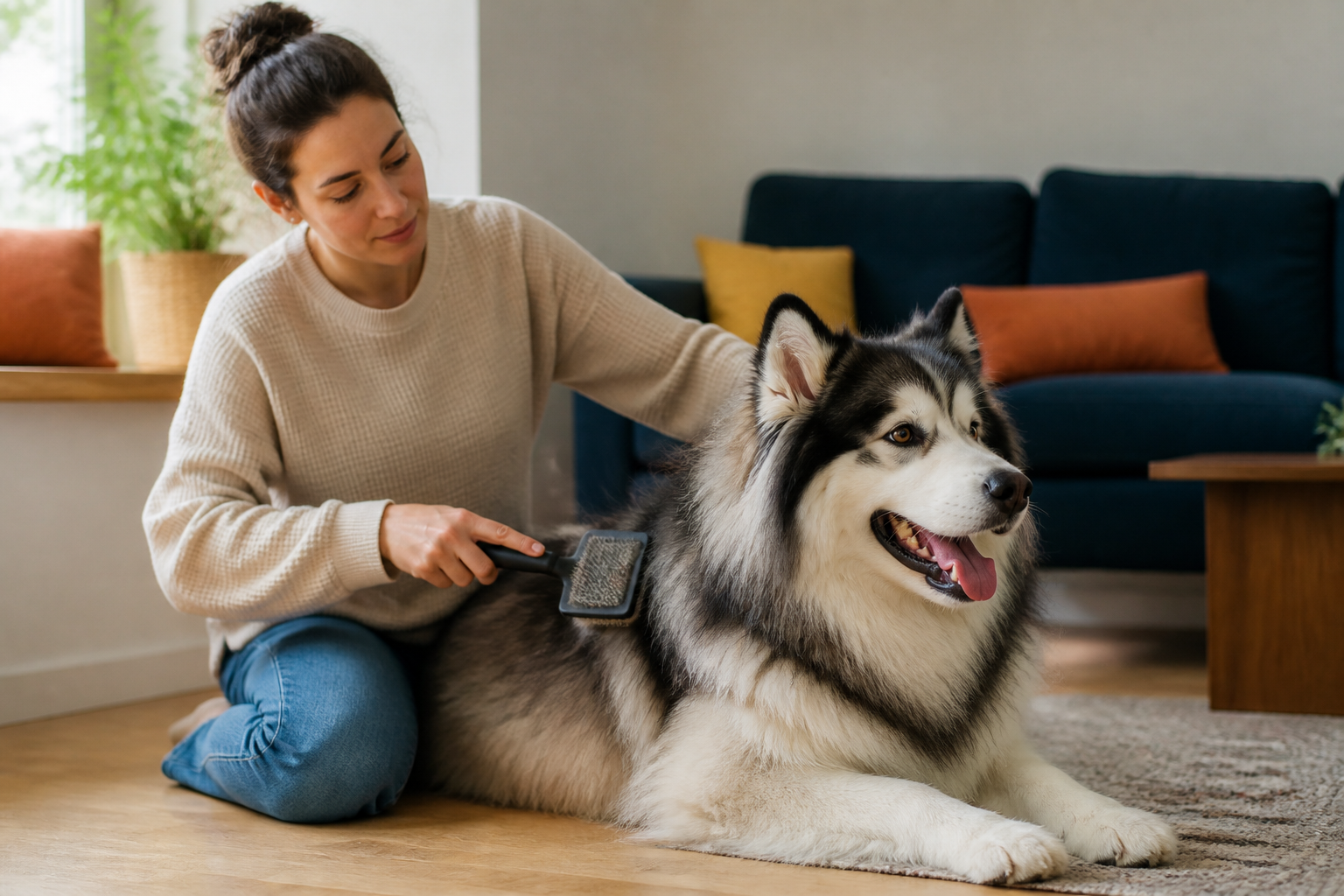
You might notice small tumbleweeds of fur drifting across your hardwood floors or realize your dark clothes are permanently decorated with light-colored hair. If you own a Golden Retriever, a Siberian Husky, or a German Shepherd, you are likely dealing with the unique challenges of a double coat. These dogs have two distinct layers of fur that require specific care to keep them comfortable and your home manageable. At BaxterBoo, we know that grooming can feel like a full-time job during certain times of the year. This guide covers exactly how often you should brush your double coated dog, the tools you need to succeed, and how to maintain skin health throughout the seasons. Establishing a consistent routine is the best way to prevent painful mats and keep that protective coat functioning exactly as nature intended.
Understanding the Two Layers of a Double Coat
A double coat is not just a thick layer of fur. It is a sophisticated climate control system. The bottom layer is the undercoat. These hairs are soft, dense, and often shorter than the top layer. They sit close to the skin and act as insulation. In the winter, this layer traps heat to keep the dog warm. In the summer, it creates a buffer that keeps the dog's skin cool and protected from the sun.
The top layer consists of guard hairs. These are longer, coarser, and usually more colorful. Guard hairs are designed to repel water and shield the dog from dirt and debris. Because these two layers grow and shed at different rates, they require a specific approach to grooming. You cannot simply brush the top and assume the undercoat is healthy.
Quick Answer: For most of the year, you should brush a double coated dog two to three times per week. During seasonal shedding periods in the spring and fall, you will need to brush them daily to manage the heavy volume of loose undercoat hair.
How Often to Brush Double Coated Dog Breeds
The frequency of your grooming sessions depends heavily on the time of year and your dog's specific activity level. For a typical week, aim for three sessions. This allows you to remove loose hairs from the undercoat before they become trapped and form mats. If your dog spends a lot of time swimming or hiking, you may need to increase this to daily checks for burrs or damp spots that can lead to skin irritation.
During the spring and autumn, double coated dogs go through a process called "blowing coat." This is a massive seasonal shed where the undercoat falls out in large clumps to make room for a new layer suited for the upcoming weather. During these three to four-week windows, daily brushing is essential. If you skip even a few days, the loose hair can become compacted against the skin. This prevents air from circulating, which can lead to hot spots or fungal infections.
Key Takeaway: Consistency is more important than the length of the grooming session. Ten minutes of thorough brushing three times a week is more effective than an hour-long session once a month.
The Essential Toolkit for Double Coats
You cannot use a standard human hairbrush or a simple plastic comb on a double coat. The hair is too dense and the undercoat is too deep. To do the job right, you need tools that can reach the skin without causing discomfort. Explore our dog brushes and combs for grooming tools suited to different coat types.
- Undercoat Rake: This tool has long, metal tines that reach through the guard hairs to pull out loose undercoat. It is the most important tool for any double coated breed.
- Slicker Brush: These have fine wire bristles that are slightly angled. They are excellent for removing surface debris and smoothing the top coat.
- Metal Greyhound Comb: A sturdy metal comb helps you check your work. If the comb can slide through the fur from the skin to the tips without snagging, you have successfully removed the mats.
- De-matting Tool: This is used for small, localized tangles that are too tight for a standard brush.
At BaxterBoo, we recommend starting with an undercoat rake to handle the bulk of the work. Follow this with a Master Grooming Tools Ergonomic Slicker Dog and Cat Brush to polish the look. If you notice your dog is scratching or showing signs of skin sensitivity after grooming, check the tines of your tools. They should be smooth and rounded to avoid scratching the skin.
The Dangers of Shaving a Double Coat
One of the most common mistakes owners make is shaving their double coated dog in the summer. It seems logical to think that removing the fur will keep them cool, but the opposite is true. Shaving a double coat removes the dog's natural insulation. Without that undercoat to buffer the heat, the dog is more likely to suffer from heatstroke.
Furthermore, the guard hairs protect the skin from UV rays. A shaved dog is at a high risk for severe sunburn and even skin cancer. In many cases, the coat never grows back the same way. The undercoat often grows back faster than the guard hairs, leading to a patchy, fuzzy texture that mats even more easily than the original coat.
Vet Tip: If your dog's coat is severely matted to the skin, a professional groomer may have to shave them for medical reasons. If this happens, keep your dog out of direct sunlight and consult your veterinarian about skin protection until the fur begins to regrow.
Step-by-Step Line Brushing Technique
Line brushing is the gold standard for managing a thick undercoat. This method ensures you are reaching the skin and not just skimming the surface.
Step 1: Part the hair. / Use your hand to push a section of the fur upward, exposing a "line" of skin.
Step 2: Brush downward. / Use your undercoat rake or slicker brush to brush the hair downward away from the part, starting right at the skin.
Step 3: Move to the next section. / Drop a small amount of the hair you were holding up and repeat the process, moving systematically across the dog's body.
Step 4: Focus on friction areas. / Pay extra attention to the areas behind the ears, under the front legs, and around the "trousers" on the back legs, as these mat most quickly.
Step 5: Finish with a comb. / Run a metal comb through the section you just brushed to ensure there are no hidden tangles.
Managing Skin Health and the BaxterBoo Pharmacy
A thick double coat can sometimes hide skin issues. During your brushing sessions, keep an eye out for redness, scaling, or unusual bumps. If your dog has a persistent odor or seems excessively itchy, it could be a sign of allergies or a skin infection. Double coated dogs are particularly prone to "hot spots," which are localized areas of bacterial skin infection that can worsen rapidly if moisture is trapped in the fur.
Our dog pharmacy provides access to FDA-approved medications and prescription treatments through our partnership with Pet's Choice. If your veterinarian identifies an allergy or a skin condition, we can help you manage it with the right prescription shampoos or medications. Keeping the skin healthy from the inside out is just as important as the physical act of brushing.
Bottom line: Brushing is the best time to perform a "body scan" for lumps, bumps, or skin irritations that need veterinary attention.
Bathing and Deshedding
While brushing is the primary way to manage a double coat, occasional baths are necessary. However, you should never bathe a matted dog. Water acts like a glue for mats, causing them to tighten and become almost impossible to remove without clippers. Always brush your dog thoroughly before getting them wet.
When you do bathe them, use a high-quality deshedding shampoo. These formulas are designed to help relax the hair follicles, making it easier for loose undercoat to wash away. Be sure to rinse the coat multiple times. The density of a double coat makes it very easy for soap residue to hide near the skin, which causes intense itching and irritation. For additional bathing guidance, read our tips for bathing your dog.
After the bath, drying is the most critical step. A damp undercoat is a breeding ground for bacteria. Use a high-velocity dryer if possible to blow the water out of the coat. This process also helps blow out any remaining loose undercoat that the brush might have missed.
Seasonal Variations in Grooming
Your schedule should shift with the weather. In the winter, you are brushing to prevent snow and ice from forming "ice balls" in the fur, especially on the legs and paws. These can be painful and lead to frostbite in extreme cases. Keeping the coat well-brushed allows it to loft properly, providing maximum warmth.
In the summer, your focus is on airflow. A well-brushed coat allows the breeze to reach the skin. We carry a wide range of dog grooming supplies to help you adapt to these changes. If you find that the seasonal shed is becoming unmanageable, consider increasing your brushing sessions to twice a day during the peak of the "coat blow."
Puppy and Senior Dog Considerations
The grooming needs of a double coated dog change as they age. Puppies have a soft, single-layer coat that is much easier to manage. However, this is the most important time to start a routine. Handle their paws, ears, and tail frequently. Use a soft brush to get them used to the sensation. By the time their adult double coat comes in around six to twelve months of age, they should be comfortable with the grooming process.
Senior dogs may find standing for long grooming sessions difficult. They may also develop thinner skin or arthritis, making them more sensitive to the tugging of a brush. For older dogs, keep sessions short and frequent. Use a grooming table or a non-slip mat to help them feel secure. If you notice your senior dog's coat is becoming dull or brittle, discuss a supplement like Cosequin or a change in diet with your vet to support their coat health from within.
Common Myths About Double Coated Dogs
There is a lot of misinformation regarding how to handle these breeds. One common myth is that double coated dogs do not need to be brushed in the winter because they "need the extra hair." While they do need the hair, they do not need the dead, shed hair that gets trapped. Trapped dead hair prevents the healthy coat from insulating properly.
Another myth is that certain tools can "cut" the coat. While some specialized tools have blades, a standard undercoat rake or slicker brush does not cut the hair. It simply pulls out the hair that has already detached from the follicle. If you see a lot of fur in the brush, do not panic. It was already loose; the brush just gathered it.
Key Takeaway: You cannot over-brush a double coated dog as long as you are being gentle and using the correct tools. You are simply assisting a natural shedding process.
Using the MVP Rewards and Autoship Programs
Maintaining a double coated dog requires a steady supply of grooming tools, shampoos, and often skin supplements. To make this easier, we offer the MVP Rewards program, which allows you to earn up to 5% back on your purchases. This is a great way to save on high-quality brushes and combs that will last for years.
If your dog requires specific supplements for skin and coat health, our Autoship programme is a convenient option. You can set up recurring deliveries so you never run out, and you will save on your first order. Plus, Autoship customers receive a free MVP Gold membership, providing even more value for your pet care routine.
Preparing for Professional Grooming
Even with a great at-home routine, many owners choose to visit a professional groomer a few times a year. This is especially helpful during the heavy shedding seasons. A professional groomer has high-powered dryers and specialized tubs that can remove a massive amount of undercoat in a single session.
When you take your dog to a professional, be clear about your expectations. Specifically mention that you do not want the dog shaved. A good groomer will understand the importance of preserving the double coat and will focus on a "bath and brush out" or a "deshedding treatment" instead. Your hard work at home makes the professional's job much easier and less stressful for your dog.
Conclusion
Caring for a double coated dog is a commitment, but the rewards are well worth the effort. By brushing two to three times a week and daily during shedding season, you protect your dog from the elements and keep their skin healthy. Remember to never shave a double coat and always use tools designed to reach that thick undercoat. If you notice any skin issues during your sessions, reach out to your veterinarian. Our pharmacy is here to help with any prescription needs that arise. We invite you to explore our full collection of grooming tools and skin care products to keep your dog's coat in peak condition.
Bottom line: A consistent brushing routine is the foundation of health for any double coated dog, ensuring they stay cool in the summer and warm in the winter.
FAQ
Can I use a human hairbrush on my double coated dog?
No, human hairbrushes are not designed to penetrate the thick layers of a dog's double coat. They will only smooth the very top of the guard hairs, leaving the undercoat to become matted and compacted. You need an undercoat rake or a slicker brush to properly reach the skin and remove loose fur.
How do I know if my dog is "blowing coat"?
You will know your dog is blowing coat when you see large, soft tufts of fur sticking out from their coat or falling off in clumps. This usually happens twice a year, in the spring and fall, as the dog transitions between their summer and winter coats. During this time, the volume of hair you find around your house will increase significantly. For another perspective on seasonal shedding, see how Australian Shepherds shed.
My dog hates being brushed; what should I do?
Start with very short sessions, sometimes just a minute or two, and use high-value treats to create a positive association. Focus on one small area at a time and gradually increase the duration as your dog becomes more comfortable. If they show signs of extreme stress, take a break and try again later rather than forcing the session.
Does brushing help with my dog's skin allergies?
Brushing itself does not cure allergies, but it helps by removing allergens like pollen or dust that get trapped in the fur. It also allows you to monitor the skin for redness or hives. If your dog has diagnosed skin allergies, your vet may recommend prescription items from our pharmacy to use alongside your regular grooming routine.






