
 Save 15% on your 1st Autoship learn more

 Email us
 Live Chat
 FAQs
FAQs





Introduction
You might notice it while relaxing on the sofa. A stray clump of fur drifts across the floor, or you feel a stubborn tangle behind your dog’s ear while giving them a scratch. These small moments are often the first sign that your grooming routine needs a quick adjustment. At BaxterBoo, we know that brushing is about much more than just a tidy appearance. It is a vital part of your pet’s physical health and a perfect time for you to bond. This guide explains how often you should brush your dog based on their unique coat type and lifestyle. We also cover the best tools for the job and how to turn grooming into a positive experience. Understanding these needs ensures your dog stays comfortable and their skin remains healthy throughout every season.
Quick Answer: Most dogs benefit from brushing two to three times per week. However, long-haired or double-coated breeds often require daily attention to prevent painful mats, while short-haired dogs might only need a quick session once a week.
Why Regular Brushing Is More Than Just Vanity
Brushing serves as a primary defense against skin irritation and discomfort. When you run a brush through your dog’s hair, you are doing more than removing loose fluff. You are actually exfoliating the skin and stimulating blood flow to the surface. This process encourages the growth of a strong, vibrant coat.
The skin produces natural oils that protect the hair and keep it hydrated. Without regular brushing, these oils tend to sit at the base of the hair follicle. Brushing helps distribute these oils down the entire length of the hair shaft. This gives the coat a healthy shine and prevents the skin from becoming dry or flaky. It also helps you spot external parasites or unusual lumps before they become major problems.
Key Takeaway: Brushing is a functional health task that manages shedding, distributes natural oils, and allows for early detection of skin issues.
Brushing Frequency Based on Coat Type
The most important factor in your grooming schedule is the type of hair your dog grows. A one-size-fits-all approach does not work because different textures behave differently when left alone.
| Coat Type | Common Breeds | Recommended Frequency |
|---|---|---|
| Short and Smooth | Beagles, Boxers, Pugs | Once a week |
| Long and Silky | Yorkies, Maltese, Setters | Daily to 3 times a week |
| Double Coat | Huskies, Goldens, Labs | 3 times a week (Daily in spring) |
| Wire-Haired | Terriers, Schnauzers | 2 to 3 times a week |
| Curly or Woolly | Poodles, Bichons | Daily |
Short and Smooth Coats
Dogs with short, sleek hair are generally the easiest to maintain. Their hair does not tangle or mat easily. However, they still shed. A weekly brushing session helps pull away dead hair before it ends up on your furniture. For these dogs, the focus is often on skin massage and oil distribution rather than detangling.
Long and Silky Coats
If your dog has long, flowing hair, you have a higher workload. These coats are prone to "mechanical" tangling. This happens when the hairs rub together during walking or playing. If you skip even two days, small tangles can quickly tighten into hard mats. Daily brushing is the safest way to keep a long coat manageable and pain-free.
Double Coats and Heavy Shedders
Breeds with a thick undercoat require a specific strategy. They have a soft, insulating layer of fur protected by longer guard hairs. During the spring and fall, these dogs "blow" their coats. This means the undercoat sheds in massive quantities. During these peak seasons, you might need to brush them every single day to keep up with the volume. In the off-season, three times a week is usually sufficient.
For more guidance on seasonal shedding and double-coated dogs, read about how Australian Shepherds shed.
Wire and Curly Breeds
Wire-haired dogs have a unique texture that traps dead hair within the coat. It does not fall out on its own as easily as other types. Curly breeds like Poodles have hair that keeps growing rather than shedding out. This means dead hair gets caught in the curls. Both types need frequent brushing to prevent the trapped hair from forming a solid felt-like layer against the skin.
Bottom line: Your dog's coat type dictates the schedule, with longer and curlier hair requiring significantly more frequent attention.
Essential Tools for Every Grooming Kit
Using the wrong brush can make grooming harder for you and uncomfortable for your dog. Our warehouse in Illinois stocks a wide variety of tools because we know that a Poodle needs something very different than a Beagle. Browse our dog grooming supplies to find brushes, combs, shampoos, and other grooming essentials.
The Slicker Brush
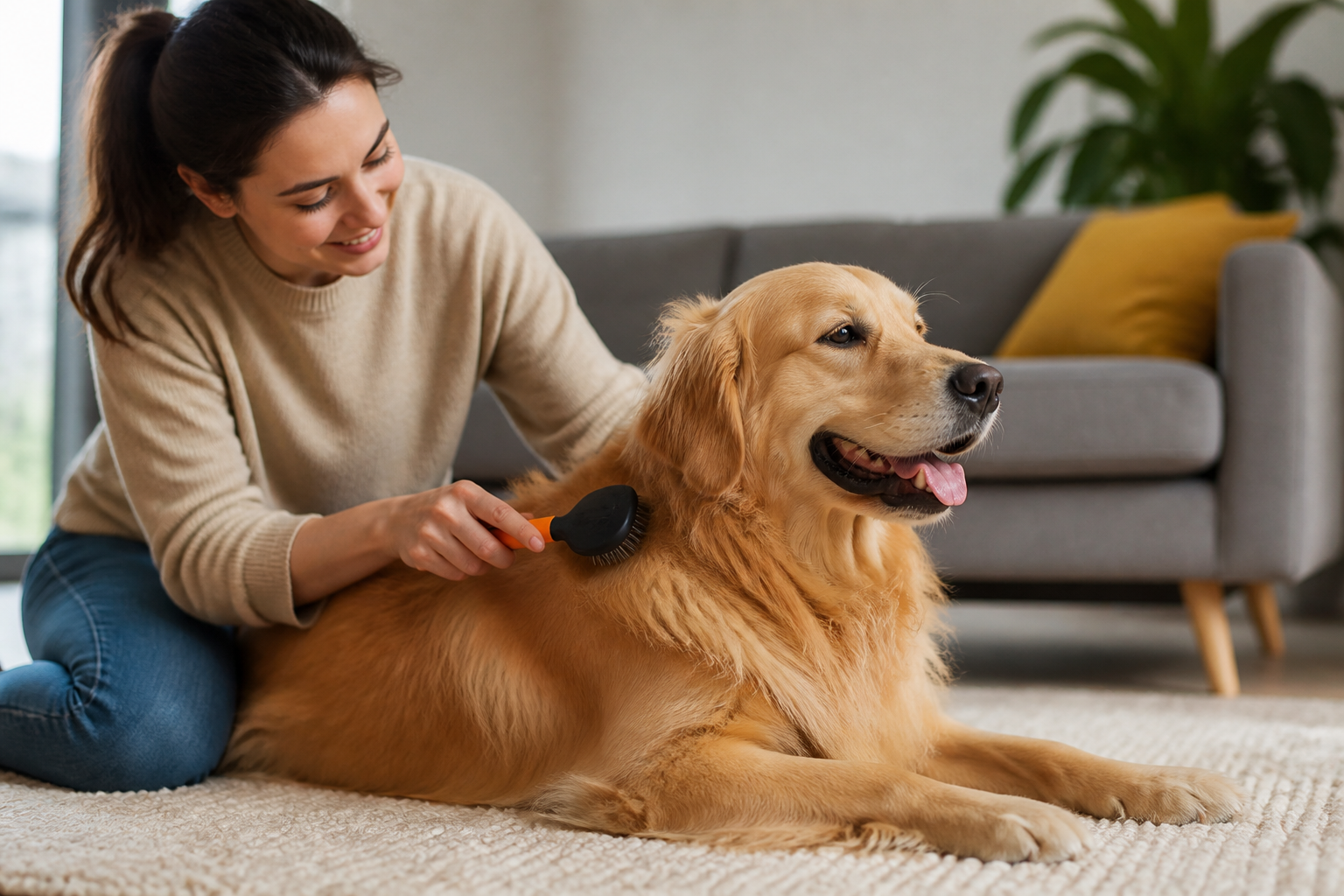
This is the workhorse of the grooming world. It features fine, short wires closely spaced together on a flat or curved surface. It is excellent for removing mats and tangles in medium to long-haired dogs. Use it gently, as the wire bristles can scratch the skin if you apply too much pressure.
The Master Grooming Tools Self-Cleaning Slicker Brush is designed to remove loose hair, dirt, debris, mats, and tangles.
The Pin Brush
A pin brush looks similar to a human hairbrush. It has tipped metal or plastic pins that reach through long hair to the skin. It is perfect for dogs with silky coats or those that do not have a thick undercoat. It provides a gentle touch and is often used for finishing a grooming session to add fluff.
Bristle Brushes and Grooming Mitts
For short-haired dogs, a natural bristle brush or a rubber grooming mitt is ideal. These tools are designed to catch loose hair on the surface and massage the skin. Most dogs enjoy the sensation of a rubber mitt because it feels like they are just being petted.
Undercoat Rakes and Deshedding Tools
If you have a heavy shedder, an undercoat rake is a necessity. These tools have long, tines that reach past the guard hairs to pull out the loose undercoat. Browse our dog brushes and combs for options suited to different coat textures.
Vet Tip: Always inspect your grooming tools for sharp edges or broken pins before use. Damaged brushes can cause skin abrasions or "brush burn," which can lead to secondary infections.
How to Brush Your Dog Step by Step
Creating a routine helps your dog know what to expect. If you have a puppy, start with very short sessions and plenty of rewards.
Step 1: Check for sensitivity. / Before you start with a brush, run your hands over your dog's body. Look for any sore spots, hot spots, or new lumps.
Step 2: Mist the coat. / Brushing dry hair can cause static and breakage. Use a light grooming spray or a leave-in conditioner to provide slip.
Step 3: Work in sections. / Start at the head and move toward the tail. Focus on one area at a time, such as a single leg or the chest, before moving on.
Step 4: Use the "Line Brushing" technique. / For thick coats, push the hair up with one hand and brush the hair downward in layers. This ensures you are reaching the skin and not just skimming the top.
Step 5: Reward and praise. / Give your dog a high-value treat like a Greenie or a small piece of jerky after the session. This builds a positive association with grooming.
Spotting Health Issues During Grooming
Grooming is your best opportunity to perform a basic health check. Because you are touching almost every inch of your dog, you can find things that might be hidden under thick fur.
While brushing, look for:
- Flea dirt (tiny black specks that turn red when wet)
- Ticks, especially around the ears and between toes
- Redness, scaling, or oily patches on the skin
- Strong odors that do not go away after a bath
- Excessive hair loss in specific patches
If you find signs of fleas or ticks, explore our dog skin and coat care products and speak with your veterinarian about appropriate treatment. Catching these issues early during a Tuesday night brushing session is much easier than dealing with a full-blown allergy or infestation later.
Key Takeaway: Use grooming time as a weekly health screening to catch parasites or skin changes before they become serious.
Managing Seasonal Shedding
Most dogs go through a major shedding cycle twice a year. This is triggered by changes in daylight and temperature. Even indoor dogs feel these shifts. During these times, the "how often" answer changes from "twice a week" to "every day."
You can manage this heavy shedding by increasing the frequency of your brushing. Adding a supplement can also support coat strength. Products like Cosequin or Zesty Paws often contain omega fatty acids that support skin barriers. When the skin is healthy, the hair follicles stay strong, which can help manage the volume of hair that falls out.
If the shedding seems excessive or your dog's skin looks very dry, it might be worth looking into their nutrition. We carry premium foods like Farmina, Royal Canin, and The Honest Kitchen, which are formulated with high-quality proteins and fats to support skin health from the inside out.
Troubleshooting Common Grooming Challenges
Not every dog loves the brush. Some might have had a bad experience in the past, or they might find the sensation overwhelming.
Dealing with Mats
Never pull on a mat. This pinches the skin and causes pain. Instead, hold the base of the mat with your fingers so the skin doesn't move. Use a specialized dematting tool or the edge of a slicker brush to gently pick at the mat starting from the outside and moving inward. If a mat is tight against the skin, it is safest to have a professional groomer or vet remove it with clippers to avoid cutting the skin.
Overcoming Fear
If your dog hides when they see the brush, go back to basics. Leave the brush on the floor and put treats around it. Let them sniff it without being brushed. Gradually progress to touching them with the back of the brush, then one or two gentle strokes. Keep sessions under two minutes until they feel comfortable.
Sensitive Areas
Be extra careful around the "friction points." These include the armpits, behind the ears, and the groin area. These spots are where mats form most quickly because of the movement of the limbs. They are also where the skin is thinnest and most sensitive.
Nutrition and the Pharmacy Connection
The quality of your dog’s hair is a direct reflection of their internal health. If the hair is brittle, dull, or breaks easily during brushing, there might be an underlying nutritional gap or a medical condition like hypothyroidism or allergies.
Our dog pharmacy provides access to prescription diets and medications for dogs with chronic skin conditions. We can help you get the specific food or treatment your veterinarian recommends. Sometimes, a change to a limited-ingredient diet or a prescription skin support formula can make the hair more resilient and easier to brush.
Vet Tip: If your dog's coat changes texture suddenly or they develop bald spots, consult your veterinarian. These can be symptoms of hormonal imbalances or underlying health issues that require a professional diagnosis.
Conclusion
Brushing your dog is a simple act that yields huge rewards for their comfort and health. While short-haired dogs only need a weekly check-in, long-haired and double-coated breeds require a more dedicated commitment to keep their coats beautiful and mat-free. By choosing the right tools and staying consistent, you turn a chore into a relaxing routine for both of you. We have been helping pet owners find the right supplies since 2006, and we are here to support your grooming journey.
- Establish a schedule based on your dog's specific coat type.
- Use a grooming spray to prevent hair breakage and static.
- Perform a quick skin and parasite check during every session.
- Reward your dog to make the experience enjoyable.
To find the perfect tools for your dog, explore our full grooming tools collection and our brushes. If you need support for skin allergies or prescription care, visit our pharmacy section to see how we can help keep your pet's coat in peak condition.
FAQ
Can I brush my dog too much? You can brush a dog too often if you use a harsh tool or apply too much pressure. This can lead to "brush burn," which is characterized by red, irritated skin. If you are brushing daily, ensure you are using a gentle touch and tools appropriate for frequent use, like a soft pin brush or a rubber mitt.
Should I brush my dog’s hair when it is wet or dry? It is usually best to brush your dog when the coat is slightly damp or after applying a grooming spray. Brushing a bone-dry coat can cause the hair to snap and create static. However, you should never brush a dog that is soaking wet and matted, as water can actually cause existing mats to tighten and become harder to remove.
What is the best way to handle a dog that hates being brushed? The best approach is desensitization and counter-conditioning. Start by showing the dog the brush and giving a treat. Gradually touch the dog with the brush without actually brushing. Over several days, work up to a single stroke, then a few more, always pairing the action with high-value treats and praise.
Does brushing help with my dog's allergies? Yes, regular brushing can help manage environmental allergies by removing pollen, dust, and other allergens trapped in the fur. By brushing these particles out before they reach the skin, you may reduce itching and irritation. For dogs with severe skin allergies, check our pharmacy for medicated shampoos and treatments that can provide further relief.






