
 Save 15% on your 1st Autoship learn more

 Email us
 Live Chat
 FAQs
FAQs





Introduction
You lean in for a morning snuggle and notice your dog's breath smells more like a swamp than usual. You lift their lip and see a distinct line of yellow or brown buildup along the gums. This is a common moment for many owners. It is when we realize that dental hygiene is not just a luxury for the show ring. At BaxterBoo, we see how much a healthy mouth changes a dog's quality of life. Proper dental care prevents pain, tooth loss, and expensive surgeries. This post covers the ideal frequency for at-home brushing and how often you should schedule professional veterinary cleanings. A consistent routine involving daily habits and annual checkups is the best way to keep your dog's tail wagging and their breath fresh.
Quick Answer: You should ideally brush your dog's teeth every day at home to prevent plaque from hardening into tartar. Professional cleanings by a veterinarian are usually required once per year to reach areas beneath the gum line.
The Ideal At-Home Brushing Frequency
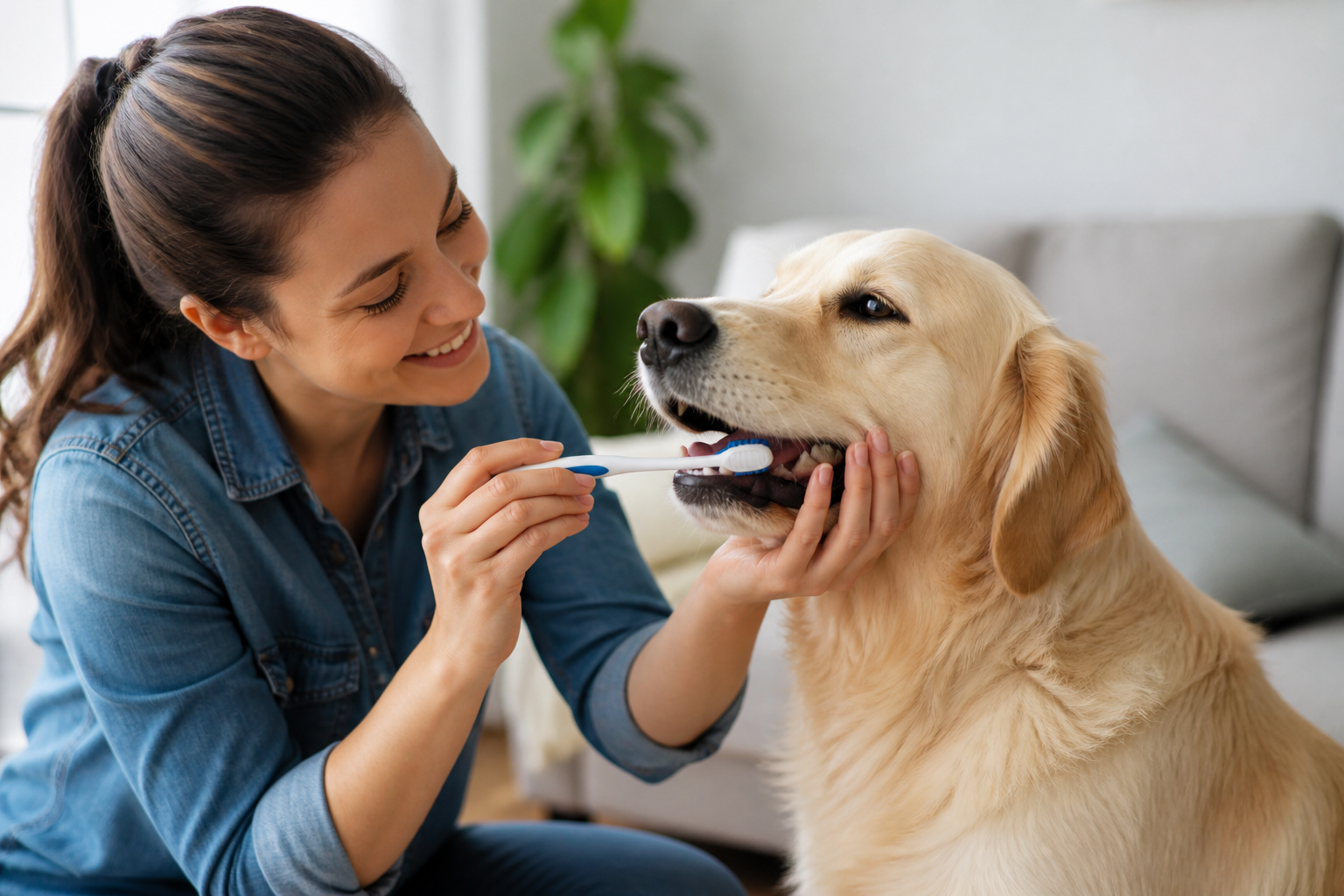
The gold standard for at-home dental care is once per day. This might sound like a tall order for a busy household. However, the biology of a dog's mouth moves quickly. Plaque is a sticky film of bacteria that starts forming on the teeth just hours after a meal. If it is not brushed away, it reacts with the minerals in your dog's saliva. Within 48 to 72 hours, that soft plaque hardens into tartar, also known as calculus.
Once plaque becomes tartar, you cannot remove it with a toothbrush. It becomes a hard, cement-like substance that traps bacteria against the gums. This leads to inflammation and infection. Brushing daily ensures you are catching the plaque while it is still soft and removable.
If daily brushing is not possible, aim for at least three times per week. This frequency still provides significant protection against the most severe forms of periodontal disease. Anything less than twice a week is generally considered ineffective for preventing the buildup of tartar.
Why Every Day Matters
- Plaque begins to colonize the tooth surface within minutes of eating.
- The bacteria in plaque can cause gingivitis in as little as two weeks if left undisturbed.
- Daily brushing creates a predictable routine that most dogs eventually accept as part of their day.
Key Takeaway: Daily brushing is the only way to stop plaque from turning into permanent tartar. If you cannot do it daily, aim for a minimum of three times per week.
For additional guidance on building a routine, read our tips for introducing dental care and brushing.
Professional Dental Cleanings: The Annual Requirement
Even with the best at-home brushing, most dogs still need a professional cleaning. This is similar to how humans go to the dentist every six months despite brushing and flossing at home. A veterinarian can reach the spaces under the gum line where at-home brushes cannot go. These professional visits are often called a COHAT, which stands for Comprehensive Oral Assessment and Treatment.
For most adult dogs, a professional cleaning once per year is the standard recommendation. During these visits, your dog is placed under general anesthesia. This allows the vet to perform a full exam, take X-rays, and use ultrasonic scalers to remove tartar from every surface of the tooth.
Vet Tip: If you notice your dog is pawing at their mouth, dropping food, or has extremely foul breath, do not wait for your annual appointment. These can be signs of a painful abscess or a fractured tooth that requires immediate veterinary attention.
How Breed and Size Change the Schedule
Not all dogs are created equal when it comes to their teeth. Your dog's breed and the shape of their mouth play a huge role in how often they need care. Small and toy breeds generally require more frequent attention than large breeds.
Small and Toy Breeds
Dogs like Yorkies, Chihuahuas, Malteses, and Pugs often have 42 adult teeth crowded into a very small mouth. This crowding creates many nooks and crannies where food and bacteria get trapped. Small dogs also have shallower tooth roots. A little bit of bone loss from gum disease can cause them to lose a tooth much faster than a large dog. Many veterinarians recommend professional cleanings every six months for these smaller companions.
Brachycephalic Dogs
Flat-faced breeds often have misaligned jaws. This means their teeth do not meet properly, which prevents the natural "self-cleaning" action that happens when dogs chew. These dogs are at a much higher risk for early-onset dental disease. They benefit from daily brushing and very frequent professional checks.
Large and Giant Breeds
Large dogs often have more space between their teeth. While they still need annual professional care, they may not show the same rapid buildup as small breeds. However, large dogs are more prone to fractured or cracked teeth from heavy chewing. Their dental schedule should focus on checking for structural damage to the molars.
Bottom line: Small breeds and flat-faced dogs typically need professional cleanings twice a year, while large breeds usually thrive with an annual schedule.
For more information about warning signs, see how to recognize hidden dental problems in dogs.
The Role of Anesthesia in Professional Cleaning
One common question owners ask is whether they can skip the anesthesia. You may see advertisements for "anesthesia-free" dental cleanings. While these may make the teeth look white, they are largely cosmetic.
A dog will not sit still for a deep cleaning under the gums or for dental X-rays. Anesthesia-free services only scrape the tartar off the visible parts of the tooth. This leaves the dangerous bacteria under the gum line, which is where the real disease happens. It can also be very stressful and painful for the dog.
At BaxterBoo, we recommend following the advice of the American Animal Hospital Association. They state that anesthesia is a necessary part of a safe and thorough dental procedure. It allows the vet to intubate the dog, which protects their lungs from the bacteria being scaled off the teeth.
Signs Your Dog Needs an Immediate Cleaning
You should not always wait for a specific date on the calendar. Your dog's mouth will often tell you when it is time for a professional visit. Watch for these red flags:
- Foul Breath: While "dog breath" is normal, a truly putrid or sweet-rotting smell indicates infection.
- Bleeding Gums: If you see blood on their chew toys or their gums look bright red and puffy, they have gingivitis.
- Difficulty Eating: If your dog starts eating on only one side of their mouth or drops kibble, they may have a painful tooth.
- Discolored Teeth: Dark brown or yellow crust near the gum line is a clear sign of tartar buildup.
- Loose or Missing Teeth: This is a sign of advanced periodontal disease that has already destroyed the bone and ligaments.
Step-by-Step: Introducing Brushing to Your Dog
If your dog is not used to having their mouth handled, you cannot expect them to tolerate a toothbrush immediately. You need a patient approach.
Step 1: Let them taste the paste. / Use a dog-specific toothpaste in a flavor like poultry or beef. Let them lick it off your finger for several days so they associate the flavor with a positive experience.
Step 2: Rub the gums. / Before introducing a brush, use your finger to gently rub their teeth and gums. This gets them used to the sensation of someone touching their mouth.
Step 3: Introduce the finger brush. / A silicone finger brush is less intimidating than a handled brush. Add a little toothpaste and do a few teeth at a time.
Step 4: Move to a handled brush. / Once they are comfortable, use a soft-bristled dog toothbrush. Focus on the outside surfaces of the teeth, as this is where the most tartar builds up.
You can compare brushes, toothpaste, wipes, and other supplies in our dog dental and breath care category.
Dental Tools, Treats, and Supplements
While brushing is the gold standard, other tools can help in between cleanings. These are especially useful if you have a dog that is extremely resistant to brushing.
Dental Chews
Products like Greenies or other VOHC-approved chews can help mechanically scrape plaque from the teeth. To be effective, the dog needs to chew them thoroughly rather than swallowing them in large chunks.
Explore our dental treats and chews for options that can supplement your dog's brushing routine.
Dental Diets
Some prescription dog foods are designed with a specific kibble structure. Instead of crumbling immediately, the kibble stays together longer so the tooth sinks into it. This provides a scrubbing action. Our pharmacy carries many of these FDA-approved prescription pet foods through our partnership with Pet's Choice. If your vet recommends a specific dental diet for a condition like advanced gingivitis, we can help fulfill that order.
Water Additives and Wipes
Wiping the teeth with a dental pad can remove some surface plaque. Water additives use enzymes to break down bacteria in the mouth. These are good supplementary tools, but they should not be the only form of dental care you provide.
Key Takeaway: Treats and additives are helpful supplements, but they cannot replace the mechanical action of a toothbrush or a professional cleaning.
For more ideas between cleanings, browse our guide to dental chews for dogs.
Why Human Toothpaste is Dangerous
It is vital to never use human toothpaste for your dog. Our toothpaste often contains xylitol, which is a sweetener that is highly toxic to dogs. Even a small amount can cause a dangerous drop in blood sugar or liver failure. Human toothpaste also contains foaming agents meant to be spit out. Since dogs swallow everything, these agents can cause significant stomach upset. Always use a paste specifically formulated for pets.
The Cost of Neglect
It is tempting to put off dental cleanings because of the cost or the concern about anesthesia. However, the cost of neglect is always higher. Untreated dental disease allows bacteria to enter the bloodstream through the inflamed gums. This bacteria can travel to the heart, liver, and kidneys, leading to organ damage and a shortened lifespan.
A routine cleaning is far less expensive than a surgery that requires multiple extractions and long courses of antibiotics. Keeping up with a schedule saves you money and saves your dog from chronic, hidden pain.
Prescription Medications and the BaxterBoo Pharmacy
Sometimes, a dental cleaning reveals a deep infection that requires more than just scaling. Your vet might prescribe a course of antibiotics or pain relief medications for the recovery period. We provide access to these medications through our pharmacy partnership. If your dog needs ongoing health management or specific prescription diets to manage their oral health, our system makes it easy to get those items delivered to your door. This is part of how we support your pet's health from puppyhood through their senior years.
Find prescription medications and veterinary products through our dog pharmacy.
Vet Tip: Always finish the full course of any prescribed antibiotics after a dental procedure. Stopping early can allow resistant bacteria to remain in the jawbone.
Managing Senior Dog Dental Care
As dogs age, their dental needs become more critical but also more complex. Senior dogs are more likely to have underlying health issues like heart murmurs or kidney disease. This does not mean they cannot have their teeth cleaned. It simply means your vet will take extra precautions, such as more extensive pre-anesthetic blood work and tailored anesthesia protocols.
Maintaining oral health in senior dogs is essential for preventing "inflamm-aging." This is a state of chronic inflammation that can worsen other age-related conditions like arthritis. Clean teeth can actually help a senior dog feel more energetic and improve their appetite.
For another senior-care perspective, read how food choices can affect senior dogs.
Conclusion
Determining how often to clean your dog's teeth depends on a mix of daily habits and professional oversight. Daily brushing is the most effective way to prevent plaque from becoming tartar. Most dogs will also require a professional cleaning once a year, while smaller breeds may need one every six months. By staying ahead of the buildup, you protect your dog from pain and systemic health issues.
- Brush daily or at least three times a week.
- Schedule an annual veterinary dental exam.
- Watch for red flags like bleeding gums or foul breath.
- Use only dog-safe toothpaste and VOHC-approved treats.
Bottom line: A proactive approach to dental care is one of the best investments you can make in your dog's long-term health and comfort.
For all your dental care needs, including brushes, wipes, and dental treats, visit our dog dental and breath care category. If your veterinarian has prescribed a specific dental diet or medication, our pharmacy is here to help you manage your pet's ongoing wellness needs.
FAQ
Is it okay to brush my dog's teeth once a week? While brushing once a week is better than nothing, it is usually not frequent enough to prevent tartar. Plaque hardens into tartar within 48 to 72 hours, so a weekly brush will miss much of that window. Aim for at least three times a week to see a real difference in their oral health.
Can I use baking soda to clean my dog's teeth? Baking soda is generally not recommended for dogs. It has a high alkaline content that can upset their stomach if swallowed in large amounts. It also lacks the flavors that make brushing a positive experience for your pet, and it does not contain the enzymes found in pet toothpaste that help break down plaque.
Do dental treats actually work? High-quality dental treats that carry the VOHC (Veterinary Oral Health Council) seal can help reduce plaque and tartar. They work through mechanical scraping as the dog chews. However, they are a supplement to brushing, not a replacement, as they often cannot reach the gum line effectively.
How do I know if my dog is in pain from their teeth? Dogs are very good at hiding oral pain. Signs include a preference for soft food, chewing on only one side of the mouth, or shying away when you touch their muzzle. You might also notice increased drooling or a sudden lack of interest in their favorite chew toys.






