
 Save 15% on your 1st Autoship learn more

 Email us
 Live Chat
 FAQs
FAQs





Introduction
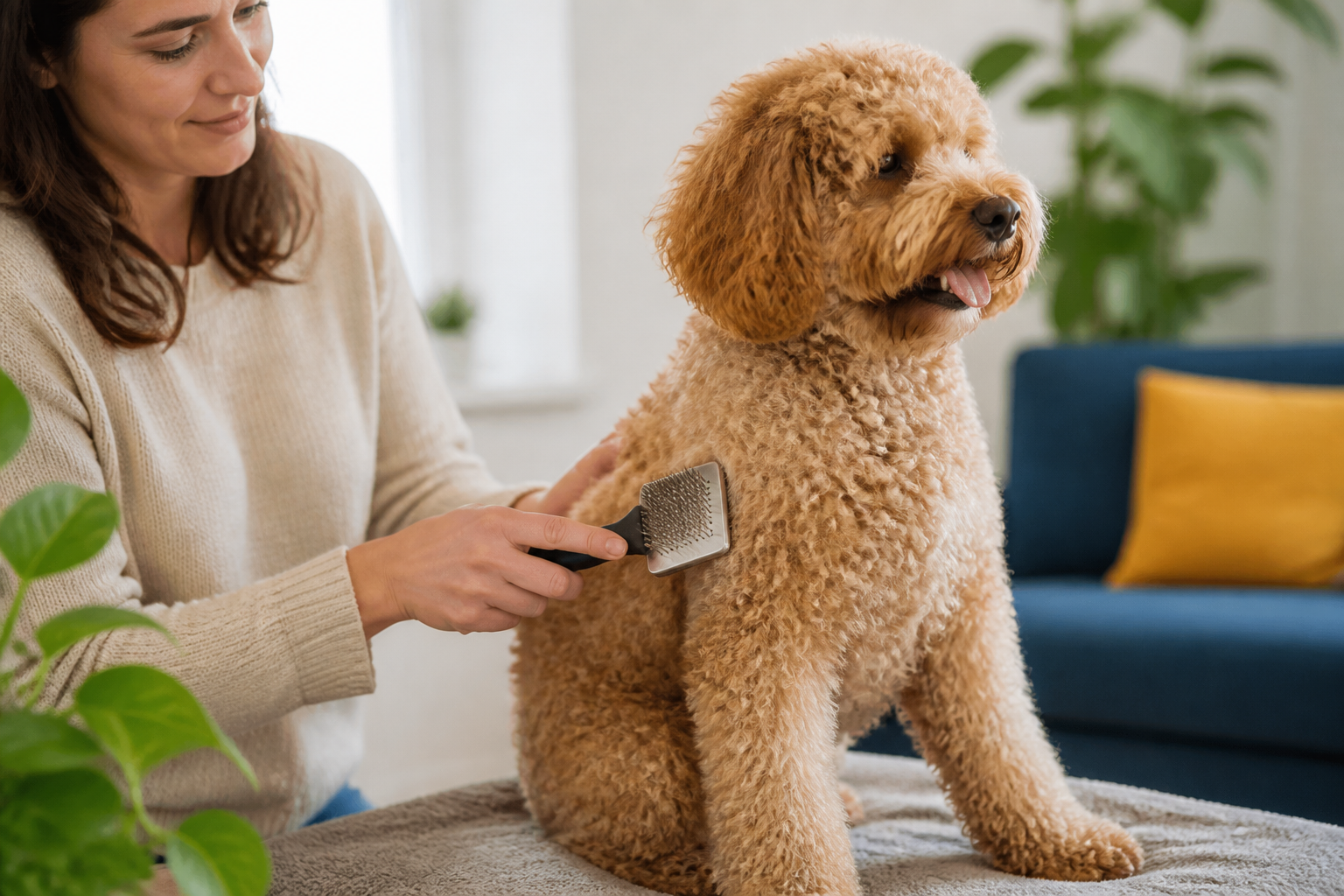
You are running your hand through your dog's beautiful curls when your fingers snag on a hard, tight knot right behind the ear. This is a common moment for owners of Poodles, Bichons, or Doodles. Those tight curls are wonderful because they do not leave hair all over your furniture. However, that trapped hair stays in the coat and creates painful mats if you do not have a solid routine. At BaxterBoo, we know that grooming a curly-coated dog is about more than just looking good for the park. It is a vital part of keeping their skin healthy and their body comfortable. This guide covers the specific tools you need and the "line brushing" technique that makes the process easier for both you and your pup. Proper brushing ensures those curls stay bouncy instead of becoming a tangled mess.
Understanding the Curly Coat Challenge
Curly hair on a dog is different from the fur on a Lab or a Golden Retriever. Most curly breeds have a single coat that grows continuously. Because the hair is curled or crimped, the loose strands that would normally fall onto your floor get trapped in the existing curls. This creates a "low-shed" experience for your home, but a high-maintenance experience for the dog.
When loose hair stays trapped, it begins to weave itself around the healthy, growing hair. This forms a knot. If left alone, these knots tighten into mats. Mats act like sponges for moisture and debris. They can pull on the skin every time the dog moves, which causes significant discomfort. Understanding that you are essentially "filtering" out dead hair to prevent these mats is the first step to successful grooming.
Essential Tools for Curly Coats
You cannot brush a curly dog with a standard plastic brush from a grocery store. You need tools that can penetrate the dense curls and reach the skin without scratching it. Using the wrong tool often leads to "top-coat brushing," where the surface looks great but a thick layer of matting is hiding underneath.
The Slicker Brush
This is your most important tool. A slicker brush has a flat or slightly curved head with rows of thin wire pins. These pins are slightly hooked to grab the dead hair and pull it out of the curls. Look for a slicker brush with protected tips if your dog has sensitive skin.
You can compare options in our dog brushes and combs collection.
The Metal Greyhound Comb
Many owners skip the comb, but it is the only way to verify your work. A stainless steel comb with wide teeth on one end and fine teeth on the other is often called a greyhound comb. It acts as a "lie detector" because it will snag on any tiny knots the brush missed.
The Pin Brush
A pin brush looks more like a human hairbrush. It is best used for daily fluffing or for dogs with longer, flowing curls. It does not remove as much dead hair as a slicker brush, but it is much gentler for a quick touch-up.
Detangling Spray and Conditioners
Brushing dry, curly hair can cause static and breakage. A light mist of detangling spray provides "slip." This allows the brush to glide through knots rather than pulling on the dog's skin.
For a specific slicker option, consider the U-Groom Slicker Brush for Dogs and Cats.
| Tool Type | Primary Use | Why It Is Essential |
|---|---|---|
| Slicker Brush | Deep brushing and deshedding | Reaches the base of the curls to remove trapped hair. |
| Metal Comb | Checking for mats | Finds hidden tangles that a brush passes over. |
| Detangling Spray | Friction reduction | Prevents hair breakage and reduces pain during grooming. |
| Pin Brush | Daily maintenance | Keeps the coat looking fluffed and neat between deep cleans. |
Quick Answer: The best way to brush a dog with curly hair is the line brushing method. This involves parting the hair to see the skin and brushing small sections from the root to the tip with a slicker brush.
The Line Brushing Technique
Most people make the mistake of brushing the dog like they brush their own hair. On a curly dog, this only touches the top layer. Line brushing is the professional secret to a mat-free dog.
For additional guidance on curly coats, read our guide to grooming a dog with curly hair.
Step 1: Apply detangler.
Lightly mist the area you are about to brush. Do not soak the hair, as wet mats can actually tighten. Just a light dampness is enough to protect the hair shaft.
Step 2: Create a line.
Start at the bottom of a leg. Use your hand to push the hair upward, exposing a "line" of skin. You want to see the skin clearly so you know you are starting at the very base of the hair.
Step 3: Brush down.
Use your slicker brush to brush a small amount of hair down from that line. Use short, gentle strokes. Continue this until the brush moves through that section with zero resistance.
Step 4: Move up and repeat.
Drop another small section of hair down and brush it into the already-brushed section. You are moving up the dog's body, section by section, ensuring every single hair is brushed from the root.
Step 5: The comb test.
Once you finish a leg or a side, run the metal comb through the hair. If the comb catches, there is a small knot. Go back to the slicker brush for that spot.
Key Takeaway: Never assume a curly coat is tangle-free just because it looks fluffy. Always verify your work by running a metal comb all the way to the skin.
Managing Sensitive Areas
Some parts of your dog's body are more prone to matting than others. These areas usually have more friction or moisture. You should check these spots daily, even if you do not do a full body brush.
- Behind the ears: This is a high-friction area where the hair is often finer and softer.
- The armpits: Friction from walking causes the hair to twist together here.
- The "trousers": The back of the thighs often catches debris from the yard.
- The collar line: Constant rubbing from a collar or harness can create a "ring" of mats around the neck.
If you find a mat in these areas, do not try to pull it out with a comb. This is painful and can tear the skin. Instead, use your fingers to gently tease the mat apart. If it is too tight, you may need to use a mat splitter or blunt-nosed scissors to carefully cut into the mat. Always hold the scissors parallel to the skin to avoid accidental nicks.
Vet Tip: If your dog's coat is severely matted to the skin, do not try to brush it out at home. Tight mats can hide skin infections or restrict blood flow. In these cases, a professional groomer or veterinarian should safely shave the mats to prevent further pain.
Skin Health and the BaxterBoo Pharmacy
Brushing is the best time to inspect your dog's skin. Curly coats can hide many issues, including ticks, lumps, or red patches. Because curly dogs often have sensitive skin, they are prone to allergic reactions or bacterial infections that get trapped under thick hair.
If you notice your dog is itching frequently or if the skin looks red and inflamed after you clear a mat, they may have a skin condition. Our dog pharmacy offers prescription medications for dogs with a veterinarian's recommendation.
It is important to remember that a healthy coat starts with healthy skin. If you see signs of "hot spots," which are moist, red sores, or if you find a flea infestation, consult your vet immediately. You can then fulfill any necessary prescriptions through our pharmacy for convenient home delivery.
Frequency and Routine
How often you brush depends on the length of the curls. If you keep your dog in a short "puppy cut," you might only need a deep line-brushing session once a week. If you prefer a longer, fluffier look, you will need to brush every day or every other day.
Consistency is better than intensity. A ten-minute session every evening while you watch TV is much better than a two-hour marathon once a month. Daily sessions also help your dog get used to the feeling of being handled. This reduces anxiety during professional grooming visits.
Puppy Introduction
If you have a new curly-haired puppy, start the grooming process immediately. They do not need much brushing yet, but they need to learn that the tools are not scary.
- Let them sniff the brush.
- Touch them with the back of the brush.
- Give them a high-value treat every time they sit still for a stroke.
- Start with very short sessions (2-3 minutes).
Nutrition and Coat Quality
What your dog eats directly affects how easy it is to brush their hair. A diet lacking in essential fatty acids can lead to dry, brittle hair that breaks and tangles easily. We carry several premium brands, such as Stella & Chewy's or Open Farm, that focus on high-quality proteins and healthy fats.
Adding a supplement like Cosequin or a specific skin and coat oil can also help. When the hair is strong and hydrated, it has more "bounce" and is less likely to weave into mats. If you are unsure which food is best for your dog's specific breed and curl type, we have a wide selection of nutrient-dense options to support coat health from the inside out.
- Checklist for a Healthy Curly Coat:
- High-quality protein source in their food
- Omega-3 and Omega-6 fatty supplements
- Professional grooming every 4–6 weeks
- Daily "quick checks" of high-friction areas
- Weekly deep line-brushing sessions
Key Takeaway: A well-hydrated, healthy coat is significantly more resistant to matting than a dry, brittle one. Pair good nutrition with a consistent brushing routine for the best results.
Bathing Your Curly Dog
Bathing should always come after brushing. This is a rule you cannot break with curly hair. If you put a matted dog into a bath, the water causes the hair fibers to swell and then shrink as they dry. This "sets" the mats, making them nearly impossible to remove without shaving.
Use a high-quality shampoo designed for curly or long-haired breeds. You can explore our dog shampoo and conditioner selection. We recommend following up with a conditioner or a leave-in spray. At BaxterBoo, we see many owners who find that a good conditioner makes the following week's brushing much faster. Ensure you rinse the coat thoroughly. Any soap residue left in the curls will cause the hair to feel sticky and attract more dirt.
When drying, avoid rubbing the dog with a towel. Rubbing creates tangles. Instead, pat the dog dry or use a high-velocity dryer on a cool setting. A blow dryer helps to "straighten" the curls slightly, making it even easier to see the skin and find any remaining knots.
Conclusion
Brushing a curly-haired dog is a commitment, but it is one that pays off in a happy, comfortable pet. By using the line brushing method and the right tools, you can prevent the painful mats that often lead to skin issues. Remember to stay consistent and keep the experience positive with plenty of rewards. Our team at BaxterBoo is here to help you find the right slicker brushes, combs, and sprays to make your routine a success.
Bottom line: Consistent line brushing prevents painful mats and allows you to monitor your dog's skin health effectively.
If you want to ensure you never run out of your favorite detangling spray or skin-supporting treats, consider signing up for our Autoship programme. You will save on your first order and earn a free MVP Gold membership, making it easier to keep your curly-haired companion looking and feeling their best.
FAQ
Can I use a human brush on my curly-haired dog?
You should avoid using human brushes because they are not designed to penetrate the dense, crimped layers of a dog's coat. Human brushes often have bristles that are too soft or spaced too closely, which leads to "surface brushing." This leaves the undercoat to tangle and mat against the skin, which can cause pain and skin infections.
Why does my dog's hair mat so quickly after a bath?
If you do not brush your dog thoroughly before a bath, the water will cause any existing tangles to tighten and shrink as they dry. This "locks" the mats in place. Always ensure you can run a metal comb through the entire coat before you get the dog wet to prevent this from happening.
How do I handle a dog that hates being brushed?
The key is to use very short sessions and high-value rewards. Start by just touching the dog with the brush and giving a treat. Gradually increase the time as they become more comfortable. Using a detangling spray also helps because it reduces the "pulling" sensation that often makes dogs dislike the grooming process.
Is it okay to just shave my curly dog instead of brushing?
While keeping a "short clip" makes maintenance much easier, your dog still needs regular brushing. Even short curly hair can develop mats, especially in areas like the armpits or under the collar. Regular brushing also helps distribute natural skin oils and allows you to check for lumps, ticks, or skin irritations that need attention.






