
 Save 15% on your 1st Autoship learn more

 Email us
 Live Chat
 FAQs
FAQs





Introduction
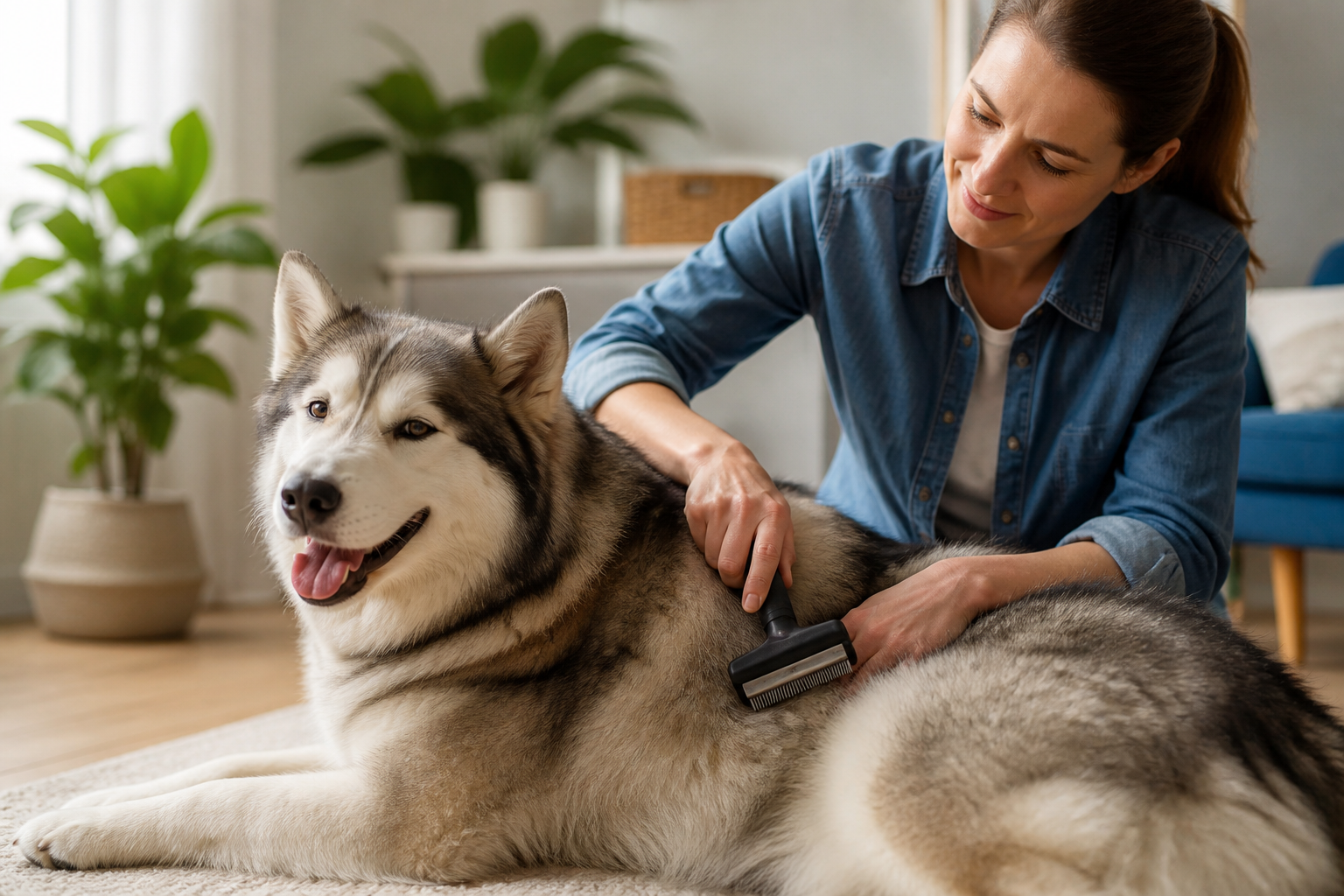
You have just finished vacuuming your living room floor. Ten minutes later, a fluffy tumbleweed of fur drifts across the hardwood. If you live with a double-coated breed like a Golden Retriever, Husky, or German Shepherd, this scene is likely familiar. At BaxterBoo, we understand that managing a thick undercoat can feel like a losing battle against the fur. However, the secret is not just brushing more often: it is using the right technique to reach the hair that actually causes the mess. This post will cover the specific tools you need and the step-by-step methods to remove dead undercoat safely. We will also look at how to handle seasonal shedding cycles to keep your home cleaner and your dog more comfortable.
Quick Answer: To brush a dog's undercoat, use an undercoat rake or a slicker brush to reach beneath the top layer of fur. Use the line-brushing technique by lifting the top hair and brushing the dense fur underneath in the direction of growth. This removes dead hair before it falls out on your floor.
Understanding the Double Coat
Before you grab a brush, it helps to know what you are working with. A double-coated dog has two distinct layers of fur. The top coat consists of "guard hairs." These are tougher, longer hairs that repel water and protect the skin from dirt. Beneath those sits the undercoat. This layer is soft, dense, and woolly. It acts as natural insulation to keep the dog warm in winter and cool in summer.
The undercoat is the part of the coat that sheds most heavily. When people talk about a dog "blowing their coat," they are referring to the mass release of this soft undercoat. This usually happens twice a year during the spring and fall. If this dead hair is not brushed out, it gets trapped against the skin. This can lead to painful mats and skin irritation.
Which Breeds Have Undercoats?
Not all dogs have this second layer. If your dog has a silky or single coat, their grooming needs are very different. Common double-coated breeds include:
- Herding breeds: Border Collies, Corgis, and Australian Shepherds.
- Working breeds: Bernese Mountain Dogs, Great Pyrenees, and Newfoundlands.
- Spitz types: Huskies, Malamutes, and Pomeranians.
- Retrievers: Labradors and Golden Retrievers.
Key Takeaway: The undercoat is the primary source of shedding and requires specialized tools to reach beneath the protective top coat.
Essential Tools for Undercoat Care
Using the wrong brush is a common mistake. A standard bristle brush might make the top coat look shiny, but it will never reach the dense undercoat. You need tools designed to penetrate deep into the fur. We carry a wide range of these professional-grade tools in our dog grooming collection to help you get the job done right.
The Undercoat Rake
This is the most important tool for any double-coated dog owner. An undercoat rake has long, metal tines that look like a garden rake. These tines pass through the top coat without damaging it. They catch the loose, fuzzy undercoat and pull it away. Look for a rake with rounded tips so you do not scratch your dog's skin.
The Slicker Brush
A slicker brush has a flat or slightly curved head with rows of thin wire pins. It is excellent for removing small tangles and smoothing out the coat. It is often used as a second step after the rake. It catches any remaining loose hair on the surface and helps fluff the coat. A product such as the Master Grooming Tools Ergonomic Slicker Dog and Cat Brush is designed for brush-outs, mat removal, and undercoat care.
De-shedding Tools
Tools like the FURminator are designed specifically for heavy shedders. They have a fine, comb-like edge that reaches deep to grab loose hair. Use these tools with caution. You only need light pressure. If you go over the same spot too many times, you can cause "brush burn" or accidentally thin out the healthy coat. For another option, consider the Warren London Long Hair De-Shedding Pet Brush, which is made for longer coats.
The Metal Comb
A simple greyhound comb or steel pet comb is the best way to check your work. Once you think you are finished brushing, run the comb through the fur. If it snags, there is still loose undercoat or a small mat that needs attention.
Bottom line: A combination of an undercoat rake for deep removal and a slicker brush for finishing is the most effective toolkit for double-coated breeds.
How to Brush a Dog's Undercoat: Step-by-Step
The goal of brushing the undercoat is to be thorough without being repetitive. Brushing the same spot for 20 minutes will irritate the skin. Instead, follow a systematic approach.
Step 1: Start at the bottom. Always begin at the rear of the dog or the bottom of the legs. This allows you to work your way up and forward. It ensures you do not miss any hidden spots under the belly or behind the ears.
Step 2: Use the line-brushing technique. Do not just swipe the brush over the dog's back. Use one hand to lift a section of the top coat. With your other hand, use the undercoat rake to brush the hair underneath that you have just exposed. You should be able to see the skin as you work.
Step 3: Brush in the direction of growth. Always follow the way the hair naturally lays. Brushing against the grain can be uncomfortable and may pull on the skin. Use short, controlled strokes rather than long, sweeping ones.
Step 4: Clear the tool frequently. An undercoat rake will fill up with fur very quickly. Stop every few strokes to remove the hair from the tines. If the tool is clogged, it cannot catch any more loose fur.
Step 5: Finishing touches. Once you have covered the whole body, switch to your slicker brush. Go over the coat one more time to pick up surface hair. Finally, use the metal comb to ensure everything is smooth from the skin to the tips of the hair.
Vet Tip: If you find a mat, do not pull on it. This causes pain and skin bruising. Use a dematting tool or your fingers to gently pick it apart. If a mat is tight against the skin, consult a professional groomer to avoid cutting your pet.
Seasonal Shedding and "Blowing" the Coat
Most double-coated dogs shed a little bit all year long. However, the "blow out" seasons are much more intense. This happens when the dog transitions between their summer and winter coats.
In the spring, they shed their thick winter undercoat to prepare for the heat. In the fall, they shed their lighter summer undercoat to make room for the heavy winter layer. During these times, you may need to brush your dog every single day. If you skip a few days, the loose hair will quickly form clumps. These clumps trap moisture and heat against the skin, which can lead to "hot spots" or fungal infections.
Key Takeaway: Seasonal shedding requires daily attention to prevent matting and maintain the skin's ability to regulate the dog's temperature.
Bathing and the Wet De-shedding Method
Sometimes, brushing a dry coat is not enough. Professional groomers often use a "wet de-shed" method. This is particularly helpful for dogs with extremely dense coats like Newfoundlands or Huskies. For additional bathing guidance, see these dos and don'ts for bathing your dog.
Start by giving your dog a thorough bath using a high-quality shampoo. While the coat is full of conditioner, use a rubber grooming mitt or a wide-toothed rake to gently brush through the fur. The conditioner provides "slip," which allows the dead hair to slide out more easily.
After the bath, drying is the most important part. A standard human hairdryer is usually too weak and too hot. If possible, use a high-velocity pet dryer. These tools use a strong blast of cool air to literally blow the water and the loose undercoat off the dog. You will see clouds of fur flying away. This is much more efficient than brushing alone.
Bottom line: Using a conditioner and a high-velocity dryer can remove more undercoat in one session than hours of dry brushing.
Health, Skin, and Nutrition
The quality of your dog's undercoat is a direct reflection of their internal health. If the coat feels brittle, excessively oily, or very dusty, it might be time to look at their diet. You can also explore our dog skin and coat care selection for grooming and coat-care options.
High-quality fats are essential for skin and coat health. We carry several premium food brands, such as Farmina and Orijen, that prioritize Omega-3 and Omega-6 fatty acids. These nutrients help the skin stay elastic and the fur stay strong. If your dog's skin is flaky or they are itching constantly, it could be a sign of allergies.
Our pharmacy provides a variety of solutions for skin health. Through our partnership with Pet's Choice, we offer FDA-approved allergy medications and prescription diets. If you notice bald spots, red skin, or a foul odor coming from the coat, please consult your veterinarian. These symptoms often require a professional diagnosis rather than just more grooming.
- Check for lumps and bumps while you brush.
- Look for parasites like fleas and ticks.
- Monitor for dry, flaky skin.
- Ensure your dog is hydrated to maintain skin elasticity.
Training Your Dog to Love Grooming
Many dogs are wary of the undercoat rake because it feels different than a soft brush. It is important to make grooming a positive experience. If you pull on mats or rush the process, your dog will learn to hide when the brush comes out.
Start with very short sessions. Spend two minutes brushing a "safe" area like the chest or shoulders, then give your dog a high-value treat. We recommend using something special like Stella and Chewy's freeze-dried treats to reward their patience. Gradually increase the time as they become more comfortable.
If your dog is particularly anxious, try using a lick mat. Spread some dog-safe peanut butter on the mat and let them lick it while you work on their undercoat. This keeps them distracted and creates a positive association with being groomed.
Conclusion
Brushing a dog's undercoat is one of the most important tasks for a double-coated pet owner. It keeps your home cleaner, prevents painful mats, and helps your dog stay cool in the summer. By using the right tools like an undercoat rake and a metal comb, you can manage even the heaviest shedding seasons. Remember to be gentle, work in sections, and use positive reinforcement to keep the experience stress-free.
Regular grooming is also the perfect time to check your dog's overall health. If you notice any skin issues or persistent irritation during your grooming routine, our pharmacy is here to help with professional-grade treatments. For all your grooming supplies, from slicker brushes to de-shedding tools, explore our full dog brushes and combs collection. Keeping up with your dog's undercoat is a commitment, but the reward is a happier pet and a much cleaner couch.
FAQ
Can I shave my double-coated dog to stop the shedding?
You should never shave a double-coated dog. The undercoat actually protects them from the heat and prevents sunburn. Shaving can permanently damage the coat, causing it to grow back patchy or not at all. It also does not stop the shedding: it just results in shorter, pricklier hairs falling out.
How often should I brush my dog's undercoat?
For most double-coated dogs, a thorough brushing once a week is sufficient. However, during the spring and fall shedding seasons, you should aim for daily sessions. Regular maintenance is much easier than trying to tackle a month's worth of accumulated dead hair all at once.
Why does my dog still shed even after I brush them?
Brushing removes the hair that is already loose, but new hairs are constantly reaching the end of their life cycle. If your dog is shedding excessively despite regular grooming, ensure you are using an undercoat rake that reaches the bottom layer. You may also want to check their diet for adequate fatty acids.
What is the best way to remove a mat from the undercoat?
The best way to remove a mat is to use your fingers to pull it apart gently. If that does not work, use a specialized dematting tool with a serrated edge to cut through the tangle. Never use scissors to cut out a mat, as it is very easy to accidentally snip the dog's skin.






