
 Save 15% on your 1st Autoship learn more

 Email us
 Live Chat
 FAQs
FAQs





Introduction
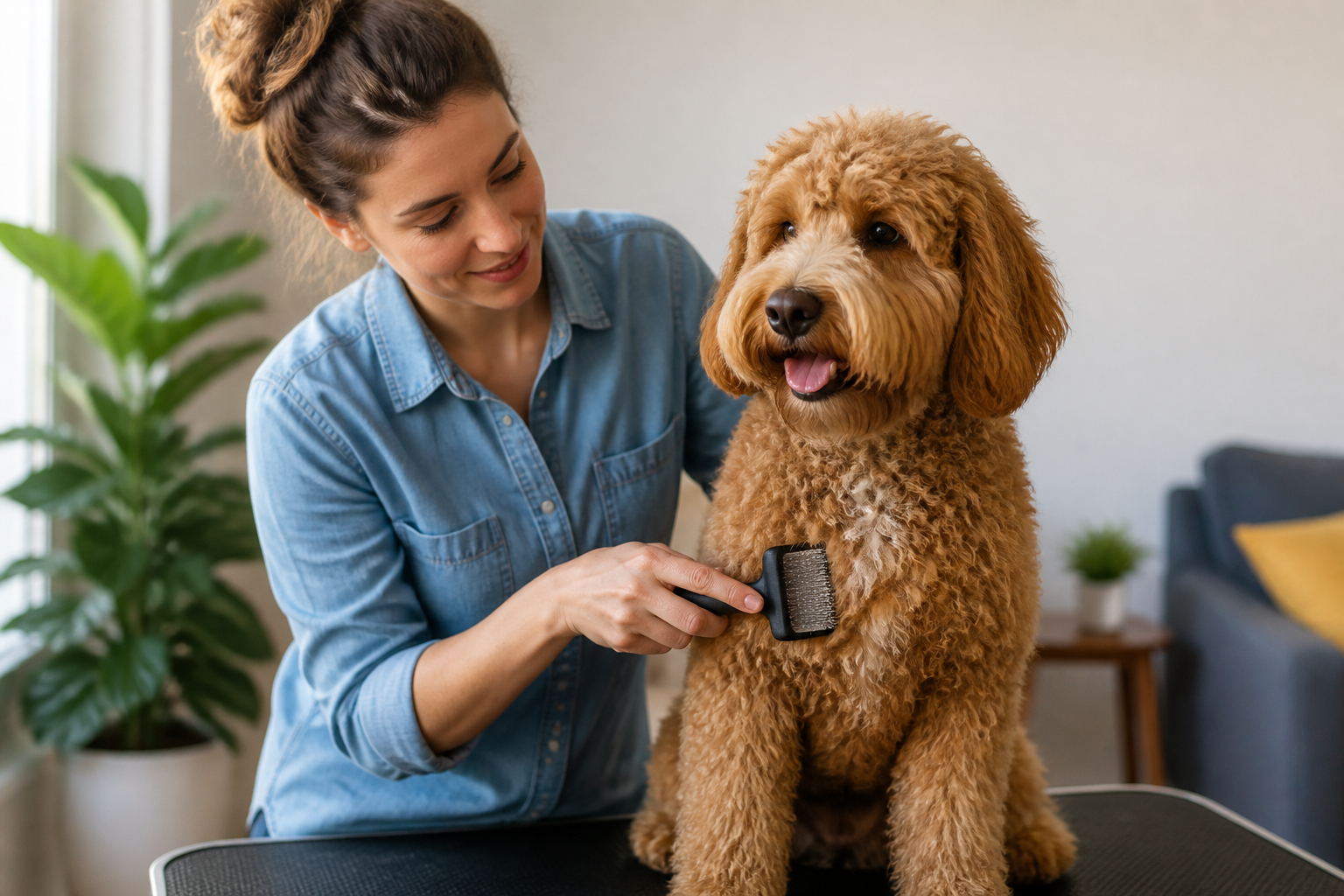
You finally brought home that fluffy Goldendoodle or Labradoodle and life is full of zoomies and cuddles. Then you notice it. A small, hard knot behind the ear or a rough patch of fur along the collar line. Within a week, that small knot has turned into a tight clump that your standard brush just skips over. At BaxterBoo, we know that the "doodle coat" is one of the most rewarding yet challenging features of these popular breeds. Whether your dog has a loose wave or tight wool curls, their hair does not stop growing and it does not fall out on its own. This leads to a high risk of painful matting if you do not have the right strategy. This guide covers the specific tools and techniques you need to keep your dog comfortable and fluffy. Mastering the art of line brushing is the only way to ensure your doodle stays mat-free from the skin to the tips.
The Essential Toolkit for Doodle Owners
The biggest mistake many owners make is using the wrong brush. A standard grocery store brush usually only touches the top layer of the coat. This creates a "shell" of beautiful fur on top while the hair closest to the skin becomes a solid carpet of mats. To avoid this, you need a specific set of tools designed for thick, double-coated, or curly hair. Explore our dog brushes and combs to find tools suited to your dog’s coat.
The Long-Pin Slicker Brush
A slicker brush has a flat or slightly curved head with rows of thin wire pins. For a doodle, the length of these pins is the most important factor. You need pins long enough to penetrate through the fluff all the way to the skin. If the pins are too short, they will just slide over the surface. Look for a slicker with a flexible head to prevent you from putting too much pressure on the dog’s skin. The Master Grooming Tools Self-Cleaning Slicker Brush is one option designed to remove mats, tangles, and loose hair.
The Metal Greyhound Comb
This is your most important diagnostic tool. A metal comb, often called a greyhound comb, has two sides with different tooth spacing. After you think you are finished brushing, you must run this comb through the coat. If the comb catches, you still have a knot. It is the only way to truly verify that you have reached the skin and cleared every tangle.
Detangling Spray and Leave-In Conditioner
Never brush a dry doodle coat. Brushing dry hair causes friction, which leads to static and hair breakage. Broken hair is more likely to tangle later. A high-quality detangling spray or a diluted leave-in conditioner provides "slip." This helps the brush glide through and protects the hair shaft.
Specialized Dematting Tools
For those moments when you find a knot that has already tightened, a dematting rake can help. These tools have sharpened blades designed to cut through the mat without requiring you to shave the entire area. However, these must be used with extreme caution to avoid cutting the dog's skin. A coat mat and tangle splitter can help break up tough tangles when used carefully.
Quick Answer: The most effective way to brush a doodle is called line brushing. You must work in small sections from the bottom up, using a slicker brush to clear the hair and a metal comb to check your work all the way to the skin.
Mastering the Line Brushing Technique
Line brushing is the gold standard for doodle grooming. It ensures that no section of the coat is missed. If you simply brush the dog from head to tail like you would a Labrador, you will miss the undercoat where mats thrive. For additional guidance on curly coats, read how to groom a dog that has curly hair.
Step 1: Prepare the Coat
Lightly mist your dog with a detangling spray. You do not want the hair soaking wet, just slightly damp to the touch. This reduces static and makes the process more comfortable for your pet.
Step 2: Create a Line
Start at the bottom of one of the back legs. Use your non-dominant hand to push the hair upward, exposing a "line" of skin. You should be able to see the skin clearly across the width of the leg.
Step 3: Brush Downward
Using your slicker brush, take small, gentle strokes to brush the hair below that line downward. Use a "tap and pull" motion rather than a long, dragging stroke. This prevents "brush burn," which is skin irritation caused by the wire pins scraping the skin repeatedly.
Step 4: Check with the Comb
Once the section looks fluffy, take your metal comb. Start at the skin and pull it through the section you just brushed. If it glides through without resistance, you are finished with that section. If it catches, go back with the slicker brush.
Step 5: Move Up the Body
Drop a small new section of hair from your hand and repeat the process. Work your way up the leg, across the flank, and toward the spine. By the time you reach the top, every inch of hair on that side will have been cleared from skin to tip.
Key Takeaway: Always brush in the direction the hair grows, but work in layers from the bottom of the dog toward the top. This prevents you from brushing the same top layer of hair repeatedly while ignoring the hair underneath.
High Friction Areas to Watch
Certain parts of a doodle’s body are more prone to matting than others. These are usually "high-friction" zones where the hair rubs against itself or against a collar or harness.
- Behind the Ears: This is the number one spot for mats. The hair here is often finer and softer. When the dog scratches its ears, it creates tight knots very quickly.
- The Armpits: As the dog walks, the friction in the armpits can cause the hair to felt. This is often painful for the dog because the mats pull on the sensitive skin when they move.
- Under the Collar or Harness: The constant rubbing of fabric against the coat is a recipe for matting. We recommend removing the collar when the dog is inside the house to give the neck hair a break.
- The Tail and "Pants": The long hair on the tail and the back of the legs (the pants) often picks up debris from outside. Twigs, burrs, and dried mud can act as the anchor for a massive mat.
- The Paws: Hair grows between the pads of a doodle’s feet. If this is not brushed or trimmed, it can trap moisture and debris, leading to irritation or fungal issues.
How to Handle Stubborn Mats
If you find a mat that the slicker brush cannot handle, do not panic. Do not reach for the kitchen scissors. Cutting a mat out with scissors is the easiest way to accidentally cut your dog’s skin. Because mats pull the skin up into the knot, you often cannot tell where the hair ends and the skin begins.
If the mat is small, apply a generous amount of detangling spray or a specialized mat-breaking gel directly to the knot. Let it sit for a few minutes. Use your fingers to gently pull the mat apart from the edges. Once it is loosened, use the end tooth of your metal comb to "pick" at the mat. Work from the tip of the hair toward the skin.
If the mat is tight and close to the skin, it is often safer to leave it for a professional groomer or to use a pair of electric clippers. Shaving a mat is much safer than cutting it with scissors. If your doodle has become "pelted," which means the mats have joined together into a solid layer across the body, a full shave-down by a professional is the only humane option. Pelting is very painful and can hide skin infections or parasites.
Vet Tip: If you discover red, raw, or oozing skin underneath a mat, consult your veterinarian. These "hot spots" or skin infections often require medicated sprays or antibiotics to heal properly. Our dog pharmacy offers prescription products for situations that require veterinary care.
Training Your Doodle to Enjoy Brushing
Because doodles require so much grooming, it is vital that they learn to tolerate or even enjoy the process. This is especially important for puppies. If the first time a puppy sees a brush is when they have a painful mat, they will develop a lifelong fear of grooming.
Start with very short sessions. Even two minutes a day is enough for a puppy. Place them on a raised surface like a table or a counter (with a non-slip mat) to signal that it is "work time." Provide high-value treats that they only get during grooming.
Focus on handling their paws, ears, and tail. These are the areas dogs are most sensitive about. Even if you don't need to brush those areas every day, touching them and rewarding the dog for staying still builds a foundation of trust. If your dog starts to struggle, stop before they get too frustrated. You want to end every session on a positive note.
Maintaining Skin and Coat Health
Brushing is not just about aesthetics. It is a vital part of your dog’s health. A well-brushed coat allows air to reach the skin. This prevents the buildup of moisture and bacteria that can lead to infections. Regular grooming also gives you a chance to check for lumps, bumps, or parasites like fleas and ticks. For routine coat care, browse our dog grooming supplies.
If your dog has sensitive skin or allergies, the grooming process can be even more complicated. Many doodles suffer from environmental or food allergies that manifest as itchy skin. When a dog scratches an itchy spot, they create more tangles, which leads to more mats. It becomes a cycle of discomfort.
For dogs with ongoing skin issues, we provide access to a full pharmacy. Through our partnership with Pet's Choice, we offer prescription allergy medications and medicated shampoos that can help soothe irritated skin. Keeping the skin healthy makes the hair stronger and less prone to breaking and matting. We also carry a wide variety of flea and tick preventives, which are much easier to apply to a coat that is kept thin and well-brushed.
Bottom line: A consistent grooming routine is the best way to prevent painful mats and catch skin health issues before they become serious.
Frequency and Professional Grooming
How often should you brush? For most doodles, a full-body line brushing should happen every 2 to 3 days. If your dog is in a "puppy coat transition" (usually between 6 and 12 months old), you may need to brush every single day. This is when the soft puppy hair is being replaced by the adult coat, and the two types of hair often tangle together.
Professional grooming is still necessary every 6 to 8 weeks. A groomer will handle the tasks that are difficult to do at home, such as trimming the hair inside the ears, clipping the sanitary areas, and giving the dog a professional bath and blow-dry. A high-velocity dryer used by groomers is one of the best ways to blow out loose undercoat and prevent mats.
If you are bathing your doodle at home, never let them "air dry" if they have any tangles. Water causes mats to shrink and tighten. Always brush your dog thoroughly before a bath, and blow them dry while brushing to ensure the coat stays straight and separated. For more bath-time guidance, see these dog bathing dos and don'ts.
Conclusion
Brushing a doodle is a commitment, but it is one that pays off in your dog's comfort and health. By using the line brushing technique and the right tools like a long-pin slicker and a metal comb, you can prevent the painful pelting that often affects these breeds. Remember to focus on the high-friction areas and keep the skin healthy to reduce itching and scratching. If you stay consistent, grooming becomes a bonding time rather than a chore.
- Brush every 2–3 days using the line brushing technique.
- Always check your work with a metal greyhound comb.
- Never brush a dry coat; use a detangling spray for slip.
- Remove collars indoors to prevent neck matting.
- Consult a vet if you find skin irritation or persistent itching.
For all your grooming needs, from specialized slicker brushes to calming treats for grooming sessions, we have you covered. You can also explore our pet pharmacy for prescription-strength skin support and flea protection to keep your doodle's coat in peak condition.
FAQ
Why does my doodle get mats even though I brush him every day?
You are likely only brushing the top layer of the fur. Without using the line brushing technique to reach the skin, the hair underneath can still felt together. Switch to a long-pin slicker brush and always follow up with a metal comb to ensure you are clearing the coat all the way to the skin.
Can I just cut a mat out with scissors?
We strongly recommend against using scissors to cut out mats. A dog's skin is very thin and can easily be pulled into the mat, leading to serious cuts. It is much safer to use a dematting tool, a pair of electric clippers, or to have a professional groomer handle the removal of tight mats.
How often should a doodle be professionally groomed?
Most doodles need a professional groom every 6 to 8 weeks. This schedule helps manage the hair length and ensures the sanitary areas and paw pads are kept tidy. Even with professional grooming, you must still perform regular maintenance brushing at home to prevent matting between appointments.
What is the best way to handle a dog that hates being brushed?
Start with very short sessions and use high-value treats to create a positive association. Use a gentle "tap and pull" motion rather than dragging the brush to avoid irritating the skin. If your dog is extremely anxious, consult your vet about calming supplements or medications, which are available through our pharmacy at BaxterBoo.






