
 Save 15% on your 1st Autoship learn more

 Email us
 Live Chat
 FAQs
FAQs





Introduction
If you have ever run your hand down your dog's back only to have your fingers snag on a hard, hidden knot, you know the specific challenge of owning a long-haired breed. Those beautiful, flowing coats on Collies, Bernese Mountain Dogs, and Golden Retrievers require more than just a quick once-over with a plastic brush. Without the right technique, loose fur gets trapped deep against the skin, leading to painful mats and skin irritation. At BaxterBoo, we see many owners who feel overwhelmed by the sheer volume of hair their pets produce. This guide will walk you through the essential tools and the professional line-brushing technique to keep your dog's coat healthy. By the end of this article, you will know how to manage even the thickest undercoats with confidence.
Understanding the Long-Haired Coat
Not all long hair is the same. Some dogs have a single coat that grows continuously, like a Yorkie or a Maltese. These coats feel more like human hair and are prone to fine tangles. Other breeds, such as Huskies or Newfoundlands, have a double coat. This consists of a soft, insulating undercoat and a coarser outer layer of guard hairs. When a double-coated dog sheds, that soft undercoat gets stuck in the outer layer. This creates a thick layer of dead hair that can actually trap moisture and heat against the skin.
Knowing which type your dog has changes how you approach the grooming process. A single-coated dog needs frequent surface brushing to prevent knots. A double-coated dog needs a tool that can reach deep into the fur to pull out the "wool" before it turns into a solid mat. Regardless of the breed, the goal remains the same. You want to clear out dead hair and distribute natural skin oils throughout the length of the coat.
Quick Answer: Brushing a long-haired dog requires a technique called line brushing. This involves parting the hair to the skin and brushing small sections at a time with a slicker brush and a metal comb to ensure every layer is tangle-free.
The Essential Tool Kit for Long Hair
You cannot achieve professional results with a generic brush from a grocery store aisle. Long-haired dogs require specific tools designed to penetrate multiple layers of fur. We have spent years at BaxterBoo testing various dog grooming supplies to see what actually works for heavy-duty coats.
The Slicker Brush
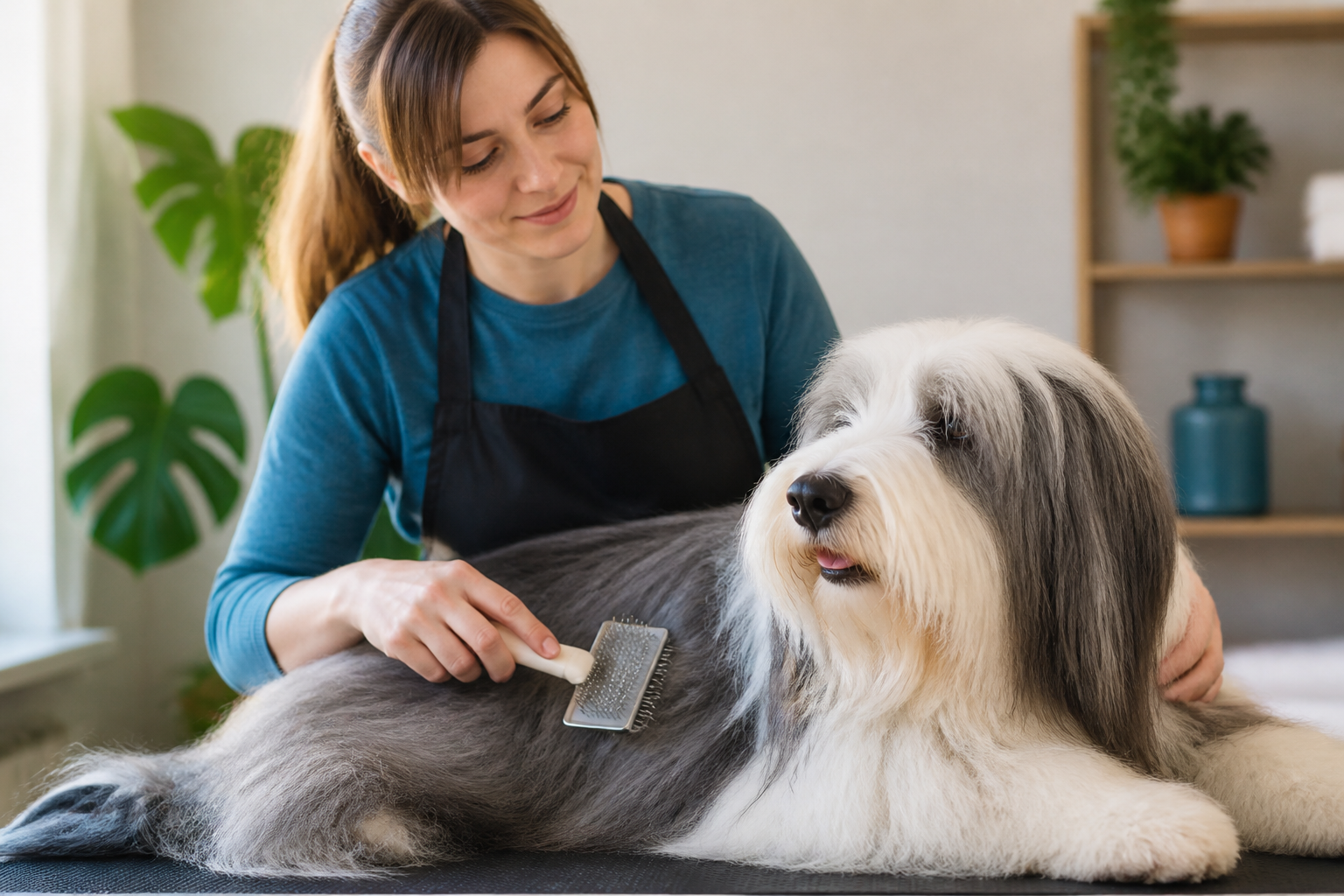
The slicker brush is the workhorse of the grooming world. It features a flat or slightly curved head with rows of thin, wire pins. These pins are angled to grab onto loose fur and pull it away from the body. It is excellent for removing surface tangles and smoothing out the top layer of the coat. Look for one with a comfortable handle, as you will be using it frequently.
The Undercoat Rake
For double-coated breeds, an undercoat rake is non-negotiable. These tools have long, sturdy metal teeth that reach past the guard hairs to pull out the loose undercoat. Using a rake during shedding season can significantly reduce the amount of fur you find on your furniture. It prevents that undercoat from compacting into mats that are impossible to brush out later.
The Stainless Steel Greyhound Comb
Often called a "finishing comb," this tool has two different tooth spacings. One side is wider for general detangling, and the other side is fine for catching small knots. The comb is your "truth teller." If you can run a metal comb through the fur from the skin all the way to the ends without snagging, your dog is truly tangle-free.
Detangling Spray and Leave-In Conditioner
Never brush a dry, long-haired coat. Brushing dry hair can cause static and breakage. A light mist of detangling spray provides "slip," which allows the brush to slide through knots more easily. It also helps protect the hair shaft from damage during the grooming process.
Key Takeaway: Proper grooming requires a slicker brush for smoothing, an undercoat rake for deep hair removal, and a metal comb to verify that no mats remain near the skin.
The Step-by-Step Line Brushing Technique
The most common mistake owners make is "surface brushing." This is when you brush only the very top layer of the hair. While the dog looks fluffy, the hair near the skin is actually becoming a solid felted mat. Line brushing is the gold standard for preventing this.
Step 1: Prepare the Coat
Start by lightly misting a section of your dog with a detangling spray. Do not soak the fur. You just want enough moisture to reduce static and provide a bit of lubrication.
Step 2: Create a Line
Start at the bottom of the leg or the base of the tail. Use your hand to push the hair upward, exposing a "line" of skin. You should be able to see the skin clearly across the entire section you are working on.
Step 3: Brush Downward
Using your slicker brush, take a small amount of the hair you are holding up and brush it downward toward the feet. Work in small, controlled strokes. Do not pull hard if you hit a snag. Instead, use the edge of the brush to gently pick at the knot.
Step 4: Verify with the Comb
Once that small section feels smooth with the slicker brush, take your metal comb. Start at the skin and pull the comb through to the ends. If it glides through, move up an inch and create a new line of skin. Repeat this process until you have covered the entire body.
Step 5: Check High-Friction Areas
Pay extra attention to the areas where mats form most often. These include behind the ears, the armpits, the "trousers" on the back legs, and where the collar or harness sits. These areas move a lot during the day, which causes the hair to rub together and knot up quickly.
Vet Tip: Check the skin under the fur for redness or hot spots while you brush. Mats can trap moisture and bacteria against the skin, leading to painful infections that may require prescription topical treatments from our pet pharmacy.
Managing Stubborn Mats and Tangles
If you find a mat that your brush cannot handle, do not reach for the kitchen scissors. It is incredibly easy to accidentally cut a dog's thin skin when trying to remove a tight mat. If a mat is close to the skin, it pulls the skin up into the knot. You might think you are cutting hair when you are actually cutting the dog.
Instead, use a specialized mat-breaking tool or a pair of electric clippers. If the mat is not too tight, you can try to "pick" it apart. Apply a heavy amount of detangling spray or a drop of grooming oil directly to the knot. Use the end tooth of your metal comb to slowly pull small bits of hair out of the mat starting from the outside edges. Work your way toward the center.
If the mat is solid and cannot be picked apart, it is safer to have it clipped out. If your dog has developed several large mats, it may be time for a "reset" shave by a professional. This is much kinder than spending hours pulling on a dog's skin to save a few inches of hair.
Bathing and Conditioning Long Hair
Bathing a long-haired dog should always be a two-part process involving the brush. Never put a matted dog in the tub. Water acts like a glue for tangles. When a mat gets wet and then dries, it tightens significantly. This can make a manageable knot turn into a solid lump that must be shaved.
Always brush your dog thoroughly before the bath. Once the coat is clear, use a high-quality shampoo. Brands like Royal Canin or Farmina often emphasize the importance of skin health, and using a gentle, soap-free shampoo helps maintain the natural barrier. For more bathing guidance, see our tips for bathing your dog.
After rinsing the shampoo, apply a conditioner. For long-haired breeds, the conditioner is essential. It closes the hair cuticle and makes the fur less likely to tangle between grooming sessions. Let the conditioner sit for a few minutes before rinsing thoroughly. Any residue left behind will attract dirt and lead to more mats.
Key Takeaway: Always brush your dog before bathing to prevent knots from tightening into permanent mats, and use a conditioner to keep the hair shaft smooth.
Trimming Sensitive Areas
Even if you want your dog to have a long, flowing coat, certain areas should stay trimmed for hygiene and safety. Long hair between the paw pads can trap mud, ice, and burrs. It can also act like socks on hardwood floors, causing your dog to slip and slide. Use a small pair of safety shears or a quiet trimmer to clear the hair flush with the paw pads.
The hair around the ears and the "sanitary" area under the tail should also be kept tidy. This prevents debris from collecting and reduces the chance of infections. If you are uncomfortable using scissors near your dog's face or sensitive bits, a professional groomer can perform a "tidy up" or "trim" between full grooming appointments.
- Trim paw pad hair every 4 weeks to maintain traction.
- Keep hair around the eyes clear to prevent tear staining and irritation.
- Check the "sanitary" area daily for any trapped debris.
- Ensure the hair inside the ears is not blocking airflow, as this can lead to yeast growth.
Health and Hygiene Beyond the Brush
Grooming is about more than just looks. It is a vital part of your dog's overall health routine. When you are brushing, you are in a perfect position to check for lumps, bumps, and parasites. Long hair provides a great hiding spot for fleas and ticks.
If you notice your dog scratching more than usual, or if you see small black "pepper" flakes in the fur, it is time for a flea and tick treatment. We carry a wide range of FDA-approved preventatives through our pharmacy partnership with Pet's Choice. Options like NexGard and Frontline are essential for dogs with long coats because it can be so difficult to spot a single tick deep in a thick undercoat.
Ear health is another concern for long-haired breeds. Many of these dogs have floppy ears that trap moisture. Use a vet-approved ear cleaner and a cotton ball to gently wipe the outer part of the ear canal once a week. If you notice a foul smell or heavy discharge, consult your veterinarian. They may need to prescribe a medicated cleanser to clear up a deep-seated infection.
Brushing for Different Life Stages
A puppy's coat is very different from an adult's coat. Most puppies start with a soft, single-layer coat that is easy to manage. However, around six months to a year, their adult coat begins to grow in. This transition period is often the most difficult time for grooming. The soft puppy hair gets tangled in the new, coarser adult hair. This is when many owners give up and have the dog shaved. To avoid this, start a daily brushing routine when they are young, even if they don't "need" it yet. This gets them used to the sensation of the tools.
Senior dogs also have unique needs. They may develop arthritis, making it painful for them to stand on a grooming table for long periods. Be patient and consider breaking the grooming session into several short sessions throughout the day. You can brush one leg while they are lying down, then come back later for the other side. Using a joint supplement like Cosequin can help keep them comfortable enough to tolerate the standing required for a full brush-out.
Vet Tip: If your senior dog's coat has become dull or brittle, it could be a sign of an underlying metabolic issue. Consult your vet to rule out conditions like thyroid problems or nutritional deficiencies.
Positive Reinforcement and Training
Most dogs are not born loving the brush. It is a learned behavior. If your dog runs away when they see the slicker brush, you need to change their association with the tool. Start by just showing them the brush and giving them a high-value treat. Then, touch them with the back of the brush, followed by more treats.
Slowly work up to a single brush stroke. Keep sessions very short and always end on a positive note. Use treats from brands like Stella and Chewy's or Zesty Paws to keep their focus. Over time, your dog will learn that grooming means snacks and attention. This bonding time is one of the best parts of pet ownership.
- Use a "licking mat" with peanut butter to keep your dog distracted while you brush.
- Keep your own energy calm and relaxed.
- If the dog gets stressed, stop and try again later.
- Always reward the dog at the end of every session.
Keeping a Schedule
Consistency is the most important factor in long-haired dog care. You do not have to do a full, head-to-tail line brushing every single day, but you should aim for it at least twice a week. A quick five-minute surface brush daily can help keep the top layer tidy between deeper sessions.
If you find that the coat is becoming unmanageable, consider a "puppy cut" or a shorter utility clip. There is no shame in a shorter haircut if it means your dog is more comfortable and mat-free. Many owners choose to keep their dogs in a shorter clip during the summer months to help them stay cool and make it easier to check for ticks after hikes.
Bottom line: Regular maintenance prevents painful mats and allows you to catch health issues like skin infections or parasites early.
Conclusion
Brushing a long-haired dog is a commitment, but the reward is a beautiful, healthy companion who feels their best. By using the line-brushing technique and the right tools like a slicker brush and metal comb, you can prevent the painful matting that often plagues these breeds. Remember to keep the experience positive with plenty of treats and praise. Our team at BaxterBoo is here to help you find the right supplies to make grooming easier. Whether you need a high-quality detangling spray or an undercoat rake, we have the gear you need. For dogs with skin sensitivities or those needing prescription flea and tick protection, our pharmacy partnership with Pet's Choice provides easy access to the medications your vet recommends. To save on your regular grooming supplies and food, consider signing up for our Autoship program to earn MVP Rewards on every order.
FAQ
How often should I brush my long-haired dog? Most long-haired breeds should be brushed at least three times a week, though daily brushing is ideal to prevent small tangles from becoming mats. High-friction areas like the armpits and behind the ears may need daily attention regardless of your overall schedule.
What should I do if my dog already has large mats? If the mats are small, you can try to gently pick them apart using a detangling spray and a metal comb. However, if the mats are large and tight against the skin, it is much safer and more humane to have them clipped out by a professional groomer to avoid injuring the skin.
Can I use human hairbrushes on my long-haired dog? Human brushes are generally not effective for dogs with thick or double coats because the bristles are not long or sturdy enough to reach the undercoat. Using a brush specifically designed for dogs, like a slicker brush or an undercoat rake, will yield much better results and be more comfortable for your pet.
Why does my dog get mats even though I brush them every day? This usually happens if you are only brushing the surface of the coat rather than getting down to the skin. If you do not use the line-brushing technique to clear the hair closest to the body, the undercoat will eventually tangle and form mats that are hidden beneath the fluffy top layer.






