
 Save 15% on your 1st Autoship learn more

 Email us
 Live Chat
 FAQs
FAQs





Introduction
Finding a thick, tight clump of fur behind your dog’s ears or tucked into their armpit is a common frustration for many pet owners. You might be midway through a cuddle session when your fingers snag on a hard knot that just will not budge. These mats are more than just a cosmetic issue. They can pull on the skin and cause real discomfort for your pup. At BaxterBoo, we know that grooming at home can feel intimidating when you are worried about hurting your dog. This post covers the specific tools you need, the "bottom-up" brushing technique, and when it is safer to put down the brush and call a professional. Understanding how to handle these tangles correctly ensures your dog stays comfortable and your grooming sessions remain a positive bonding experience.
Why Dog Hair Mats and Where to Look
A mat occurs when loose, dead hair becomes entangled with live hair. If these tangles are not removed, they continue to trap more fur, dirt, and oils. Over time, the knot tightens and moves closer to the skin. Friction is the most common cause of matting. This is why you often find knots in high-movement areas like the armpits, under the chin, and where the legs meet the body.
Environmental factors also play a massive role. If your dog loves to swim or goes out in the rain, the moisture can cause the hair to curl and tighten as it dries. If you do not brush your dog immediately after they get wet, those curls can quickly turn into solid mats. Similarly, collars, harnesses, and sweaters create constant rubbing against the coat. Puppies are also prone to matting when they transition from their soft puppy fur to their adult coat, as the two different textures often tangle together.
Key Takeaway: Mats are usually caused by friction, moisture, or seasonal shedding. Regular checks in "friction zones" like the armpits and collar area can help you catch tangles before they become solid knots.
The Right Tools for the Job
You cannot effectively remove a mat with a standard human hairbrush or a simple plastic comb. Dog fur is much denser and requires tools designed to penetrate the coat without breaking the hair. Having the right kit makes the process faster and much more comfortable for your pet. Start with our dog brushes and combs to find tools designed for different coat types.
The Slicker Brush
A slicker brush has a flat or slightly curved head with rows of thin wire pins. These pins are angled to grab onto loose hair and pull it away from the skin. This is your primary tool for breaking up the outer layers of a mat. Look for one with a comfortable handle, as you will need a steady grip for controlled movements.
The Metal Greyhound Comb
Often called a finishing comb, this tool has long metal teeth. One end usually has wider spacing while the other has finer spacing. After you use the slicker brush, the comb helps you check your work. If the comb can slide from the root to the tip of the hair without snagging, the mat is gone.
Detangling Sprays and Conditioners
Dry hair is brittle and prone to breaking. Using a dog-safe detangling spray or a leave-in conditioner provides "slip" to the hair. This allows the individual strands to slide past each other more easily. Never use human products, as the pH balance is wrong for a dog's skin and can cause irritation.
Electric Clippers
In cases of severe matting, clippers are much safer than scissors. We never recommend using scissors to cut out a mat. A dog’s skin is very thin and can easily be pulled into the knot. Electric clippers with a safe blade allow you to go underneath the mat to remove it without risking a deep cut.
Preparing Your Dog for Grooming
A dog that is stressed or wiggly is much harder to groom safely. Before you even touch a brush to a mat, make sure the environment is calm. Choose a time when your dog is naturally relaxed, perhaps after a long walk or a meal.
If your dog is nervous about grooming, use high-value treats to create a positive association. You might try spreading some xylitol-free peanut butter on a silicone licking mat. This keeps their head down and their body still while you work on their fur. If the mat is in a sensitive spot like the belly or the back of the legs, have a second person help keep the dog steady and distracted with praise.
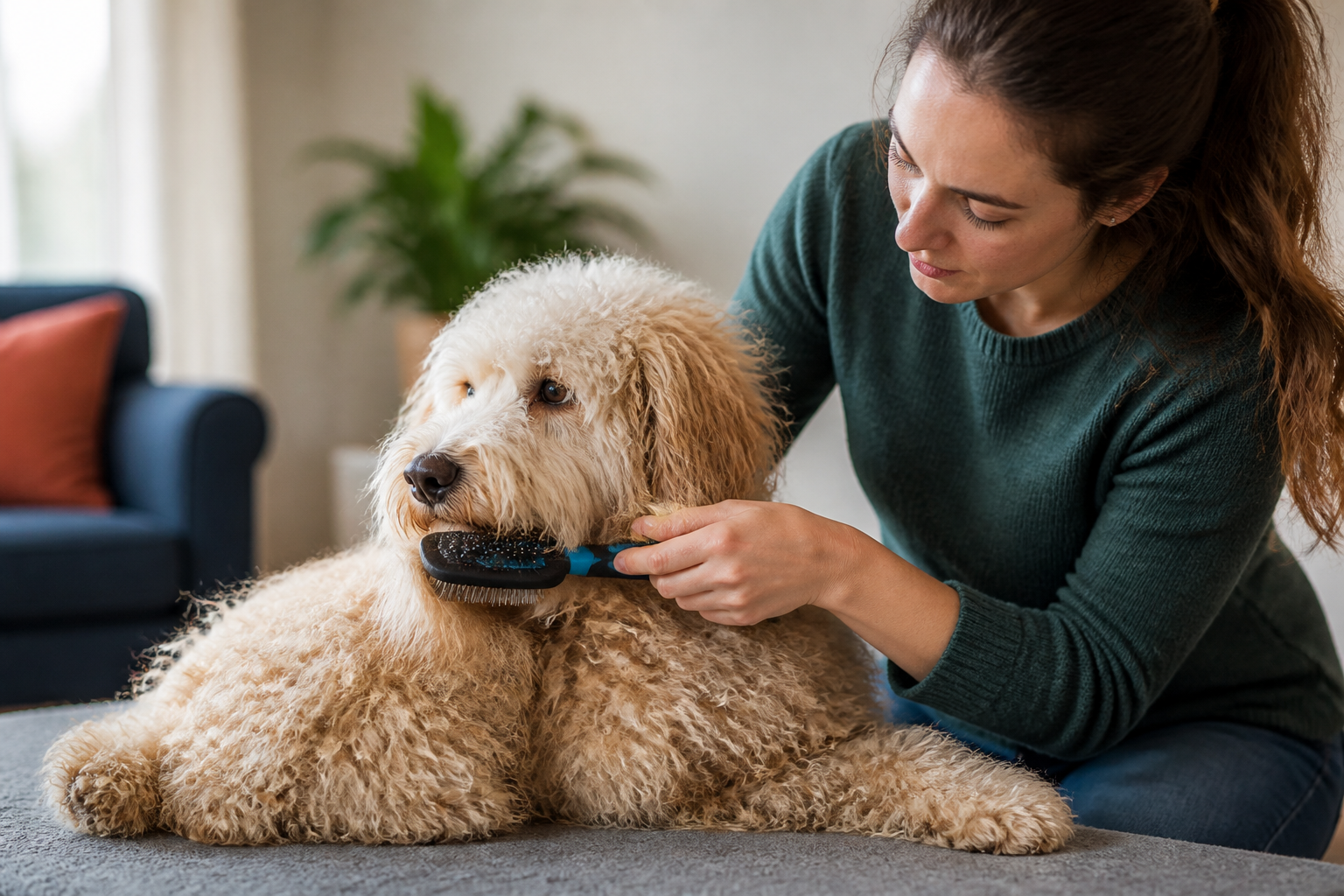
Quick Answer: To brush a matted dog, apply a detangling spray to the knot and use your fingers to loosen the outer hairs. Use a slicker brush starting at the ends of the hair, slowly working toward the skin while holding the base of the hair to prevent pulling.
The Step-by-Step Brushing Technique
The biggest mistake owners make is trying to brush through a mat from the top down. This pulls the skin and causes immediate pain. Instead, you must use a "bottom-up" or "outside-in" approach.
Step 1: Isolate the mat. / Separate the tangled clump from the surrounding healthy hair so you can see exactly what you are working with.
Step 2: Apply detangler. / Saturate the mat with a dog-safe detangling spray and let it sit for a minute or two to soften the hair.
Step 3: Support the skin. / Hold the base of the mat firmly between your thumb and forefinger. This ensures that when you brush, the tension is on your fingers rather than pulling on the dog's skin.
Step 4: Pick at the edges. / Use the edge of your slicker brush to gently pick at the very ends of the hair. Do not try to shove the brush into the center of the knot.
Step 5: Work toward the root. / As the ends become free, move the brush slightly closer to the skin. Continue this process until the slicker brush moves through the area easily.
Step 6: Check with a comb. / Run your metal comb through the area to ensure no small tangles remain near the base of the hair.
For additional guidance on brushing, bathing, and handling tangles, review these dog grooming and bathing tips.
Vet Tip: If you notice the skin under a mat is red, moist, or has a foul odor, stop grooming and consult your veterinarian. These can be signs of a "hot spot" or a bacterial infection trapped by the mat that may require medical treatment.
Understanding Different Coat Types
Not all coats are created equal when it comes to matting. The breed of your dog determines how often you need to brush and which tools will be most effective. BaxterBoo carries a variety of brushes suited for these specific needs.
Long and Silky Coats
Breeds like Yorkies, Maltese, and Setters have hair that is very similar to human hair. It is fine and tangles easily. These dogs do not usually have a thick undercoat, so mats are often closer to the surface. A soft slicker brush and a fine-toothed comb are essential for these breeds.
Curly and Wavy Coats
Poodles, Doodles, and Bichons have hair that grows continuously and traps shed fur within the curls. This creates "pelted" mats if not brushed daily. For these dogs, you often need to use a technique called line brushing, where you part the hair and brush from the skin outward in sections to ensure the undercoat is not matting beneath the top layer. Our guide to grooming curly-haired dogs covers similar brushing and detangling considerations.
Double Coats
Golden Retrievers, Newfoundlands, and German Shepherds have a soft, insulating undercoat and a tougher outer coat. During shedding season, the undercoat comes out in clumps. If these clumps are not brushed out, they become trapped by the outer coat and form massive mats. An undercoat rake is often the best tool to reach through the top layer and pull out the dead fur.
The Dangers of Severe Matting
It is easy to think of mats as just a nuisance, but they can lead to significant health issues. When hair is tightly knotted, it prevents airflow to the skin. This creates a warm, damp environment where bacteria and yeast thrive.
Heavy matting can also hide parasites like fleas and ticks. Because the hair is so thick, topical flea treatments may not reach the skin effectively. If you find evidence of pests while grooming, our dog pharmacy offers flea and tick products through our partnership with Pet's Choice.
In extreme cases, mats can act like a tourniquet. They can wrap so tightly around a limb or the tail that they cut off blood circulation. This is a medical emergency that requires immediate veterinary intervention. Furthermore, the constant pulling on the skin can cause hematomas, which are pockets of blood that form when small vessels burst under the pressure of the mat.
Bottom line: Severe matting is a health hazard that can cause infections, hide parasites, and restrict blood flow, making regular grooming a vital part of preventative care.
When to See a Professional Groomer
There is a point where home grooming is no longer safe or humane. If the mats are "pelted" — meaning they are a solid sheet of fur tight against the skin — you cannot brush them out. Attempting to do so would cause extreme pain and could tear the skin.
Professional groomers have the experience and high-grade equipment to handle these situations. They will likely recommend a "shave down." While it can be upsetting to see your long-haired dog with a short haircut, it is often the kindest choice. Once the matted coat is removed, the skin can breathe again, and your dog will feel an immediate sense of relief.
If your dog becomes aggressive or extremely fearful when you try to brush them, do not force the issue. A professional can often work more quickly, and some veterinary offices offer sedated grooming for pets that are too stressed for a standard salon visit.
Preventing Future Mats
The best way to deal with mats is to stop them from forming in the first place. A consistent routine saves you time and saves your dog from discomfort.
- Brush at least three times a week. For long-haired or curly breeds, daily brushing is better.
- Remove gear at home. Take off collars and harnesses when your dog is indoors to reduce friction.
- Dry thoroughly. After a bath or a rainy walk, use a towel or a blow dryer on a cool setting, then brush the coat once it is dry.
- Use a high-quality diet. Skin and coat health starts from the inside. Foods rich in Omega-3 fatty acids help keep the hair strong and less prone to breakage.
- Schedule regular professional trims. Keeping the hair at a manageable length makes home maintenance much easier.
We recommend setting up an Autoship schedule for your favorite grooming sprays and supplements. This ensures you never run out of the supplies you need to keep your dog's coat in top shape.
Key Takeaway: Prevention is a combination of frequent brushing, proper drying techniques, and a diet that supports coat elasticity and strength.
Conclusion
Managing a matted coat requires a blend of patience, the right tools, and a gentle touch. By using a slicker brush and metal comb with a proper bottom-up technique, you can clear minor tangles without causing your dog distress. Always prioritize your dog's safety and comfort. If a mat is too tight or your dog is too stressed, reaching out to a professional groomer or your veterinarian is the best course of action. Keeping your dog’s coat healthy is an ongoing process, but it is one of the best ways to ensure they stay happy and comfortable. For all your grooming needs, from specialized brushes to skin-supporting supplements, explore our full collection of dog grooming supplies at BaxterBoo.
FAQ
Can I use scissors to cut out my dog's mats?
You should never use scissors to cut out mats because it is extremely easy to accidentally cut your dog's skin. A dog's skin is very thin and can be pulled up into the mat, making it impossible to see where the hair ends and the skin begins. If a mat cannot be brushed out, use electric clippers or take your dog to a professional groomer who can safely shave the area.
Why does my dog get mats even though I brush them?
If you are only brushing the top layer of fur, mats can still form in the undercoat near the skin. This is common in double-coated or curly-coated breeds. To prevent this, use a technique called line brushing to ensure you are reaching all the way down to the skin and removing dead hair from the base.
Does water make mats worse?
Yes, water often makes mats tighter. When matted hair gets wet and then air-dries, the hair fibers can shrink and wind more tightly around each other. Always try to brush out any visible tangles before giving your dog a bath, and ensure you brush them again once they are completely dry.
Should I shave my matted dog in the winter?
If your dog is severely matted, shaving may be the only humane option regardless of the season. A matted coat does not provide warmth; instead, it can trap moisture against the skin and cause infections. If you must shave your dog in the winter, you can keep them warm with a well-fitted dog sweater or jacket until their fur begins to grow back.






