
 Save 15% on your 1st Autoship learn more

 Email us
 Live Chat
 FAQs
FAQs





Introduction
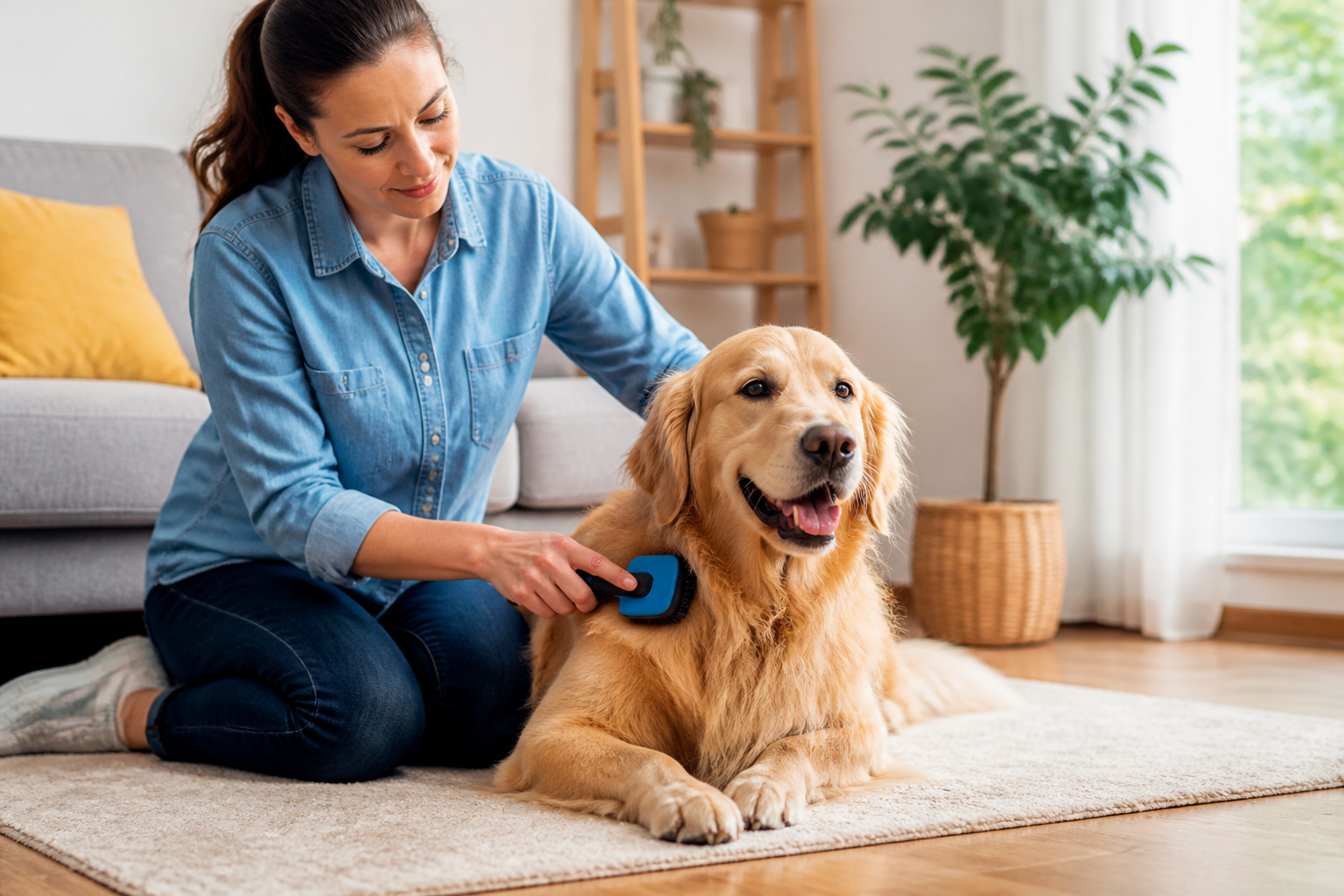
Finding a thick layer of dog hair on your favorite rug or discovering a hard mat behind your pup's ears can be a frustrating moment for any pet owner. We know that grooming often feels like a chore, especially if your dog squirms the moment they see a brush. At BaxterBoo, we believe that the right tools and a gentle approach can turn this routine into a positive bonding experience. This guide covers how to choose the right brush for different coat types and the best techniques to keep your dog's skin healthy. You will learn how to handle tangles safely and how to keep your pet calm during the process. Using the correct method ensures your dog stays comfortable while their coat remains shiny and debris-free.
Choosing the Right Tools for the Job
Before you start brushing, you need the right equipment. Not all dog fur is the same, and using the wrong tool can be ineffective or even painful for your pet. Explore our dog brushes and combs to find tools suited to different coat types.
- Slicker Brushes: These have fine wire bristles. They work well for removing tangles and loose hair on medium to long coats.
- Bristle Brushes: These are best for short-haired dogs with smooth coats. They help distribute natural oils and remove surface dirt.
- Undercoat Rakes: These tools reach through the top layer of fur to pull out dead hair from the thick undercoat. They are essential for breeds like Huskies or Labs.
- Rubber Curry Brushes: These are great for short-haired breeds. They massage the skin and pull away loose hair during shedding season.
- Metal Combs: Often called Greyhound combs, these are perfect for a final pass to check for hidden knots.
Quick Answer: The best brush depends on your dog's coat. Use a slicker brush for long hair and tangles, a bristle brush for smooth coats, and an undercoat rake for heavy shedders.
Brushing Based on Coat Type
Each coat type requires a different strategy. If you brush a smooth-coated Boxer the same way you brush a curly-coated Poodle, you might miss important areas or cause skin irritation.
Short and Smooth Coats
Dogs like Great Danes or Bulldogs have hair that lies close to the skin. These dogs do not mat, but they still shed. Use a rubber curry brush or a soft bristle brush once a week. Move the brush in the direction of hair growth to pull away loose fur and shine the coat.
Double Coats
Breeds like Golden Retrievers or German Shepherds have a soft undercoat and a tougher outer coat. These dogs shed heavily twice a year. You should use a slicker brush and an undercoat rake. Start with the slicker brush to remove surface tangles. Then, use the rake to gently pull out the loose undercoat before it ends up on your furniture.
Curly and Wavy Coats
Poodles and Doodles have hair that grows constantly. This hair traps loose fur instead of letting it fall out. This leads to severe matting quickly. These dogs require daily brushing. Use a slicker brush to get down to the skin. If you only brush the top layer, the hair near the skin will turn into a solid felt-like mat.
Key Takeaway: Always brush all the way down to the skin, regardless of the coat length. Only brushing the top layer allows mats to form underneath.
The Step-by-Step Brushing Process
A systematic approach ensures you do not miss any spots. Dogs often have sensitive areas like the belly, the back of the legs, and the tail. For additional bathing and brushing guidance, read these tips for bathing your dog.
Step 1: Prepare the area. / Place your dog on a non-slip surface where they feel secure. For small dogs, a sturdy table often works better than your lap.
Step 2: Start at the head. / Work your way from the neck toward the tail. This follows the natural growth pattern of the hair.
Step 3: Work in sections. / For dogs with long hair, lift a section of fur and brush the hair underneath it. This is often called line brushing.
Step 4: Check with a comb. / After you finish brushing a section, run a metal comb through it. If the comb catches, there is still a small knot that needs attention.
Step 5: Finish with the legs and tail. / These areas are sensitive. Use a light touch and offer plenty of praise.
Handling Mats and Tangles Safely
Mats are more than just an eyesore. They can pull on the skin and cause sores or infections. If you find a mat, do not reach for your kitchen scissors. Dogs have very thin skin that can easily get caught in the blades. For tools designed for difficult knots, browse our dematting and tangle-care options.
If a mat is small, apply a detangling spray. Use your fingers to gently pull the hair apart. Once it is loosened, use the edge of a slicker brush to pick at the mat from the ends toward the skin. If the mat is tight against the skin, it is safest to see a professional groomer. They can use clippers to safely remove the hair without cutting the skin.
Vet Tip: If you notice red skin, a bad smell, or your dog flinches when you touch a specific area, consult your veterinarian. Mats can hide skin infections or parasites that need medical treatment.
Health Benefits and Early Detection
Brushing is one of the best ways to monitor your dog's overall health. While you work through the fur, look for anything unusual. This includes lumps, bumps, or skin redness.
This is also the time to check for external parasites. If you see tiny black specks that look like pepper, your dog may have fleas. Our dog flea and tick pharmacy offers a variety of FDA-approved flea and tick preventatives. Through our partnership with Pet's Choice, we can help you fulfill prescriptions for medicated shampoos or flea treatments if you discover a problem during your grooming routine.
For more information about prevention options, read this guide to flea and tick prevention products.
Bottom line: Regular brushing serves as a weekly health check for skin issues and parasites.
Keeping Your Dog Calm and Cooperative
Many dogs find brushing stressful at first. The goal is to make the brush look like a source of rewards. Start by letting your dog sniff the brush. Give them a high-value treat immediately.
Keep your first few sessions very short. You do not have to brush the whole dog at once. You can do the front legs one day and the back legs the next. If your dog starts to struggle, stop before they get too upset. We want them to end the session feeling successful rather than stressed. Using a lick mat with some peanut butter can keep them distracted while you work on difficult areas.
FAQ
How often should I brush my dog?
Smooth-coated dogs usually only need a weekly brushing to stay tidy. Dogs with long hair, double coats, or curly fur generally need brushing every two to three days to prevent mats. During heavy shedding seasons in the spring and fall, daily brushing is often necessary for most breeds.
Should I brush my dog before or after a bath?
You should always brush your dog before a bath. Water causes mats to tighten and shrink, making them much harder to remove once the hair is wet. Brushing beforehand also removes loose hair so it does not clog your drain or create a mess in the tub.
Can I use my own hairbrush on my dog?
Human brushes are usually not effective for dog fur. The bristles are not designed to reach through thick undercoats or break up canine tangles. Pet-specific brushes have different bristle lengths and tensions designed specifically for the texture of dog hair and the sensitivity of their skin.
What should I do if my dog is terrified of the brush?
Start very slowly by placing the brush on the floor and putting treats around it. Once your dog is comfortable being near it, touch them with the back of the brush. Reward them for staying calm. Gradually work up to a single stroke of the bristles followed by a treat until they associate the tool with something positive.
Summary of Best Practices
Brushing is a fundamental part of responsible pet ownership. It keeps your home cleaner, reduces shedding, and ensures your dog stays comfortable.
- Match the brush type to your dog's specific coat.
- Brush in the direction of hair growth.
- Never use scissors to cut out mats.
- Check for skin issues and parasites during every session.
Key Takeaway: Consistency is the most important part of grooming. Short, frequent sessions are better than one long, stressful session once a month.
If you are just starting a grooming routine, consider signing up for our Autoship program. This allows you to get regular deliveries of grooming wipes, detangling sprays, and treats so you never run out of the essentials. Staying prepared makes it much easier to keep your dog looking and feeling their best.






